The Patriot Problem: America Cannot Build Interceptors Fast Enough for the Wars It Is Arming
 ΧΡΟΝΟΣ ΑΝΑΓΝΩΣΗΣ 8 '
Πηγή Φωτογραφίας: AP Photo//The Patriot Problem: America Cannot Build Interceptors Fast Enough for the Wars It Is Arming



The biggest weakness of the Patriot system may no longer be on the battlefield.
It may be on the production line.
The U.S.-made air-defense system has proven its value against ballistic and cruise missiles, but demand for its interceptors has grown so sharply that the American defense industry is now racing to expand factories, add suppliers and create new production capacity.
That is the real context behind discussions over possible Patriot-linked production for Ukraine.
There is still no finalized agreement allowing Kyiv to manufacture PAC-3 MSE interceptors on Ukrainian soil.
Talks remain at an early stage, and U.S. officials have made clear that any long-term co-production arrangement would be difficult to complete quickly.
That does not make the story smaller.
It makes it more important.
Because it shows how intense the pressure on Western air-defense inventories has become.
The Problem Is Bigger Than Ukraine
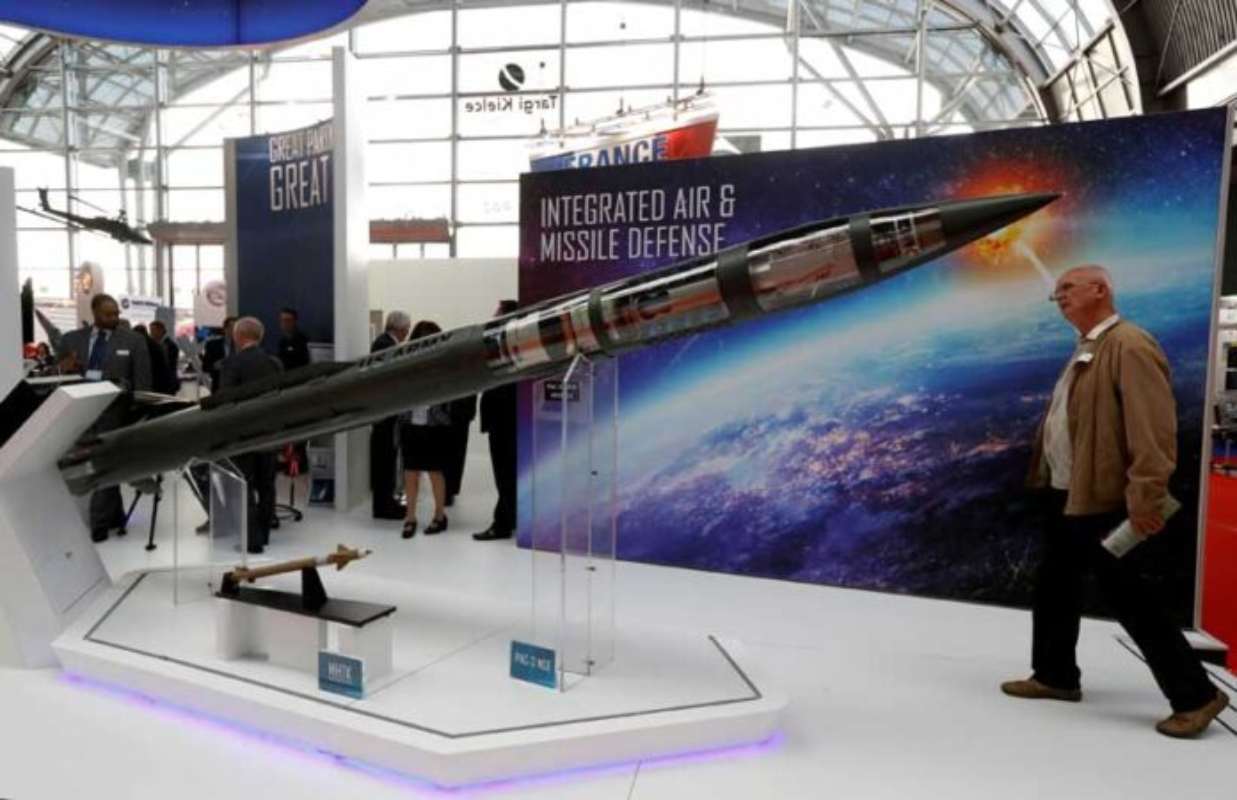
PAC-3 MSE is one of the most sought-after interceptors in the Western arsenal.
It is used or ordered by the United States and a growing number of allies, while demand has surged because of the war in Ukraine, repeated missile attacks in the Middle East and the military buildup across the Indo-Pacific.
Lockheed Martin has already pushed production higher, moving from roughly 500 PAC-3 MSE interceptors in 2024 to more than 600 in 2025, with plans to increase output further.
That sounds like a large number.
In a high-intensity conflict, it is not.
Ukraine is only one customer.
The same missiles are also needed to replenish U.S. stocks and meet demand from Europe, the Gulf and Asia.
The Real Bottleneck Is Inside the Missile
Increasing output is not simply a matter of telling Lockheed Martin to build faster.
PAC-3 MSE depends on a complex supplier network.
One of the most critical components is the seeker — the guidance system that allows the interceptor to detect and destroy its target.
Boeing produces PAC-3 seekers in Huntsville, Alabama, and has been working with the Pentagon to expand capacity significantly.
That matters because a new Ukrainian or European assembly line would not automatically solve the shortage.
If seekers, rocket motors and other critical components remain concentrated among a small number of suppliers, the bottleneck simply moves upstream.
This is the core industrial problem.
The West does not only need more factories.
It needs more suppliers for the parts that make the missile possible.
Germany Is Becoming Part of the Answer
The second major shift is the gradual Europeanization of production.
RTX has expanded plans around Patriot GEM-T manufacturing in Europe, with Germany becoming an increasingly important part of the supply chain.
That is strategically significant.
For years, Europe largely treated Patriot as an American system that it purchased.
The war is forcing that model to change.
Germany is no longer just a customer.
It is becoming part of the industrial architecture needed to keep European air defenses supplied.
PAC-2 and PAC-3 Are Not the Same Weapon
A critical distinction is often lost in the headlines.
Patriot does not use only one type of interceptor.
The PAC-2 GEM-T and PAC-3 MSE are different missiles with different designs and operational roles.
GEM-T is especially relevant against aircraft, cruise missiles and other aerial threats, while PAC-3 MSE uses hit-to-kill technology and is a key capability against advanced ballistic threats.
That means increased European production of GEM-T does not automatically solve the shortage of PAC-3 MSE.
And that distinction matters enormously for Ukraine.
What Is Actually Being Discussed With Kyiv
U.S. defense companies have acknowledged early-stage discussions about what kind of Patriot-related production could eventually be connected to Ukraine.
But this is very different from saying that Kyiv has already received the blueprint to manufacture PAC-3 MSE independently.
It has not.
The important development is that such discussions are happening at all.
Patriot is one of Washington’s most tightly controlled air-defense systems.
Any movement toward wider production, licensing or deeper industrial participation by allies is therefore a sign of how serious the supply problem has become.
Why Ukraine Is Pushing So Hard
Russia has made ballistic missiles a central instrument of pressure against Ukrainian cities and infrastructure.
For Kyiv, Patriot is especially valuable because it is one of the few Western systems with a proven ability to intercept the most dangerous ballistic threats.
But every successful interception consumes a missile that can take months to replace.
That creates an unforgiving equation.
Russia can launch missiles, drones and decoys in large waves.
The West has to answer with weapons that are more expensive, more complex and much slower to manufacture.
The Drone Lesson
The problem becomes even more difficult because of the mass use of drones.
It is not economically sustainable to use a Patriot-class interceptor against every low-cost UAV.
That is why Ukraine and NATO increasingly need layered air defense:
cheap counter-drone systems for cheap threats,
mid-tier interceptors for cruise missiles,
and PAC-3 MSE reserved for the ballistic threats that genuinely require top-end capability.
Without that kind of layered architecture, even a major increase in Patriot production may still not be enough.
The Bigger Political EU Question
For Brussels, the Patriot problem is not only about Ukraine.
It is about European strategic resilience.
Europe increasingly needs:
- larger missile inventories,
- more air-defense systems,
- production lines located in Europe,
- second and third suppliers for critical components,
- less dependence on a single American industrial pipeline.
Germany’s role in expanding Patriot-linked production is an important first step.
But it is not sufficient.
The larger question is whether Europe can build a missile-defense industrial base at wartime scale.
America Is Already Responding
The U.S. defense industry is not standing still.
Lockheed Martin, Boeing and the Pentagon are investing aggressively to expand output.
PAC-3 MSE production is rising.
Seeker production is being expanded.
Supply-chain capacity is being widened.
So the phrase “America cannot build Patriots fast enough” requires one important qualification:
it does not mean production is not growing.
It means demand is growing faster.
And that is the more serious problem.
The War Exposed the Limits of the “Just Enough” Defense Model
For decades, Western defense production was optimized for relatively limited output.
Highly sophisticated systems.
Long contracts.
Small production runs.
High unit costs.
That model made sense in a world where massive missile inventories were seen as unnecessary and expensive.
Ukraine changed that assumption.
A prolonged war of attrition does not ask only who has the best missile.
It asks who can build enough missiles, every month, for years.
That is the real Patriot problem.
The United States may possess the West’s most capable ballistic-missile defense system.
But a weapon simultaneously needed by Ukraine, the U.S. Army, European allies, Gulf states and Indo-Pacific partners inevitably becomes an industrial bottleneck.
That is why the discussion about co-production with Ukraine matters so much.
Not because a Ukrainian PAC-3 factory will open tomorrow.
But because it shows that NATO itself is being forced to rethink how it builds the weapons on which its deterrence depends.
The next major battle for Western air defense may therefore not be decided by a Patriot radar.
It may be decided in a factory in Alabama, Arkansas or Germany.
Source: pagenews.gr
Διαβάστε όλες τις τελευταίες Ειδήσεις από την Ελλάδα και τον Κόσμο