Achilles Shield: How Greece’s New Air-Defense Dome Will Work — From Drones to Ballistic Missiles
 ΧΡΟΝΟΣ ΑΝΑΓΝΩΣΗΣ 12 '
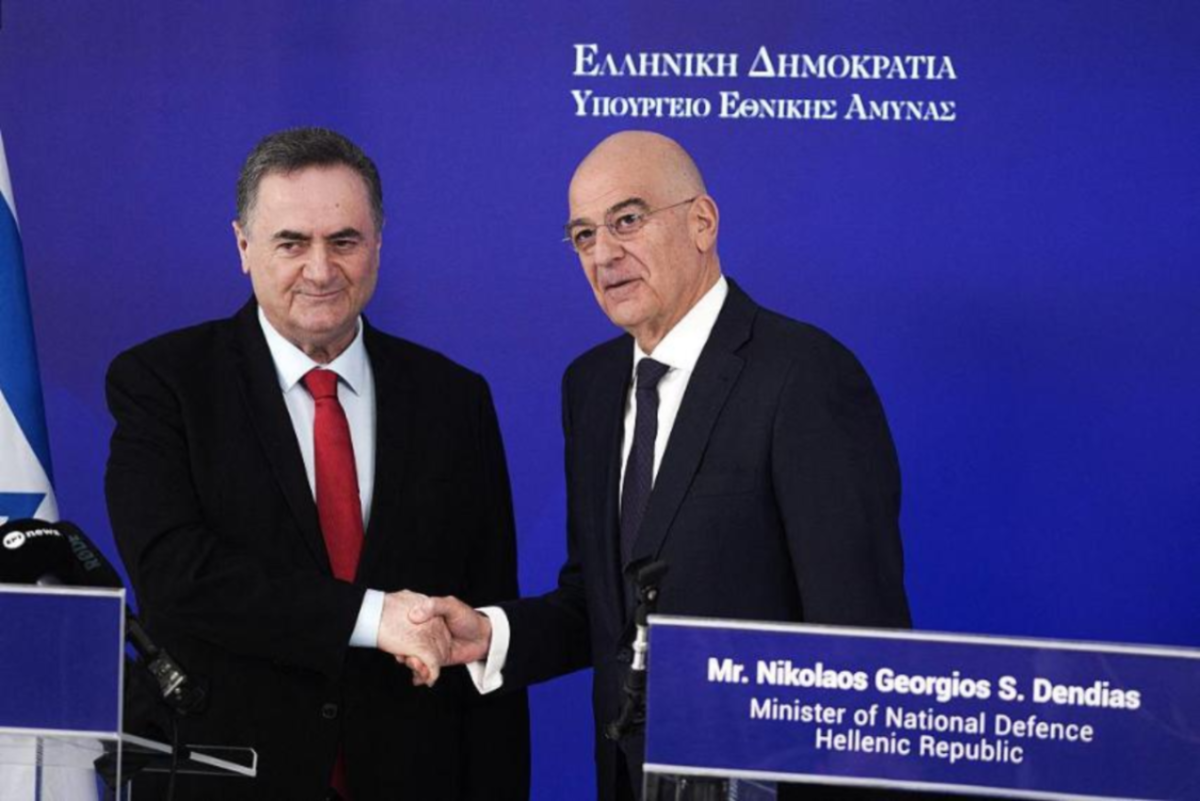
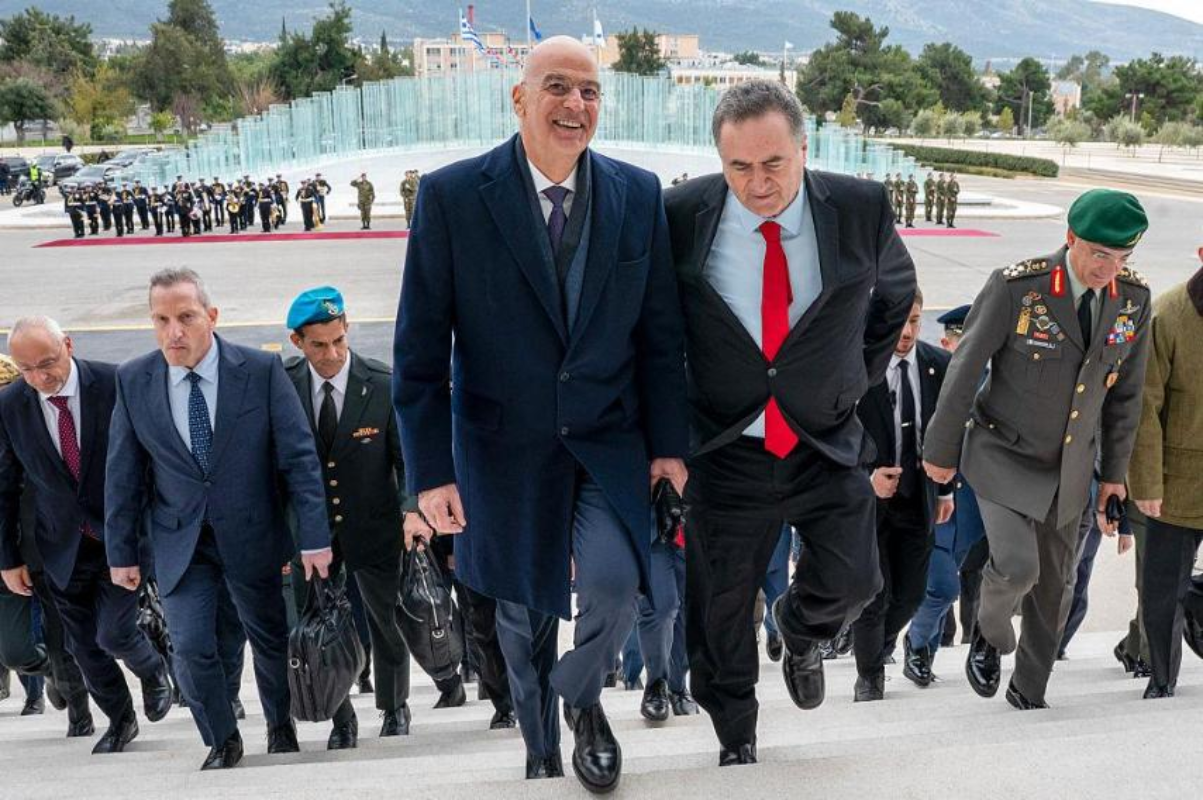
Πηγή Φωτογραφίας: eurokinissi//Achilles Shield: How Greece’s New Air-Defense Dome Will Work — From Drones to Ballistic Missiles



The agreement with Israel over the Achilles Shield is not simply about Greece acquiring another generation of missiles.
It represents an attempt to build an integrated, multi-layered air and missile defense network capable of responding to fundamentally different threats — from small UAVs and loitering munitions to combat aircraft, cruise missiles and ballistic missiles.
The critical word is “network.”
The new model is not based on a single weapon system waiting for a target to appear.
Radars, sensors, command centers and interceptors must operate as parts of the same defensive organism.
Step One: The “Eyes” of the Shield Detect the Threat
The first line of Achilles Shield is not the interceptor.
It is the sensor network.
Advanced radars and surveillance systems will be expected to generate the broadest possible picture of activity in and around Greek airspace.
The objective is early warning.
The earlier an incoming object is detected, the more time commanders have to identify it, calculate its trajectory and determine whether — and how — it should be intercepted.
That becomes even more important when dealing with ballistic threats, where reaction times can be extremely compressed.
Step Two: The Network Must Decide What It Is Seeing
Detection alone is not enough.
The command-and-control architecture has to answer a series of questions almost immediately.
Is it a drone?
An aircraft?
A cruise missile?
A ballistic missile?
Where is it heading?
Which military installation, critical infrastructure or population center could be threatened?
And which defensive weapon provides the most appropriate response?
This is where the technological heart of Achilles Shield lies: the Command & Control system, which must combine information from different sensors into a common operational picture.
The aim is to shorten what militaries call the sensor-to-shooter chain — the time between detecting a threat and engaging it.
Step Three: Don’t Fire a Million-Euro Missile at a Cheap Drone
This may be one of the most important lessons to emerge from Ukraine and the wars in the Middle East.
Destroying the incoming weapon is not enough.
It must be destroyed in an economically sustainable way.
If an adversary launches a relatively inexpensive drone and the defender repeatedly uses an interceptor costing hundreds of thousands — or even millions — of euros, the defender may win every individual engagement while gradually losing the cost-exchange battle.
That is why Greece needs different defensive layers.
The system should be capable of assigning the least expensive effective response to each incoming threat rather than using the most sophisticated interceptor every time.
The Inner Layer: Drones and Very Short-Range Threats
At the lowest level are small UAVs, loitering munitions and other short-range threats.
Here, the priority is mass and affordability.
Protection does not necessarily have to rely exclusively on missiles.
Counter-UAS technologies, electronic warfare, jamming and other systems can become part of the defensive architecture.
The objective is simple: prevent a cheap offensive weapon from forcing Greece to expend a vastly more expensive interceptor.
SPYDER: The Short- and Medium-Range Layer
The SPYDER family developed by Rafael represents the type of system that can provide short- and medium-range protection within a layered air-defense architecture.
SPYDER is designed to confront a range of airborne threats, including aircraft, helicopters and UAVs.
Its mobility is particularly relevant to Greece.
Greek geography creates a uniquely demanding defense environment: a continental mainland, hundreds of islands, dispersed military installations, ports, energy infrastructure and strategic facilities.
Air defense therefore cannot depend solely on a small number of fixed positions.
Mobile systems make the defensive network harder to predict and potentially more resilient.
David’s Sling: Moving Up the Threat Ladder
At greater ranges and against more sophisticated missile threats comes the category represented by David’s Sling.
At this level, the challenge changes significantly.
The incoming target may no longer be a relatively slow drone or conventional aircraft but a high-speed missile leaving very little time for detection, decision and interception.
David’s Sling occupies an important layer within Israel’s own multi-tiered air and missile defense philosophy.
For Greece, the strategic attraction is the ability to build depth into its defenses rather than depend on a single interception opportunity.
BARAK MX and the Outer Defensive Layer
The BARAK MX family from Israel Aerospace Industries represents another network-centric approach to air and missile defense, using different interceptors against different categories and ranges of threats.
For Greece, that philosophy is particularly important.
The objective is not to create one defensive line.
It is to create successive layers of engagement.
If an incoming threat penetrates or survives the first opportunity for interception, another defensive layer should potentially be able to engage it.
This is the essence of layered defense.
An attacker is not required to defeat one system.
It may have to defeat several systems in succession.
What an Interception Could Look Like
Consider a simplified hypothetical scenario.
A hostile missile is launched toward Greek territory.
A radar detects it.
The information immediately enters the Command & Control network.
The system calculates its speed, trajectory and potential impact point.
The threat is classified.
The most appropriate available interceptor is selected.
An engagement order is issued.
If the first interception fails, another layer of the defensive architecture may have an opportunity to engage the incoming weapon.
Depending on the threat, the entire sequence may unfold within minutes — or even seconds at critical stages.
This is why the real weapon is not merely the interceptor.
It is the speed with which sensors + computers + command systems + interceptors can function as one integrated kill chain.
Why Control of the Command System Matters
There is another reason Athens has placed so much emphasis on sovereign control over the Command & Control architecture and access to critical source code.
The Greek system cannot simply become an Israeli product physically installed on Greek territory.
It must ultimately interact with Greece’s existing radar network, the Hellenic Air Force, the Hellenic Navy and the country’s wider air-defense architecture.
Defense Minister Nikos Dendias has made the principle explicit:
“The Armed Forces do not acquire and will not acquire systems for which we do not possess the source code.”
He has explained the strategic rationale equally clearly:
“For the Armed Forces to operate a system of such capabilities without being able to intervene in its architecture and evolution makes the country hostage even to the friendliest foreign country or ally. This is absolutely impossible.”
In modern warfare, weapons generate enormous amounts of data.
The side that can combine and exploit that information fastest gains a critical advantage.
Marinakis: “It Takes the Country Into a New Era”
The Greek government has deliberately avoided disclosing the full technical configuration before the formal process is completed.
Government spokesman Pavlos Marinakis described Achilles Shield as “certainly one of the country’s flagship defense initiatives in many respects.”
He added:
“Those listening to us understand the importance of the ‘Achilles Shield’. It completes a puzzle that will continue to expand together with strengthening at sea and in the air — in other words, the country’s defense in terms of armaments. It is something that takes our country, at this level and in this discussion, into a new era.”
His final message ahead of the expected announcements was equally important:
“A little patience until Monday.”
That caution matters because the final contractual configuration — including exact systems, quantities and ranges — should only be treated as definitive once officially confirmed.
Why This Is More Than a Greek “Iron Dome”
Achilles Shield is frequently described as a Greek version of Israel’s Iron Dome.
That shorthand does not capture the scale of the Greek concept.
Athens is pursuing a much broader multi-domain and multi-layered defense architecture, potentially linking protection against drones, missiles and aircraft with wider capabilities across land, sea, air, space and cyberspace.
It should therefore be understood as a system of systems, rather than a single missile battery.
That distinction is fundamental.
A modern saturation attack might combine drones, cruise missiles, ballistic weapons and electronic warfare simultaneously.
No single interceptor can efficiently defeat every one of those threats.
A network potentially can.
The Geography of Greece Makes the Challenge Different
Greece also faces a defensive problem very different from Israel’s.
The country has a highly dispersed geography.
Its defense network must potentially protect major cities, military bases, islands, naval installations, airports, energy infrastructure and strategically important maritime areas.
That means the architecture cannot simply be copied from Israel.
It has to be adapted to the Greek operational environment.
This is where integration, mobility, networking and Greek control over the command architecture become especially important.
The technology may have Israeli origins.
The defensive architecture ultimately has to be Greek.
What Changes for Greek Deterrence
The biggest transformation is not that Greece will possess another powerful missile.
It is that Athens is attempting to create multiple defensive layers that communicate with one another.
A drone is not confronted in the same way as a ballistic missile.
A cruise missile is not the same target as a fighter aircraft.
And a mass saturation attack cannot be effectively defeated if every weapon system operates as an isolated island.
Achilles Shield is designed to change precisely that.
It seeks to transform different sensors, interceptors and platforms into one integrated Greek defensive network.
That could also have consequences for the Hellenic Air Force.
A stronger ground-based air-defense network can reduce the degree to which valuable combat aircraft must be dedicated primarily to territorial protection, potentially freeing Rafales, F-16 Vipers and eventually F-35s for broader deterrence and strategic missions.
The New Equation in the Aegean and Eastern Mediterranean
The program is not officially presented as being directed against Turkey, and reducing Achilles Shield to an anti-Turkish weapon would distort its broader purpose.
Its impact on the strategic balance in the Aegean and Eastern Mediterranean, however, is significant.
A successful layered defense architecture increases the complexity and potential cost of any hostile air or missile operation against Greece.
It can strengthen the protection of military bases and critical infrastructure.
It can complicate saturation attacks.
And it can give Greek combat aircraft greater operational freedom.
That is ultimately what deterrence is about.
The best air-defense system is not merely the one that destroys an incoming missile.
It is the one that forces an adversary, before launching that missile, to question whether the attack can succeed at all.
The Real Achilles Shield
The strategic significance of the project can therefore be reduced to one concept:
depth.
First, detect.
Then identify.
Then select the appropriate defensive layer.
Then intercept.
And, where the architecture allows it, maintain another opportunity for engagement if the first fails.
If Achilles Shield ultimately operates as Athens intends, a potential adversary will no longer be calculating whether it can penetrate one Greek defensive line.
It will have to calculate how many successive layers it must defeat before reaching its target.
And that is the fundamental transformation Greece is seeking:
not simply more missiles, but a defensive network designed to make Greek airspace progressively harder, more expensive and more dangerous to penetrate.
Source: pagenews.gr
Διαβάστε όλες τις τελευταίες Ειδήσεις από την Ελλάδα και τον Κόσμο