Vertical Corridor Expands: Greece Opens the Energy Gateway to the Western Balkans
 ΧΡΟΝΟΣ ΑΝΑΓΝΩΣΗΣ 8 '
Πηγή Φωτογραφίας: Vertical Corridor Expands: Greece Opens the Energy Gateway to the Western Balkans



Southeast Europe’s energy map is acquiring a broader corridor — and its southern gateway lies in Greece.
The addition of Serbia and North Macedonia to the Vertical Gas Corridor expands a project that began as a regional energy initiative into a wider network linking Greece’s gas entry points with the Balkans, Central Europe, Moldova and Ukraine.
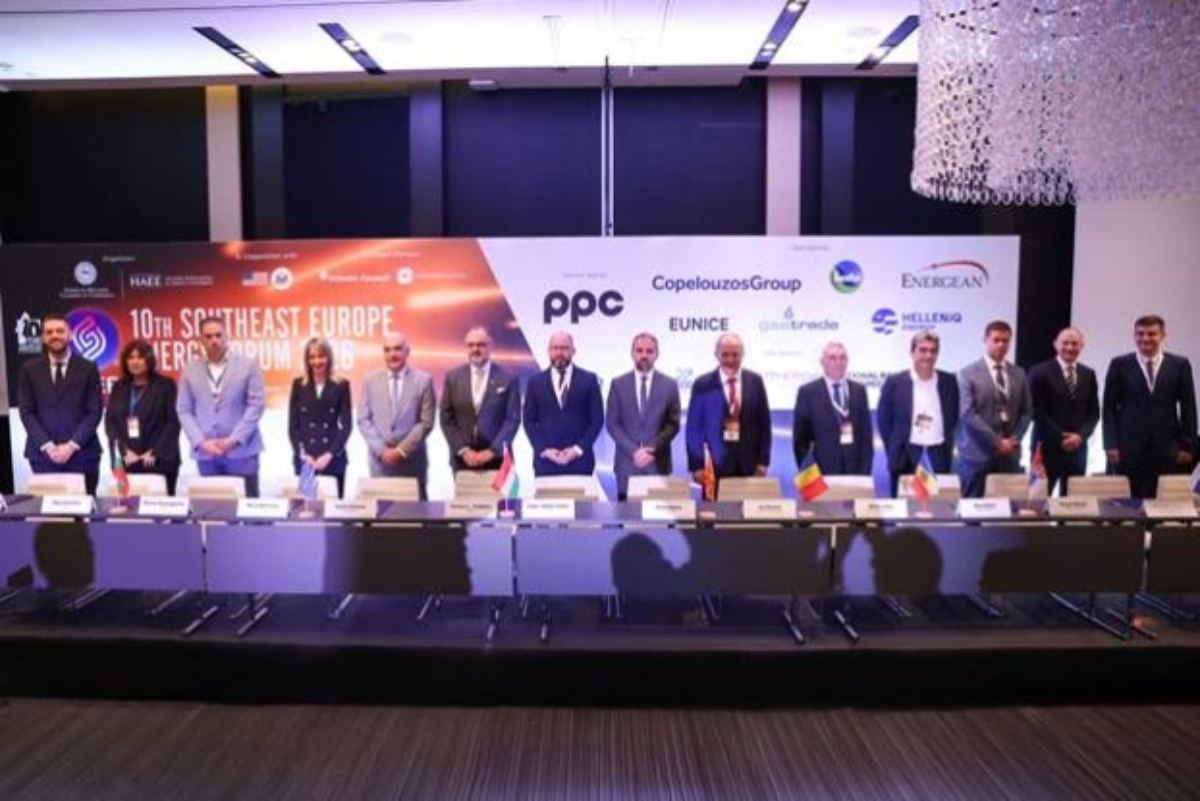
A new Memorandum of Understanding was signed in Thessaloniki during the 10th Southeast Europe Energy Forum, with North Macedonia’s NOMAGAS and Serbia’s Transportgas joining the transmission system operators participating in the initiative.
The Corridor now brings together operators from Greece, Bulgaria, Romania, Hungary, Slovakia, Ukraine, Moldova, North Macedonia and Serbia.
Geography matters.
The wider the Corridor becomes, the greater Greece’s potential role not merely as an energy-consuming market, but as an entry and transit gateway for alternative gas supplies moving north into Europe.
From Alexandroupolis into the Western Balkans
At the centre of this emerging architecture is the ability to bring diversified gas supplies into Southeast Europe from the south and move them toward markets further north.
That gives Alexandroupolis even greater strategic importance.
Ahead of the signing of the new MoU, representatives of the transmission operators participating in the Vertical Corridor initiative — including NOMAGAS and Transportgas Serbia — visited the Alexandroupolis LNG Terminal to examine its capacity and its potential role in supporting alternative regional supply routes.
With Serbia and North Macedonia now entering the framework, the Corridor is effectively expanding westwards into the Western Balkans.
That means a larger potential market for gas entering Europe through Greece.
Greece seeks to become the South’s energy gateway
The economic significance goes well beyond another pipeline project.
Greece is seeking to combine its geography, LNG infrastructure, interconnected transmission networks and new energy investments in order to strengthen its role as a regional transit hub.
Kostis Sifnaios, Vice President and Managing Director of Gastrade, described the extension into Serbia and North Macedonia as an important milestone for expanding alternative energy sources and routes toward the Western Balkans and Central Europe.
“It further strengthens the momentum of the Corridor and Greece’s strategic role as a reliable energy gateway to Southeast and Central Europe,” he said, highlighting the importance of Alexandroupolis.
This is the broader Greek bet: turning geography into an economic asset.
The MoU is about more than adding countries
The real significance of the agreement lies in what comes next.
Participating transmission system operators agreed to deepen coordination over the development and operation of their interconnected networks.
The agenda includes better utilization of existing infrastructure, identification of additional investment requirements, stronger bidirectional-flow capabilities and increased cross-border capacity.
The expansion could therefore trigger another wave of infrastructure investment.
Pipelines, compressor stations, LNG terminals, interconnectors, storage and network upgrades increasingly form part of the same regional energy equation.
The real test: The economics must work
This is also where geopolitics meets the market.
Building a corridor is not enough.
For the project to function at scale, gas moving through it must remain commercially competitive.
That is why discussions at SEEF2026 went beyond infrastructure construction.
Competitive tariffs, higher utilization of existing assets and commercial arrangements capable of supporting stable flows were central to the debate.
The Vertical Corridor therefore faces a two-part test:
the physical route must exist — and there must be a market willing to use it.
Washington sees Greece as a pivotal energy partner
The US presence at the Forum highlighted the geopolitical dimension of the project.
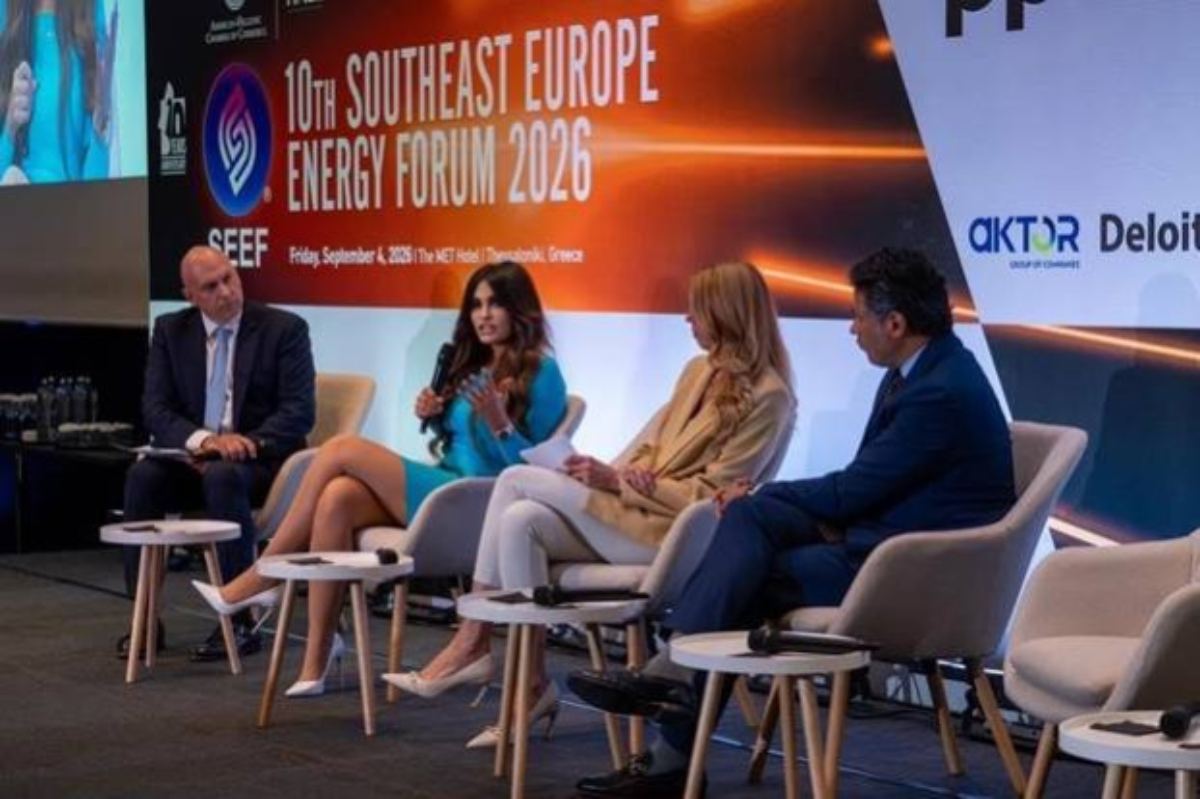
US Ambassador to Greece Kimberly Guilfoyle participated in the signing ceremony for the expansion of the Vertical Corridor, alongside US Special Envoy for Energy Integration Joshua Volz.
Washington’s interest is directly connected to the diversification of Europe’s energy supplies and the creation of additional routes capable of carrying LNG through Greek gateways into Southeast and Central European markets.
Guilfoyle captured the strategic logic in a simple statement:
“Energy security is national security.”
The expansion of the Vertical Corridor now gives that strategy greater geographical depth.

US LNG gains access to a larger potential market
The extension into the Western Balkans also has a clear commercial dimension.
The more markets that can be connected through the Vertical Corridor, the larger the potential customer base for alternative gas volumes entering the region through Greece.
That creates opportunities for LNG suppliers, traders, infrastructure operators and energy companies.
But it also increases pressure to ensure that transmission tariffs and commercial conditions along the route are competitive.
The Corridor cannot simply exist on a map.
It has to make economic sense for the companies buying and transporting the gas.
Serbia and North Macedonia change the project’s reach
The addition of the two countries is particularly significant because it opens a new geographical direction.
Until now, the main axis of the Vertical Corridor ran from Greece through Bulgaria and Romania toward markets further north.
With North Macedonia and Serbia participating, the initiative gains a stronger connection to the Western Balkans.
For North Macedonia in particular, participation forms part of a broader effort to integrate Southeast and Central European gas systems and strengthen a strategic South-to-North energy route.
From Russian gas to diversified supply
Behind the entire project is one of the biggest structural changes triggered by Russia’s invasion of Ukraine: Europe’s effort to reduce its strategic dependence on Russian natural gas.
The Vertical Corridor is one of the mechanisms supporting that diversification.
It does not automatically replace every former Russian supply route, nor does it eliminate the challenge of high energy prices.
What it does provide is optionality.
And in energy markets, more options mean less dependence on a single supplier or a single route.
The next energy battle is in the grids
SEEF2026 also delivered a second message: the energy security of the next decade will not be determined by natural gas alone.
Greek Deputy Minister of Environment and Energy Nikos Tsafos identified faster deployment of storage as a priority in order to absorb more of the rapidly expanding renewable generation capacity.
Energy executives also focused on grids, batteries, electricity interconnections and the protection of critical infrastructure.
The underlying message was consistent:
more generation without more network capacity and storage is not enough.

Industry puts energy costs at the centre
There is another factor that cannot be ignored.
Energy security has limited economic value if energy remains too expensive for industry.
Executives from Titan Cement, MEL Macedonian Paper Mills and Alumil described how high energy costs are affecting production, corporate margins and international competitiveness.
This may be Europe’s most difficult energy equation.
Security of supply, decarbonization and industrial competitiveness now need to be delivered simultaneously.
From energy consumer to regional hub
For Greece, the expansion of the Vertical Corridor is another piece of a much larger strategy.
Alexandroupolis, LNG infrastructure, gas networks, electricity interconnectors, renewables, storage and cross-border energy partnerships are gradually creating a different model.
Greece is seeking to move from being primarily an end-user of imported energy toward becoming a regional energy gateway and transit centre.
And as the Vertical Corridor expands, so does the geo-economic value of Greece’s position on the map.
The inclusion of Serbia and North Macedonia is therefore more than the addition of two names to an MoU.
It expands the potential energy market that can be supplied from Europe’s southern gateways — and takes Greece another step toward turning its geography into strategic energy power.
Source: Pagenews.gr
Διαβάστε όλες τις τελευταίες Ειδήσεις από την Ελλάδα και τον Κόσμο