Trump Blames Republican Election Defeat on His Absence From the Ballot: “We Would Have Won in a Landslide”
 ΧΡΟΝΟΣ ΑΝΑΓΝΩΣΗΣ 10 '
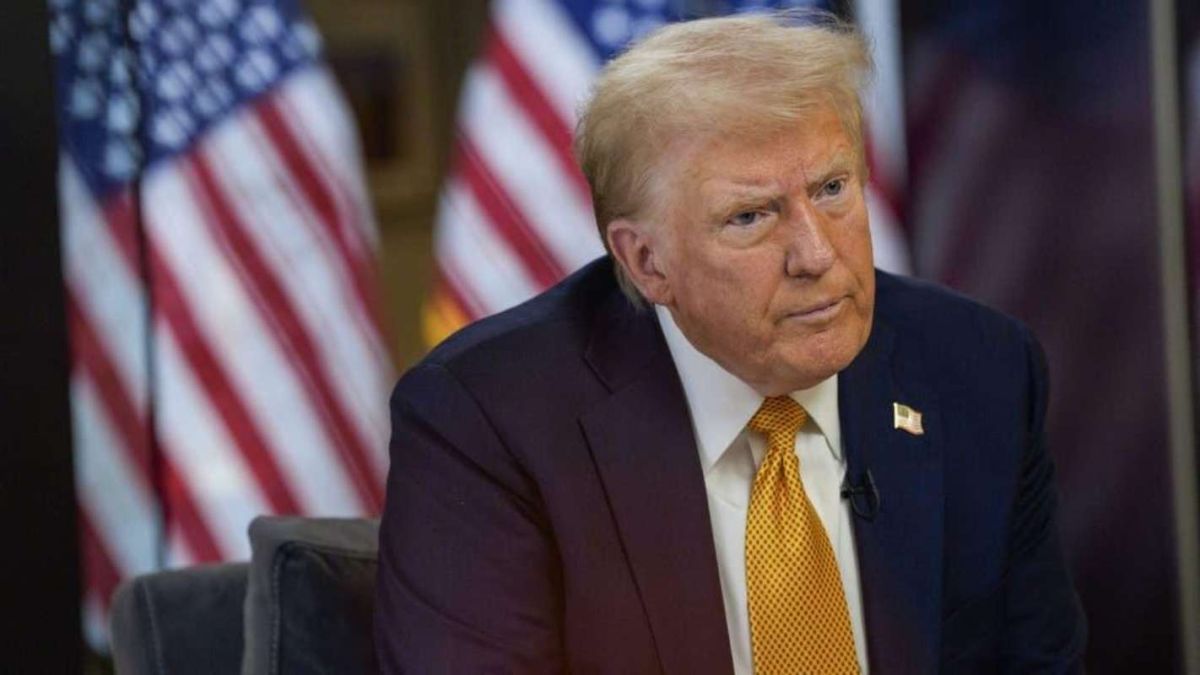
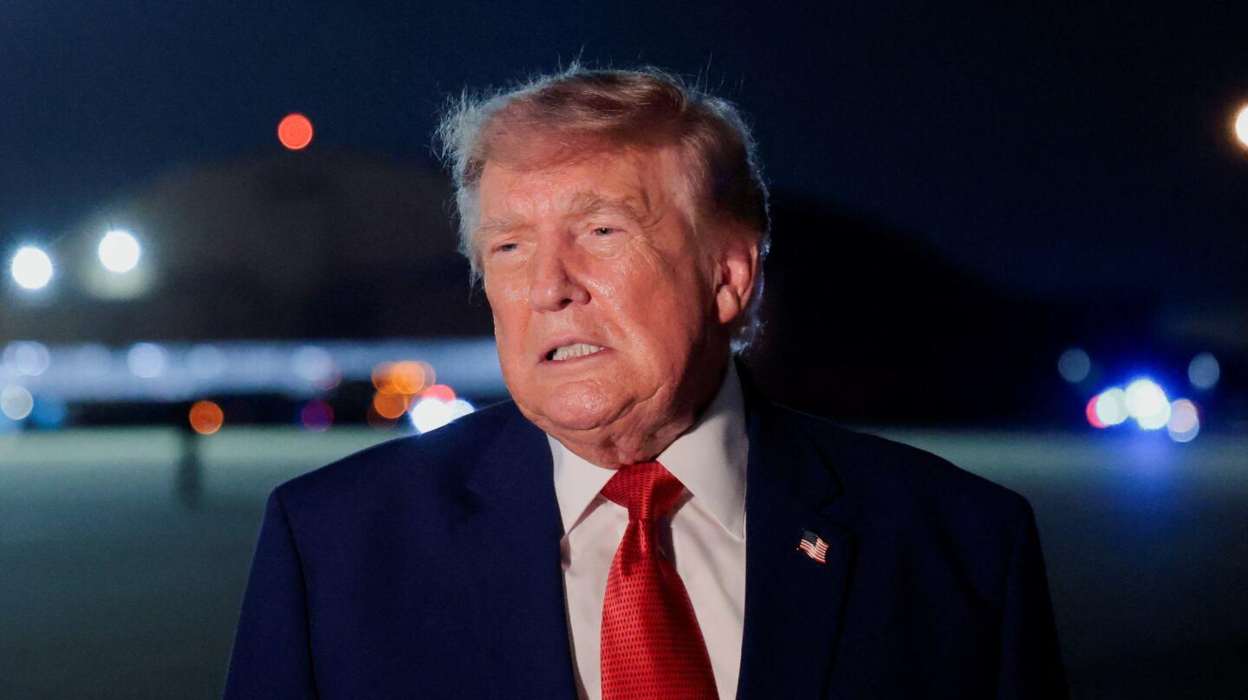
Πηγή Φωτογραφίας: Credit: Saul Loeb / Pool via Reuters//With that declaration, President Donald Trump responded to the Republican Party's losses in the November 3, 2026, midterm elections, seeking to separate his personal political appeal from the electoral setbacks suffered by candidates he supported.



“I wasn’t on the ballot, and if I was, we would have won in a landslide!”
With that declaration, President Donald Trump responded to the Republican Party’s losses in the November 3, 2026, midterm elections, seeking to separate his personal political appeal from the electoral setbacks suffered by candidates he supported.
The president’s reaction came as Democrats secured control of the Senate and the House of Representatives, fundamentally changing the balance of power in Washington for the final two years of his presidency.
According to Axios, Trump’s response combined criticism of the media, a defense of his political influence and an unexpected willingness to work with Democratic leaders.
Yet his message was far from conciliatory throughout. Shortly after expressing openness to cooperation, Trump posted an image of a red cap bearing a single word: “VETO.”
The contrasting signals illustrate the political challenge confronting the White House as Trump prepares to govern with an opposition-controlled Congress.
“I Wasn’t on the Ballot”: Trump Distances Himself From Republican Losses
Trump’s initial response focused on a familiar argument: his personal ability to mobilize voters exceeds that of other Republican candidates.
Writing on Truth Social, the president insisted that Republicans would have achieved a dramatically different outcome had he personally been running.
“I wasn’t on the ballot, and if I was, we would have won in a landslide! Thank you for your attention to this matter.”
The statement came despite Trump’s extensive involvement in the midterm campaign.
He had endorsed Republican candidates across the country, intervened in competitive primaries and urged his supporters to vote as though his own political future depended on the outcome.
Nevertheless, several candidates associated with his political movement suffered significant defeats.
In Texas, Democrat James Talarico defeated Republican Ken Paxton, whom Trump had supported over incumbent Senator John Cornyn during the Republican primary.
In South Carolina, Democrat Annie Andrews secured a victory in a state that had long been considered reliably Republican in Senate elections.
North Carolina also delivered a setback, with former Democratic Governor Roy Cooper defeating Republican Michael Whatley.
In Ohio, Democrat Sherrod Brown reclaimed a Senate seat from Republican control.
Together, the results have intensified scrutiny of Trump’s candidate-selection strategy and raised questions about whether his influence in Republican primaries translates into broader electoral appeal.
The Texas Defeat Exposes Republican Divisions
Texas has become a particularly important case in the debate over Trump’s political influence.
The president intervened in the Republican primary to support state Attorney General Ken Paxton against incumbent Senator John Cornyn, a veteran Republican with extensive congressional experience.
Some party strategists had considered Cornyn a more established general-election candidate.
Paxton’s subsequent defeat by Democrat James Talarico has prompted criticism from Republicans who believe the president’s intervention complicated the party’s electoral prospects.
The result is historically significant because Democrats had not won a US Senate election in Texas since 1988.
However, candidate selection was not the only issue shaping the campaign.
Economic dissatisfaction, political polarization and concerns over the administration’s policies also influenced the broader electoral environment.
The Texas result illustrates a central question facing Republicans: how to balance loyalty to Trump’s political movement with the need to attract voters beyond its core supporters.
Trump Turns His Criticism Toward Fox News
The president also directed criticism at Fox News, arguing without presenting supporting evidence that the network’s election coverage had contributed to Republican losses.
He indicated that he intended to examine the results personally and explain why individual Republican candidates had won or lost.
His reaction came amid growing criticism within the Republican Party over the administration’s electoral strategy.
According to Reuters, voter frustration over high living costs, tariffs and the economic consequences of the war with Iran had weakened the political environment for Republican candidates.
Republican strategist Doug Heye characterized the election outcome as a “Trump Quake,” arguing that the president had focused heavily on issues important to himself rather than voters’ immediate concerns.
The White House offered a different interpretation.
Administration officials argued that Trump had campaigned extensively for Republican candidates despite an already challenging political environment.
The competing explanations highlight an emerging debate within the party over whether the election losses primarily reflected candidate weaknesses, economic dissatisfaction or broader opposition to the administration.
“I Am Absolutely Willing to Accept These Results”
One of Trump’s most consequential statements concerned his willingness to recognize the election outcome.
Speaking to The New York Times, the president said:
“I am absolutely willing to accept these results.”
The declaration carries particular significance given Trump’s refusal to accept his defeat in the 2020 presidential election and his subsequent challenges to its legitimacy.
This time, the president publicly indicated that he was prepared to acknowledge the new congressional balance.
He also expressed an interest in negotiating with Democratic lawmakers.
“We will work with the Democrats, and, you know, we look forward to working with them. We’ll probably be able to work something out,” Trump said.
According to Axios, the president also told Politico that he had contacted Democratic leaders late Tuesday evening and expressed an interest in reaching agreements.
Those remarks suggest that the White House recognizes the need for negotiations as Democrats prepare to exercise greater influence over the legislative agenda.
However, the president’s subsequent social media activity demonstrated that cooperation would not necessarily mean abandoning confrontation.
From Cooperation to “VETO”: Trump’s Two Messages to Washington
Approximately an hour after expressing his willingness to work with Democrats, Trump posted an image of a red cap featuring the word “VETO.”
The message highlighted one of the most important constitutional powers available to a president facing an opposition-controlled Congress.
Under the US constitutional system, the president can reject legislation passed by Congress.
Lawmakers can override a presidential veto, but doing so requires a two-thirds majority in both chambers.
With Democrats controlling the House and Senate, Trump’s veto power could become a central instrument in negotiations over spending, taxation, immigration and other legislative priorities.
At the same time, Democratic control of Congress gives the opposition greater authority over legislative scheduling, committee investigations and oversight of the executive branch.
The resulting political environment could produce both negotiated compromises and institutional confrontations.
Trump’s contrasting messages suggest that the administration intends to preserve both options.
Democrats Reshape the Political Map
The Democratic Party’s gains extended beyond the Senate.
Democrats also secured control of the House of Representatives and recorded significant victories in gubernatorial elections, including contests in Georgia, Texas and Iowa.
The results represent a substantial shift in the political balance that had supported Trump’s legislative agenda.
Control of both congressional chambers gives Democrats opportunities to pursue oversight investigations, scrutinize administration decisions and influence federal spending negotiations.
For the White House, the consequences extend beyond individual legislative proposals.
Presidential nominations requiring Senate confirmation will face a different political environment, while major policy initiatives will depend increasingly on negotiations across party lines.
The administration will also need to respond to economic concerns that emerged as important issues during the campaign.
High consumer prices, trade policy and the financial consequences of the conflict with Iran featured prominently in the political debate.
These issues may become central to negotiations between the White House and congressional Democrats.
The MAGA Movement Faces a Strategic Debate
For more than a decade, Trump’s influence has reshaped the Republican Party.
His endorsements have helped determine primary outcomes, elevated political allies and challenged established Republican figures who disagreed with his priorities.
That influence remains an important feature of the party’s internal politics.
But the 2026 midterm results have renewed debate over the distinction between winning Republican primaries and securing broader support in general elections.
The question is particularly relevant in competitive states where candidates must appeal to independents and moderate voters alongside committed Republican supporters.
Some Republican strategists argue that the party should place greater emphasis on candidates with established local support and wider electoral appeal.
Others maintain that Trump’s political movement remains essential to Republican voter mobilization and that the losses reflected an unfavorable national environment rather than a fundamental weakness in his endorsement strategy.
The debate will shape Republican discussions over candidate recruitment, economic policy and the party’s political direction.
A Different Washington for the Final Two Years of Trump’s Presidency
The midterm elections have created a new institutional reality for the Trump administration.
Democrats now control Congress, while the president retains the executive branch and the constitutional authority to veto legislation.
The arrangement will test whether the two parties can negotiate agreements on major policy issues or become locked in prolonged political confrontation.
Trump has indicated that he is prepared to accept the results and explore cooperation with Democratic leaders.
At the same time, he continues to defend his personal electoral influence and challenge interpretations that place responsibility for Republican defeats on his political decisions.
His immediate post-election response captured both sides of that position.
“I am absolutely willing to accept these results,” he told The New York Times.
And, discussing the prospect of working with the new congressional majority, he added:
“We will work with the Democrats, and, you know, we look forward to working with them.”
Less than an hour later, his social media message offered a reminder of the confrontation that could lie ahead:
“VETO.”
Source: pagenews.gr
Διαβάστε όλες τις τελευταίες Ειδήσεις από την Ελλάδα και τον Κόσμο