Mitsotakis Tells Ministers: “Forget the Election Race”–A Warning to Turkey and a Broadside at the Opposition
 ΧΡΟΝΟΣ ΑΝΑΓΝΩΣΗΣ 10 '
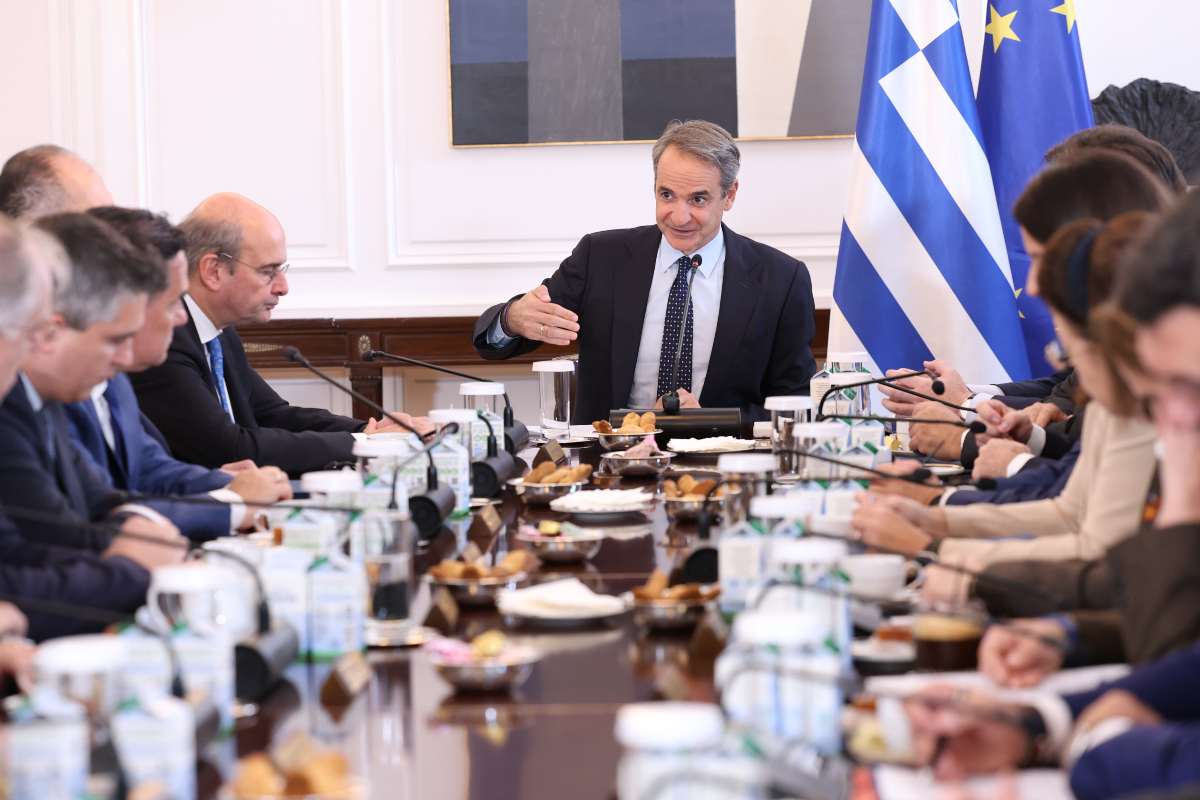
Πηγή Φωτογραφίας: Greek Prime Minister Office--Papamitsos//With that unmistakable warning, Greek Prime Minister Kyriakos Mitsotakis opened a Cabinet meeting that was about considerably more than reviewing the government's legislative agenda.



“The pre-election hunt for preference votes can wait. The priority is delivering government results.”
With that unmistakable warning, Greek Prime Minister Kyriakos Mitsotakis opened a Cabinet meeting that was about considerably more than reviewing the government’s legislative agenda.
His message was directed first at his own ministers: stop thinking about individual electoral campaigns and concentrate on delivering the government’s remaining commitments.
But the prime minister also used the meeting to open several political fronts simultaneously, challenging the opposition over crime and the rule of law, rejecting Turkish and Libyan maritime claims, and acknowledging the growing pressure on Greek households.
At the centre of the meeting was a list of 90 government priorities to be completed before the end of the parliamentary term.
For Mitsotakis, the political calculation is straightforward: the government’s credibility will depend less on promises made during the next election campaign than on what it can demonstrate it has actually delivered.
“Our Record Is Our Passport to Credibility”
Mitsotakis made clear that the government must not enter an early pre-election slowdown.
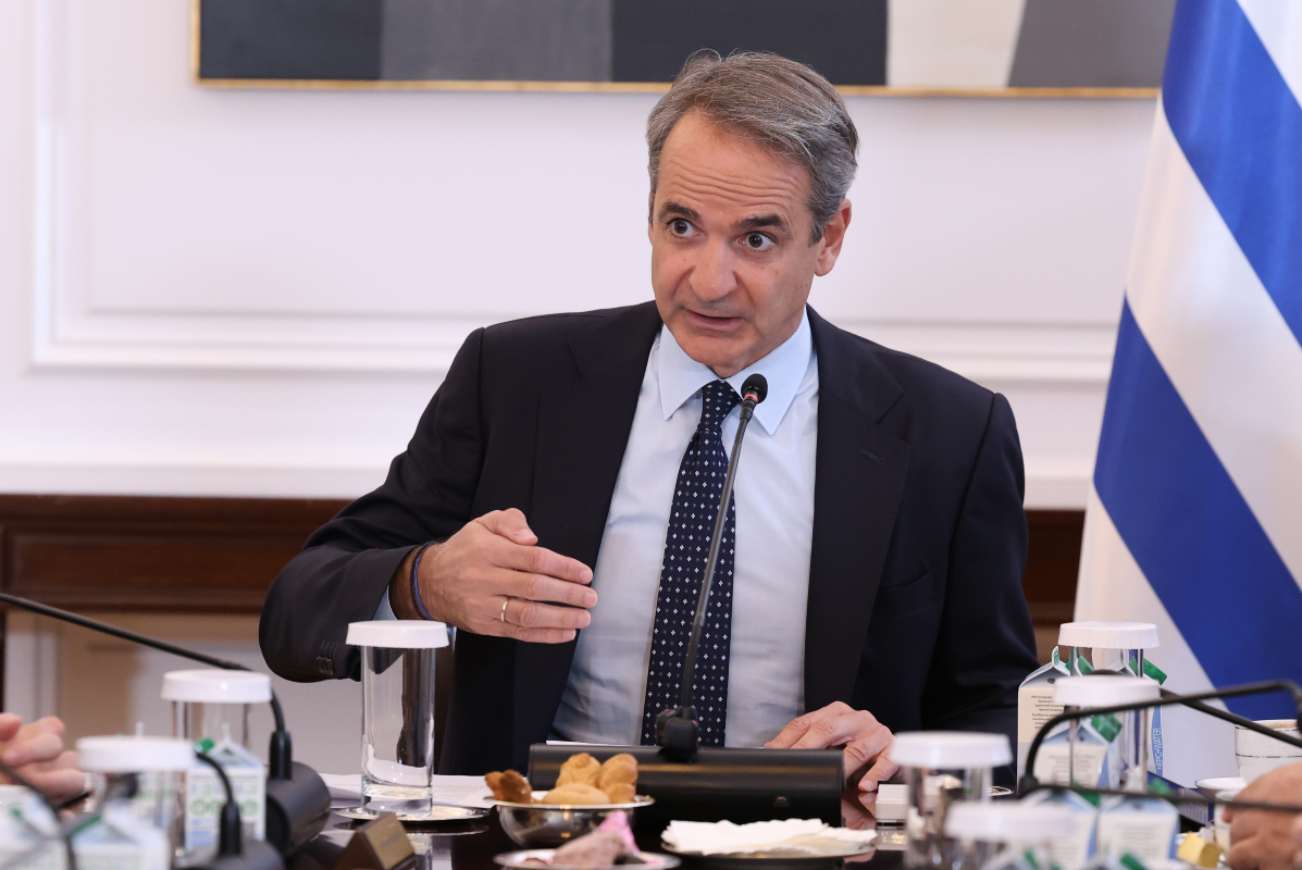
“Our work is our passport to credibility,” he told ministers.
He argued that completing the government’s commitments would provide “the best response to the opposition’s miserable nihilism.”
The warning about preference votes was particularly pointed.
In Greece’s electoral system, individual candidates compete for personal preference votes within their party lists. As elections approach, ministers who are also parliamentary candidates can face competing demands between their government responsibilities and constituency campaigns.
Mitsotakis signalled that he expects government responsibilities to come first.
The list of 90 priorities is intended to turn that instruction into a measurable programme, covering taxation, employment, infrastructure, housing, education, healthcare, defence and public administration.
The immediate political question is whether ministers can deliver those commitments within the remaining parliamentary timetable.
A Sharp Attack Over the 2019 Criminal Code Reforms
The prime minister reserved some of his strongest language for crime, corruption and the record of the previous SYRIZA government.
“Crime has always existed. Now, however, it is being uncovered,” he said.
Mitsotakis pointed to recent investigations involving tax evasion and organised criminal activity, arguing that enforcement agencies are exposing practices that had previously escaped effective scrutiny.
He then turned directly to the opposition.
“Some people kept Parliament open to change the Criminal Codes in 2019,” he declared.
The reference was to criminal justice reforms adopted during the final period of the SYRIZA administration.
Mitsotakis argued that elements of those changes resulted in more favourable criminal treatment for defendants, accusing his political opponents of inconsistency in their present-day denunciations of corruption and lawlessness.
The claim forms part of a longstanding political dispute over the impact of the 2019 reforms. Whether particular provisions benefited specific defendants requires examination of the legislation and individual cases.
Nevertheless, the prime minister’s objective was clear: to place the government’s law-enforcement record at the centre of the political confrontation.
“We Win Many Battles. We Lose Some.”
Mitsotakis praised the work of Greece’s Independent Authority for Public Revenue, the Financial Police and the Directorate for Combating Organised Crime.
He described the campaign against entrenched illegal practices as a confrontation with networks that, in his account, had operated with the tolerance of parts of the so-called deep state.
Yet he stopped short of claiming complete success.
“We win many battles. We lose some,” he acknowledged.
The remark was notable because it recognised that dismantling organised criminal networks requires sustained enforcement rather than isolated police operations.
For the government, the challenge is to demonstrate that investigations lead to prosecutions and lasting institutional change.
For its critics, the central question remains whether authorities are identifying misconduct early enough and whether enforcement is consistent.
Turkey–Libya Agreement: “Arbitrary Claims Cannot Create Facts on the Ground”
Mitsotakis also delivered a firm message to Ankara and Tripoli over the disputed Turkey–Libya maritime agreement.
“Arbitrary claims contrary to the Law of the Sea have no validity. They do not create faits accomplis, nor do they overturn our national plans,” he said.
The prime minister insisted that unilateral maritime claims cannot override Greece’s rights under international law.
Athens rejects the Turkish-Libyan maritime delimitation on the grounds that it disregards the maritime entitlements of Greek islands and affects areas in which third states have legitimate interests.
Mitsotakis argued that Greece’s position had received strong international support.
He also sought to reassure the domestic audience that the latest diplomatic developments would not force Athens to abandon its strategic planning in the Eastern Mediterranean.
“Greece threatens no one, but it accepts threats from no one,” he declared.
The statement came amid renewed domestic criticism of the government’s handling of the Turkey–Libya issue, including questions about whether diplomatic objections alone are sufficient to prevent unilateral actions.
For Athens, the immediate challenge is not simply defending its legal position but preventing disputed claims from becoming a source of further regional confrontation.
A Maritime Ceasefire Proposal at the United Nations
The prime minister linked the Eastern Mediterranean dispute to wider concerns about the security of international shipping.
He referred to his proposal at the United Nations Security Council for a global maritime ceasefire intended to protect critical commercial routes.
The economic stakes are substantial for Greece, one of the world’s leading maritime nations.
Disruption to shipping routes can increase freight costs, affect energy supplies and ultimately contribute to higher consumer prices.
Mitsotakis presented maritime security as an issue connecting international law, regional stability and the cost of living.
“I Know Many Households Are Struggling”
On the economy, the prime minister acknowledged that international instability continues to put pressure on Greek households.
“I know that many of our households are being tested,” he said.
Mitsotakis argued that Greece was better placed than several other European countries to manage the crisis without imposing broad austerity measures or cutting social spending.
He pointed to the government’s fiscal management as the basis for maintaining targeted support while pursuing tax reductions.
He also announced that the principal legislative framework for measures unveiled at the Thessaloniki International Fair would be brought forward within the next two weeks.
Further emergency fuel subsidies, potentially adjusted on a fortnightly basis, were also discussed as part of the government’s response to energy-price pressures.
But Mitsotakis offered an unusually explicit acknowledgment of the limits of government intervention.
“The measures we are taking provide relief, but they certainly do not cure the problem,” he said.
The distinction matters politically.
The government is seeking to demonstrate that it can protect household incomes without promising to eliminate price pressures driven by global developments.
The effectiveness of that approach will ultimately be judged by how much relief reaches consumers and whether real household purchasing power improves.
The 90 Priorities: Wages, Infrastructure and Housing
The government’s agenda includes a series of commitments designed to demonstrate progress before the end of the parliamentary term.
On employment, Mitsotakis reiterated the objective of raising Greece’s minimum wage to €1,000 by early 2028.
The programme also includes expanding the Digital Work Card and introducing additional protections for people working through digital platforms.
Major infrastructure priorities include the Thessaloniki Flyover project and the delivery of another 25 kilometres of the Northern Road Axis of Crete, known as BOAK.
Housing is another central priority.
The government intends to expand the Renovate–Rent programme, advance social housing partnerships and develop residential properties on disused military sites.
These initiatives come as rising rents and limited access to affordable housing continue to affect young workers and families.
Their political significance will depend on how quickly the promised housing supply becomes available.
Education, Healthcare and Public Administration
In education, the government’s plans include preparations for a National School-Leaving Certificate, the renovation of another 500 schools and the delivery of student accommodation facilities at Panteion University and in Tripoli.
Healthcare priorities include preventive medicine and the development of a health adviser system.
Public administration reforms include upgrading the Diavgeia transparency platform, linking urban planning services with the national Cadastre and expanding digital tools in the justice system and construction oversight.
The government also intends to strengthen the 112 emergency warning system, introduce additional road-safety measures and expand offices dealing with domestic violence.
These commitments are intended to demonstrate that the government’s final legislative period will extend beyond fiscal policy and major construction projects.
Defence: New Helicopters and Greek-Made Drones
Defence procurement remains another prominent element of the government’s programme.
Following the arrival of the second Belharra-class frigate, Nearchos, the government plans to receive another seven Romeo helicopters.
It is also pursuing domestic drone production as part of a broader effort to strengthen Greece’s defence-industrial capabilities.
The emphasis on locally developed unmanned systems reflects the increasing importance of drone technology in contemporary military operations.
For Athens, the challenge is to combine procurement from international partners with greater domestic industrial participation.
The Legislative Agenda Behind the Political Message
The Cabinet meeting also examined legislation concerning artificial intelligence in the workplace, protections for digital-platform workers, changes to the Judicial Police and alignment with the revised World Anti-Doping Code.
The breadth of the agenda reinforces the central message Mitsotakis wanted ministers to take away from the meeting.
The government is approaching the final stage of its parliamentary term, but the prime minister does not want the machinery of government to be overtaken by individual electoral ambitions.
He made the choice explicit in his opening remarks:
“The pre-election hunt for preference votes can wait. The priority is delivering government results.”
Source: pagenews.gr
Διαβάστε όλες τις τελευταίες Ειδήσεις από την Ελλάδα και τον Κόσμο