ExxonMobil: Countdown to Greece’s First Offshore Drilling — Ionian Sea Enters the Energy Spotlight
 ΧΡΟΝΟΣ ΑΝΑΓΝΩΣΗΣ 8 '
Πηγή Φωτογραφίας: AP Photo//ExxonMobil: Countdown to Greece’s First Offshore Drilling — Ionian Sea Enters the Energy Spotlight



Greece’s hydrocarbons strategy is approaching the point where geological models, seismic surveys and political declarations will finally face the ultimate test: the drill bit.
Preparations are advancing for the first exploration well in Greek offshore waters in decades, targeting Block 2 in the northwestern Ionian Sea.
Following a meeting with ExxonMobil Vice President for Global Exploration John Ardill, Greece’s Environment and Energy Minister Stavros Papastavrou said the timetable remained unchanged.
“The target for the first exploration drilling in the first months of 2027, after almost half a century, remains firmly in place,” Papastavrou said.
The development carries significance beyond the energy sector. ExxonMobil’s participation in what is currently Greece’s most mature offshore exploration project gives Athens’ return to hydrocarbon exploration additional investment and geopolitical weight.
Asopos-1: The Well That Will Provide the Real Answer
The key target lies in Block 2, northwest of Corfu and close to the Greek-Italian maritime boundary.
ExxonMobil holds a 60% interest, Energean 30% and HELLENiQ ENERGY 10%. Energean remains operator during the exploration phase.
The prospect already has a name:
Asopos-1.
Energean currently points to April 2027 as the drilling target, subject to the timely completion of the necessary permitting procedures.
The Environmental and Social Impact Assessment has already been submitted, while the drilling unit has also been identified.
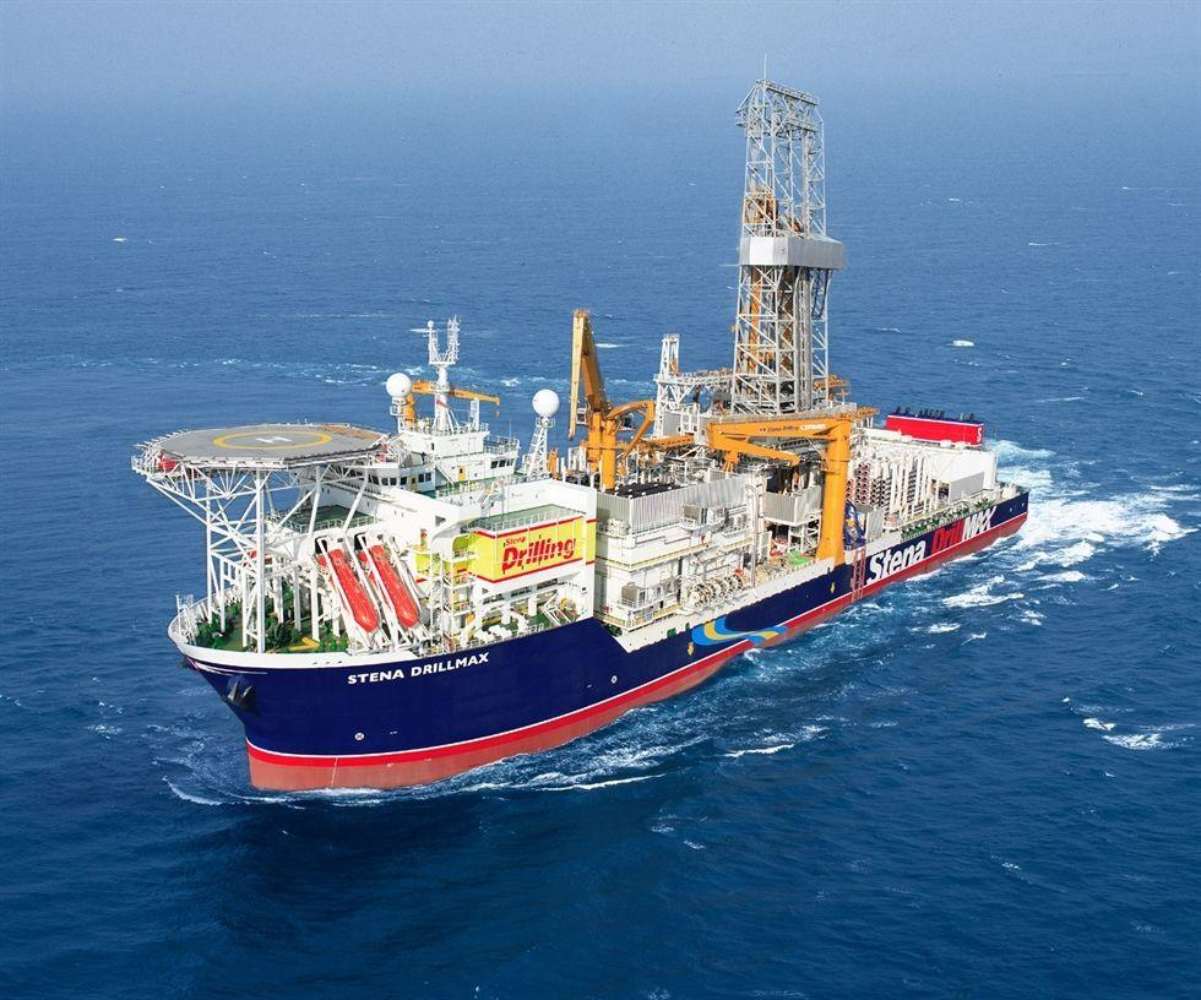
Energean has contracted Stena DrillMAX, an ultra-deepwater drillship operated by Stena Drilling, for the operation.
That marks an important shift in the maturity of the project. Greece is no longer discussing whether an exploration well might eventually be drilled. The technical, environmental and logistical preparations for the operation are already under way.
Greece’s First Offshore Exploration Well Since 1986
If the schedule is maintained, Asopos-1 will be Greece’s first offshore exploration well since 1986.
Prime Minister Kyriakos Mitsotakis also referred to the project during his visit to New York this week, placing the drilling operation in spring 2027 and linking hydrocarbon exploration with the broader expansion of Greek-US energy cooperation.
The coming year could therefore become a milestone for Greece’s energy strategy.
After four decades, the question of whether commercially exploitable offshore gas resources exist beneath Greek waters could begin to receive answers based not merely on seismic interpretation but on actual drilling data.
The Big Number: 270 Billion Cubic Metres
This is where the scale of the prospect becomes apparent.
Energean has estimated the Gas Initially In Place potential of the Asopos prospect at approximately 270 billion cubic metres.
For perspective, annual Greek natural gas consumption is currently only a fraction of that figure.
But there is an essential distinction.
The 270 bcm figure does not represent proven reserves, nor does it mean Greece has discovered a 270 bcm gas field.
It is an estimate of the potential geological resource.
Only drilling can establish whether hydrocarbons are actually present, in what quantities and — most importantly — whether any discovery can be developed commercially.

The Geological Risk Remains High
This distinction matters because exploration drilling is inherently risky.
Energean puts the prospect’s geological probability of success at around 16%.
That means Asopos-1 is a genuine high-risk exploration well rather than a confirmation well targeting an already established discovery.
This is also one reason ExxonMobil’s participation is significant.
One of the world’s largest international energy companies has decided to take a majority position in the project and assume a substantial share of its geological and financial risk.
€60–70 Million Just to Find Out What Lies Below
The exploration well itself is expected to require an investment of approximately €60–70 million.
Asopos-1 is planned to reach a total depth of up to approximately 4,622 metres.
The logistical operation gives another indication of the project’s scale.
The Port of Igoumenitsa is expected to serve as the onshore supply base, while personnel transfers to the drillship are planned by helicopter from Corfu Airport.
The project is therefore far more complex than simply positioning a drilling vessel in the Ionian Sea. It requires a full offshore supply chain, specialist personnel, environmental monitoring, aviation support and international technical expertise.
What Happens if Gas Is Found?
A successful exploration well would not mean production begins immediately.
Further appraisal drilling would be required to determine the size and characteristics of any discovery, followed by engineering studies, additional environmental and regulatory approvals and ultimately a final investment decision.
Under a successful development scenario outlined by Energean, investment could reach approximately €5 billion.
Possible development concepts include offshore infrastructure connected to markets in Greece and Italy.
At that point, the discussion would no longer concern only Greek domestic gas demand.
It would become part of the wider European energy equation.
Why ExxonMobil Is Making Its Move
ExxonMobil entered Block 2 in November 2025, securing a 60% interest in the concession.
In March 2026, the consortium formally moved into the second exploration phase, which includes preparation for and execution of the exploration well.
Block 2 is currently regarded as the most mature Greek offshore concession in terms of drilling readiness.
And ExxonMobil’s interest in Greece extends beyond the Ionian Sea.
Together with HELLENiQ ENERGY, the US major is also involved in exploration acreage west and southwest of Crete, while Chevron’s entry into additional Greek offshore acreage has strengthened the presence of major international energy companies in the country.
ExxonMobil, Chevron and Greece’s Return to the Exploration Map
That may ultimately prove to be the bigger story behind Asopos-1.
The Eastern Mediterranean is attracting renewed attention from global energy companies at a time when European energy security remains closely linked to diversification of supply.
For Greece, therefore, the importance of the first well extends beyond whether this particular prospect succeeds.
Asopos-1 will test whether the country can return to international offshore exploration with regulatory continuity, investment credibility and the ability to execute complex deepwater projects.
Papastavrou: From Announcements to Drilling
For the Greek government, the project is part of a broader strategy to position the country not only as an energy importer but as a regional hub for gas, LNG, electricity and, if exploration is successful, potentially domestic hydrocarbon production.
That gives the Papastavrou-Ardill meeting additional political significance.
The government’s message is that the timetable remains unchanged: the first months of 2027.
The next decisive milestones, however, will not be political announcements.
They will be the completion of permitting procedures and the arrival of Stena DrillMAX in Greek waters.
The Ionian Could Change Greece’s Energy Equation — But First, It Has to Be Drilled
This is where expectations need to remain grounded.
Greece does not yet have a confirmed 270 bcm gas field.
What it has is a potentially significant geological prospect, a consortium comprising ExxonMobil, Energean and HELLENiQ ENERGY, a contracted deepwater drillship and a defined drilling window for 2027.
If Asopos-1 succeeds, an entirely different discussion will begin — one involving billions of euros in investment, potential state revenues, European energy security and Greece’s role in the energy architecture of southeastern Europe.
If it fails, the well will still deliver something that no seismic survey can provide with certainty:
real geological data from beneath the Ionian seabed.
That is why 2027 matters.
After four decades, Greece is preparing to find out what really lies beneath its offshore waters.
Source: pagenews.gr
Διαβάστε όλες τις τελευταίες Ειδήσεις από την Ελλάδα και τον Κόσμο