Mitsotakis at the UN: ‘A Bridge, Not a Troublemaker’ — Greece Draws Its Red Line With Turkey
 ΧΡΟΝΟΣ ΑΝΑΓΝΩΣΗΣ 6 '
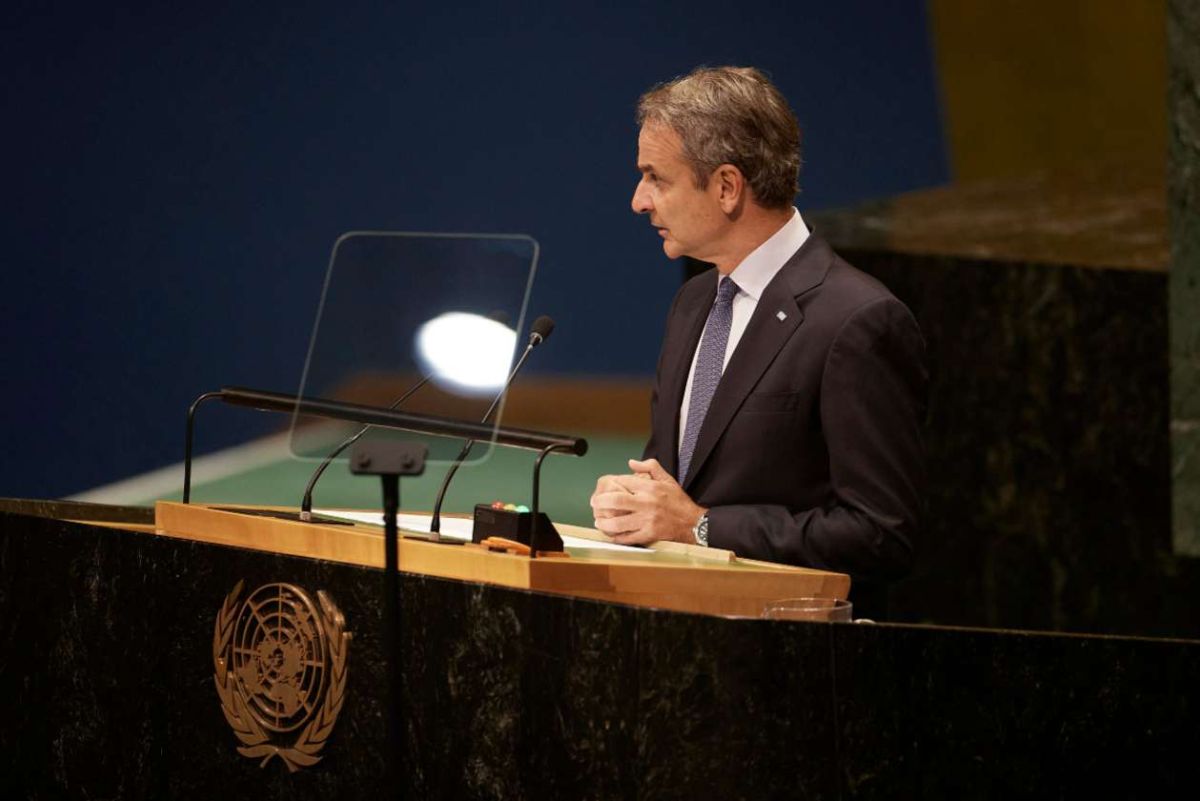
Πηγή Φωτογραφίας: Greek Prime Minister Office--Papamitsos//Mitsotakis at the UN: ‘A Bridge, Not a Troublemaker’ — Greece Draws Its Red Line With Turkey



Greece seeks to act as a “bridge” rather than a source of instability, but dialogue with Turkey comes with clear parameters: international law, good-neighborly relations and the Law of the Sea.
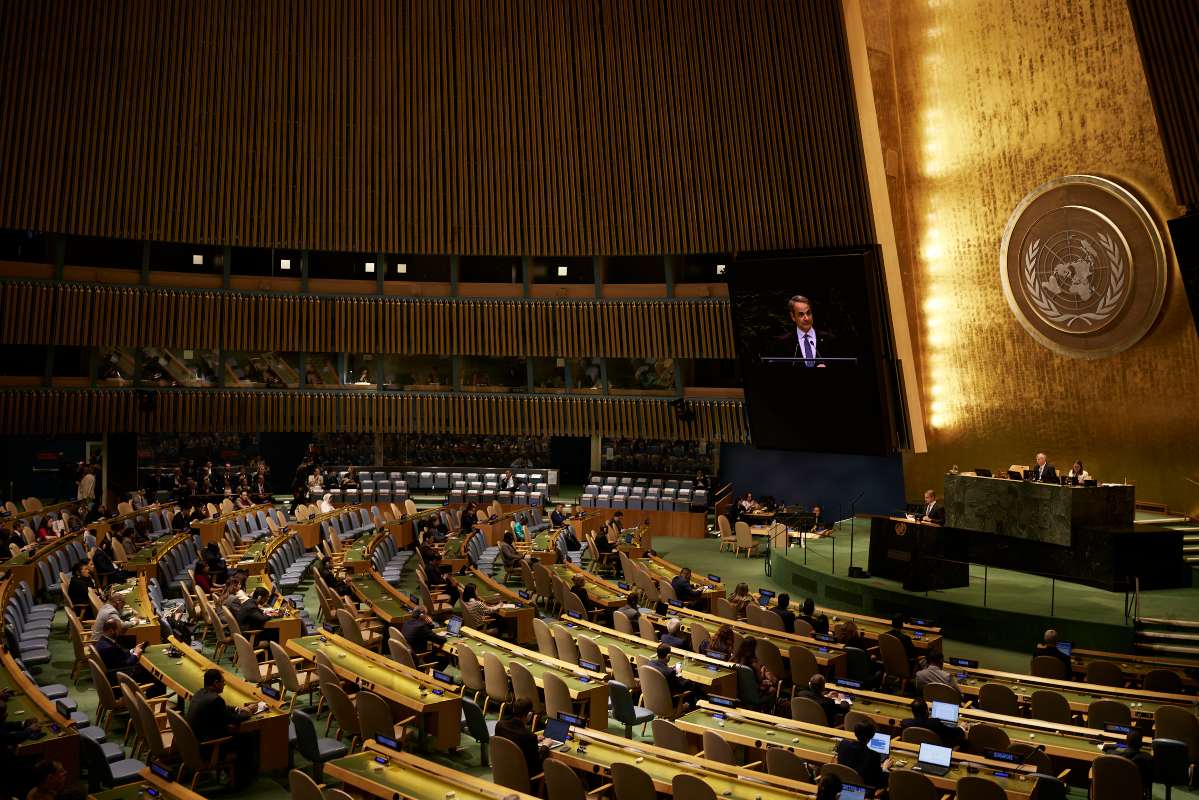
That was one of the central messages delivered by Greek Prime Minister Kyriakos Mitsotakis at the 81st United Nations General Assembly in New York, at a time when Greek-Turkish relations are once again facing difficult strategic questions.
Mitsotakis also sought to position Greece as a stabilizing link between Europe, the Eastern Mediterranean and the Middle East.
The Message to Turkey
Athens is not abandoning dialogue.
At the same time, however, Greece does not accept that keeping channels of communication with Ankara open requires compromising its positions on sovereignty and sovereign rights.
The Greek position remains that the core bilateral dispute capable of judicial settlement concerns the delimitation of the continental shelf and Exclusive Economic Zones.
This is where one of the most important elements of the Greek position emerges: Athens considers the UN Convention on the Law of the Sea, UNCLOS, the legal framework on which a settlement should be based.
The issue carries additional weight because Turkey is not a party to UNCLOS and continues to advance positions in the Aegean that Greece rejects.
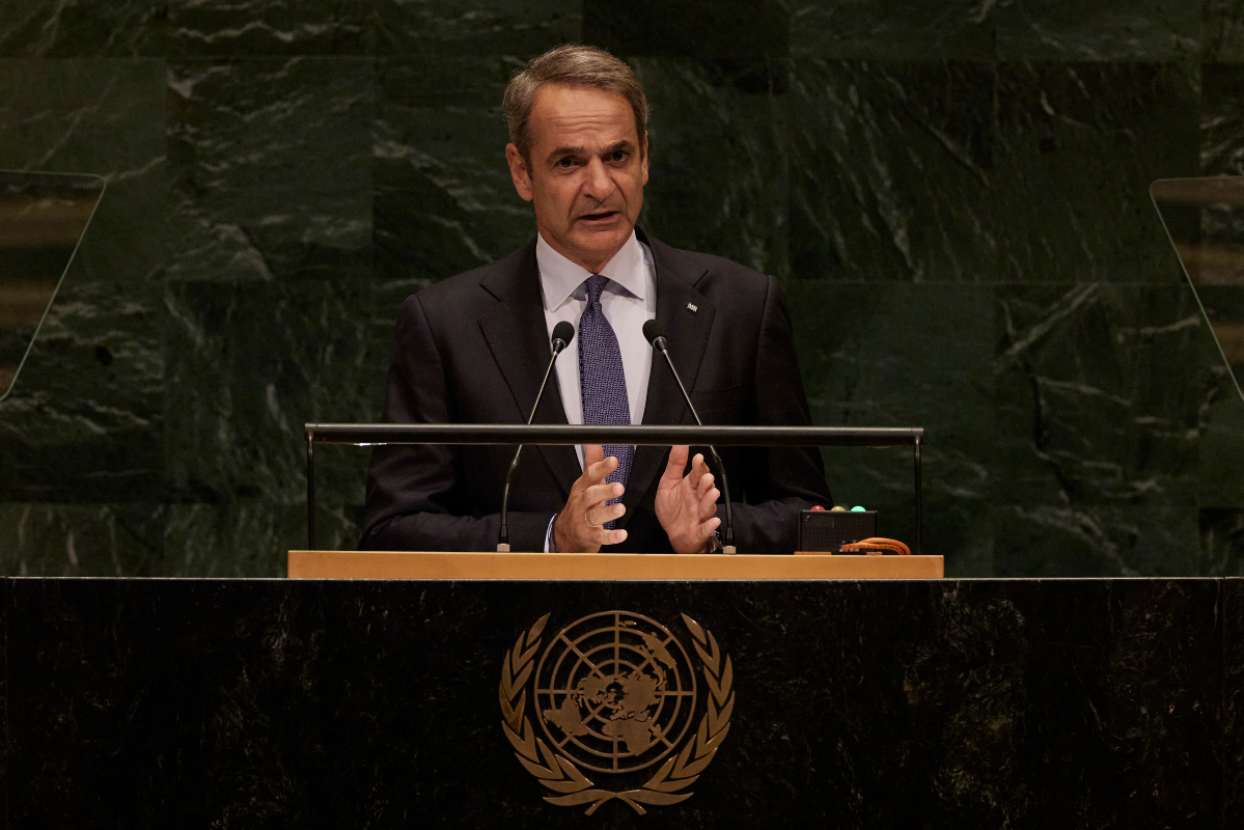
Dialogue and Deterrence
The Greek strategy is increasingly attempting to maintain two tracks simultaneously.
On the one hand, Athens does not want Greek-Turkish relations to return to a permanent cycle of confrontation.
On the other, it does not want de-escalation to be interpreted as acceptance of broader Turkish claims.
The Greek approach can therefore be summarized around three concepts:
dialogue, international law and deterrence.
Athens wants Greece to be seen as a country that does not seek crises but possesses the diplomatic, political and military capabilities required to defend its interests.
Cyprus Returns to the Center
Cyprus was another important element of the prime minister’s UN message.
More than half a century after the events of 1974 and the continuing division of the island, Greece continues to support UN-led efforts aimed at restarting substantive negotiations for reunification within the agreed UN framework.
For Athens, Cyprus also represents a broader test of the international rules-based order.
The Greek argument is that international law cannot be applied selectively depending on geography or on which particular conflict is under discussion.
That message acquires additional significance at a time when wars in Ukraine and the Middle East have returned questions of sovereignty, occupation and territorial integrity to the center of international diplomacy.
No Mitsotakis–Erdogan Meeting in New York
No formal bilateral meeting between Mitsotakis and Turkish President Recep Tayyip Erdogan was scheduled on the sidelines of the General Assembly.
The absence of a meeting does not automatically signal a return to crisis.
It does, however, demonstrate that the momentum behind the Greek-Turkish rapprochement remains fragile.
The next phase of the relationship is likely to depend less on rhetoric about “calm waters” and more on what both countries actually do when confronted with their next significant disagreement.
The Sea Becomes a Central Greek Strategic Asset
There is also a much bigger picture.
Greece no longer views maritime policy exclusively through the prism of the Aegean.
Maritime security is increasingly connected to international trade routes, the Eastern Mediterranean, energy security and wider geopolitical instability.
For one of the world’s leading maritime nations, that matters.
Athens is effectively trying to transform geography from a potential vulnerability into a strategic advantage.
From Defense to Energy
The same strategy increasingly extends into energy.
Greece wants to strengthen its position as an energy gateway toward Europe and the Balkans, while the presence and interest of major US energy companies in Greek waters add another dimension to the Athens-Washington relationship.
This is where geopolitics and economics meet.
The Aegean, the Eastern Mediterranean, LNG, shipping routes and energy infrastructure are no longer separate policy files.
They are increasingly components of the same strategic equation.
Athens Is Trying to Change the Framework
The most important aspect of Greece’s presence in New York may not be one particular phrase addressed to Erdogan.
It is the attempt to change the framework of the discussion itself.
Athens wants disputes in the Aegean to be viewed internationally not simply as another bilateral disagreement between two NATO allies, but within the broader framework of international law, the Law of the Sea and security in the Eastern Mediterranean.
That also raises the stakes for what comes next.
Because the real test will not take place inside the halls of the United Nations.
It will come in the Aegean and Eastern Mediterranean, when Greece and Turkey face their next serious disagreement and must determine whether dialogue can survive without either side abandoning its fundamental positions.
Source: pagenews.gr
Διαβάστε όλες τις τελευταίες Ειδήσεις από την Ελλάδα και τον Κόσμο