Netanyahu at UN: ‘Golan Heights Will Remain Under Israeli Control’ — Blasts Turkey and Qatar
 ΧΡΟΝΟΣ ΑΝΑΓΝΩΣΗΣ 6 '
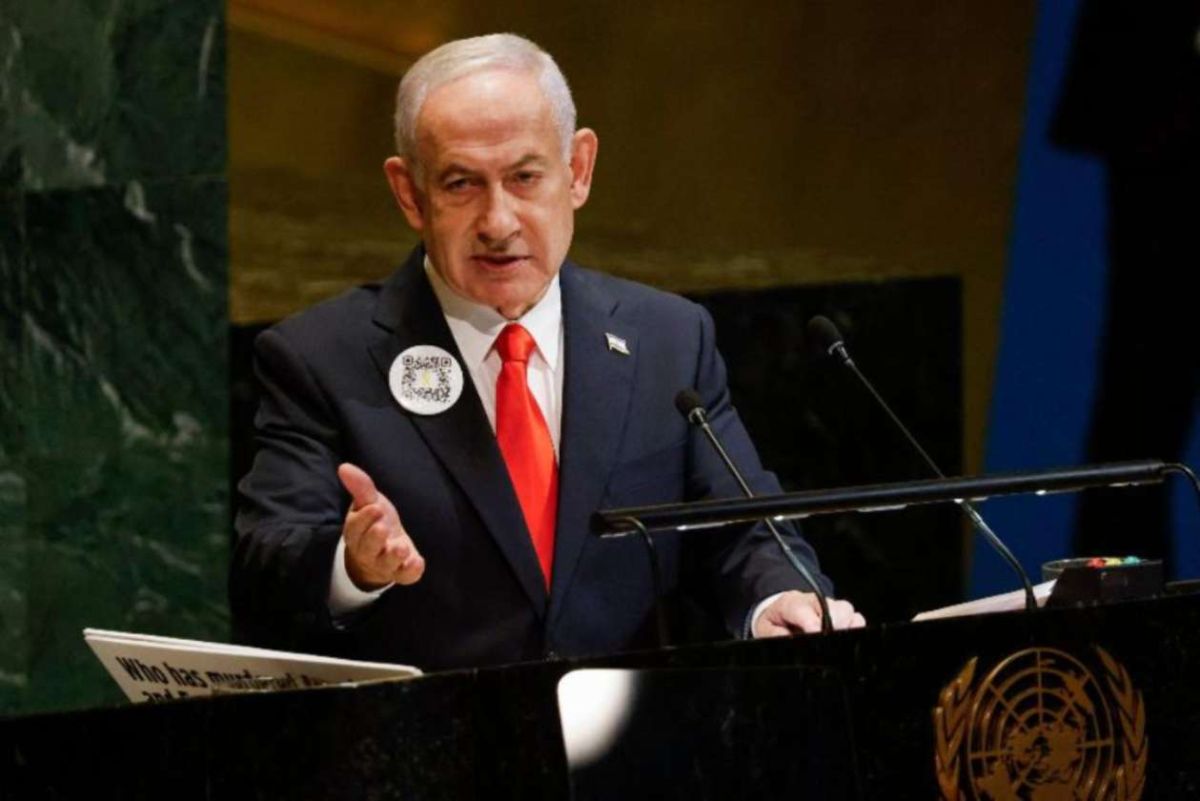
Πηγή Φωτογραφίας: AP Photo//Netanyahu at UN: ‘Golan Heights Will Remain Under Israeli Control’ — Blasts Turkey and Qatar



Israeli Prime Minister Benjamin Netanyahu used his address to the 81st United Nations General Assembly to send messages far beyond New York — to Tehran, Damascus, Ankara and Doha.
Netanyahu defended Israel’s military campaign against Iran, rejected Syrian President Ahmed al-Sharaa’s position on the Golan Heights and accused Turkey and Qatar of spreading false narratives about Israel.
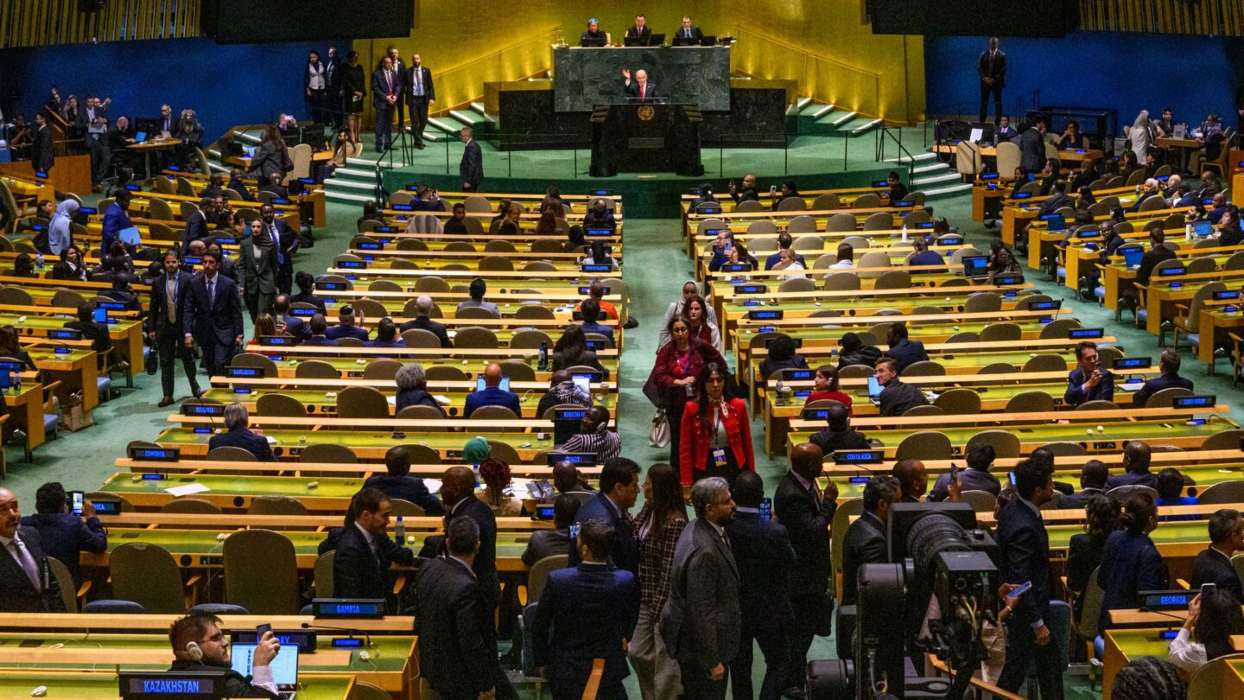
The atmosphere inside the General Assembly hall was itself part of the political story.
Dozens of delegates walked out as Netanyahu prepared to address the gathering, underscoring the deep international divisions surrounding Israel’s regional military campaigns.
Golan Heights: Netanyahu Answers al-Sharaa
One of the most consequential geopolitical parts of Netanyahu’s speech concerned the Golan Heights.
A day earlier, Syrian President Ahmed al-Sharaa had declared from the same UN podium that the Golan Heights would “remain Syrian territory,” while condemning Israeli military operations in Syria.
Netanyahu rejected that position, making clear that Israel has no intention of relinquishing control of the strategically important territory.
The dispute remains highly sensitive under international law.
Israel captured the Golan Heights from Syria during the 1967 Six-Day War and effectively annexed the territory in 1981. The United Nations continues to regard the Golan as occupied Syrian territory.
The Netanyahu–al-Sharaa confrontation therefore goes far beyond an exchange of rhetoric in New York. It brings one of the Middle East’s longest-running territorial disputes back to the center of the region’s rapidly changing geopolitical order.
Iran: Netanyahu Defends the War
Netanyahu devoted a significant part of his address to defending Israel’s confrontation with Iran through the lens of Israeli national security.
The war with Tehran and the wider escalation involving Iran-aligned forces have transformed the regional balance of power and emerged as central issues at this year’s UN General Assembly.
For the Israeli government, the message is that the confrontation with Tehran cannot be viewed as an isolated bilateral conflict.
Israel sees Iran’s military capabilities, its regional network and developments in Syria as interconnected components of the same security challenge.
That helps explain why Netanyahu brought Iran, Syria, Turkey and Qatar into the same geopolitical narrative.
Netanyahu Turns His Fire on Turkey and Qatar
Of particular significance for the Eastern Mediterranean was Netanyahu’s criticism of Turkey.
The Israeli prime minister accused both Ankara and Doha of promoting false claims against Israel.
The remarks came amid a much broader deterioration in Israeli-Turkish relations.
Turkey has developed close ties with Syria’s new leadership, while tensions between Ankara and Jerusalem increasingly extend beyond Gaza to Syria and the wider balance of power across the Eastern Mediterranean and Middle East.
The Syrian arena is particularly sensitive.
Israel is watching closely for any expansion of Turkish political or military influence there, while Ankara views developments in post-war Syria as a central component of its own regional security strategy.
The Golan Heights are therefore becoming entangled in a much larger geopolitical contest.
Delegates Walk Out
The mass walkout became one of the defining images surrounding Netanyahu’s appearance.
Dozens of delegates left the chamber before or as the Israeli prime minister began speaking.
According to Al-Monitor, Bahrain, China and Colombia were among the countries whose representatives remained.
The scene illustrated the intense diplomatic pressure surrounding Israel at the United Nations and the widening gap between Israel’s military strategy and the positions adopted by many UN member states.
Netanyahu, however, used the confrontation to reinforce his argument that Israel would continue pursuing what his government considers necessary for its security regardless of international criticism.
Trump Praised — But No Meeting in New York
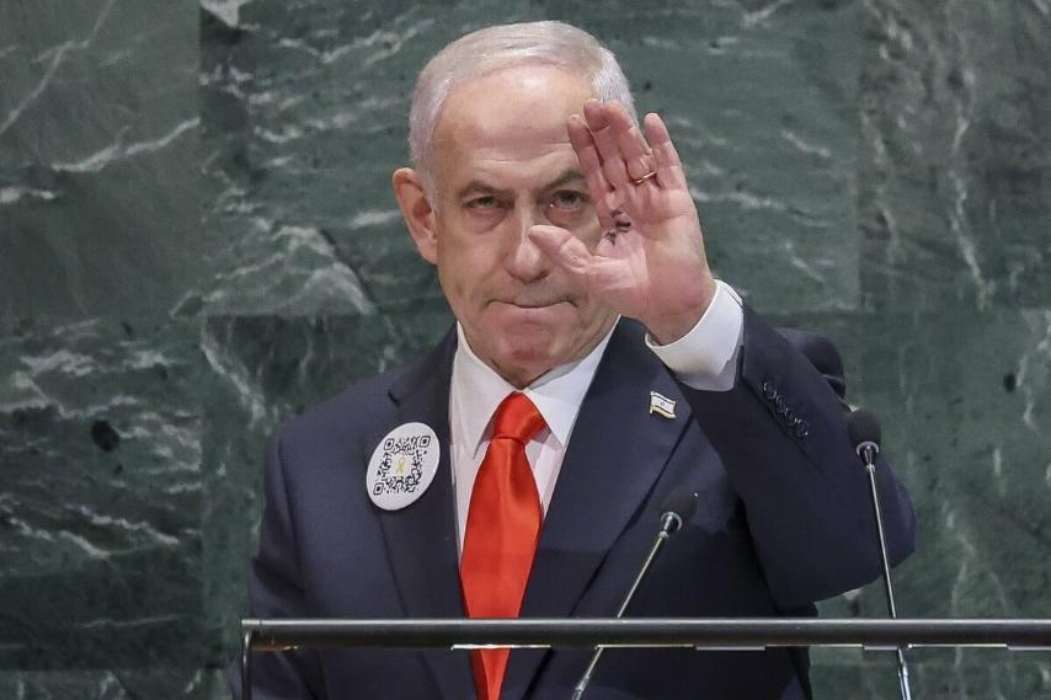
Netanyahu also praised US President Donald Trump during his address, even though the two leaders did not meet during Netanyahu’s trip to New York.
The reference was politically significant.
Washington remains the indispensable external actor in almost every major component of the current Middle Eastern equation — from Iran and Syria to Israel’s security and the future regional architecture.
The US-Israel relationship therefore remains central to Netanyahu’s calculations even as Washington simultaneously manages relations with Turkey, Gulf states and Syria’s emerging leadership.
The Deeper Message Was About Syria and Turkey
Behind the confrontation inside the UN chamber lies a much larger struggle for regional power.
The first front is Iran.
The second is Syria — and, crucially, what kind of state and regional actor emerges from Syria’s political transformation.
The third is Turkey.
Ankara is seeking to turn its relationship with the new leadership in Damascus into strategic influence. Israel, meanwhile, is deeply wary of any significant expansion of Turkish military and political power inside Syria.
That is why the Golan Heights have once again become strategically important.
This is no longer solely an old Israeli-Syrian territorial dispute.
The area sits at the intersection of a much broader competition involving Israel, Turkey, Syria, Iran and the United States — all seeking to shape the Middle East’s emerging balance of power.
Netanyahu’s message from New York was therefore broader than the future of one disputed territory.
Israel appears determined to ensure that the military upheavals of recent years translate into a new security reality on the ground.
The unresolved question is whether that new reality can eventually be transformed into a stable regional order — or whether Syria will become the arena for the next phase of strategic competition between Israel and Turkey.
Source: pagenews.gr
Διαβάστε όλες τις τελευταίες Ειδήσεις από την Ελλάδα και τον Κόσμο