IPTO Pushes Cyprus–Israel Power Link Forward, Strengthening Europe’s Eastern Mediterranean Energy Corridor
 ΧΡΟΝΟΣ ΑΝΑΓΝΩΣΗΣ 9 '
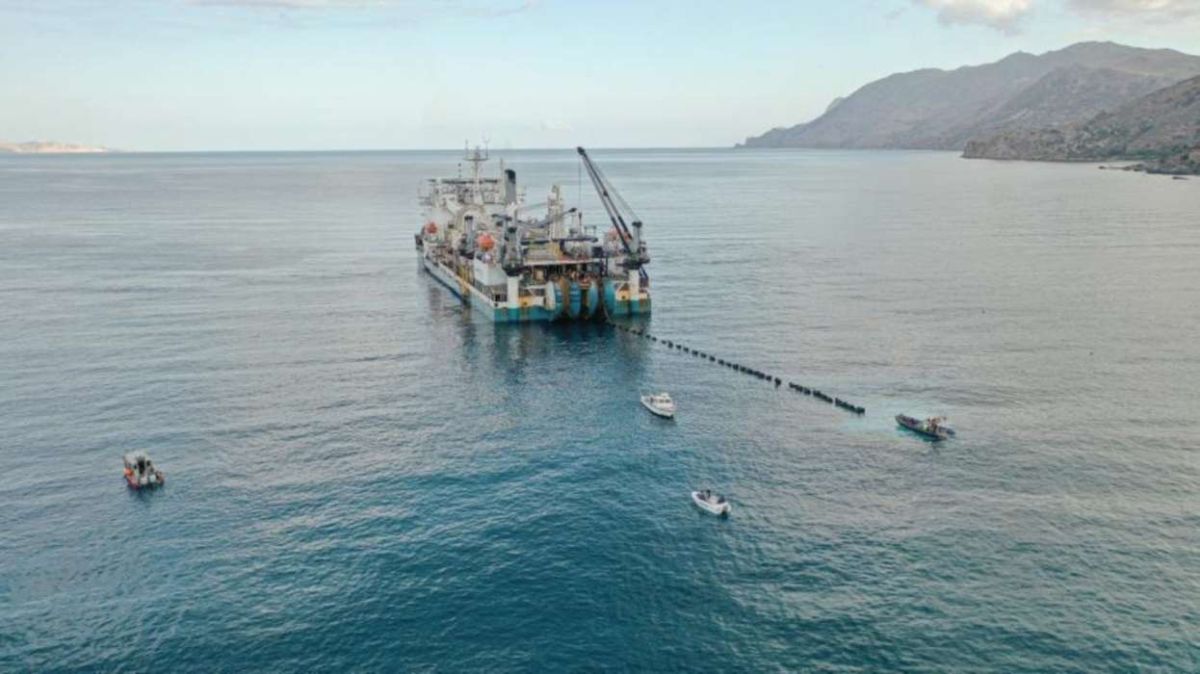
Πηγή Φωτογραφίας: eurokinissi//IPTO Pushes Cyprus–Israel Power Link Forward, Strengthening Europe’s Eastern Mediterranean Energy Corridor



Greece’s Independent Power Transmission Operator (IPTO/ADMIE) is accelerating the next major phase of the Great Sea Interconnector (GSI), submitting the formal investment request for the Cyprus–Israel electricity interconnection to the regulatory authorities of both countries.
The submission, made under the European Union’s TEN-E regulatory framework, represents an essential step towards moving the project from technical and economic preparation into the regulatory, investment and financing phase.
For IPTO, which serves as project promoter, the development further consolidates its role as a key infrastructure player in the Eastern Mediterranean.
For Greece, Cyprus and Israel, however, the implications extend well beyond electricity transmission.
The Great Sea Interconnector has the potential to become a strategic energy bridge between the Eastern Mediterranean and continental Europe.
From an electricity cable to a strategic energy corridor
The project is designed ultimately to interconnect the electricity systems of Greece, Cyprus and Israel, creating a new cross-border electricity corridor across the Eastern Mediterranean.
Cyprus remains the EU member state without an electricity interconnection to the continental European transmission system. IPTO says the project is intended to end that isolation, while the subsequent Cyprus–Israel section would provide Israel with an additional electricity connection and strengthen its security of supply.
That gives the project a strategic dimension rarely associated with conventional transmission infrastructure.
A permanent electricity link between the three countries would facilitate cross-border power flows, support greater penetration of renewable energy and create another layer of energy cooperation between Europe and the Eastern Mediterranean.
Greek Energy Minister Stavros Papastavrou has placed the project firmly within this broader European framework.
“Electricity interconnections are essential for Europe’s energy security, particularly in the Eastern Mediterranean.”
Papastavrou has also stressed Greece’s intention to press ahead with the wider Greece–Cyprus–Israel connection.
His message is significant: Athens is increasingly presenting the GSI not simply as a bilateral infrastructure project, but as part of Europe’s wider energy-security architecture.
Papastavrou went even further last week, describing the Great Sea Interconnector as a “European issue.”
IPTO moves the project into its next regulatory stage
The investment request submitted by IPTO follows the completion of the required Cost-Benefit Analysis (CBA) and the proposal for Cross-Border Cost Allocation (CBCA).
According to IPTO, extensive consultations took place with the relevant authorities and electricity-system operators in Cyprus and Israel, including Cyprus’ Transmission System Operator and Israel’s NOGA.
The studies incorporated updated assumptions concerning electricity demand, renewable-energy penetration, the development of the respective power systems and future infrastructure requirements.
The conclusion announced by IPTO is particularly important for the investment case:
the Cyprus–Israel interconnection was found to be economically viable under all scenarios examined.
According to the operator, the analysis also confirms substantial benefits in three strategically important areas: security of supply, renewable-energy integration and deeper integration of Eastern Mediterranean electricity markets with Europe.
The investment request now opens the way for the regulators in Cyprus and Israel to assess the project and seek a common decision concerning how its costs will be allocated between the two countries and recovered through regulated project revenues.
A technically formidable project
The scale of the Cyprus–Israel section demonstrates the engineering challenge IPTO is undertaking.
The offshore connection is planned to extend for approximately 324 kilometres, with subsea installation depths ranging from around 2,200 to 2,400 metres.
The Great Sea Interconnector is designed as a 1,000 MW bipolar high-voltage direct-current system operating at 500 kV.
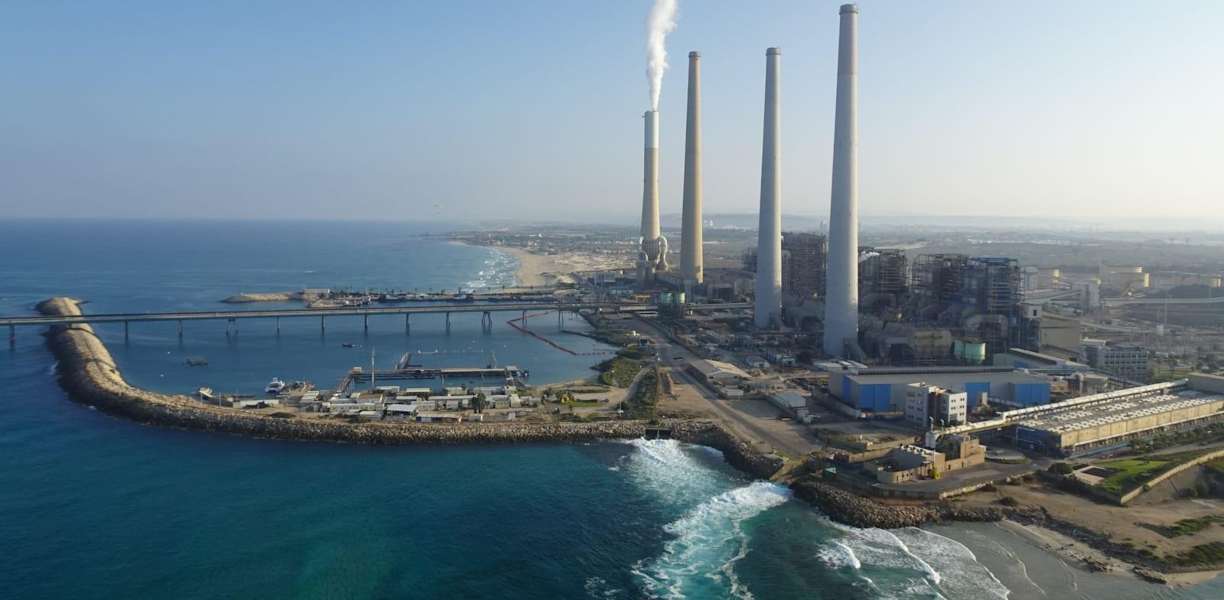
On the Cypriot side, the cable will connect to a converter station planned at Kofinou, while the Israeli converter station is expected to be developed in the Hadera area.
Crucially, the interconnector will allow bidirectional electricity flows.
This means electricity will not simply travel from one country to another in a predetermined direction. Power flows can be reversed depending on system requirements, market conditions and available generation.
That flexibility is particularly valuable as electricity systems incorporate increasing volumes of intermittent renewable generation.
Meridiam changes the investment equation
The regulatory move comes only a week after another major development for the project: the agreement between IPTO and French infrastructure investor Meridiam, signed at the Maximos Mansion in Athens.
Under the agreement announced this month, Meridiam is entering the Great Sea Interconnector company as its majority shareholder, giving the project additional international investment weight.
The agreement was welcomed at the highest political level in Athens.
Greek Prime Minister Kyriakos Mitsotakis described Meridiam’s involvement as a strong signal of confidence and underlined the wider significance of the project:
“We are joining forces on a European project of common interest.”
He added that the interconnector would contribute to ending Cyprus’ energy isolation while strengthening energy security in the Eastern Mediterranean and Europe’s energy resilience.
The arrival of an experienced international infrastructure investor does not eliminate the regulatory, financing or geopolitical challenges facing a project of this magnitude.
It does, however, broaden the project’s capital base, distribute investment risk and strengthen its international financial profile.
IPTO emerging as a regional infrastructure player
This is where the wider strategic significance for IPTO becomes clear.
The Greek transmission operator is no longer acting solely as the manager and developer of Greece’s domestic high-voltage network.
Through major international interconnections, IPTO is increasingly positioning itself as an infrastructure platform linking electricity markets across the wider region.
The Great Sea Interconnector is arguably the clearest expression of that strategy.
By assuming the role of project promoter and coordinating technical, regulatory and financing work across multiple jurisdictions, IPTO is taking responsibility for an infrastructure project whose consequences could last for decades.
And the Cyprus–Israel investment request demonstrates that, despite the considerable challenges surrounding the GSI, the operator continues to push the project through the institutional steps required for implementation.
Israel adds another dimension
The Israeli leg gives the project a geopolitical significance that extends beyond the European Union.
Both Cyprus and Israel are currently electricity islands in terms of international grid connectivity.
Connecting them — and ultimately connecting that system through Greece to continental Europe — would create an entirely new electricity route across the Eastern Mediterranean.
The development comes after contacts between Papastavrou and Israeli Energy Minister Eli Cohen concerning the advancement of the Cyprus–Israel electricity link. IPTO explicitly linked the latest investment request to that diplomatic momentum.
Energy infrastructure of this kind has consequences that reach far beyond daily electricity trading.
Once constructed, cross-border grids create long-term strategic interdependence between the participating states.
The next major milestone: FID
The investment request does not mean that construction of the Cyprus–Israel section begins immediately.
Important regulatory and financial decisions remain.
Following an agreement between the countries and the relevant regulatory process, the project will move toward its Final Investment Decision (FID).
That decision will be the gateway to the financing stage.
IPTO has already signalled that it intends to attract additional investors to the Cyprus–Israel section, following the model used for the Greece–Cyprus leg and the entry of Meridiam.
This could prove crucial.
An infrastructure project of this scale needs more than engineering expertise. It requires regulatory certainty, political alignment, institutional support and access to substantial long-term capital.
IPTO is attempting to bring those elements together.
More than a cable beneath the Mediterranean
The Great Sea Interconnector should therefore not be viewed simply as another subsea electricity cable.
If completed as envisaged, it would establish a new strategic electricity axis linking Israel and Cyprus with Greece and, through Greece, the wider European electricity system.
For Cyprus, it offers a route out of electrical isolation.
For Israel, it provides an additional international electricity connection and greater system flexibility.
For Europe, it can deepen the integration of the Eastern Mediterranean into its energy architecture.
And for Greece, it strengthens the country’s ambition to become an increasingly important energy and electricity hub between Europe and the Eastern Mediterranean.
At the centre of that effort stands IPTO.
The submission of the Cyprus–Israel investment request is not the end of the Great Sea Interconnector’s long and complex journey.
But it is a concrete step forward — and another indication that IPTO intends to turn one of the Eastern Mediterranean’s most ambitious energy projects from geopolitical vision into physical infrastructure.
Διαβάστε όλες τις τελευταίες Ειδήσεις από την Ελλάδα και τον Κόσμο