Exarchou: The Deals Speak for Themselves — The Big Energy Game Began Before Guilfoyle
 ΧΡΟΝΟΣ ΑΝΑΓΝΩΣΗΣ 12 '
Πηγή Φωτογραφίας: AP Photo//Exarchou’s Energy Strategy: The Deals Reshaping the Region—and the Plan Before Guilfoyle



Exarchou’s Energy Strategy: The Deals Reshaping the Region—and the Plan Before Guilfoyle
Alexandros Exarchou’s strongest response to the debate surrounding the Vertical Corridor lies in the development of the project itself: commercial agreements, increased contracted LNG volumes, regional partnerships and publicly documented support from governments and energy companies.
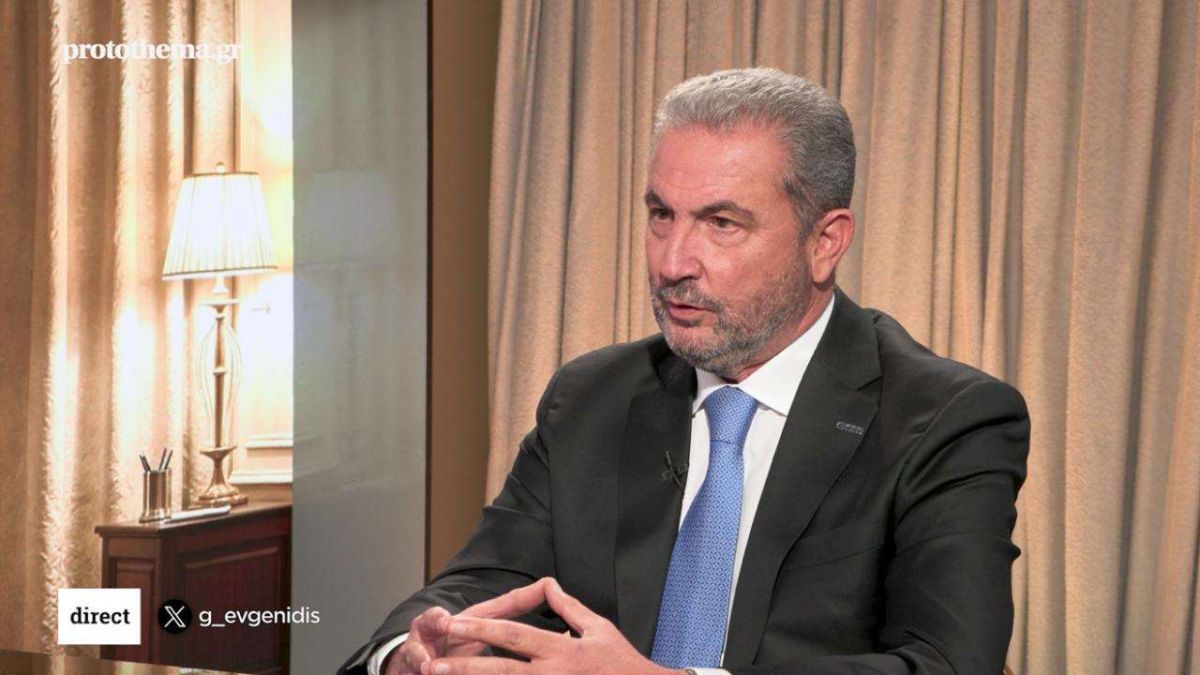
In his interview on “Direct” with Giorgos Evgenidis, the chairman and chief executive of AKTOR Group and chief executive of Atlantic SEE LNG outlined a business strategy connecting Greek corporate expansion with a broader geopolitical objective: establishing Greece as an important gateway for energy supplies to Southeastern and Central Europe.
The commercial substance is clear. The strategy brings together long-term American LNG procurement, regional customers and infrastructure capable of connecting Greek entry points with European markets.
“I followed all the procedures; suspicious relationships do not take place in public,” Exarchou said, responding to questions about his contacts with former U.S. Ambassador to Greece Kimberly Guilfoyle.
His interview also brought the chronology into focus: the development of the energy initiative preceded her arrival in Athens.
September 2025: The Strategic Framework Before the Ambassador’s Arrival
On September 11, 2025, U.S. Interior Secretary and National Energy Dominance Council chairman Doug Burgum met Greek Prime Minister Kyriakos Mitsotakis in Athens.
Their publicly documented discussion already covered the North–South Corridor, Greek infrastructure, LNG transportation and opportunities for Greek companies to participate in strengthening energy security across Eastern and Southeastern Europe.
“The United States sees Greece as a strategic partner,” Burgum said.
He also stated Washington’s broader objective:
“The United States is fully committed to replacing Russian gas with U.S. gas.”
Mitsotakis highlighted Greece’s emerging position as a regional energy hub and discussed the importance of a route connecting Alexandroupolis with Odesa.
The intergovernmental framework for the energy corridor was therefore publicly articulated in September, before Guilfoyle arrived in Greece on November 1, 2025.
In his interview, Exarchou traced the development of his commercial initiative to contacts following Burgum’s visit.
“I met her on the first day she arrived. I had never seen her before,” he said of Guilfoyle.
The preparatory discussions and the subsequent signing were distinct stages. The energy strategy was already taking shape when her diplomatic tenure began.
November’s Agreement—and June’s Expansion
On November 7, 2025, during the Partnership for Transatlantic Energy Cooperation ministerial meeting in Athens, Atlantic–SEE LNG Trade and Venture Global announced a twenty-year LNG sales and purchase agreement.
The initial contract provided for a minimum of 500,000 tonnes annually, starting in 2030, with scope for expansion.
On June 11, 2026, the companies announced that the contracted volume would double to 1 million tonnes annually, maintaining the twenty-year term.
That expansion gives concrete commercial substance to Exarchou’s strategy. Within months, the partnership had secured a larger supply base to support the development of regional sales.
Announcing the expanded agreement, Venture Global chief executive Mike Sabel highlighted the partners’ commitment to energy security, supply diversification and economic growth. He described the Vertical Corridor as “a vital energy hub for the region.”
Securing additional long-term volumes is a measurable business achievement in a market where infrastructure financing and future supply availability depend heavily on contractual commitments.
Washington’s Support Was Formally Recorded
On the same day as the original supply announcement, November 7, 2025, energy ministers from Greece, Bulgaria, Romania, Moldova, Ukraine and the United States issued a joint statement supporting the Vertical Corridor.
Published by the U.S. Department of Energy, the statement identified the route’s importance for supplying Central, Eastern and Southeastern Europe with gas from sources diversified away from Russia.
Washington explicitly expressed its readiness to facilitate American LNG supplies to Greek import terminals.
This institutional backing places the commercial initiative within a broader framework. Suppliers and buyers are developing business relationships that can also help countries across the region diversify their energy sources.
Greek terminals and cross-border pipeline connections provide the physical foundation for that opportunity.
Albania: A Twenty-Year Supply Agreement
On April 28, 2026, AKTOR LNG USA, a wholly owned AKTOR subsidiary, and ALBGAZ, Albania’s state-owned gas company, signed a long-term commercial agreement in Tirana.
The agreement provides for 1 billion cubic metres annually from 2030, over twenty years. AKTOR’s announcement estimated total revenue over the contract’s duration at approximately €6 billion.
The signing ceremony was attended by Albanian Prime Minister Edi Rama, Infrastructure and Energy Minister Enea Karakaçi, and Guilfoyle, then serving as U.S. ambassador to Greece.
Separately, AKTOR ENERGY USA signed a memorandum of understanding covering studies for an integrated energy hub, including a gas-fired power plant of approximately 380 megawatts.
The two arrangements have distinct purposes: a commercial supply agreement and a memorandum preparing the development of additional infrastructure.
Together, they demonstrate the breadth of the group’s regional energy ambitions.
Rama: Energy Defines Security and Economic Strength
The Albanian prime minister’s official address explained the strategic importance attached to the agreements.
“Energy defines our security, our economic strength and our ambition for our place in this region and in Europe,” Rama said.
He described cooperation with the United States as bringing together long-term supply security, critical infrastructure development and private-sector expertise.
Rama also connected the development of the Vlora energy hub with stronger cooperation between Albania and Greece, particularly in energy supply, production and resilience.
The ceremony placed Exarchou’s commercial initiative within a publicly articulated regional development strategy, with the participating businesses assuming specific roles in its implementation.
Asked about the Albanian supply agreement during his interview, Exarchou described it as “fully binding.” He clarified that the condition he discussed concerned the Albanian state guarantee.
Ukraine: Commercial Activity Ahead of 2030
Atlantic SEE LNG’s development also includes transactions with a nearer-term horizon.
On January 30, 2026, the company signed its first agreement to sell American LNG to Ukraine. The announcement provided for delivery in March through the Greece–Bulgaria–Romania–Moldova–Ukraine route.
The transaction demonstrated a commercial pathway for using the corridor ahead of the long-term supply contracts beginning in 2030.
Konstantinos Xifaras, chairman of Atlantic SEE LNG and chief executive of DEPA Commercial, connected the agreement with a new phase for the company and Greece’s position in the European energy market.
Exarchou summarised its significance:
“With this agreement, the Vertical Corridor becomes a reality.”
The development added another dimension to the strategy: alongside securing future supplies, the company was establishing commercial arrangements to utilise existing infrastructure.
Greek Support and the Expansion Into Regional Markets
At the “Greece–US Alliance for Energy Security” event on June 24, 2026, Greek Environment and Energy Minister Stavros Papastavrou presented the Vertical Corridor as a strategic choice for Europe.
He congratulated Atlantic SEE LNG’s management on its persistence in addressing the initiative’s challenges and linked the corridor’s development with Greece’s growing role in the regional energy architecture.
The event also outlined the company’s regional commercial expansion.
Offtake agreements involving Albania and Bosnia and Herzegovina were announced, while cooperation with Bulgaria, Romania and Ukraine also included memorandums intended to develop into definitive long-term arrangements.
The commercial objective is to connect secured supplies with regional demand, building a broader network of customers around the available infrastructure.
For Exarchou, that combination of procurement, sales and logistics is central to turning strategic ambition into a sustainable business.
The Corporate Structure Behind the Agreements
The agreements involve identifiable companies with distinct roles.
Atlantic SEE LNG, owned 60% by AKTOR and 40% by DEPA Commercial, is the counterparty to the long-term agreement with Venture Global and develops its own regional trading partnerships.
AKTOR LNG USA, a separate, wholly owned group subsidiary, signed the April supply agreement with ALBGAZ.
AKTOR ENERGY USA participates in the preparation of the proposed Albanian energy infrastructure.
This structure reflects a broader international expansion strategy, with different corporate entities undertaking specific commercial and development activities.
“Everything Took Place in Public”
Exarchou also addressed his contacts with Guilfoyle and his cooperation with Christos Marafatsos.
“Everything took place in public,” he said, explaining that meetings abroad concerned the Vertical Corridor and that the American side wanted to promote the initiative publicly.
Regarding the Davos trip on his private aircraft, he stated that he had followed the procedures applicable to his side. He distinguished those actions from the ambassador’s own official reporting and approval obligations.
Discussing AKTOR’s presence in the United States, Exarchou referred to disclosed relationships with three specialist advisers in interest representation and business development, aimed at expanding contacts and attracting investment capital.
He clarified that the relationship with Marafatsos was not exclusive and that the energy initiative would have proceeded “with or without him.”
Exarchou described the Wall Street Journal report as “a strike against the Republicans ahead of the elections,” attributing political motives to its coverage and pointing to competition surrounding gas suppliers and export routes.
His response accompanies a commercial record that has specific dates, counterparties, contracted volumes and public statements.
Exarchou: The Competitors, Turkey and the Battle Over the Vertical Corridor
Alexandros Exarchou places the controversy surrounding the agreements within a broader landscape of political and business competition. He described the Wall Street Journal report as “an attack on Republicans ahead of the elections,” arguing that competing business interests helped shape the picture presented.
In his assessment, even the decision to name AKTOR rather than Atlantic SEE LNG served that narrative. He also pointed out that the reports in question did not describe the relationships and activities they discussed as illegal.
*Behind the public controversy lies a critical question: through which country will natural gas reach the European market?*
Asked who would prefer the Vertical Corridor not to advance, Exarchou pointed to Venture Global’s competitors in the United States, as well as suppliers that would favour a different country as the transit route.
He also discussed Turkey in that context. He stressed that Greece, as a European Union member state, is bound by the EU framework, while the same obligations do not apply to Turkey in the same way. His remarks brought the strategic importance of the Greek route—and the competition surrounding it—into focus.
*His response, however, remains centred on the progress of the agreements.* In his assessment, the controversy also prompted the Greek and US governments to reaffirm their determination to move the Vertical Corridor forward. He also made clear that Kimberly Guilfoyle’s departure from the embassy does not affect the progress of the agreements.
The Economic Opportunity for Greece
The significance of the strategy extends beyond one company’s revenue.
Developing energy trade through Greek infrastructure can support additional transit activity, new partnerships and a stronger Greek presence in regional markets.
Exarchou’s approach connects three elements: long-term procurement in the United States, sales agreements with regional buyers and infrastructure partnerships capable of supporting further growth.
Discussions with Motor Oil concerning Dioriga Gas in Corinth form part of that broader development effort.
For Europe, he argues that securing supplies early and coordinating financial responses are essential to limiting the pressure on businesses and households.
“This cannot be addressed with bicycles and switching off the lights,” he warned, criticising an approach centred on limited conservation measures.
The underlying commercial argument concerns preparedness: supply commitments and functioning infrastructure take time to develop, while geopolitical disruptions can change market conditions rapidly.
A Strategy With a Documented Record
From the official discussions of September 2025 to the twenty-year contracts, increased supply volumes and regional partnerships, Exarchou has developed an energy business with a clear geoeconomic dimension.
The next challenge is to expand sales and establish sustained commercial use of the routes connecting Greece with neighbouring markets.
That is where the wider national opportunity lies: translating geography, infrastructure and international partnerships into economic activity and greater strategic relevance.
As Exarchou stated during the June presentation:
“Everyone involved in the Vertical Corridor serves the national interest, and today proves it.”
Source: pagenews.gr
Διαβάστε όλες τις τελευταίες Ειδήσεις από την Ελλάδα και τον Κόσμο