Greek-American Power in Congress: A New Geopolitical Equation for Greece, Cyprus and Turkey
 ΧΡΟΝΟΣ ΑΝΑΓΝΩΣΗΣ 15 '



The Greek-American presence in the United States Congress is entering a new political phase following the November 3, 2026, midterm elections.
As Washington adjusts to a changing congressional balance of power, Greece and Cyprus are closely watching not only which party controls the House of Representatives and the Senate, but also which lawmakers will gain influence over foreign policy, defence cooperation and relations with Turkey.
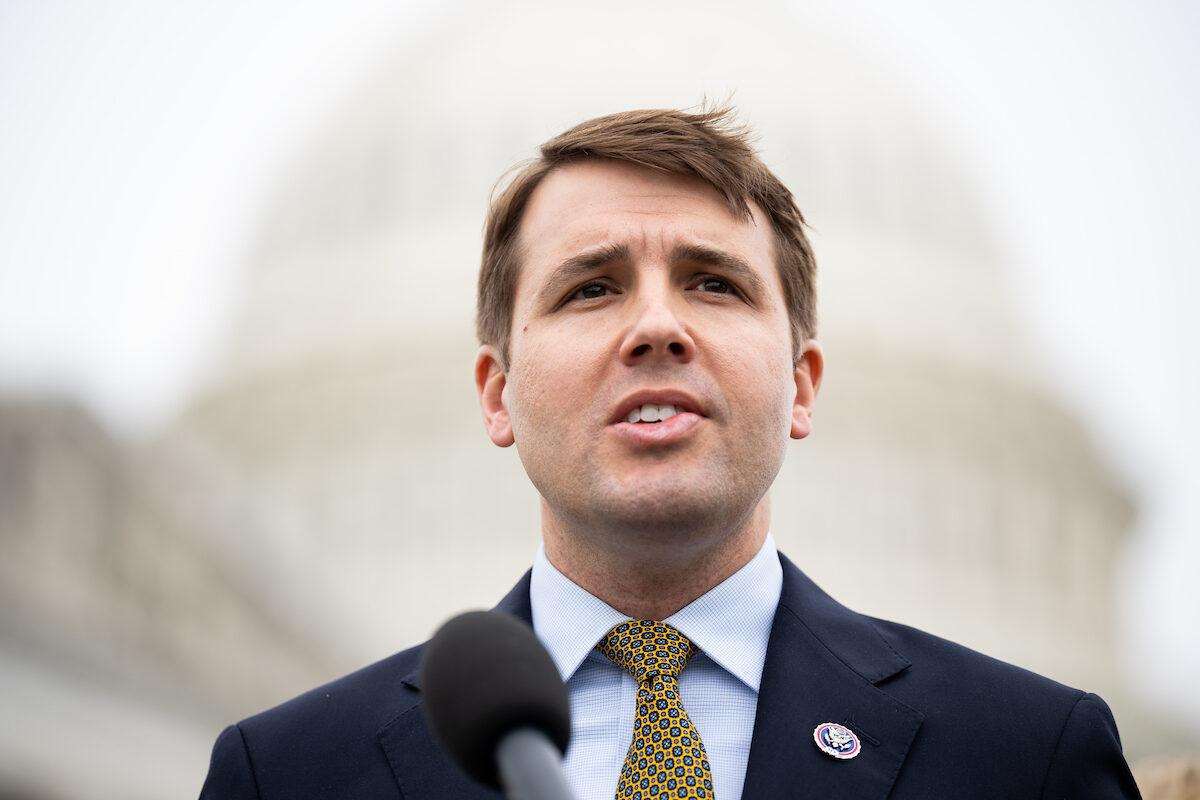
The election of Chris Pappas to the US Senate, alongside the continued presence of Greek-American lawmakers in the House, places the Hellenic-American community at an important intersection of domestic American politics and Eastern Mediterranean geopolitics.
Yet the significance of this representation extends beyond ethnic heritage.
The real question is whether Greek-American lawmakers can translate their congressional positions into effective bipartisan initiatives on regional security, the Cyprus issue, energy cooperation and US–Turkey relations.
Speaking to Euronews, Thanos Davelis, Director of Public Affairs at the Hellenic American Leadership Council (HALC), highlights the opportunities created by the new congressional landscape.
“The change in the balance of power in Congress creates new dynamics in terms of the ability to exercise political influence and pressure on American foreign policy,” he explains.
His assessment reflects a broader reality: while the White House directs much of American diplomacy, Congress retains substantial powers over legislation, federal funding and oversight of the executive branch.
For Greece and Cyprus, those powers could become increasingly relevant during the second half of Donald Trump’s presidential term.

From Greek Heritage to Political Influence on Capitol Hill
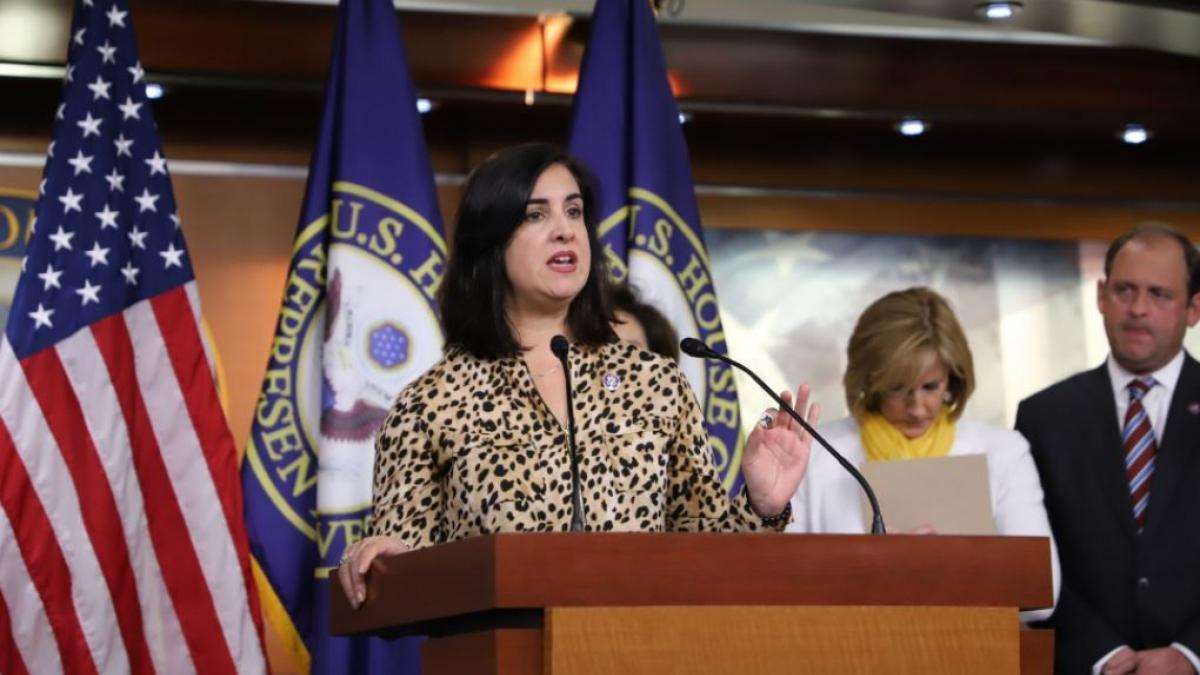
The Greek-American presence in federal politics includes figures such as Gus Bilirakis, Nicole Malliotakis, Maggie Goodlander, Dina Titus and Mike Haridopolos, alongside other lawmakers with established connections to the Hellenic-American community.
The election of Chris Pappas to the Senate represents a particularly significant development.
Having previously served in the House of Representatives, Pappas brings experience in congressional politics and a record of engagement with issues involving Greece, Cyprus and the Eastern Mediterranean.
His move to the Senate gives the Greek-American community a voice in a legislative chamber with substantial responsibilities in foreign affairs, including treaty approval and confirmation of senior diplomatic and national security appointments.
However, representation alone does not guarantee political influence.
Davelis emphasises that a lawmaker’s effectiveness depends heavily on committee assignments, seniority and institutional responsibilities.
“He remains one of one hundred,” he observes, referring to the Senate.
The remark captures an important distinction.
The election of a Greek-American senator carries political and symbolic weight, but meaningful influence requires the ability to build alliances, shape legislation and participate in the committees responsible for foreign policy and national security.
For Athens and Nicosia, the composition of those committees may prove as important as the broader election results.
The Congressional Committees That Could Shape US Policy Towards Turkey
Two institutions are particularly relevant to Eastern Mediterranean diplomacy: the House Foreign Affairs Committee and the Senate Foreign Relations Committee.
Both play significant roles in examining US foreign policy, reviewing international agreements and scrutinising the administration’s diplomatic decisions.
They can hold hearings, request testimony from government officials and introduce legislation affecting relations with foreign governments.
Other congressional committees, including those responsible for armed services and appropriations, can also influence defence cooperation, military assistance and security-related spending.
This institutional structure matters because US policy towards Greece, Cyprus and Turkey is shaped by more than presidential decisions.
Congress can exercise oversight over arms transfers, impose legislative conditions and examine the implementation of sanctions.
It can also provide a platform for lawmakers to raise concerns about territorial disputes, regional security and human rights.
Greek-American lawmakers have historically worked with colleagues from both major parties on issues involving Cyprus and the Eastern Mediterranean.
Maintaining that bipartisan approach will remain important as political divisions in Washington intensify.
Turkey Under Scrutiny: F-16s, F-35s and the Strategic Balance in the Aegean
US–Turkey relations are likely to remain a central issue for lawmakers concerned with Eastern Mediterranean security.
Turkey occupies a strategically important position within NATO, linking the Black Sea, the Caucasus, the Middle East and southeastern Europe.
Its military capabilities and geographic location make it an important partner for Washington.
At the same time, bilateral relations have been complicated by disagreements over defence procurement, sanctions and regional security.
One of the most significant disputes concerns Ankara’s acquisition of Russia’s S-400 air defence system.
That decision led to Turkey’s removal from the F-35 fighter aircraft programme and contributed to a deterioration in defence relations with Washington.
The issue remains relevant to broader discussions about Turkey’s future participation in advanced Western defence programmes.
Meanwhile, the procurement and modernisation of Turkish F-16 fighter aircraft have highlighted the role of Congress in overseeing major defence transactions.
For Greece, these developments are closely connected to the military balance in the Aegean and the wider Eastern Mediterranean.
Athens has consistently emphasised the importance of regional stability, respect for international law and the avoidance of actions that could increase tensions.
The challenge for American lawmakers is to reconcile Turkey’s strategic importance to NATO with congressional concerns over its regional conduct and defence policies.
The Halkbank Case: Turkey, Iran and Congressional Oversight
Another potentially sensitive issue is the long-running legal case involving Turkey’s state-owned Halkbank.
US authorities have accused the bank of participating in a scheme to evade American sanctions against Iran.
Halkbank has contested the allegations, and the case has generated years of legal proceedings and diplomatic controversy.
The matter is particularly significant because it intersects with US sanctions policy, relations with Turkey and Washington’s broader confrontation with Iran.
Davelis believes the new congressional environment could lead to greater scrutiny of the administration’s foreign policy decisions.
“My sources in Washington say that Congress is very likely to conduct investigations into democracy, human rights and the case involving the Turkish bank that had financial dealings with the Iranians,” he says.
His remarks represent an assessment of possible congressional action rather than confirmation that a specific investigation has been formally launched.
Nevertheless, the issues he identifies illustrate the areas in which lawmakers could seek additional information from the administration.
Congressional hearings could examine sanctions enforcement, diplomatic engagement with Ankara and the relationship between strategic cooperation and human rights concerns.
For Greece and Cyprus, such developments would be relevant because they could influence the broader political framework governing US–Turkey relations.
Cyprus: Why Congress Matters Beyond the White House
The Cyprus issue has long been a major focus of Greek-American political advocacy.
Turkey’s military presence in northern Cyprus, efforts to achieve a settlement under United Nations auspices and the development of closer US relations with the Republic of Cyprus have all featured in congressional debates.
A significant legislative milestone was the Eastern Mediterranean Security and Energy Partnership Act of 2019.
The legislation established an important framework for strengthening American cooperation with Greece, Cyprus and Israel.
It also reflected growing recognition in Washington of the Eastern Mediterranean’s strategic importance.
The region’s relevance extends beyond traditional security concerns.
Energy infrastructure, maritime transportation, regional connectivity and cooperation among democratic partners have become increasingly important components of American engagement.
For Cyprus, congressional support can help sustain attention on the island’s security and diplomatic challenges.
However, the presence of sympathetic lawmakers does not automatically produce specific policy outcomes.
Legislation requires political support, coordination between congressional chambers and, in many cases, cooperation with the executive branch.
The effectiveness of Greek-American advocacy therefore depends on building coalitions that extend beyond lawmakers of Greek descent.
The Eastern Mediterranean: Energy, Security and the Greece–Cyprus–Israel Partnership
The geopolitical importance of the Eastern Mediterranean has expanded considerably over the past decade.
The region connects European energy security with developments in the Middle East, North Africa and major maritime trade routes.
Cooperation between Greece, Cyprus and Israel has developed across several areas, including defence, energy and regional security.
The 3+1 cooperation framework, which brings the United States together with Greece, Cyprus and Israel, provides a diplomatic mechanism for discussing shared strategic interests.
Energy infrastructure remains a particularly important component of this cooperation.
Projects involving electricity interconnections, natural gas infrastructure and maritime connectivity have the potential to strengthen regional links.
The proposed electricity interconnection between Greece and Cyprus is one example of infrastructure with broader European and geopolitical implications.
Its development also raises questions involving financing, implementation, regional security and the protection of sovereign rights.
For American policymakers, such projects must be assessed within the wider context of energy diversification and regional stability.
Congressional engagement can help maintain political attention on these initiatives, although it cannot independently resolve their financial or technical challenges.
The Kimberly Guilfoyle Controversy and Diplomatic Accountability
Congressional oversight could also extend to the activities of former US Ambassador to Greece Kimberly Guilfoyle.
Following her departure from the diplomatic post in October 2026, allegations concerning her contacts with political donors and potential conflicts of interest attracted attention in Washington.
The controversy reportedly involved an alleged request for a financial contribution in exchange for access to senior Trump administration officials.
Guilfoyle has disputed the authenticity of messages associated with the allegations.
The accusations have not been established as proven wrongdoing.
Democratic lawmakers have indicated that they intend to pursue questions concerning the matter, including requests for information about diplomatic contacts and possible conflicts of interest.
The case illustrates the broader role of Congress in examining the conduct of administration officials and the relationship between diplomatic activity and private interests.
For Greece, the issue is relevant because the US ambassador plays an important role in bilateral relations, investment discussions and strategic cooperation.
Any congressional inquiry would need to distinguish between allegations, documented evidence and established findings.
Trump Faces a Changed Congress: Could Foreign Policy Become His Main Focus?
The midterm elections have also raised questions about the direction of Donald Trump’s presidency.
Davelis suggests that a more challenging domestic legislative environment could encourage the president to devote greater attention to international affairs.
“I think the most likely scenario is that President Trump, because he no longer has the same ability to legislate and advance a domestic agenda, will turn his attention abroad,” he says.
He identifies two particularly important areas.
“We should closely monitor what he does regarding Iran and Ukraine.”
The assessment reflects the institutional differences between domestic legislation and foreign policy.
A president can exercise considerable authority in diplomacy and national security, but Congress retains the constitutional power to appropriate federal funds and oversee executive actions.
That distinction becomes especially important when military operations, international assistance and long-term security commitments require substantial funding.
Congress cannot dictate every diplomatic decision, but it can influence the resources available to implement presidential policies.
For Greece and Cyprus, the interaction between the White House and Capitol Hill will therefore remain a significant factor in assessing American foreign policy.
Iran and Ukraine: Two Conflicts With Direct Implications for the Mediterranean
The war involving Iran has become a major issue in American domestic politics and international security.
Its consequences extend beyond the immediate military confrontation.
Energy markets, shipping routes, regional alliances and the security of critical infrastructure are all affected by developments in the Middle East.
For Greece, a major maritime nation, the stability of international shipping routes is particularly important.
Disruptions in regional energy supplies or maritime trade can affect transport costs, commercial activity and European energy security.
Cyprus, because of its geographic position in the Eastern Mediterranean, also has a direct interest in regional stability.
Meanwhile, the conflict in Ukraine continues to influence NATO’s strategic priorities, European defence planning and security in the Black Sea.
Turkey plays an important role in both regional environments.
Its position within NATO, its geographic proximity to conflict zones and its relations with regional powers give Ankara substantial diplomatic relevance.
American decisions regarding Iran and Ukraine may therefore have consequences for the strategic environment in which Greece and Cyprus operate.
The Road to 2028: A New Political Contest Begins
The 2026 midterm elections also mark the beginning of a new phase in American presidential politics.
Both major parties will increasingly focus on the 2028 presidential election.
For Democrats, the challenge will be to demonstrate that their congressional agenda responds to voters’ concerns, particularly regarding inflation and the cost of living.
Davelis highlights this issue as a central political test.
“Democrats must prove that they can deliver on what they have promised American voters, especially on affordability,” he says.
Within the Republican Party, discussions about the post-Trump political landscape include prominent figures such as Vice-President JD Vance and Secretary of State Marco Rubio.
No final conclusions can be drawn about future candidacies at this stage.
For Greece and Cyprus, the political transition underscores the importance of maintaining relationships across party lines.
Bilateral cooperation with Washington has developed under administrations of both major American parties.
Preserving that continuity remains a central diplomatic objective.
Athens and Nicosia: Turning Political Access Into Strategic Cooperation
The new congressional landscape creates opportunities for Greece and Cyprus to communicate their positions to American lawmakers.
Those opportunities, however, should not be confused with guaranteed political influence.
The ability of Greek-American representatives to affect policy will depend on their committee assignments, legislative initiatives and capacity to form bipartisan coalitions.
Several issues are likely to remain relevant to congressional engagement: the security balance in the Aegean, US–Turkey defence relations, the Cyprus settlement process, regional energy infrastructure and developments involving Iran.
For Athens, maintaining a strong relationship with Washington requires engagement with both the administration and Congress.
For Nicosia, the legislative branch remains an important forum for discussing regional security and the Republic of Cyprus’s relationship with the United States.
The broader challenge is to translate diplomatic relationships and congressional access into sustained cooperation on specific policies.
As Davelis observes, even a Greek-American senator “remains one of one hundred.”
The significance of that representation will ultimately depend on the committees, partnerships and legislative initiatives that follow.
Source: pagenews.gr
Διαβάστε όλες τις τελευταίες Ειδήσεις από την Ελλάδα και τον Κόσμο