Who Really Picks the UN Chief? Hidden Vetoes, a Gulf Bid and Turkey’s Late Entry
 ΧΡΟΝΟΣ ΑΝΑΓΝΩΣΗΣ 6 '
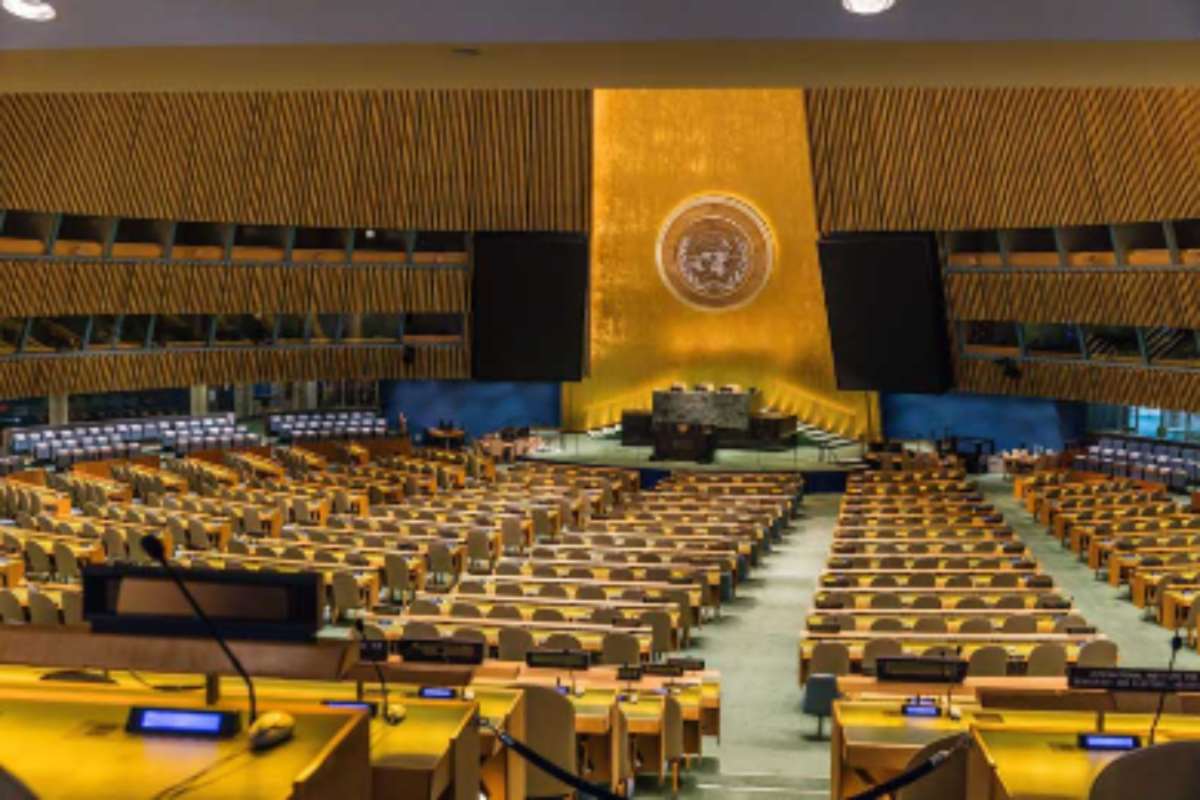



Twelve favourable votes in a council of 15 countries would ordinarily suggest a decisive advantage. In the race to lead the United Nations, however, even overwhelming support can run into opposition from a single major power.
That is the paradox confronting Costa Rica’s Rebeca Grynspan. In the Security Council’s eighth informal ballot, held on November 5, she strengthened her lead with 12 “encourage” votes and three “discourage” votes.
The result makes her the clear front-runner. It does not reveal whether any of those three negative signals came from a country holding veto power.
The central struggle is therefore bigger than the contest for first place: who can turn a broad majority into a deadlock?
With António Guterres’s second term ending on December 31, the succession has become a test of the UN’s unwritten political arrangements. The arrival of the UAE’s Lana Nusseibeh and Turkey’s Feridun Sinirlioğlu has widened the geographical field in a contest Latin America and the Caribbean regarded as their turn.
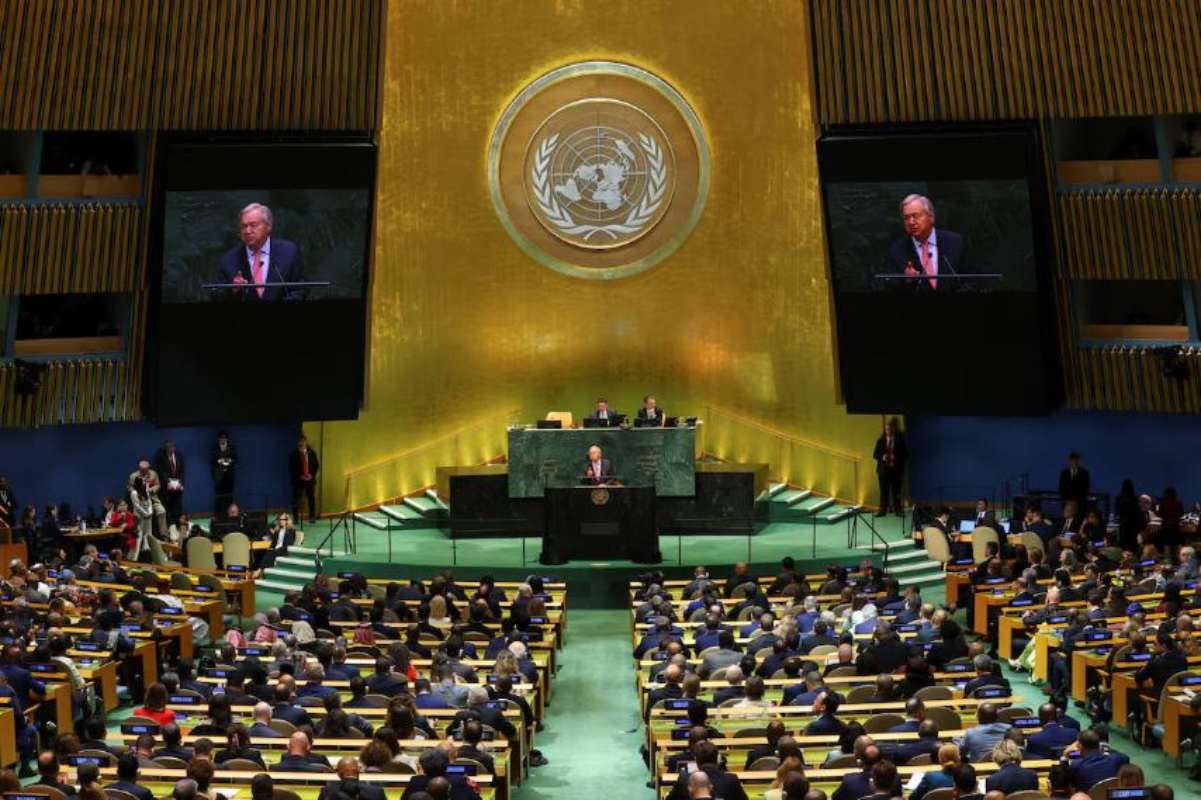
A majority matters. A veto can matter more
Article 97 of the UN Charter provides that the General Assembly appoints the secretary-general following a recommendation from the Security Council.
A formal recommendation requires at least nine affirmative votes and no veto from the five permanent members: the United States, Russia, China, France and the United Kingdom.
Before that decision, informal straw polls test candidates’ viability. Council members indicate “encourage,” “discourage” or “no opinion.” A discouraging vote from a permanent member signals a potential veto; it is not itself the exercise of one.
According to leaked results published by specialist outlets and monitoring organisations, the November 5 standings included:
- Rebeca Grynspan: 12 encourage, three discourage, no “no opinion” votes.
- Rafael Grossi: nine encourage, four discourage, two “no opinion” votes.
- Carolyn Rodrigues Birkett: eight encourage, five discourage, two “no opinion” votes.
- Lana Nusseibeh: seven encourage, six discourage, two “no opinion” votes.
- Feridun Sinirlioğlu: three encourage, eight discourage, four “no opinion” votes.
The Council does not officially publish detailed results. The public picture emerges through leaks, while governments retain secrecy over their individual ballots.
Latin America’s “turn” is not a guaranteed right
Regional rotation is a political convention rather than a legally binding selection rule.
For Latin America and the Caribbean, the argument carries considerable symbolic weight: the region has produced only one secretary-general, Peru’s Javier Pérez de Cuéllar.
Yet the 2016 contest demonstrated the convention’s limits. Despite expectations that the next leader would come from Eastern Europe, Portugal’s António Guterres prevailed.
Supporters of rotation emphasise representation. Critics argue that geography should not restrict the search for the strongest candidate.
But who defines suitability? When the criteria remain open to interpretation, governments possessing veto power have disproportionate influence over the answer.
The UAE’s bid encounters resistance
Lana Nusseibeh’s nomination on October 21 introduced an experienced Gulf diplomat into the contest.
The former UAE permanent representative to the UN could become the organisation’s first female leader and its second Arab secretary-general, after Egypt’s Boutros Boutros-Ghali.
Her candidacy offers a different geographical option should the contest remain deadlocked. So far, however, it has not overturned the balance: her seven encouraging and six discouraging votes were unchanged between the seventh and eighth rounds.
That weakens any assumption that she represents a ready-made compromise. Her candidacy remains active, but requires a substantial expansion of support.
Turkey’s late entry raises a procedural question
Turkey formally nominated Feridun Sinirlioğlu on November 1. An experienced diplomat, former foreign minister and secretary-general of the Organization for Security and Co-operation in Europe, he brings an extensive international record.
His opening result—three encouraging votes, eight discouraging votes and four “no opinion” votes—placed him well behind the leaders.
His participation matters for another reason: he appeared on the Council’s ballot before his public dialogue with the General Assembly, scheduled for November 6.
Security Council Report notes that such dialogues are not mandatory prerequisites for participation in straw polls. Nevertheless, the 1 for 8 Billion campaign has warned that these precedents could weaken accountability and create unequal conditions among candidates.
That exposes a less visible institutional struggle: how meaningful is the wider UN membership’s role if the Council begins assessing a candidate before that person publicly presents a programme?
Even the colour of the ballot carries political weight
The sixth straw poll, on October 16, used differently coloured ballots to distinguish permanent members’ votes from those of elected members.
It revealed that Grynspan, Grossi and Rodrigues Birkett each faced two discouraging votes from permanent members.
The following two polls returned to undifferentiated ballots. Consequently, Grynspan’s improved overall standing does not establish whether opposition among the five major powers has diminished.
The ballot’s colour therefore determines how much candidates and other governments can learn about the underlying deadlock. Returning to differentiated ballots could reveal whether the front-runner is approaching a viable agreement.
Moscow leaves the door open to abandoning rotation
The eighth poll took place in November, despite earlier speculation that the process might slip into December.
Time nevertheless remains short. Each inconclusive round increases pressure for a compromise and reduces the incoming secretary-general’s preparation period.
Russia has already left open the possibility of considering candidates from outside Latin America if none of the region’s contenders secures sufficient support.
Kirill Logvinov, the Russian Foreign Ministry official responsible for international organisations, described Moscow’s original commitment:
“At the early stages of the race we promised to respect this tradition to our Latin American partners.”
Source: pagenews.gr
Διαβάστε όλες τις τελευταίες Ειδήσεις από την Ελλάδα και τον Κόσμο