“Kövesi vs Greece: A Clash Over More Than Prosecutors’ Terms”
 ΧΡΟΝΟΣ ΑΝΑΓΝΩΣΗΣ 6 '

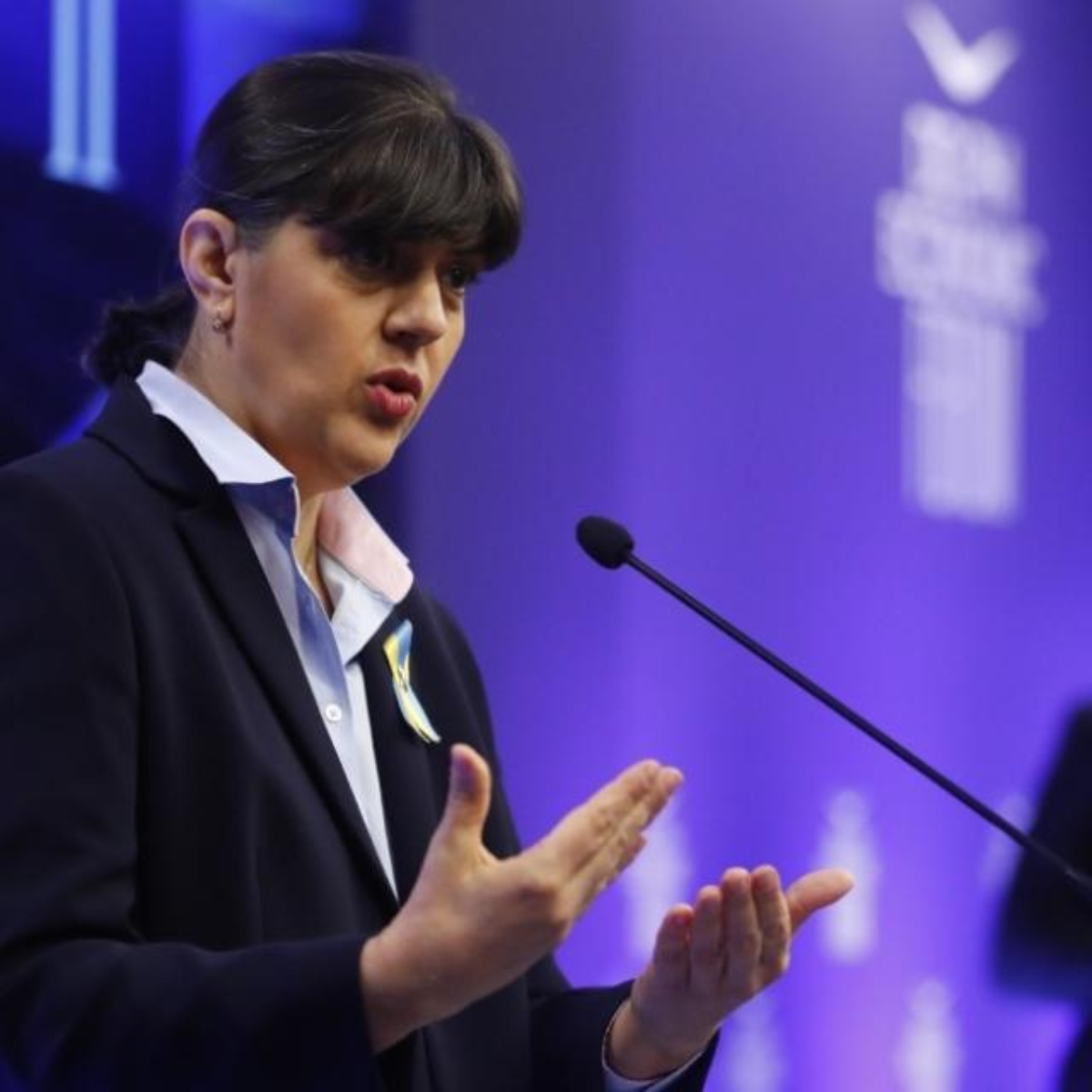
Πηγή Φωτογραφίας: “Kövesi vs Greece: A Clash Over More Than Prosecutors’ Terms”



At first glance, the dispute appears to concern a technical disagreement over the term length of three European Delegated Prosecutors in Greece.
In reality, however, Brussels, Luxembourg, and several European capitals view the case as a major test of the limits of European judicial authority inside EU member states.
Laura Kövesi’s legal challenge is not primarily about individuals.
It is about the institutional model of the European Public Prosecutor’s Office (EPPO).
It is about whether a European body created to investigate fraud against the EU budget can operate independently of national interference—or whether national judicial institutions ultimately retain the final say.
Why Brussels Is Paying Close Attention
The EPPO is not an ordinary European agency.
It is arguably the most federal-style institution the European Union has ever created in the field of criminal justice.
For the first time in EU history, European prosecutors possess direct authority to investigate criminal offenses affecting the Union’s financial interests within member states.
This explains why Kövesi is treating the Greek case as a matter of principle.
If a national judicial body can effectively modify or override a decision already taken by the EPPO College, a precedent is created for every member state.
Tomorrow it could happen in Italy.
Romania.
France.
Or Poland.
And the entire architecture of prosecutorial independence that underpins the EPPO would come under pressure.

Greece at the Center of a European Precedent
Athens now finds itself at the center of a broader European debate.
European institutions are monitoring developments closely—not because the issue concerns only Greece, but because it may become the first major judicial confrontation between:
- A national judicial system
- And the European Union’s supranational prosecutorial authority
Several European rule-of-law observers and policy institutes believe the case could evolve into a landmark precedent comparable to previous jurisdictional clashes between the Court of Justice of the European Union (CJEU) and national constitutional courts.
In other words:
Greece could become the venue where the next chapter of European judicial integration is written.
The Geopolitical Context Few Are Discussing
The timing is particularly significant.
The European Union is entering a period of heightened institutional scrutiny.
Oversight of Recovery Fund spending, defense-industrial programs, infrastructure investments, and strategic EU funding has become a top priority.
The EPPO has emerged as one of the Union’s most important instruments for protecting European taxpayers’ money.
That is precisely why Brussels is reluctant to allow any perception that the EPPO’s independence can be weakened.
For many European policymakers, this is not merely a legal dispute. It is a strategic one.
The credibility of Europe’s financial governance framework is increasingly linked to the effectiveness and autonomy of institutions such as the EPPO.
The Three Scenarios Being Discussed in European Policy Circles
Scenario One: Institutional De-escalation
The most benign outcome would see the Greek judicial system provide a solution that allows both sides to claim institutional legitimacy.
Under this scenario, the dispute would be resolved domestically.
Athens and the EPPO would avoid an open confrontation.
This is undoubtedly the preferred outcome in Brussels.
Scenario Two: Referral to the Court of Justice of the European Union
Many observers consider this the most likely scenario.
If Kövesi concludes that the Greek decision conflicts with the EPPO Regulation, the dispute could ultimately be referred to the Court of Justice of the European Union in Luxembourg.
At that point, the Court would be asked to answer a fundamental question:
Who possesses final authority over decisions affecting European Delegated Prosecutors—the European Public Prosecutor’s Office or national judicial institutions?
The ruling would establish binding precedent across the European Union.
Its implications would extend far beyond Greece.
Scenario Three: Political and Institutional Escalation
This is the scenario European institutions would prefer to avoid.
If the European Commission were to conclude that EPPO independence is being undermined, the matter could evolve into a broader rule-of-law discussion.
No one is currently speaking of infringement procedures or formal sanctions.
However, Brussels is well aware that disputes involving judicial independence can rapidly acquire political significance at the European level.
The history of EU rule-of-law confrontations demonstrates how technical legal disagreements can evolve into strategic political disputes.
What Is Really at Stake
The heart of the issue is not whether a mandate lasts two years or five.
The real question is:
Can the European Public Prosecutor’s Office function as a genuinely independent supranational institution, or does it ultimately remain dependent on national judicial authorities?
The answer given in the Greek case may shape the future balance between national sovereignty and European judicial integration.
That is why European institutions do not see this as merely a domestic Greek legal dispute.
They increasingly view it as one of the most significant stress tests of the European rule-of-law architecture since the creation of the EPPO itself.
In that sense, the proceedings before the Greek Supreme Court are about far more than three prosecutors.
They may ultimately define how much judicial sovereignty member states are willing to share with the European Union in the years ahead.
Source: pagenews.gr
Διαβάστε όλες τις τελευταίες Ειδήσεις από την Ελλάδα και τον Κόσμο