Athens Opens a Strategic Channel to Saddam Haftar as Greece Challenges Turkey’s Libya Doctrine
 ΧΡΟΝΟΣ ΑΝΑΓΝΩΣΗΣ 7 '
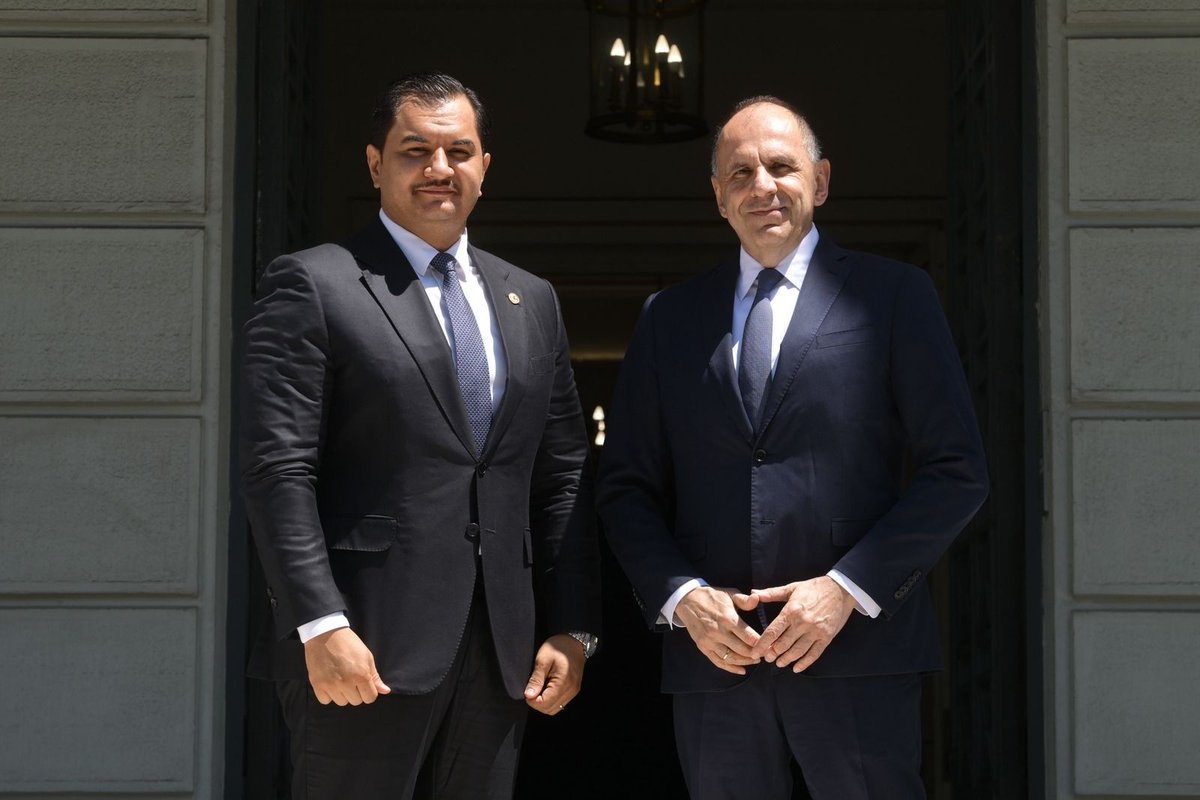
Πηγή Φωτογραφίας: eurokinissi//Athens Opens a Strategic Channel to Saddam Haftar as Greece Challenges Turkey’s Libya Doctrine



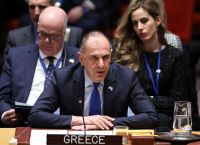
The meeting between Greek Foreign Minister George Gerapetritis and Saddam Haftar, Deputy Commander-in-Chief of the Libyan Arab Armed Forces and son of Field Marshal Khalifa Haftar, comes at a crucial moment for regional geopolitics.
Behind the official language of cooperation and stability lies a broader strategic calculation. Greece is seeking to capitalize on shifting dynamics within Libya and build relationships with all major centers of power in the country, including the eastern administration based in Benghazi.
For Athens, this is not simply about Libya. It is about the future of maritime boundaries, energy security, migration management, and the broader geopolitical contest unfolding across the Eastern Mediterranean.
The Real Prize: Challenging the Turkey–Libya Maritime Deal
At the heart of Greece’s diplomatic efforts lies one issue above all others: the controversial Turkey–Libya Memorandum of Understanding signed in 2019.
The agreement between Ankara and the Tripoli-based Government of National Accord established maritime boundaries that Greece considers legally invalid because they ignore the rights of Greek islands such as Crete, Rhodes, Karpathos, and Kasos.
For years, the memorandum has served as a cornerstone of Turkey’s strategy in the Eastern Mediterranean.
Athens now sees a potential opening.
Greek diplomats believe that if both Libya’s western government and the eastern administration associated with the Haftar camp can be brought into a broader process of maritime negotiations, the issue could eventually be referred to the International Court of Justice in The Hague.
Such a development would fundamentally alter the legal framework surrounding the dispute and place the Turkey–Libya agreement under intense international scrutiny.
For Greece, that would represent the most significant challenge yet to Ankara’s maritime claims.

Why Saddam Haftar Matters
Saddam Haftar is no ordinary military figure.
Over recent years, he has emerged as one of the most influential personalities in eastern Libya, controlling significant military structures built by his father, Field Marshal Khalifa Haftar.
Many observers regard him as the most likely successor to Libya’s powerful eastern strongman, making him an increasingly important figure for regional and international actors.
His visit to Athens carries additional significance because of his previous ties to Turkey.
Until recently, Saddam Haftar maintained frequent contacts with Turkish officials and was often viewed as one of the key channels between eastern Libya and Ankara.
His presence in Greece therefore sends a signal that political and strategic calculations inside Libya may be evolving.
While it would be premature to describe this as a geopolitical realignment, Athens clearly views the visit as an opportunity to deepen dialogue with a figure who could shape Libya’s future political direction.
Migration Flows High on the Agenda
Maritime disputes are only part of the conversation.
Migration has become another pressing concern.
In recent months, Greece has experienced growing migratory pressure, particularly on Crete and the southern Aegean islands, with many departures originating from eastern Libyan coastlines.
Greek officials are seeking closer cooperation with authorities in eastern Libya to combat human trafficking networks and improve border management.
The issue has also become a broader European concern, as EU institutions increasingly focus on migration routes across the Central Mediterranean.
Any meaningful cooperation with eastern Libyan authorities could therefore strengthen Greece’s role as a key partner in European migration policy.
Economic Opportunities and Libya’s Reconstruction
Beyond security concerns, the talks are expected to include discussions on economic cooperation.
Libya remains one of North Africa’s most promising reconstruction markets after more than a decade of instability and conflict.
Greek companies are interested in opportunities related to:
- Infrastructure development
- Construction projects
- Energy investments
- Maritime transport
- Port modernization
Athens hopes that improved political relations can pave the way for greater Greek participation in Libya’s economic recovery.
Why Turkey Is Watching Closely
Turkey remains one of the most influential external actors in Libya.
Its military presence, security agreements, and close relationship with authorities in Tripoli have given Ankara substantial leverage in the country.
That influence has translated into broader geopolitical gains across the Eastern Mediterranean.
However, Greece’s efforts to engage both eastern and western Libyan actors introduce a new variable into Ankara’s strategic calculations.
If Athens succeeds in building trust with all major Libyan stakeholders, it could strengthen its diplomatic position and potentially reduce Turkey’s ability to shape Libya’s future exclusively through its own networks of influence.
For Turkish policymakers, this represents a development worth monitoring closely.
A Visit With Regional Consequences
The significance of Saddam Haftar’s visit extends well beyond bilateral relations.
It touches on some of the most important strategic issues facing the Eastern Mediterranean:
- Maritime boundaries
- Energy corridors
- Migration management
- Regional security
- Great-power competition
For Greece, the objective is clear: transform diplomacy into strategic leverage and create conditions that could eventually challenge arrangements long viewed as unfavorable to Greek interests.
Whether this effort ultimately leads to legal action over maritime boundaries, a reassessment of the Turkey–Libya memorandum, or a broader geopolitical realignment remains uncertain.
What is already clear, however, is that Athens is actively expanding its diplomatic options in Libya—and that alone has the potential to reshape calculations across the region.
The most important aspect of Saddam Haftar’s visit is not what was publicly discussed, but what it signals.
For years, Greece largely operated from a defensive position regarding Libya, reacting to developments shaped by others. Today, Athens appears increasingly determined to become an active player in the country’s future.
By engaging simultaneously with Libya’s competing power centers, Greece is attempting to build diplomatic flexibility at a time when Eastern Mediterranean geopolitics are becoming more fluid and more interconnected.
The strategy carries risks. Libya remains politically fragmented, and alliances can shift rapidly. Yet the potential rewards are substantial.
If Greece succeeds in strengthening ties with eastern Libya while maintaining dialogue with Tripoli, it could gain influence over one of the region’s most consequential geopolitical files.
And in the broader contest over energy, maritime rights, and regional leadership, that influence could prove decisive.
Source: pagenews.gr
Διαβάστε όλες τις τελευταίες Ειδήσεις από την Ελλάδα και τον Κόσμο