Sanctions, S-400s and the F-35 Question
 ΧΡΟΝΟΣ ΑΝΑΓΝΩΣΗΣ 8 '
Πηγή Φωτογραφίας: AP Photo//Sanctions, S-400s and the F-35 Question



Trump–Erdogan Reset? Inside the NATO Summit That Could Redraw U.S.–Turkey Relations
What Actually Happened
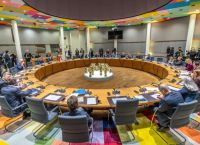
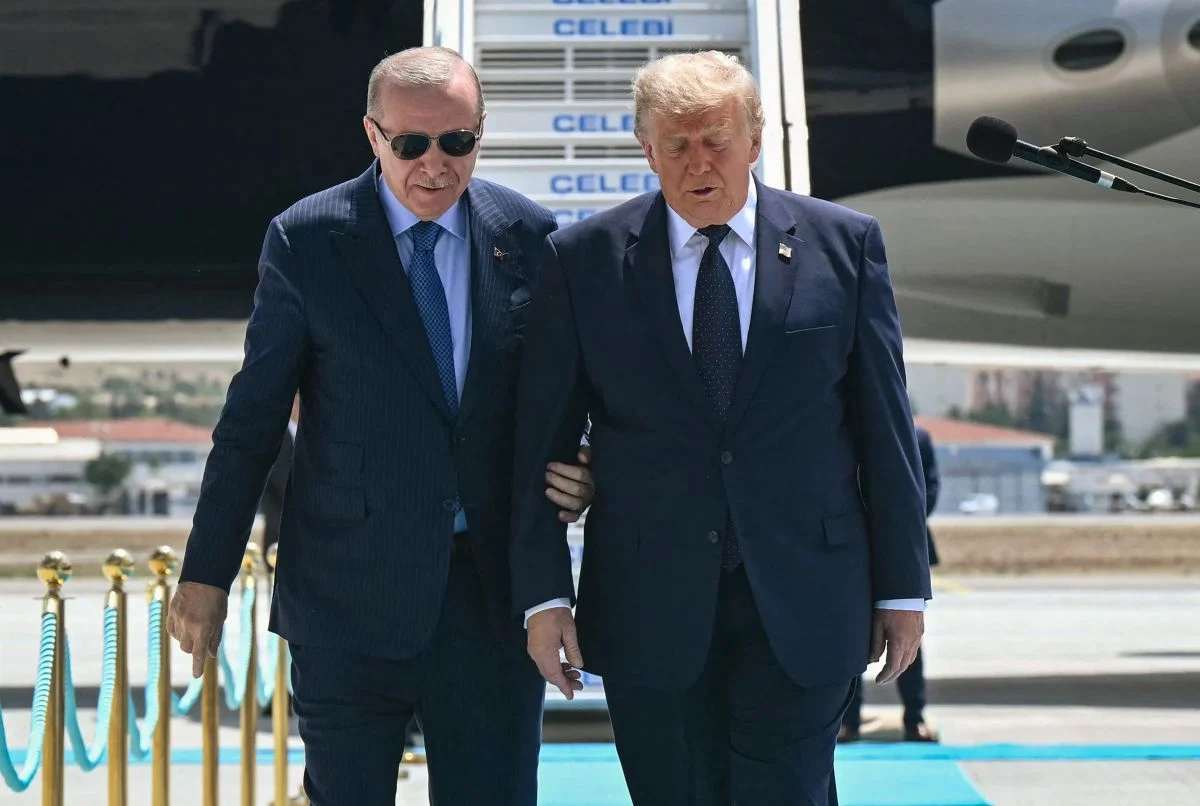
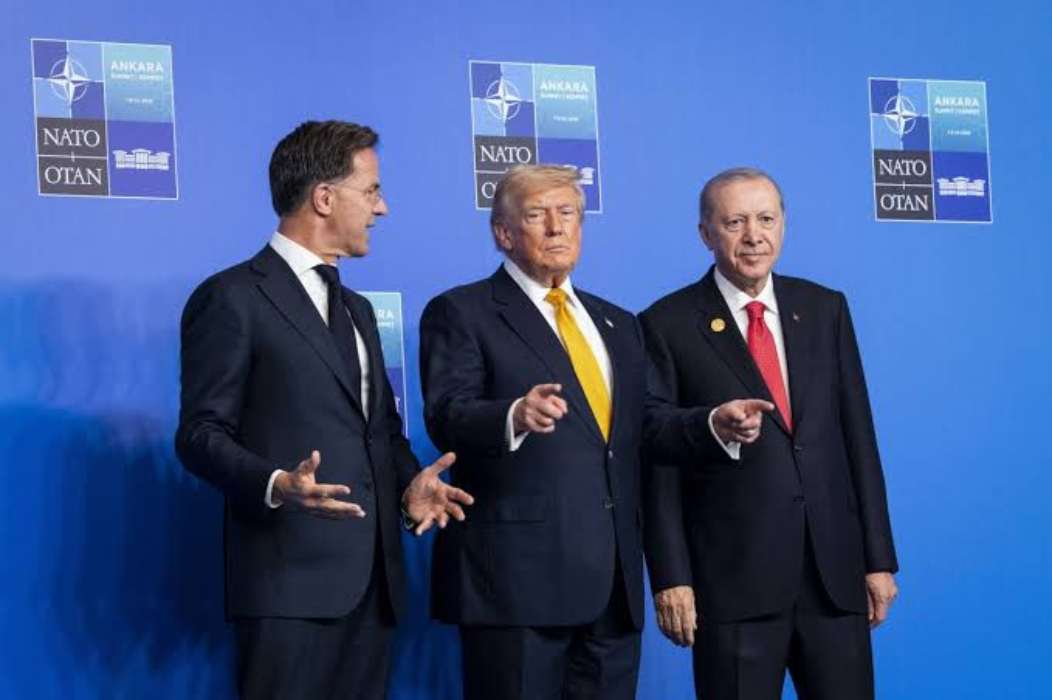
The NATO summit in Ankara became one of Turkey’s most significant diplomatic victories in years.
U.S. President Donald Trump not only chose to attend the gathering but also delivered what many foreign policy observers described as a public political rehabilitation of Turkish President Recep Tayyip Erdogan.
Trump praised Erdogan repeatedly, pledged to pursue the removal of U.S. sanctions imposed over Turkey’s purchase of the Russian S-400 air defense system and signaled openness to restoring Ankara’s participation in the F-35 stealth fighter program.
Taken together, the announcements represented the strongest indication yet that the White House wants to reopen a strategic relationship that has deteriorated steadily since 2019.
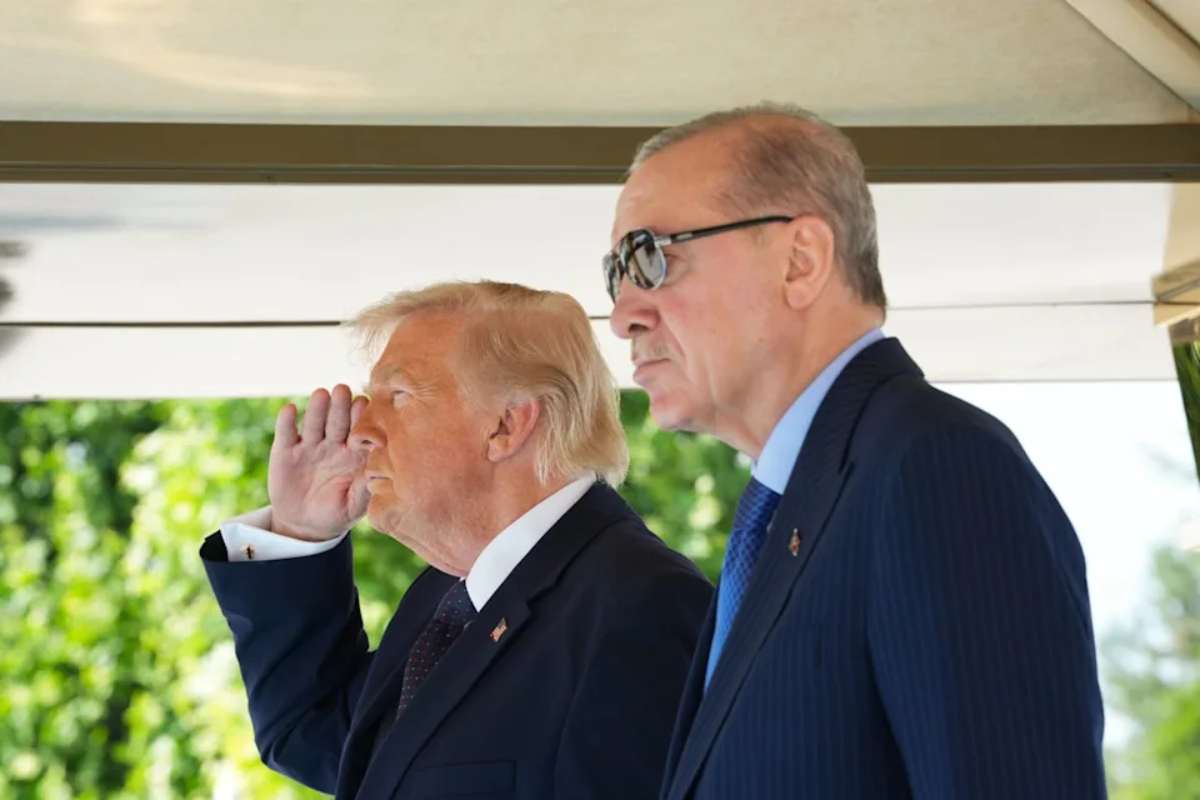
The optics were equally significant.
While Trump openly criticized several NATO allies throughout the summit, Erdogan stood out as one of the few leaders to receive consistent public praise—reinforcing the perception that Ankara has regained privileged access to the Oval Office.
The Real Story Behind the Headlines
For Turkish officials, the first diplomatic victory came before the summit had even begun.
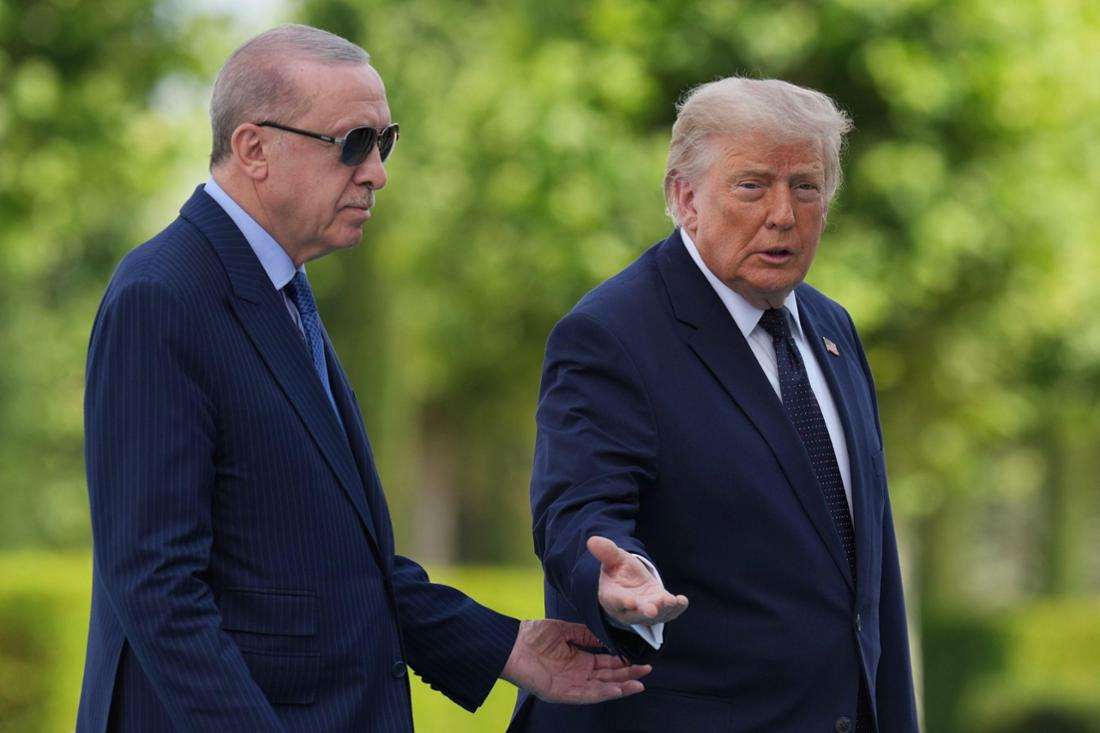
Trump—who has repeatedly questioned NATO’s relevance and frequently criticized alliance gatherings—revealed that Erdogan himself was a major reason he chose to attend.
“I came because Recep was hosting it,” Trump said.
Erdogan quickly welcomed the remark.
“It was valuable that President Trump emphasized the importance he places on our friendship,” Erdogan declared.
Inside Ankara, officials viewed the statement as more important than any single defense announcement.
Following years of strained relations under previous U.S. administrations, Erdogan has once again become a leader with direct personal access to an American president.
Western diplomats have long argued that the Trump–Erdogan relationship operates differently from traditional U.S.-Turkey diplomacy. Trump’s foreign policy has consistently prioritized personal chemistry between leaders over institutional processes, giving Ankara a political advantage that many European capitals currently lack.
That personal diplomacy may now be evolving into strategic policy.
Sanctions, S-400s and the F-35 Question
The summit’s most consequential outcome centered on two issues that have defined U.S.-Turkey tensions for years.
Trump indicated that he intends to remove CAATSA sanctions imposed after Turkey purchased Russia’s S-400 missile defense system.
He also expressed willingness to reconsider Turkey’s exclusion from the F-35 program.
“We’ll take a look at it,” Trump said, while later clarifying that no final decision had yet been made.
For Ankara, however, the political signal mattered almost as much as the policy itself.
If implemented, both moves would reverse cornerstone decisions that fundamentally reshaped bilateral relations during Trump’s first presidency.
Within Turkish political circles, the announcements were interpreted as evidence that Washington is prepared to reconsider assumptions previously viewed as politically untouchable.
Washington’s Institutions May Block the Reset
The political symbolism is powerful.
The policy reality is considerably more complicated.
Congress remains deeply skeptical of Turkey’s defense relationship with Russia.
For years, lawmakers from both parties have insisted that Turkey cannot simultaneously operate the Russian-made S-400 system while participating in America’s most advanced fifth-generation fighter program.
That position enjoys bipartisan support.
As a result, even if Trump seeks a strategic reset, implementation would require overcoming legal restrictions, congressional resistance and institutional opposition inside Washington.
There is another challenge.
Russia remains part of the equation.
Turkey’s S-400 acquisition reportedly includes end-user obligations that could complicate any attempt by Ankara to deactivate, relocate or transfer the system without triggering political repercussions from Moscow.
For now, Trump’s announcements should be understood as political commitments rather than irreversible policy decisions.
Turkey’s Strategic Value Is Rising Again
The summit reinforced a broader geopolitical trend that Western security institutions have been monitoring for several years.
Turkey no longer presents itself merely as a difficult NATO ally.
Instead, Ankara increasingly positions itself as an indispensable security actor across multiple theaters simultaneously.
Its strategic geography connects Europe to the Middle East, the Black Sea, the Caucasus and the Eastern Mediterranean.
Its rapidly expanding defense industry has become a major supplier for NATO partners.
Its military remains the alliance’s second largest.
Trump strengthened that narrative further by publicly defending Erdogan against criticism from Israeli Prime Minister Benjamin Netanyahu regarding potential U.S. sales of F-35 fighter jets to Turkey.
Within diplomatic circles, the exchange was interpreted as more than a disagreement over aircraft.
It suggested that a future Trump administration may be less willing to allow Israeli objections to dictate broader U.S. strategic policy toward Ankara.
That represents a notable shift in regional power calculations.
A Different America for Different Allies
Turkey’s diplomatic gains contrasted sharply with Trump’s treatment of several other NATO members.
The U.S. president threatened Spain over defense spending disputes, revived controversial claims regarding Greenland and again challenged traditional alliance assumptions.
The contrast was unmistakable.
Toward much of Europe, Trump projected confrontation.
Toward Erdogan, he projected strategic trust.
Despite those disagreements, NATO Secretary General Mark Rutte insisted the summit demonstrated alliance unity.
Behind closed doors, however, diplomats acknowledged that the meeting exposed increasingly different expectations about NATO’s future political architecture—and Turkey appeared to benefit from those divisions.
Democracy Slips Down the Western Agenda
Perhaps the summit’s most revealing development was not what leaders discussed—but what they largely avoided.
The gathering took place amid the arrests of opposition politicians, journalists and a prominent comedian inside Turkey, raising renewed concerns over democratic backsliding.
Unlike previous NATO meetings, however, those issues received relatively limited public attention.
Instead, discussions focused overwhelmingly on defense production, military spending, regional deterrence and strategic competition.
Rutte nevertheless reiterated that:
“Democracy includes freedom of expression, free media and the right to protest.”
Turkish opposition figures argue that Erdogan’s improving relationship with Washington reflects growing political dependence on the United States.
Critics, meanwhile, contend that Western governments have become noticeably quieter on democratic concerns as Turkey’s geopolitical importance has expanded.
For many European analysts, the summit illustrated an uncomfortable reality:
Strategic necessity is increasingly outweighing democratic conditionality.
From a Western political intelligence perspective, the Ankara summit does not yet represent a full strategic normalization of U.S.-Turkey relations.
It does, however, constitute the clearest political indication that Donald Trump intends to restore Ankara to the inner circle of America’s regional security partners.
The central question is no longer whether Trump wants to reset relations.
The question is whether Washington’s institutions will allow him to do so.
Congress, CAATSA legislation, the unresolved S-400 issue, Israeli security concerns and Russia’s leverage collectively form a dense institutional and geopolitical barrier that personal diplomacy alone cannot dismantle.
If sanctions are eventually lifted and Turkey returns to the F-35 program, bilateral relations could enter their most constructive phase in nearly a decade.
If those initiatives stall inside Congress or the U.S. national security bureaucracy, however, the Ankara summit may ultimately be remembered less as a strategic breakthrough than as an extraordinary display of personal diplomacy between two leaders who have long understood the value of political chemistry.
In intelligence terms, the summit did not close the file on U.S.–Turkey tensions. It opened a new one.
Source: pagenews.gr
Διαβάστε όλες τις τελευταίες Ειδήσεις από την Ελλάδα και τον Κόσμο