The 407 Donations Worth Over €111 Million Strengthening Greece’s Armed Forces
 ΧΡΟΝΟΣ ΑΝΑΓΝΩΣΗΣ 15 '
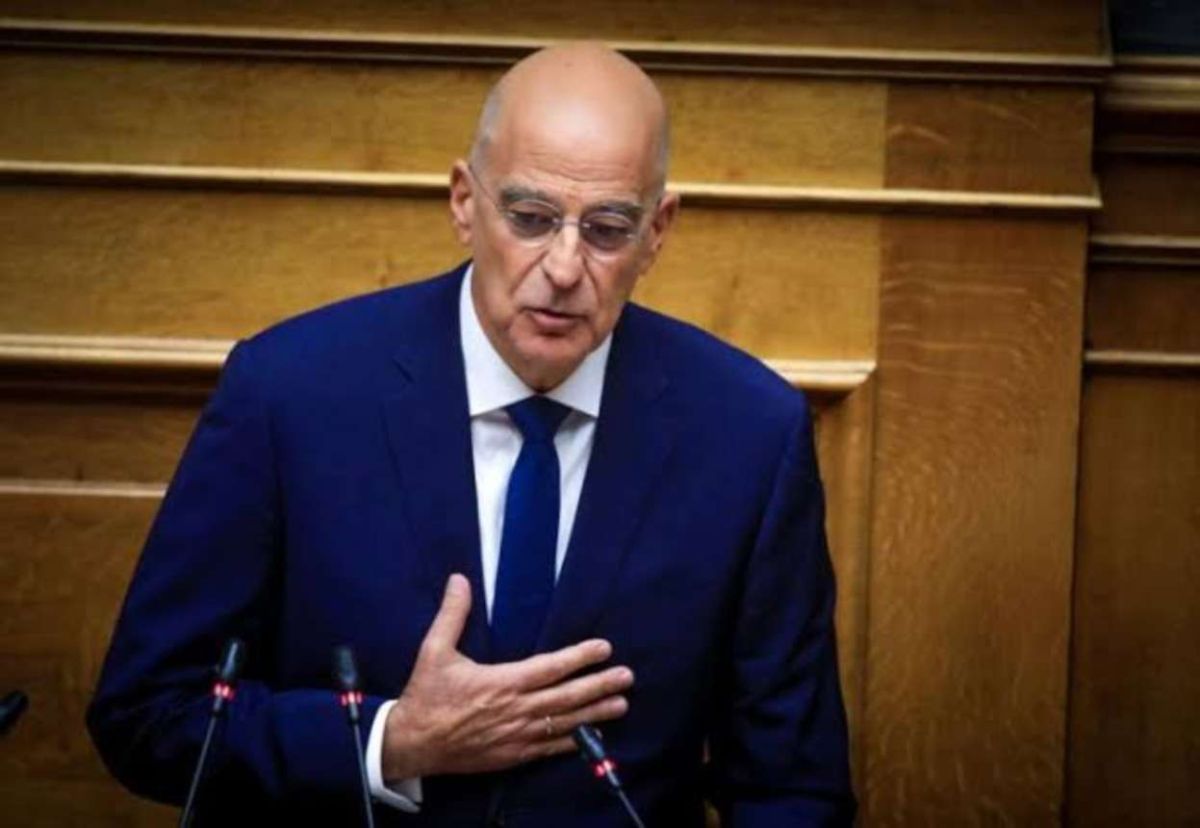
Πηγή Φωτογραφίας: eurokinissi//The 407 Donations Worth Over €111 Million Strengthening Greece’s Armed Forces



More Than €111 Million in Private and Institutional Support for National Defence
A significant, though less widely publicised, part of Greece’s effort to modernise its Armed Forces is reflected in the volume of donations made since 2023.
According to the available figures, the Ministry of National Defence has received 407 donations, with a total value of €111,211,425.87. During 2026 alone, the value of donations has already reached €30,059,179.
The contributions extend far beyond direct financial assistance. They include infrastructure projects, military hospital renovations, energy upgrades, unmanned aerial systems, vessels, cyber-defence facilities, training equipment and projects dedicated to national memory.
Of the total number of donations, 18 exceed €1 million, demonstrating that the support is not merely symbolic. It has evolved into a substantial supplementary funding mechanism for projects with practical and, in several cases, direct operational importance.
Dendias: Donations Are a Contribution to the Vision of a Strong Nation
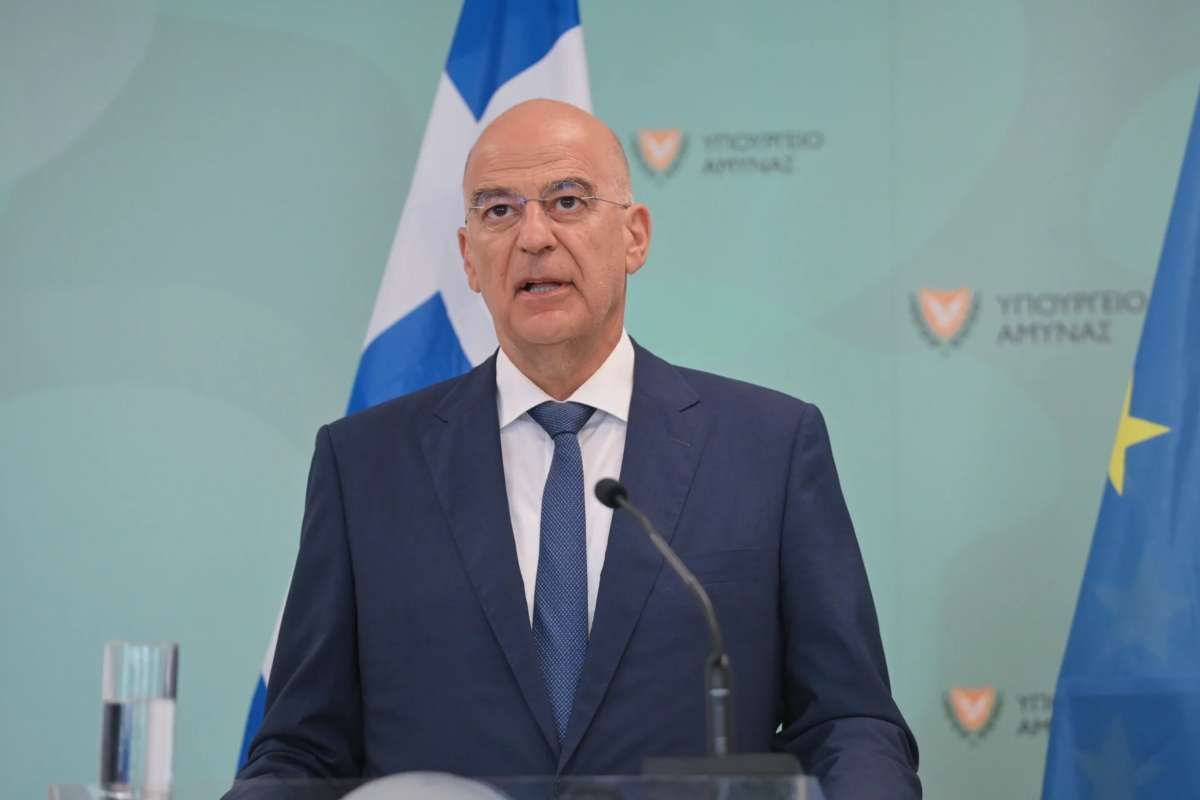
Defence Minister Nikos Dendias has made the revival of Greece’s historic tradition of national benefactors one of his priorities since taking office.
His approach is summarised in the statement:
“Donations constitute a tangible declaration of contribution to the vision of a strong homeland.”
The statement reflects a broader political philosophy. National defence remains the exclusive responsibility of the state, but it need not remain detached from society, businesses and individuals willing to support specific projects.
The return of the concept of the “national benefactor” to public debate seeks to connect modern economic strength with a deeply rooted Greek tradition: private support for projects of national importance.
Such support, however, must supplement—not replace—the state budget and the institutional responsibilities of the government.
The Largest Donations Exceeding €1 Million
At the top of the list is a €12 million donation by the Antonios E. Komninos Foundation, intended for the acquisition of a collection of Philhellenic works of art and the construction of the National Museum of the 1821 Greek Revolution.
It is followed by:
- Piraeus Bank: €10 million.
- HELLENiQ ENERGY – Hellenic Petroleum: €7.5 million.
- Metlen Energy & Metals, formerly Mytilineos: €7,052,200.
- Public Power Corporation, PPC: €6 million.
- Athanasios C. Laskaridis Charitable Foundation: €5.75 million for V-BAT drones.
- Athanasios C. Laskaridis Charitable Foundation: €5 million for a cyber-defence building.
- Melio Shipping Company of the Manousis family: €5 million through the donation of a vessel.
- Konstantinos Martinos: €4.5 million for an unmanned aerial system.
- Panos Laskaridis: €4.5 million for new facilities at the Hellenic Air Force Academy.
- Motor Oil – Vardinogiannis Group: €4.5 million for hospital infrastructure at the Athens Naval Hospital.
- Hellenic Parliament: total support of €4.2 million for military medical facilities.
- Athanasios and Marina Martinos Foundation: €2.8 million.
- Vulcanus Technical Maritime Enterprises: €1.8 million.
- Athina I. Martinos Foundation: €1,496,075.
- Holy Archdiocese of Cyprus: €1.2 million.
- Hellenic Parliament: €1.2 million for infrastructure at the Hellenic Naval Academy.
- Athanasios C. Laskaridis Charitable Foundation: €1,143,600 for additional cyber-defence construction work.
The list reflects the broad profile of the benefactors: major corporations, shipping families, charitable foundations, the Hellenic Parliament and the Church of Cyprus.
€30.5 Million for the Transformation of the Papagou Defence Complex
Four of the largest corporate donations, worth a combined €30,552,200, are being directed towards the renovation and modernisation of the central Ministry of National Defence building and its surrounding area at the Papagou military complex.
The donors are:
- Piraeus Bank, with €10 million,
- HELLENiQ ENERGY, with €7.5 million,
- Metlen Energy & Metals, with €7,052,200,
- and PPC, with €6 million.
The building’s new façade was inaugurated in October 2025 and was designed by renowned sculptor Costas Varotsos.
Together with the Ark of National Memory, the project seeks to link the history of the Armed Forces with a modern architectural identity.
The intervention is not solely aesthetic.
The installation of vertical shading systems and bioclimatic features is designed to improve the building’s energy efficiency, reduce consumption and provide better working conditions for ministry personnel.
The Transformation Extends Beyond the Façade
Further work began during the current year and includes:
- the energy upgrade of the northern façade,
- the renovation of all common internal areas,
- the modernisation of central administrative facilities,
- improved ergonomics and functionality.
The energy upgrade is expected to be completed in autumn 2026, while the broader interior renovation programme is scheduled for completion during the first months of 2027.
Politically, the project is presented as part of the transition from outdated administrative infrastructure to a modern defence headquarters compatible with the philosophy of the Armed Forces Agenda 2030.
Yet such investment must also be judged by strict criteria: measurable energy savings, operational improvement, adherence to deadlines and transparent costing.
V-BAT Drones: Donations With Direct Operational Value
Particular importance is attached to donations involving equipment that can immediately enhance the operational capabilities of the Armed Forces.
The Athanasios C. Laskaridis Charitable Foundation contributed €5.75 million, while Konstantinos Martinos donated a further €4.5 million for the purchase of V-BAT unmanned aerial systems manufactured by Shield AI.
The total value of the two donations amounts to €10.25 million.
These systems can support:
- surveillance of land and maritime borders,
- intelligence and imagery collection,
- target identification,
- operations in complex environments,
- reduced risk to manned aircraft and personnel.
The donation highlights the changing nature of military power. Defence capability is no longer measured only in frigates, tanks and fighter aircraft, but also in the quality of sensors, data, surveillance systems and autonomous platforms.
Cyber Defence: More Than €6.1 Million From the Laskaridis Foundation
In the modern geopolitical environment, a country can suffer a severe strategic blow without a single metre of its physical borders being crossed.
Cyberattacks targeting military networks, critical infrastructure, telecommunications, energy systems and government services are now central tools of hybrid warfare.
Within this context, donations by the Athanasios C. Laskaridis Charitable Foundation, with a combined value of €6,143,600, are financing the construction and completion of a new building at the Papagou complex to house the country’s Cyber Defence Directorate.
The importance of the project goes far beyond the structure itself.
For the investment to have genuine strategic value, it must be accompanied by:
- highly trained personnel,
- modern cyber-security systems,
- continuous readiness exercises,
- cooperation with universities and Greek technology companies,
- strong safeguards for classified information.
Cyber defence is no longer a supplementary administrative field. It is a distinct operational domain alongside land, sea and air.
The Vessel “Nisos” Joins the Fleet Headquarters
A separate category of donation concerns the transfer of the vessel Nisos, formerly Alcantara Dos, by the Melio Shipping Company of the Manousis family.
The donation is valued at €5 million, and the vessel has been transferred to the Hellenic Fleet Headquarters.
The strategic value of such a contribution is not determined only by the vessel’s commercial price.
Its usefulness depends on:
- its technical condition,
- the cost of adaptation,
- its potential role in fleet support,
- crew and maintenance requirements,
- compatibility with existing naval capabilities.
Provided it is fully integrated into operational planning, it could enhance transport, logistical support or training capabilities within the Hellenic Navy.
Panos Laskaridis’s Longstanding Support for the Hellenic Navy
Special mention must be made of Panos Laskaridis, whose support for the Armed Forces—particularly the Hellenic Navy—has been longstanding.
Among the vessels donated to the Navy are the general support ships:
- Atlas,
- Heracles,
- Ajax,
- Perseus,
as well as the training vessel Kyknos.
His contributions also include the construction of a short-stay treatment ward at the Athens Naval Hospital.
His latest donation, worth €4.5 million, concerns the construction of new facilities for the 5th Cadet Squadron at the Hellenic Air Force Academy.
The project forms part of the broader effort to modernise military academies and improve the training and living conditions of cadets.
Investment in military education is ultimately investment in human capital. Weapons systems evolve, but the quality of personnel remains one of the most decisive multipliers of military power.
Military Hospitals: Health Infrastructure for Armed Forces Personnel
A considerable share of the donations is directed towards military healthcare.
Motor Oil – Vardinogiannis Group is providing €4.5 million for the construction of the fourth and fifth floors and the development of a new hospital wing at the Athens Naval Hospital.
The Hellenic Parliament is financing the renovation of critical medical infrastructure at the 251 Air Force General Hospital with a donation of €3 million.
These interventions have a dual value.
They improve healthcare for military personnel and their families, while also strengthening hospitals that may play a vital role during crises, emergencies or mass-casualty incidents.
Personnel welfare is an essential component of deterrence. Armed Forces equipped with advanced weapons but supported by outdated healthcare structures cannot be regarded as fully modernised.
New Projects at the Hellenic Naval Academy
The donations also finance major projects at the Hellenic Naval Academy.
These include:
- €2.8 million from the Athanasios and Marina Martinos Foundation for the construction of an amphitheatre,
- €1.496 million from the Athina I. Martinos Foundation for a naval simulation training system,
- €1.2 million from the Holy Archdiocese of Cyprus for infrastructure upgrades,
- an additional €1.2 million from the Hellenic Parliament.
Simulators have become indispensable training tools because they allow cadets to practise complex scenarios without the continuous deployment of ships and at a significantly lower cost.
The modernisation of naval education is especially important as the Hellenic Navy enters a new era involving new ships, digital combat systems and increased interoperability requirements.
The Submarine “Proteus” Becomes a Living Museum
Vulcanus Technical Maritime Enterprises is financing work worth €1.8 million to place the submarine Proteus at the Flisvos Naval Tradition Park.
Turning a historic submarine into a museum is not merely a secondary cultural initiative.
It can connect society with the Hellenic Navy, highlight Greece’s maritime history and familiarise younger generations with naval technology, military missions and the sacrifices of submarine crews.
When presented through modern educational methods, military history can serve as a bridge between national memory and technological learning.
The National Museum of 1821 and the €12 Million Donation
The largest individual donation is the €12 million contribution by the Antonios E. Komninos Foundation.
It concerns a collection of Philhellenic works of art, as well as the architectural and museum studies required for the creation of the National Museum of the Greek Revolution of 1821.
The donation has primarily cultural and national significance, but it is also directly connected to the historic identity of the Armed Forces and the modern Greek state.
A modern museum dedicated to the Greek Revolution could highlight:
- international Philhellenism,
- the military and political dimensions of the struggle,
- the contribution of ordinary fighters,
- internal divisions and civil conflicts,
- the European geopolitics of the era,
- the creation of the independent Greek state.
The essential requirement is that the museum should not be limited to a celebratory narrative, but operate as a serious, scientifically documented institution of historical knowledge.
National Contribution or Privatisation of Defence?
The scale of the donations inevitably raises a fundamental political question: where does philanthropy end and the state’s obligation begin?
The answer must be unambiguous.
Donations can accelerate projects, improve infrastructure and meet specific needs. They cannot become a permanent substitute for a coherent defence budget.
National defence must not depend on whether a business leader or charitable foundation chooses to finance a strategically important system.
Long-term planning, procurement, maintenance and operational support remain the responsibility of the state.
The correct political interpretation is therefore that donations should function as a supplement, not a replacement.
Transparency Is a Precondition for Benefaction
As the value of donations increases, the need for institutional transparency becomes even greater.
For every donation, the following should be publicly clear:
- the donor,
- the exact value,
- the project or equipment involved,
- the method of valuation,
- the acceptance procedure,
- the implementation timetable,
- the maintenance cost,
- the final operational or social benefit.
In equipment donations, the initial purchase value is only one factor. Authorities must also consider life-cycle costs, spare parts, training, technical support and compatibility with existing systems.
At the same time, no donor should acquire privileged access to public contracts, decision-making or political influence.
Recognition of contribution is legitimate. The creation of dependency is not.
Honorary Military Ranks and the Limits of Recognition
The Ministry of National Defence recognises major benefactors through a range of honours, including, in some cases, honorary military ranks.
The practice has historical precedent and strong symbolic value, but it requires restraint and clearly defined criteria.
An honorary rank must never be confused with actual military hierarchy, operational experience or command responsibility.
The honour recognises service to the Armed Forces and the country. It should not become an instrument of social promotion or a reward for financial power.
Public and objective criteria protect both the prestige of the institution and the reputation of the donors themselves.
Defence as a Shared National Responsibility
The 407 donations reveal that the relationship between Greek society and the Armed Forces remains strong.
Banks, energy groups, shipping families, charitable foundations, the Hellenic Parliament and religious institutions are contributing to projects involving:
operational readiness, cyber defence, military education, hospital care, infrastructure and national memory.
For Nikos Dendias, this mobilisation provides an additional tool in the transition of the Armed Forces into a new era.
Its success, however, will not be measured only by the total amount donated.
It will be judged by whether every euro is transformed into real operational value, improved conditions for personnel, modern facilities, stronger deterrence and measurable benefit for the public interest.
The Return of National Benefactors in the 21st Century
Greece has a deep tradition of national benefactors. Schools, universities, hospitals, stadiums, museums and major public institutions bear the names of individuals who chose to return part of their wealth to society.
The revival of this tradition in the field of national defence takes on particular significance during a period of heightened geopolitical uncertainty.
Donations for drones, cyber defence, military hospitals and simulation systems show that the idea of benefaction is adapting to the needs of the 21st century.
The new generation of donations is not limited to buildings and monuments. It also supports data, sensors, technology, personnel and national resilience.
This development is positive, provided it rests on three permanent principles:
transparency, operational usefulness and the absolute priority of the national interest.
The €111.2 million represented by the 407 donations constitutes a powerful vote of confidence in the Greek Armed Forces.
It also creates a major responsibility for the Ministry of National Defence: to demonstrate that the generosity of benefactors is not lost in bureaucracy, but converted into real strength for the country.
Διαβάστε όλες τις τελευταίες Ειδήσεις από την Ελλάδα και τον Κόσμο