Ankara “Grays” the Aegean Again: Turkey Targets Greece’s New Offshore Energy Strategy
 ΧΡΟΝΟΣ ΑΝΑΓΝΩΣΗΣ 6 '
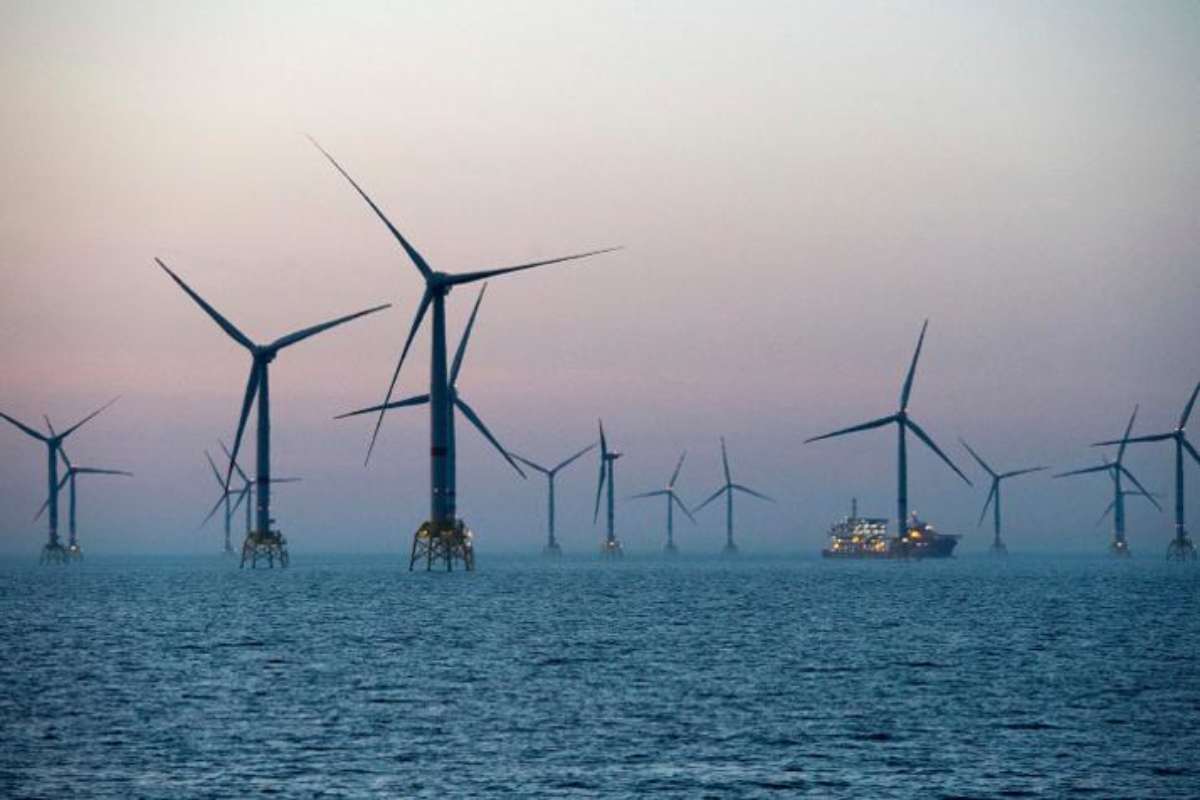
Πηγή Φωτογραφίας: AP Photo//Ankara “Grays” the Aegean Again: Turkey Targets Greece’s New Offshore Energy Strategy



Turkey is raising the stakes in the Aegean once again, this time using Greece’s new renewable energy strategy as the trigger for a broader challenge to Athens’ maritime planning.
Only days after the confrontation over Turkey’s newly declared “national marine parks,” Ankara has opened another front by challenging Greece’s new Special Spatial Planning Framework for Renewable Energy Sources, which also covers maritime areas and the future development of offshore energy infrastructure.
What initially appears to be an environmental and energy-policy dispute is rapidly acquiring a much deeper geopolitical dimension.
Turkey is effectively using Greece’s renewable-energy planning to revive its longstanding claims over sovereignty and jurisdiction in the Aegean.
From marine parks to offshore energy
The timing is significant.
On August 15, Turkey declared two “national marine parks” in the northeastern Aegean and Eastern Mediterranean. Athens responded by arguing that the Turkish measures extended beyond Ankara’s jurisdiction and could neither create legal faits accomplis nor affect Greece’s sovereign rights.
Days later, Greece brought its new renewable-energy spatial framework into force.
Ankara’s response was immediate.
Turkish Foreign Ministry spokesperson Öncü Keçeli argued that the Greek framework could have no legal consequences for Turkey concerning disputes in the Aegean.
The Turkish Defense Ministry has now reinforced that position, bringing the issue directly into the security and sovereignty debate.
Most importantly, Ankara again referred to geographical features whose sovereignty, according to Turkey, was never transferred to Greece through international treaties.
That language takes the confrontation far beyond wind farms.
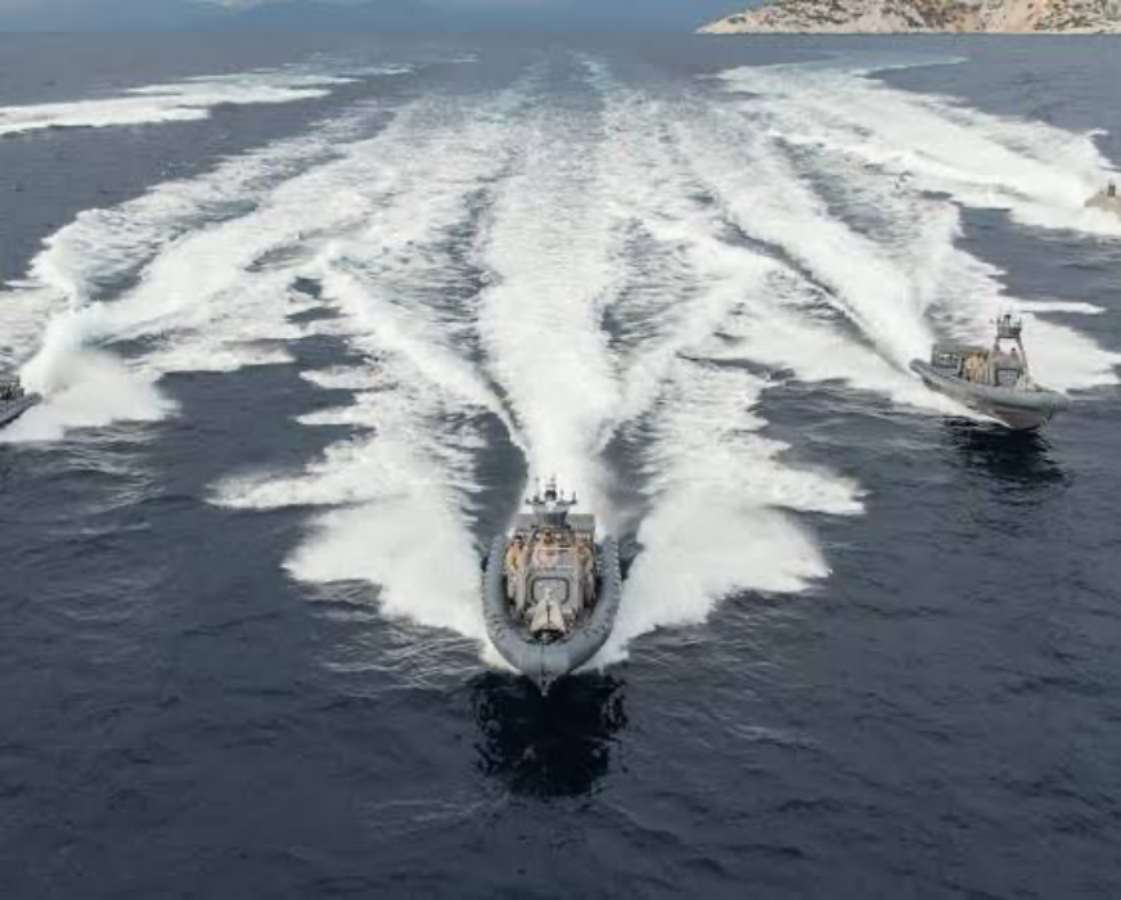
Turkey brings the “gray zones” doctrine back into play
The reference to geographical formations is the most politically sensitive element of Ankara’s reaction.
It effectively revives Turkey’s longstanding theory concerning islands, islets and rocks in the Aegean whose sovereignty it disputes.
In other words, Greece announces a regulatory framework governing renewable-energy development, while Turkey responds by reopening questions of territorial sovereignty.
“This regulation has no legal consequences for our country, including with regard to geographical formations whose ownership has not been transferred to Greece through international agreements,” the Turkish Defense Ministry said.
Ankara also stressed its determination to protect what it describes as Turkey’s rights and interests in the Aegean.
The language matters because offshore renewable energy requires something more fundamental than investment: states must determine where projects can be licensed, built, connected and regulated.
That inevitably brings maritime jurisdiction into the equation.
Wind turbines become geopolitical assets
Greece’s new framework is designed to replace rules dating back to 2008 and establish a modern system for renewable-energy projects and storage infrastructure through 2050.
At sea, however, the stakes are considerably higher.
Offshore wind farms, electricity interconnectors and other infrastructure increasingly form part of a country’s energy-security architecture.
As Europe attempts to reduce dependence on imported fossil fuels and expand electricity generation at sea, control over maritime space acquires greater economic value.
For Greece, the Aegean is therefore not simply a maritime frontier. It is becoming part of the country’s future energy system.
For Turkey, Greek planning in those waters is consequently being scrutinized through the prism of Ankara’s broader maritime claims.
Ankara accuses Athens of unilateral action
Turkey is also attempting to frame the dispute around the principle of cooperation between coastal states.
Keçeli argued that unilateral measures should be avoided in enclosed or semi-enclosed seas such as the Aegean and Mediterranean, calling instead for cooperation under international law.
Yet this argument comes immediately after Turkey itself declared marine parks that Athens considers unlawful because they extend into areas beyond Turkish territorial waters.
That creates a striking political contradiction.
Ankara is warning Greece against unilateral maritime planning while simultaneously defending its own unilateral initiatives in contested waters.
Energy is becoming the new battlefield in the Aegean
The renewable-energy dispute cannot be viewed in isolation.
Several strategically important issues are now converging in the same maritime space:
- offshore renewable energy and future wind farms;
- electricity interconnectors;
- marine spatial planning;
- protected marine areas;
- continental shelf and maritime jurisdiction disputes;
- and the unresolved Greek-Turkish sovereignty confrontation.
This explains why an ostensibly technical planning decision has triggered reactions from both Turkey’s Foreign and Defense ministries.
The energy transition is effectively adding a new layer to one of Europe’s oldest geopolitical disputes.
The “calm waters” strategy faces another stress test
The developments also raise questions about the future of the Greek-Turkish rapprochement launched under the Athens Declaration of December 2023.
Ankara continues to speak publicly about international law, good-neighborly relations and dialogue.
But within a matter of days, two new confrontations have emerged — first over Turkey’s marine parks and now over Greece’s renewable-energy spatial planning.
The contradiction between diplomatic normalization and persistent maritime disputes is becoming increasingly difficult to ignore.
The challenge for Athens will be to preserve channels of communication without allowing dialogue to evolve into acceptance of Turkish claims.
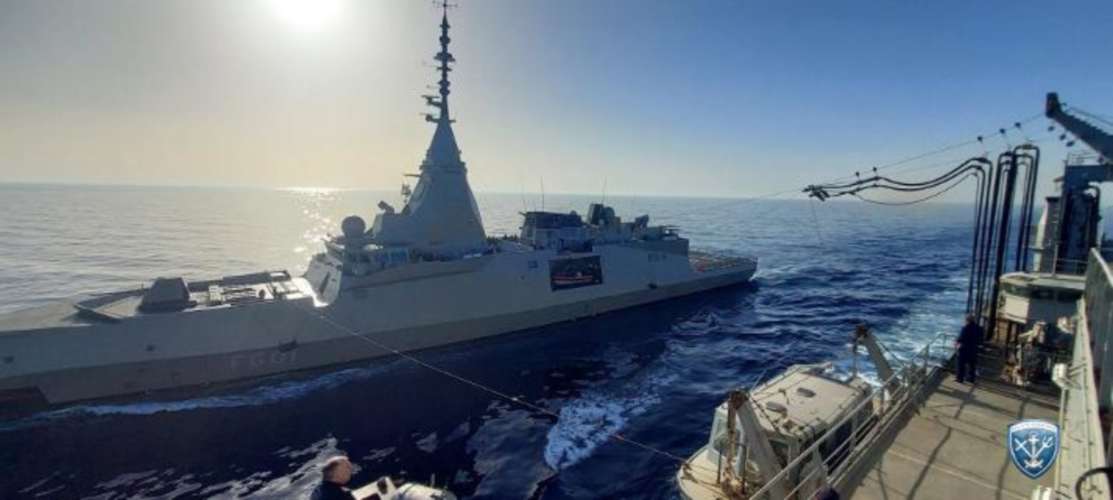
The bigger battle is over who shapes the future Aegean
The latest confrontation reveals how dramatically the strategic landscape is changing.
For decades, Greek-Turkish disputes were dominated by territorial waters, the continental shelf, airspace, sovereignty and military deployments.
Those issues remain unresolved.
But the energy transition is now creating an entirely new arena of competition.
Offshore wind farms, submarine electricity cables, energy corridors and marine protection zones all require states to exercise regulatory authority over maritime space.
That means every major infrastructure decision can potentially become geopolitical.
Turkey’s latest reaction demonstrates that Ankara does not intend to treat Greece’s offshore energy expansion as merely domestic economic policy.
And that makes the central question considerably bigger than where Greece will build its next wind farms.
It is about who will shape the rules — and the strategic map — of the Aegean’s emerging energy era.
Source: pagenews.gr
Διαβάστε όλες τις τελευταίες Ειδήσεις από την Ελλάδα και τον Κόσμο