Greece Builds an Air-Defence Shield Over Souda: Why Crete Is Becoming a Strategic Fortress
 ΧΡΟΝΟΣ ΑΝΑΓΝΩΣΗΣ 6 '
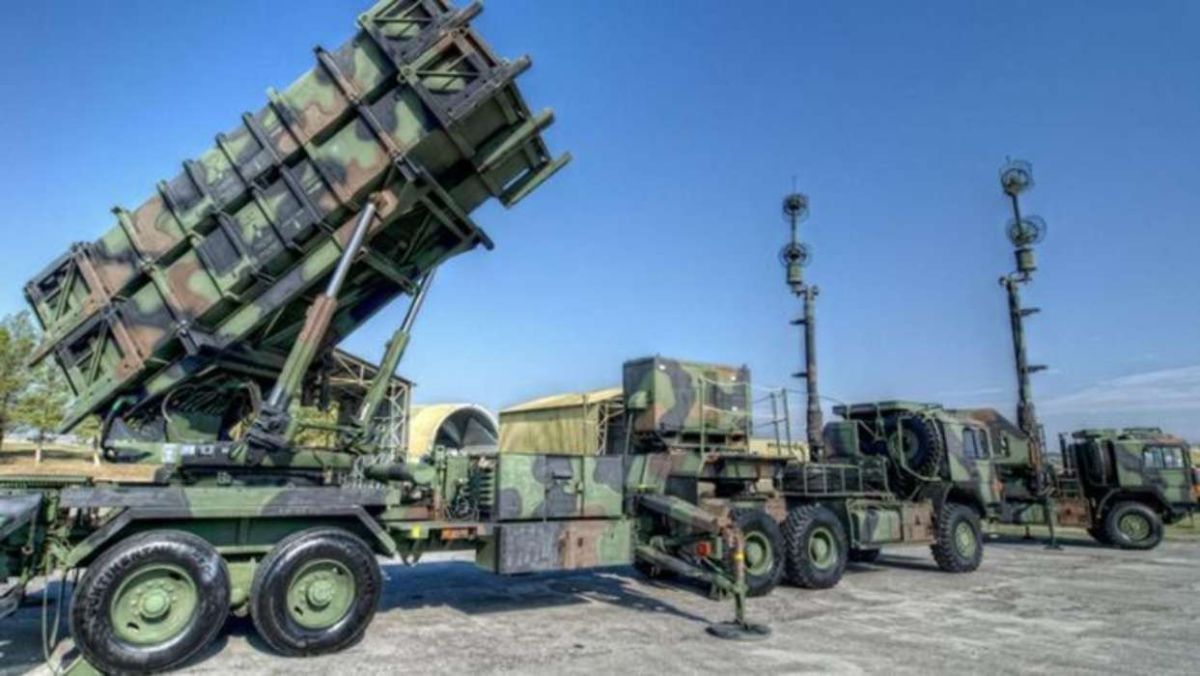
Πηγή Φωτογραφίας: AP Photo//Greece Builds an Air-Defence Shield Over Souda: Why Crete Is Becoming a Strategic Fortress



The relocation of a Greek Patriot battery from Karpathos to Crete has already made headlines. But the more important question lies beneath the immediate military movement: why has Athens chosen to concentrate such a valuable air-defence capability around Souda Bay now, and what does that reveal about Greece’s changing defence map?
The battery, together with its personnel and equipment, began moving on August 23 following a reassessment of regional security risks.
Souda is not simply another Greek military facility. It is a crucial hub for Greek, US and NATO operations across the Eastern Mediterranean, combining strategically important naval and aviation infrastructure.
That strategic importance helps explain why Crete is moving closer to the front line of Greece’s air and missile defence architecture.
From Karpathos to Souda: The threat changes, so does the deployment
The Patriot battery had been deployed to Karpathos in March as the escalating Middle East conflict forced Greece’s military leadership to reassess the country’s ballistic-missile defence posture.
Months later, the system is being moved again.
This does not necessarily mean that southeastern Aegean defence has become less important. Instead, it indicates a shift towards protecting an asset of exceptional strategic value: Souda Bay.
Greek defence planning now has to account for a regional security environment shaped not only by traditional military threats but also by long-range ballistic missiles, cruise missiles and increasingly sophisticated drones.
That changes the logic of air defence.
The priority is no longer simply geographical coverage. It is also the protection of infrastructure whose disruption could carry military consequences far beyond Greece itself.
Why Souda is different
Geography explains much of the calculation.
Crete sits at the crossroads of continental Europe, the Middle East and North Africa. Souda Bay provides critical infrastructure supporting Greek and allied naval and air operations across the wider region.
In an era when conflicts in the Middle East increasingly involve long-range missile and drone attacks, the strategic value of such an installation inevitably comes with greater requirements for protection.
The deployment of a Patriot system around Souda can therefore be interpreted as more than an emergency measure.
Greece is increasingly treating Crete as a critical air-defence hub for the Eastern Mediterranean.
Greece’s new defensive arc extends beyond Crete
There is another dimension to the emerging picture.
Athens is simultaneously monitoring developments around Cyprus, where Greek military assets have been deployed amid the wider regional crisis.
This suggests a broader strategic geography:
Crete – Cyprus – southeastern Europe.
It is too early to describe this as a formally declared new Greek defence doctrine. But recent moves demonstrate that Greek air-defence planning increasingly has to address threats beyond the traditional Greek-Turkish security equation.
The Eastern Mediterranean itself has become a potential missile and drone battlespace.
The big question: Will Greece’s Patriot return from Saudi Arabia?
This could become the next significant development.
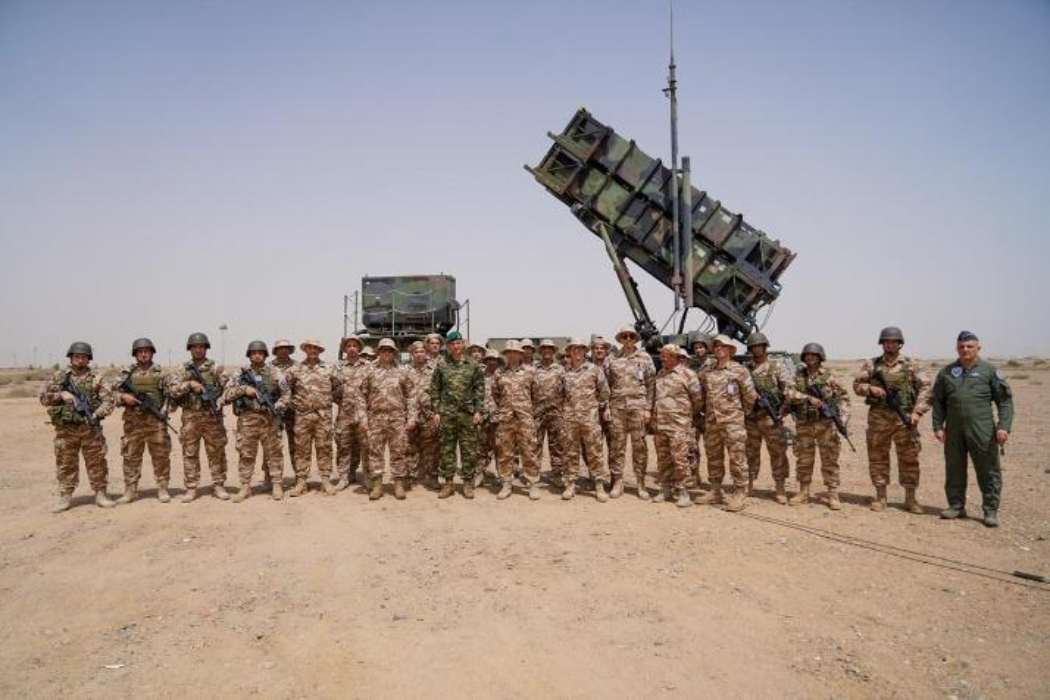
Athens is also reviewing the future of the Greek Patriot battery deployed in Saudi Arabia since 2021.
Greece’s Ministry of National Defence has previously stated that the deployment forms part of bilateral Greek-Saudi defence cooperation and is intended exclusively to provide air and missile protection for critical infrastructure.
The ministry has also stressed that such deployments must be balanced against Greece’s own operational requirements.
That calculation has now become much more consequential.
If the battery returns, Greece would regain another highly valuable air-defence system at a time when demand for missile-defence capabilities across Europe and the Middle East has surged.
From exporting security to protecting Greek territory
The Saudi deployment has delivered important diplomatic and operational benefits for Greece.
But the regional environment has fundamentally changed.
When the Patriot was deployed to Saudi Arabia in 2021, Athens could use the mission as an instrument of defence diplomacy and as a way to deepen its strategic partnership with Riyadh.
In 2026, the question is different:
How many high-value air-defence systems can Greece afford to maintain abroad when the Eastern Mediterranean itself is exposed to a much wider missile confrontation?
The answer will have implications not only for Greece’s relationship with Saudi Arabia but also for the country’s broader air-defence posture.
Patriot scarcity is becoming a strategic problem
There is another important piece of the puzzle.
Patriot systems and, crucially, their interceptor missiles have become some of the most sought-after military assets in the world.
The wars in Ukraine and the Middle East have demonstrated the importance of layered air and missile defence while simultaneously placing enormous pressure on available inventories.
For Greece, this creates a difficult equation.
Athens needs to maintain enough operational systems at home, secure sufficient interceptor stocks and modernise its existing Patriot batteries at the same time.
The issue therefore goes well beyond deciding where a single battery should be positioned.
It is about how Greece allocates a scarce strategic capability across an increasingly unstable region.
Crete is becoming more than a military base
The relocation from Karpathos to Souda should therefore not be viewed in isolation.
It fits into a much broader reassessment of Greek defence priorities: the protection of Crete and critical allied infrastructure, developments around Cyprus, the future of the Saudi deployment and the growing missile threat across the Eastern Mediterranean.
Greece now faces a different security equation.
For decades, much of Greek air-defence planning was primarily oriented towards the Aegean.
The emerging strategic environment requires Athens to look simultaneously south and east.
Within that new map, Crete acquires a different weight: not merely as Greece’s largest island, but as the point where Greek defence, US military presence and NATO’s southeastern flank increasingly converge.
The Patriot at Souda is ultimately only the most visible sign of that transformation.
Διαβάστε όλες τις τελευταίες Ειδήσεις από την Ελλάδα και τον Κόσμο