EU Blocks Brazilian Beef Giant: The Move Shaking Mercosur and Global Food Trade
 ΧΡΟΝΟΣ ΑΝΑΓΝΩΣΗΣ 10 '
Πηγή Φωτογραφίας: AP Photo//EU Blocks Brazilian Beef Giant: The Move Shaking Mercosur and Global Food Trade



A regulatory decision that initially appears to be about antibiotics in livestock is becoming a test of European trade power — and a serious challenge for one of the world’s agricultural export giants.
As of Thursday, September 3, new European Union requirements governing the use of antimicrobials in animals and animal products imported into the bloc take effect.
Brazil has not yet provided the guarantees required under the new regime.
The immediate consequence is significant: Brazilian exports of certain animal products to the EU face disruption until the country can demonstrate compliance with the European requirements.
For Latin America’s largest economy, however, the issue goes far beyond the tonnes of meat that could be diverted away from Europe.
It is about the precedent being created.
Europe’s message: If you want our market, you must meet our standards
The EU rules restrict the use of certain antimicrobials in animals for growth promotion or increased yield, while also protecting specific antimicrobials considered critical for human medicine.
But Brussels is no longer applying these principles only to European farmers.
Third countries seeking to export relevant animal products into the EU must also provide the required guarantees.
That represents an important political shift.
For years, one of the central complaints of European farmers has been that they are required to comply with increasingly demanding sanitary, environmental and animal-health standards while competing with imports produced under different regulatory conditions.
The new regime sends a clear signal:
Access to Europe’s high-value market increasingly comes with European conditions attached.
Brazil’s weak spot: The “passport” of every animal
For beef, one of the most difficult issues is traceability.
Brussels wants assurances regarding antimicrobial use throughout the relevant production chain.
In practical terms, that requires Brazil to demonstrate what happened to an animal well before the final stages leading to slaughter.
The problem is structural.
Brazil possesses one of the largest and most complex cattle industries in the world. An animal can move between different farms and production systems before reaching slaughter weight.
That makes complete individual traceability considerably more difficult.
Europe is therefore asking for more than another export certificate.
It effectively wants a reliable “passport” for the animal’s production history.
And Brazil must prove that it can provide that level of oversight across an enormous and fragmented cattle supply chain.
Brasília races to reopen the European door
Brazil’s meat industry is attempting to resolve the issue rapidly.
The Brazilian Beef Exporters Association, ABIEC, has stressed that the new European requirements do not in themselves mean Brazilian beef has suddenly become unsafe or of lower quality.
That distinction is crucial.
The EU is not declaring Brazilian beef inherently dangerous. The problem is whether Brazil can provide the evidence required to demonstrate compliance with the new European regime.
Brazil has been developing additional protocols and mechanisms intended to satisfy Brussels, while the country has a broader objective of implementing a national individual cattle traceability system by 2032.
For exporters, however, 2032 is too distant.
The commercial problem exists now.
A smaller buyer — but a premium one
The European Union does not absorb the majority of Brazil’s beef exports.
China is vastly more important in volume terms.
But Europe is precisely the type of customer Brazilian exporters do not want to lose.
EU buyers typically purchase higher-value products and premium cuts, meaning that the commercial importance of the European market cannot be measured solely in tonnes.
Brazil can redirect meat elsewhere.
That does not necessarily mean it can redirect it at the same price.
And that difference is what turns a relatively limited trade flow into a much more important profitability issue.
Europe also needs Brazilian beef
The relationship is not one-sided.
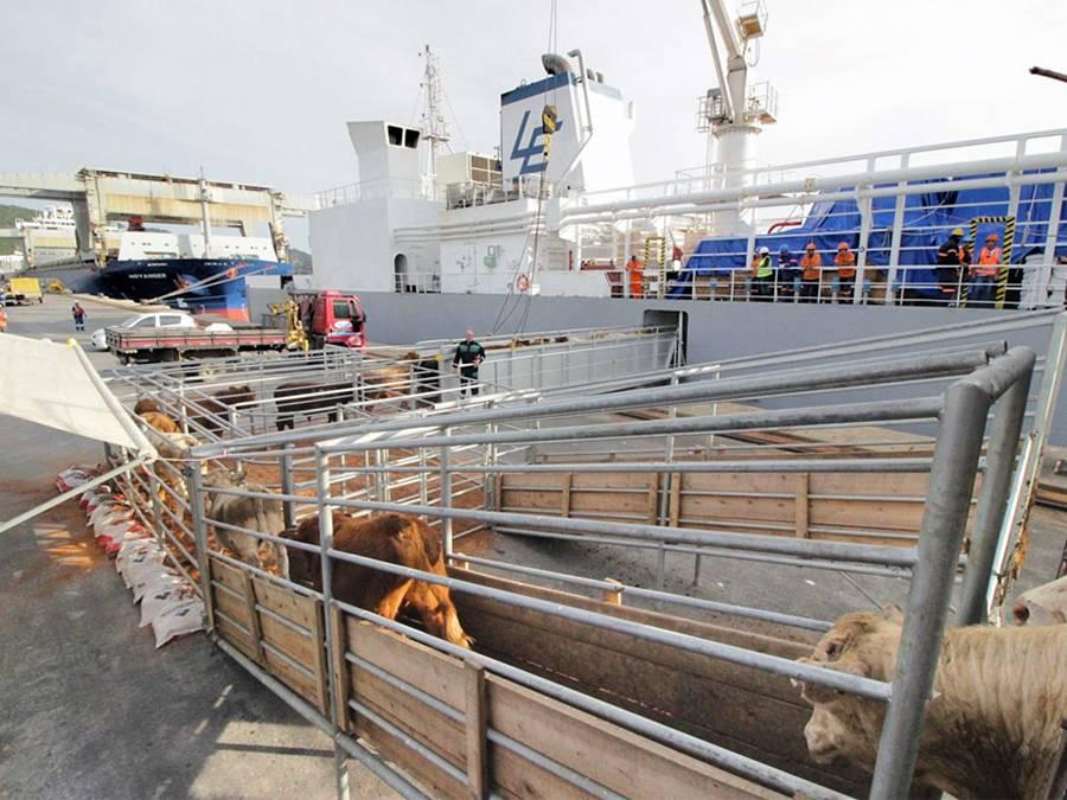
Brazil is an important supplier to the European beef market, meaning that a prolonged disruption could eventually reshape European import flows.
European buyers may need to increase sourcing from alternative suppliers, while Brazilian exporters would have to push additional volumes towards other international markets.
That creates potential winners and losers.
Other beef exporters could gain market share in Europe.
Brazil could increase its dependence on large-volume Asian buyers.
European import prices could also face upward pressure if alternative supplies prove more expensive.
The longer the interruption lasts, therefore, the greater the possibility that what begins as a regulatory dispute becomes a reorganisation of international meat trade flows.
The problem is becoming geoeconomic
This is where the story moves decisively beyond cattle farming.
Brazil has built a substantial part of its international economic power on its ability to feed the world.
Beef.
Soybeans.
Sugar.
Coffee.
Corn.
Poultry.
Its scale is extraordinary, and its agricultural sector has made Brazil one of the central pillars of the global food system.
But the new era of international trade is no longer determined simply by how much a country can produce and at what price.
Increasingly, it is also determined by whether a producer can prove how goods were produced.
Traceability, environmental standards, animal health, antimicrobial use and supply-chain transparency are becoming instruments of economic power.
And the European Union possesses an exceptionally powerful weapon: access to a market of roughly 450 million relatively affluent consumers.
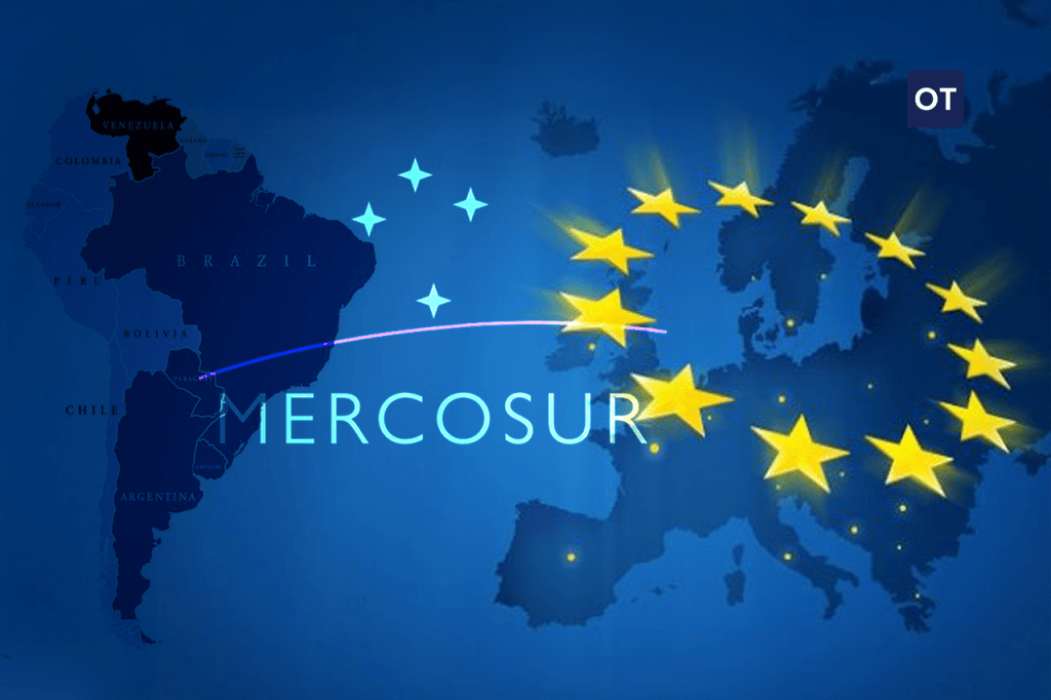
A new headache for Mercosur
The timing is politically sensitive.
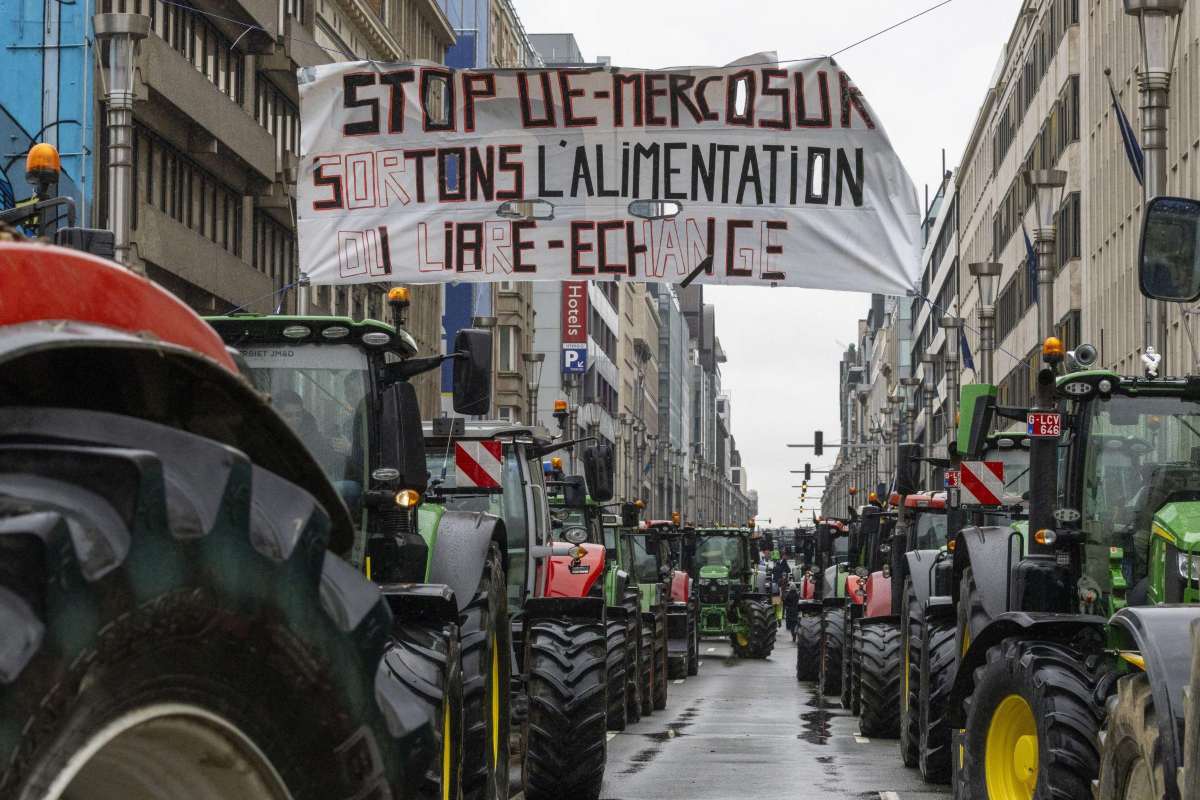
Europe is already engaged in an intense debate over agricultural competition and its economic relationship with Mercosur.
European farmers have repeatedly argued that Brussels cannot impose demanding production requirements on EU agriculture while simultaneously allowing increasing volumes of imports from countries operating under different conditions.
The Brazilian beef dispute now provides fresh ammunition for that debate.
It does not prove that Mercosur products as a whole are unsafe or produced to inadequate standards.
But it demonstrates something politically important:
Access to the EU market can be interrupted when the guarantees required by European law are not available.
That distinction could become highly significant in the broader debate over agricultural trade.
European farmers gain a powerful argument
This may ultimately be one of the most important political consequences of the dispute.
The Commission can argue that stringent EU rules are not merely additional costs imposed on European livestock farmers.
They can also operate as a gatekeeping mechanism for imports that cannot demonstrate equivalent compliance with applicable EU requirements.
That moves the debate towards the principle of reciprocity — one of the central demands of European farming organisations.
European farmers increasingly want a simple rule:
If they must meet demanding standards to sell food inside Europe, imported food should be required to provide comparable guarantees.
The Brazilian case gives that argument new political force.
Europe exports rules instead of commodities
There is an even deeper geoeconomic dimension.
The European Union is not the world’s dominant producer of many agricultural commodities.
But it remains one of the world’s most powerful regulatory actors.
When a consumer market of Europe’s size establishes new standards, exporters around the world frequently have little choice but to adapt if they want continued access.
That phenomenon is sometimes described as Europe’s regulatory power: instead of exporting more commodities, the EU effectively exports its rules.
Brazil is now confronting that reality directly.
The battle is no longer only about tariffs or quotas.
It is about data.
Certification.
Traceability.
Production methods.
And the ability to prove compliance across an entire supply chain.
China makes the equation even more delicate
Brazil’s challenge becomes more important because its beef export strategy is heavily exposed to major external buyers, particularly China.
That creates a classic geoeconomic vulnerability.
A producer may dominate global supply, but if its most profitable or largest destination markets tighten access simultaneously, bargaining power can shift rapidly from seller to buyer.
For Brasília, maintaining diversified access to China, Europe and future high-value Asian markets is therefore strategically important.
Losing Europe for an extended period would not destroy Brazil’s beef industry.
But it could increase the sector’s dependence on other major buyers and reduce its flexibility in negotiating prices.
The battle is not really about beef — it is about the rules of global trade
Brazil will remain a global beef powerhouse.
It has the land, production capacity, industrial groups and international customer base to retain that position.
But the European decision reveals a new limit to the power of global agricultural giants.
Production scale is no longer sufficient.
Access to the world’s most profitable markets will increasingly depend on the ability to prove compliance throughout the supply chain.
That transforms traceability from a technical requirement into a geoeconomic instrument.
Brazil’s immediate objective is straightforward: reopen the European market as quickly as possible.
For Europe, however, something larger is at stake.
Brussels wants to demonstrate that countries seeking access to the European consumer do not simply gain entry to a lucrative market — they must also play by its rules.
Source: pagenews.gr
Διαβάστε όλες τις τελευταίες Ειδήσεις από την Ελλάδα και τον Κόσμο