Rubio: “Greece Deserves an Ambassador Trump Fully Trusts” – Washington’s Strategic Message to Athens
 ΧΡΟΝΟΣ ΑΝΑΓΝΩΣΗΣ 15 '
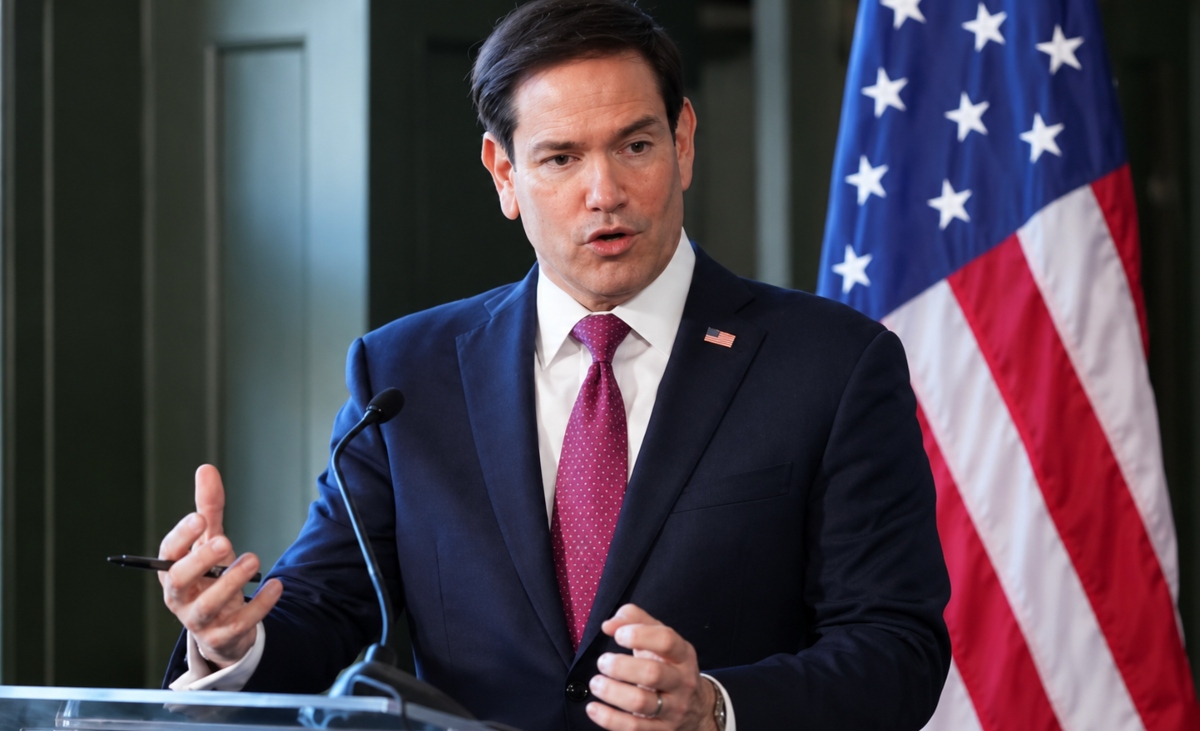
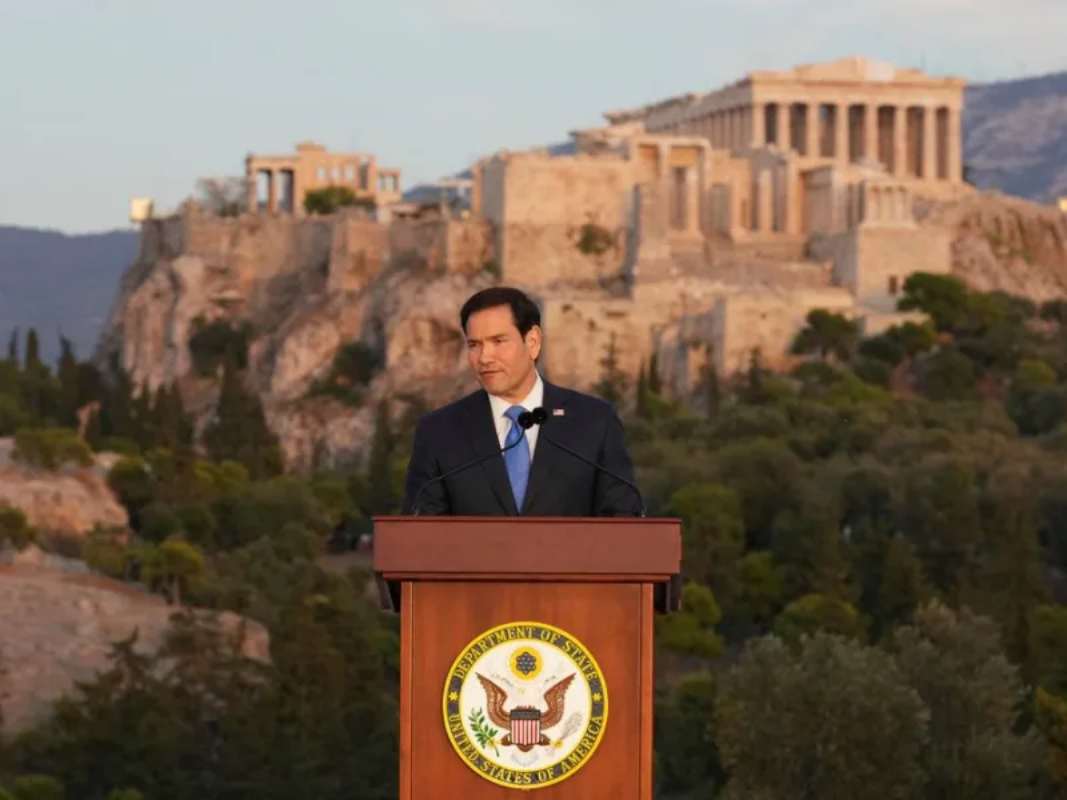
Πηγή Φωτογραφίας: AP Photo//Rubio: “Greece Deserves an Ambassador Trump Fully Trusts” – Washington’s Strategic Message to Athens



Washington Sends a Clear Diplomatic Message to Greece
US Secretary of State Marco Rubio has delivered a significant diplomatic message to Athens, declaring that Greece deserves a powerful American ambassador with direct access to President Donald Trump and his complete confidence.
In an interview with Matthew Boyle of Breitbart News, Rubio addressed the forthcoming appointment of a successor to Kimberly Guilfoyle, firmly rejecting suggestions that the leadership change at the US Embassy in Athens represents a weakening of bilateral relations.
Instead, the American Secretary of State described Greece as a strategically important ally whose geographical position, energy infrastructure and role within NATO make it increasingly relevant to Washington’s long-term priorities.
His remarks extended well beyond the appointment of a new ambassador.
They offered a broader picture of how the Trump administration views Greece within an evolving geopolitical environment shaped by energy security, European strategic vulnerabilities, instability in the Middle East and the war in Ukraine.
For Athens, the central diplomatic question is how Washington’s recognition of Greece’s strategic importance will translate into concrete cooperation, investment and security commitments.
Rubio: “Greece Is a Very Important Country”
Rubio was unequivocal when discussing Greece’s importance to the United States.
“Greece is an important country, a very important country. It is a great ally of the United States,” he stated.
He went further, emphasizing that the relationship is not merely rooted in historical cooperation.
“They have helped us in so many ways, and they are important to our future,” Rubio said.
The reference to the future of American strategic interests is particularly significant.
It places Greece within Washington’s forward-looking calculations rather than treating the country simply as a longstanding NATO partner.
The United States increasingly views southeastern Europe and the Eastern Mediterranean through the interconnected lenses of energy security, military cooperation, regional stability and international trade routes.
Greece occupies a geographical position linking several of these priorities.
Rubio’s comments therefore reflect an American strategic assessment in which Athens remains relevant to broader regional objectives.
“Greece Deserves a Strong Ambassador with the President’s Confidence”
Addressing the search for Kimberly Guilfoyle’s successor, Rubio explained that the selection process was still at an early stage when the interview took place.
Finding the appropriate candidate and completing the required confirmation process would take time.
However, the Secretary of State outlined the qualities Washington considers essential for its next representative in Athens.
“Greece deserves a strong and good ambassador who has access to the president and his confidence,” he said.
The emphasis on presidential access is noteworthy.
In an administration where personal relationships and direct communication with the White House can play an important role in diplomatic decision-making, the political standing of an ambassador may influence the effectiveness of bilateral engagement.
Rubio’s statement suggests that Washington wants its next ambassador to possess both diplomatic authority and the personal trust of President Trump.
Such a choice would be particularly relevant when dealing with complex regional issues involving energy infrastructure, defense cooperation and competing geopolitical interests.
No Downgrade After Kimberly Guilfoyle’s Departure
Rubio directly rejected interpretations suggesting that Guilfoyle’s departure might signal a reduced American commitment to Greece.
“Under no circumstances should any of this be viewed as a downgrade of the relationship with Greece,” he declared.
He reinforced the message by explaining why the position requires careful consideration.
“On the contrary, I believe it is so important to us that it is essential for the person there to have the president’s full support and confidence,” Rubio said.
The Secretary of State also indicated that an appropriate diplomatic team would maintain the embassy’s operations during the transition.
His comments draw a distinction between changes in diplomatic personnel and the underlying strategic relationship between two countries.
The appointment of a new ambassador does not, by itself, indicate a change in policy.
Nevertheless, Rubio’s emphasis on presidential confidence also reflects the Trump administration’s preference for senior representatives who are closely aligned with its political leadership.
For Greece, the practical significance of the appointment will become clearer once a nominee is identified and the administration’s priorities are translated into diplomatic action.
Greece as an Energy Bridge Between Three Continents
One of the most substantial sections of Rubio’s interview concerned Greece’s growing importance in the international energy system.
The Secretary of State described the country’s geography and political approach to energy development as important strategic advantages.
“I think Greece is in a very unique position, both geographically and politically,” he stated.
Rubio highlighted Greece’s openness to energy exploration and the potential for developing infrastructure connecting different regional markets.
He emphasized that energy production alone is insufficient without the networks required to transport electricity, oil and natural gas.
“It has always been the connecting link between Europe, Africa and the Middle East,” he said.
He added that Greece could contribute not only to energy production but also to the movement of energy across regions.
“Beyond producing energy, it can help move it north into Europe and south into Israel, the Middle East and beyond.”
The remarks reflect an American view of Greece as a potential energy corridor linking European consumers with suppliers and infrastructure across the Eastern Mediterranean.
That role has become increasingly relevant as European countries seek to diversify their energy supplies and strengthen their resilience against geopolitical disruptions.
LNG, Electricity Interconnections and the Eastern Mediterranean
Greece’s strategic position is supported by existing and planned energy infrastructure.
The country has liquefied natural gas import facilities, cross-border natural gas connections and access to markets in southeastern Europe.
At the same time, proposed and developing electricity interconnections in the Eastern Mediterranean could expand cooperation involving Greece, Cyprus, Israel and other regional partners.
These projects form part of a wider discussion about energy diversification and the security of European supply routes.
For Washington, such infrastructure may contribute to regional stability while also creating opportunities for American energy exports and investment.
For Athens, energy connectivity offers potential economic and geopolitical benefits.
However, the development of major cross-border projects requires substantial financing, regulatory cooperation, commercial viability and the management of regional security risks.
Rubio’s comments demonstrate American interest in Greece’s potential role but should not be interpreted as an announcement of new funding or a specific infrastructure agreement.
The distinction between strategic support and concrete commitments remains essential.
NATO and Greece’s Role in Regional Security
Rubio also linked Greece’s importance to NATO and the broader security architecture of southeastern Europe.
As a member of the Alliance, Greece occupies a strategic position near the Balkans, the Black Sea and the Eastern Mediterranean.
These regions have acquired renewed significance amid tensions involving Russia, continuing instability in the Middle East and concerns over critical maritime and energy routes.
For Washington, cooperation with Athens contributes to a wider network of diplomatic and defense relationships.
For Greece, its strategic partnership with the United States remains connected to national security, regional cooperation and participation in NATO planning.
The relationship nevertheless operates within a complex regional environment where American and Greek priorities do not necessarily coincide on every issue.
Rubio’s statements underscore the importance Washington attaches to the partnership without eliminating the possibility of differences over individual policies.
Rubio Criticizes Europe’s Dependence on Russian Energy
The American Secretary of State also used the interview to criticize European energy policies over the past two decades.
He argued that insufficient development of domestic energy resources and excessive reliance on Russian supplies created strategic vulnerabilities.
Rubio recalled Donald Trump’s warnings during his first presidency about Germany’s dependence on Russian energy.
“Their dependence on Russian energy is one of the reasons Putin invaded Ukraine,” he argued.
According to Rubio, Moscow believed that Europe’s reliance on Russian supplies would limit the willingness of European governments to respond forcefully.
This represents the Secretary of State’s interpretation of the Kremlin’s calculations.
Russia’s invasion of Ukraine involves multiple historical, political and strategic factors that cannot be reduced to energy dependence alone.
Nevertheless, Europe’s reliance on Russian oil and gas had important consequences for the economic and political response to the war.
Rubio also linked high electricity and transportation costs to economic difficulties across parts of Europe.
His comments reflect the Trump administration’s broader criticism of energy policies that, in its view, increase costs or constrain domestic production.
The Pnyx Speech: Ancient Greece and the Political Heritage of the West
Rubio also revisited his speech at the Pnyx in Athens, overlooking the Acropolis.
The historic setting provided the backdrop for a broader message about the cultural and institutional foundations of Western civilization.
“We are the inheritors. We inherited from Greece and Rome, and ultimately through Europe, many of the values on which our country rests today,” Rubio said.
He argued that American institutions and political traditions emerged from a historical development extending across thousands of years.
The Secretary of State connected this heritage to the Trump administration’s understanding of Western identity and foreign policy.
“They come from a shared history that we need to rediscover and embrace,” he stated.
He continued:
“That is what we are doing here in this country under President Trump. We want more Western leaders to do the same.”
The remarks reveal an ideological dimension of the administration’s foreign policy.
Rubio presented Western cultural heritage as a source of political identity and argued that governments should be more willing to acknowledge and defend it.
His interpretation forms part of a broader debate over national identity, historical memory and the relationship between cultural traditions and international politics.
For Greece, the references to ancient Athens highlight the symbolic importance the country holds in American political discourse.
Russian Diesel: Washington Places American Interests First
Rubio also defended the Trump administration’s temporary easing of certain restrictions affecting Russian diesel.
According to the Secretary of State, the decision was intended to increase supply in international energy markets and protect American economic interests.
He presented the move as an example of the administration’s commitment to prioritizing domestic needs.
“If there is a conflict between what is good for them and what is good for us, we must always choose what is good for us,” Rubio declared.
The statement reflects the administration’s emphasis on the primacy of American national interests in foreign policy.
Rubio argued that the decision was not intended to benefit Russia or harm Ukraine.
Instead, he described it as a measure designed to serve the needs of the United States.
The policy raises questions for European governments seeking to maintain economic pressure on Moscow while also addressing energy prices and supply concerns.
It illustrates the potential tensions between sanctions policy, energy security and national economic priorities.
Ukraine: The Donetsk Dispute Remains a Major Obstacle
Turning to the war in Ukraine, Rubio identified disagreements over the future of Donetsk as a central obstacle to a negotiated settlement.
According to his account, Moscow is demanding control of the entire region, while Kyiv considers its remaining defensive positions essential to national security.
The Secretary of State said the United States remains willing to facilitate negotiations.
However, he acknowledged the difficulties involved and emphasized that Washington must also address other international priorities.
“We would like the war to end, but we also have other priorities around the world that we are focused on,” Rubio said.
The remarks suggest that the administration views the war in Ukraine as one of several major geopolitical challenges competing for American attention and resources.
Rubio also addressed Ukrainian attacks involving vessels in the Black Sea, expressing concern about incidents affecting ships carrying oil associated with American companies.
He indicated that he did not believe Ukraine had deliberately targeted American interests.
At the same time, he expressed frustration over continuing Russian missile attacks on Ukrainian cities and civilian areas.
The comments illustrate the complexity of Washington’s position as it seeks to manage energy-market concerns while remaining engaged in efforts to end the conflict.
Iran and the Strait of Hormuz: Energy Security Meets Military Power
Rubio’s interview also addressed Iran and the security of international shipping through the Strait of Hormuz.
The Secretary of State argued that American military operations had weakened Iran’s conventional military capabilities.
He identified the protection of maritime traffic as a central priority for US forces in the region.
According to figures cited by Rubio, approximately 13 million to 14 million barrels of oil per day had passed through the Strait during the ten days preceding the interview.
He said American forces were helping protect commercial vessels despite the continuing threat of attacks.
Rubio also argued that economic pressure and restrictions on Iranian oil exports were limiting Tehran’s ability to finance military activities and regional armed groups.
These claims reflect the American administration’s assessment of the situation.
The Strait of Hormuz remains one of the world’s most strategically important maritime corridors, making disruptions there a significant concern for international energy markets.
For Greece, whose shipping industry has a substantial international presence, maritime security in the Gulf has direct economic relevance.
The connection between naval security, energy transportation and international trade reinforces the broader geopolitical importance of the region.
What Rubio’s Statements Mean for Athens
Rubio’s interview reveals several interconnected priorities shaping American policy toward Greece.
The selection of a new ambassador, cooperation within NATO, the development of energy corridors and security in the Eastern Mediterranean are distinct issues, but they form part of a wider strategic relationship.
Washington is signaling that it intends to maintain strong diplomatic channels with Athens while pursuing clearly defined American interests.
For the Greek government, the challenge is to translate this recognition into tangible benefits without overlooking its own national priorities or the complexities of regional diplomacy.
The appointment of the next US ambassador will be one indication of how the administration intends to manage that relationship.
Energy investment, defense cooperation and the progress of regional infrastructure projects will provide additional measures of its practical development.
Rubio’s most important message was therefore not simply about who will replace Kimberly Guilfoyle. It was his explicit assurance that Greece remains strategically important to the United States and deserves an ambassador with direct presidential access and Donald Trump’s full confidence.
The broader significance of those remarks lies in the increasingly close relationship between diplomacy, energy security and regional power in the Eastern Mediterranean.
Source: pagenews.gr
Διαβάστε όλες τις τελευταίες Ειδήσεις από την Ελλάδα και τον Κόσμο