“Too Hot to Work”: Europe Puts “Heat Leave” on the Political Agenda
 ΧΡΟΝΟΣ ΑΝΑΓΝΩΣΗΣ 10 '
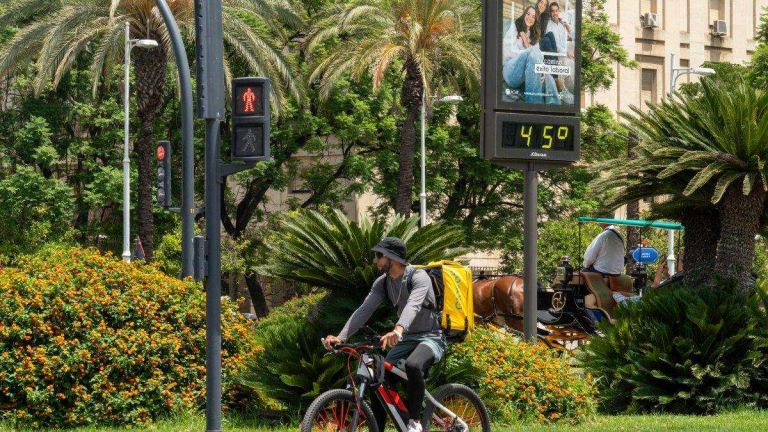



Until recently, an extreme heatwave was treated primarily as a public-health emergency.
Now it is becoming a labour, economic and political issue for the whole of Europe.
As heatwaves become more frequent and intense, Brussels is confronting a question that would have sounded unusual only a decade ago:
When is it simply too hot to work?
And immediately behind it comes the more difficult question:
Who pays when work has to stop because of extreme heat?
The European Commission has now explicitly brought extreme heat into the debate over the future of working conditions. In July, it launched the second-stage consultation with social partners on the forthcoming Quality Jobs Act, identifying protection from extreme heat among the emerging occupational health and safety challenges facing European workers.
There is not yet an EU-wide legal right to “heat leave”.
But there is now a serious European debate about how people should work when temperatures become dangerous.
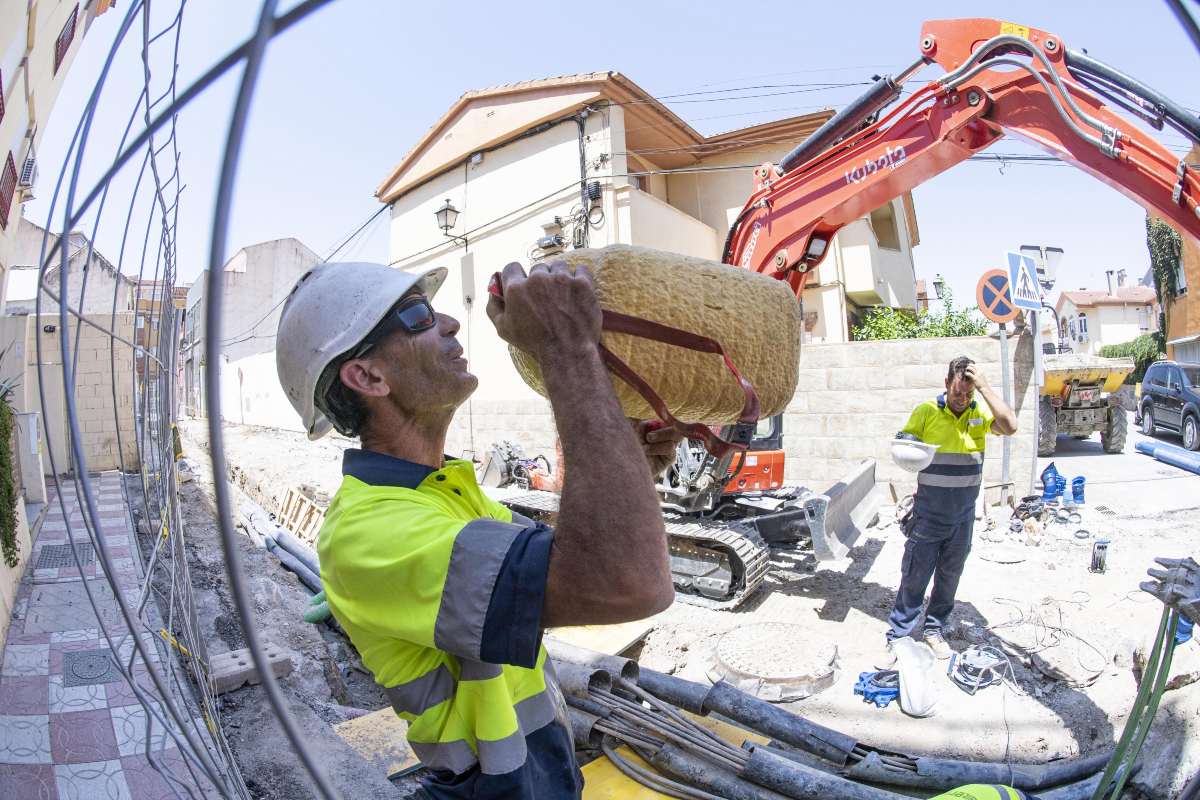
Heat Is Becoming a Workplace Hazard
The numbers explain why Brussels is paying attention.
According to EU-OSHA’s 2025 OSH Pulse survey, one in five workers in the EU reported exposure to extreme heat at work during the previous 12 months.
In Greece, the figure reached 35% – the highest recorded in the survey. Cyprus followed at 30%, with Croatia at 28%.
Extreme heat is not simply uncomfortable.
It can cause dehydration, heat exhaustion and heatstroke. Fatigue and reduced concentration can also increase the risk of workplace accidents, while sustained heat exposure can undermine productivity.
The question is therefore no longer:
“Can workers tolerate the heat?”
It is increasingly:
“Can Europe continue operating under the same labour rules in a much hotter climate?”
One Europe, But No Single Heat Rule
This is where the political problem begins.
The European Union has a broad occupational health and safety framework, but there is no single EU temperature threshold at which work automatically has to stop.
Member states have developed different approaches.
Some use temperature or heat-stress limits.
Others focus on changing working hours, mandatory breaks, access to water and shade, ventilation or employers’ obligation to assess workplace risks.
The result is a European patchwork.
And as extreme heat increasingly crosses national borders, the question is whether that patchwork remains sustainable.
Spain: The “Climate Leave” Model
Spain has gone further than many European countries.
Following the catastrophic Valencia floods, Madrid introduced up to four days of paid climate leave when extreme weather conditions, official restrictions or serious risks make it impossible for employees to reach their workplace safely.
Spain has also strengthened protections for outdoor workers during periods of extreme temperatures.
The significance goes beyond the specific legislation.
It changes the philosophy behind extreme-weather protection.
Dangerous weather is no longer treated solely as the worker’s personal problem. It becomes a workplace risk that employers and governments have a responsibility to manage.
Italy: Stop Working During the Most Dangerous Hours
Italy has taken a somewhat different approach.
During periods of extreme heat, regional authorities have imposed restrictions on outdoor work during the hottest parts of the day, particularly in sectors such as construction and agriculture.
The idea is not necessarily to give employees an entire day off.
Instead, the working day can be reorganised around the heat.
Work begins earlier.
Activity stops during the most dangerous hours.
Employees return when temperatures fall.
Across southern Europe, climate change could therefore eventually alter the structure of the working day itself.
Should Work Stop at 35°C?
Setting one temperature limit sounds simple.
In reality, it is not.
35°C inside an air-conditioned office is not the same as 35°C on a construction site under direct sunlight.
Nor are 32°C combined with high humidity and heavy physical labour necessarily safer than a higher temperature under different conditions.
Heat stress depends on temperature, humidity, solar radiation, airflow, clothing, protective equipment and the physical intensity of the work.
That means Europe may ultimately move toward a system based not on one magical temperature number, but on actual heat-stress risk.
The Workers on the Front Line
Not every occupation faces the same danger.
Construction workers, agricultural labourers, delivery riders, sanitation workers, drivers, port workers and emergency personnel are among those most exposed.
But indoor workers can also face dangerous conditions.
Factories, warehouses, commercial kitchens and poorly ventilated buildings can become extremely hot.
EU-OSHA stresses that both outdoor and indoor workers can be affected and that heavy protective clothing can further increase heat stress.
Greece Is Already on the Front Line
For Greece, this debate is particularly important.
The 35% exposure rate among Greek workers recorded in the EU-OSHA survey illustrates how directly the country is affected.
The structure of the Greek economy adds to the challenge.
Tourism.
Construction.
Food delivery.
Hospitality.
Agriculture.
Ports and transport.
Seasonal employment.
These are sectors in which significant economic activity takes place precisely during the months when temperatures are highest.
For Athens, therefore, the discussion in Brussels is far from theoretical.
Who Pays When Work Stops?
This is where the real political battle begins.
If an employee cannot safely work because of extreme heat, who pays for the lost hours?
The employer?
The government?
Social insurance?
Or some combination of all three?
A large corporation may be able to absorb several hours of disruption relatively easily.
For a small construction company, family-run restaurant or agricultural business, repeated shutdowns throughout the summer could represent a significant cost.
And as heatwaves become more frequent, the issue is no longer about “two unusually hot days in July”.
It becomes a permanent cost of adapting the European economy to climate change.
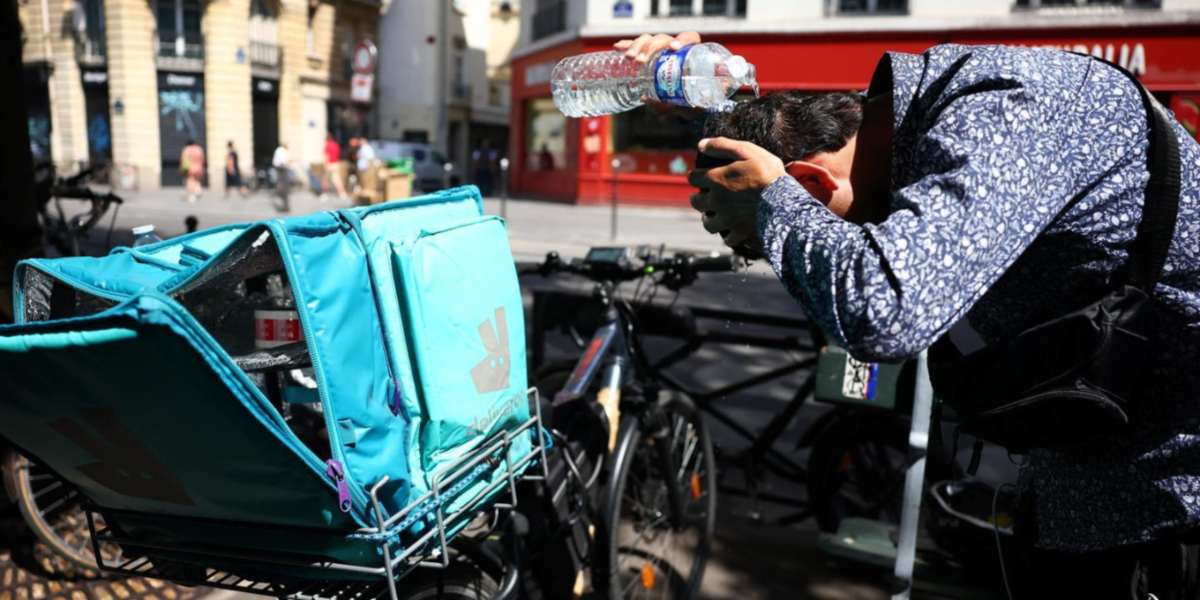
Delivery Riders: The New Symbol of Heatwave Work
Few jobs illustrate the problem better than food delivery.
When temperatures approach or exceed 40°C, a rider on a motorcycle is exposed to direct sunlight, heat radiating from asphalt and additional thermal stress from helmets and protective equipment.
But the platform economy creates another question:
Who exactly is responsible for stopping the work?
Who decides conditions are too dangerous?
Who switches off the app?
And who compensates the rider for lost income?
Climate policy therefore collides with another major European debate: the rights and status of workers in the digital platform economy.
Tourism Faces Its Own Heat Dilemma
For Greece, Spain, Italy, Cyprus and Portugal, there is another complication.
The hottest period of the year coincides with the peak tourism season.
Hotels, restaurants, transport companies and tourism businesses need the largest number of workers precisely when working conditions are most difficult.
Adaptation could mean more shifts, different schedules, improved cooling systems, additional staff and more frequent breaks.
All of those measures cost money.
But failing to adapt also carries costs through accidents, sickness absence and declining productivity.
Extreme Heat Is an Economic Problem Too
This is where the debate moves beyond social policy.
Heat affects concentration and physical performance, while increasing fatigue and the risk of mistakes and accidents.
Protecting workers therefore does not necessarily conflict with employers’ interests.
Keeping an exhausted employee at work for another two hours does not automatically produce two additional productive hours.
In some circumstances, the opposite may be true.
The economic question is therefore shifting from the cost of protecting workers to the cost of failing to protect them.
What Could Brussels Actually Do?
The European Commission is still considering its options.
Crucially, Brussels has not proposed a universal EU “heat leave” entitlement.
What it has done is formally place extreme heat within the Quality Jobs Act debate and the wider discussion about modernising occupational health and safety protections.
EU workplace-safety guidance already points toward measures such as rescheduling work away from the hottest hours, ensuring access to drinking water, providing shade or cooled rest areas, improving ventilation, introducing adequate breaks and training workers and managers to recognise heat stress.
The next question is political:
Which protections should remain recommendations – and which should become enforceable rights?
Is Europe Creating a New Labour Right?
Europe has rewritten the rules of work many times before.
The eight-hour day.
Paid annual leave.
Parental leave.
Maternity protection.
Remote-working protections.
And, more recently, rules for digital platform work.
Climate change could create the next major category of labour rights.
That does not necessarily mean every European employee receiving a paid day off whenever temperatures cross a particular number.
A future system could instead establish a right to protection from dangerous heat, potentially triggering shorter hours, additional breaks, altered schedules, suspension of work or paid absence depending on the circumstances.
Climate Change Is Reaching the Working Day
For years, Europe’s climate debate focused primarily on CO₂ emissions, cars, electricity generation and industry.
Now climate change is reaching into the everyday organisation of work.
What time you start.
How many hours you work.
When you have the right to stop.
And whether you still get paid when temperatures make working unsafe.
Europe is only beginning this debate. But the pressure is unlikely to disappear. EU-OSHA’s latest findings show that one in three EU workers reports exposure to at least one climate-related workplace risk, while one in five reports exposure to extreme heat.
For countries such as Greece, where occupational exposure to extreme heat is already among the highest in Europe, the question is no longer whether working practices will eventually have to adapt.
The question is how quickly Europe will rewrite the rules – and who will pay the bill for working in an increasingly hotter continent.
Διαβάστε όλες τις τελευταίες Ειδήσεις από την Ελλάδα και τον Κόσμο