Athens Raises the Stakes With Ankara: Aegean Protest, EU Pressure and a New Deterrence Strategy
 ΧΡΟΝΟΣ ΑΝΑΓΝΩΣΗΣ 7 '
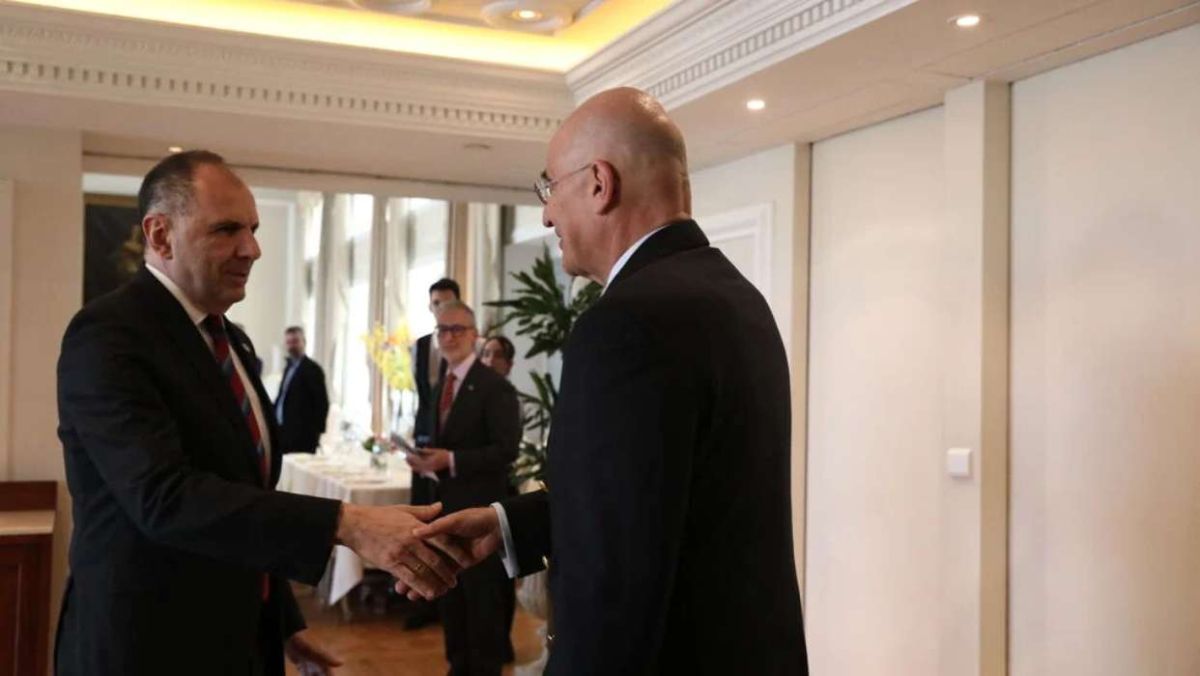
Πηγή Φωτογραφίας: eurokinissi//Athens Raises the Stakes With Ankara: Aegean Protest, EU Pressure and a New Deterrence Strategy



Greece is responding to the latest escalation in Turkish rhetoric and claims in the Aegean on several fronts, combining diplomatic pressure, international law, European leverage and stronger military deterrence.
A strongly worded Greek diplomatic protest delivered to the Turkish Foreign Ministry over Ankara’s maritime spatial planning and marine parks reflects this increasingly assertive approach.
Athens categorically rejects Turkey’s claims and insists that sovereignty in the Aegean has been definitively established by international treaties.
“Greece categorically rejects the Turkish claims as arbitrary and devoid of any legal basis. The sovereignty regime in the Aegean has been clearly and definitively established by the relevant international treaties,” the Greek protest states.
Athens rejects Turkey’s marine parks
A second element of the confrontation concerns the marine parks declared by Ankara.
Greece’s position is that, insofar as the Turkish-designated areas extend beyond Turkey’s jurisdiction and into areas of the Greek continental shelf, they have no legal effect.
Athens has made clear that no state can unilaterally establish marine protected areas beyond its national jurisdiction in a way that infringes upon another country’s sovereign rights.
The underlying concern is broader than environmental policy.
Greece wants to prevent environmental or administrative measures from being used to establish facts on the ground — or, more accurately, at sea — that could later support wider Turkish claims in the Aegean.
Athens takes the Turkish file to Europe
The Greek strategy does not stop at bilateral diplomacy.
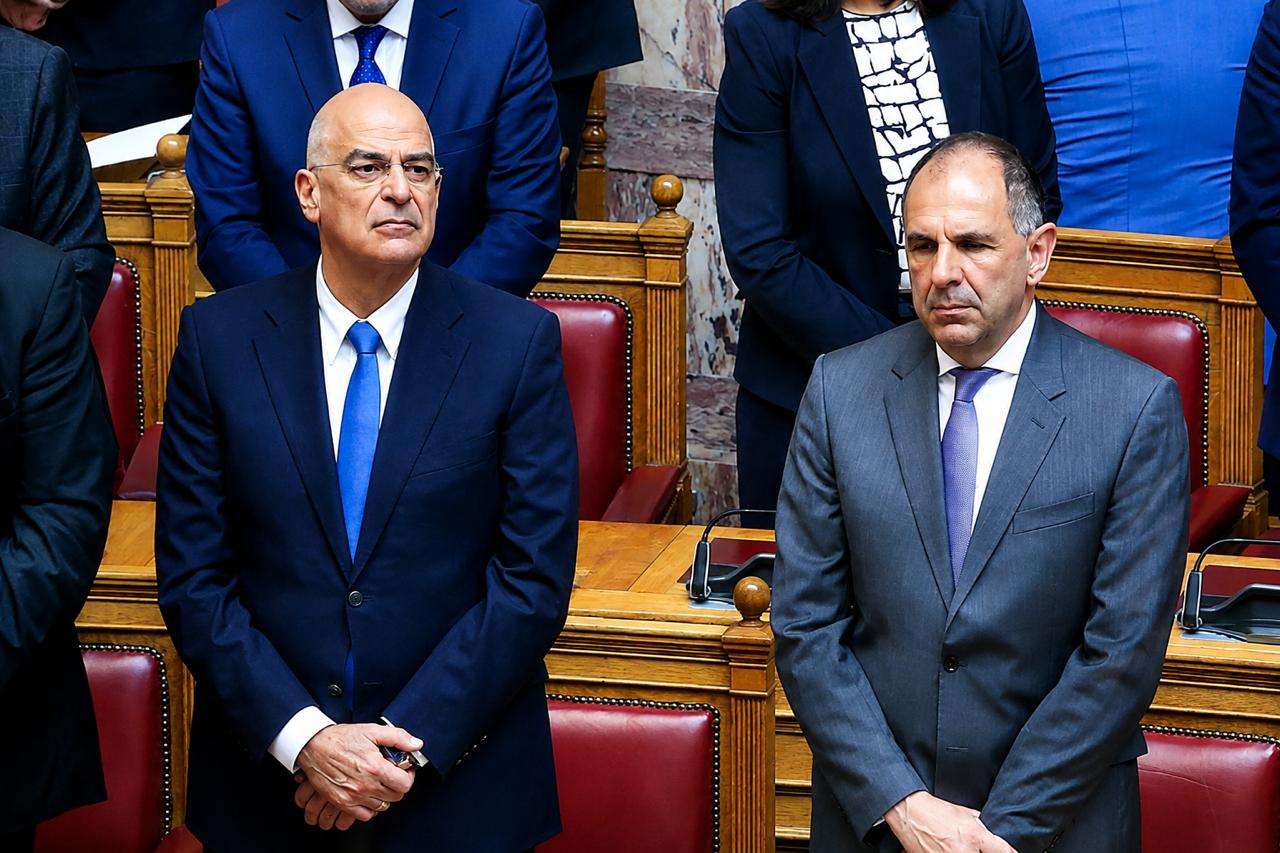
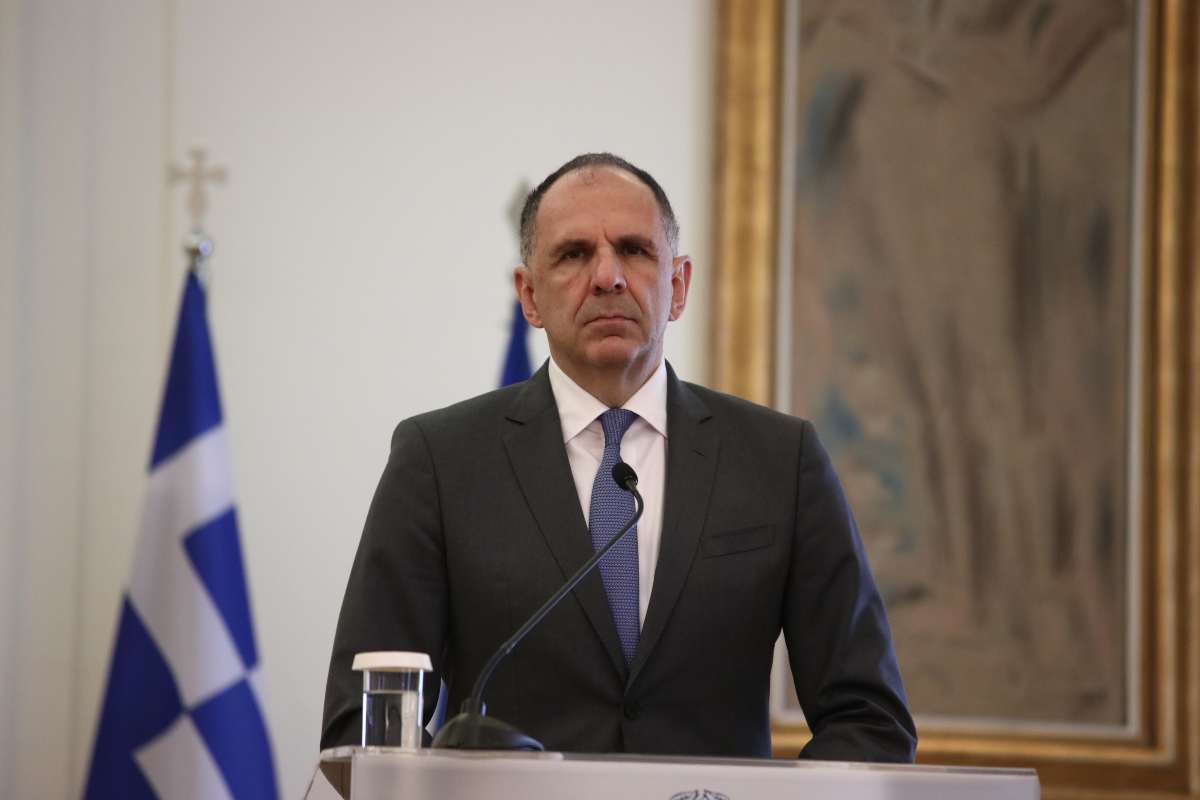
Foreign Minister George Gerapetritis has taken the growing tensions to Greece’s European partners, presenting a broader file of Turkish actions and claims.
It includes the dispute over maritime spatial planning, Turkey’s marine parks, the “Blue Homeland” doctrine and what Athens considers a qualitative and quantitative escalation of Turkish challenges.
“Greece will continue to bring before its European and international partners every unilateral action that violates international law and affects its sovereignty and sovereign rights,” Athens has stressed.
This European dimension is becoming increasingly important.
Greece wants Turkey’s conduct in the Aegean to be considered within the broader strategic relationship between Ankara and the European Union rather than treated as an isolated bilateral dispute.
Gerapetritis: Greece is setting the agenda
The political philosophy behind the strategy has been described openly by the Greek foreign minister.
Gerapetritis argues that the traditional dynamic of Greek-Turkish relations is changing.
“Turkey used to be the one putting issues on the table and forcing us to follow. That is no longer the case. The opposite now applies. Greece puts forward the arguments and Turkey reacts,” he has said.
Athens points to its maritime spatial planning, marine parks, energy exploration involving major international companies and expanding strategic partnerships as evidence of this shift.
The Greek interpretation is therefore that Turkey’s increasingly sharp reactions are partly a response to Athens taking greater initiative in areas where Ankara traditionally sought to dictate the agenda.
The second message comes from Thrace
At the same time, another part of the Greek response is military.
Defence Minister Nikos Dendias has used a visit to northern Greece to emphasise the importance of rapidly expanding Greece’s capabilities in unmanned systems while inspecting new fortification projects.
Greece is moving toward the capacity to produce as many as 15,000 drones annually, while hundreds of new defensive works are being developed to protect military personnel and infrastructure.
“Drones give us surveillance capabilities, reconnaissance capabilities and offensive capabilities. But that is not enough. There is also defence — the need to protect our personnel from similar systems that a country threatening Greece might possess,” Dendias said.
His language is significant.
The wars in Ukraine and the Middle East have demonstrated how inexpensive drones, FPV systems and loitering munitions can reshape the modern battlefield.
Greece now wants not only operational drone capabilities but also a domestic industrial base capable of producing them at scale.
Diplomacy and deterrence become part of the same strategy
The approaches of Gerapetritis and Dendias may appear to belong to separate policy areas, but strategically they form two sides of the same equation.
The Foreign Ministry is building the legal and diplomatic framework.
The Defence Ministry is strengthening deterrence.
Athens appears determined not to respond to Turkish pressure simply with escalating rhetoric. Instead, it is seeking to increase the political and strategic cost of any challenge on three levels: international law, European relations and military capability.
The Aegean returns to Europe’s strategic equation
The timing is particularly important.
Turkey is seeking a greater role in Europe’s emerging security architecture at precisely the moment when the EU is dramatically increasing defence spending and looking for ways to mobilise additional industrial capacity.
Turkey’s large military, NATO membership and rapidly developing defence industry make Ankara an attractive partner for several European capitals.
For Greece, that creates leverage.
Athens wants its European partners to recognise that deeper strategic cooperation with Turkey cannot be entirely separated from Ankara’s policies toward an EU member state.
The Aegean therefore risks becoming increasingly connected to the broader debate over Turkey’s future relationship with European defence.
The bigger picture: From “calm waters” to controlled confrontation
The central question is whether the period of relative “calm waters” in Greek-Turkish relations is now giving way to a more confrontational — although still controlled — phase.
Dialogue between Athens and Ankara has not been abandoned.
Greece continues to maintain that the delimitation of the continental shelf and Exclusive Economic Zone is the only bilateral dispute that could ultimately be referred to international jurisdiction.
But Athens is simultaneously adopting a more assertive posture.
Maritime spatial planning, marine parks, energy exploration, European diplomatic pressure, drones and stronger military deterrence are increasingly becoming elements of a single strategic picture.
Greece is signalling that it does not seek a rupture with Turkey.
But it is also drawing a clear distinction:
Dialogue does not mean accepting faits accomplis — and de-escalation does not mean surrendering sovereignty or sovereign rights.
Source: pagenews.gr
Διαβάστε όλες τις τελευταίες Ειδήσεις από την Ελλάδα και τον Κόσμο