Mytilineos to Europe: “We Cannot Wait” – Energy Will Decide Whether European Industry Survives
 ΧΡΟΝΟΣ ΑΝΑΓΝΩΣΗΣ 7 '
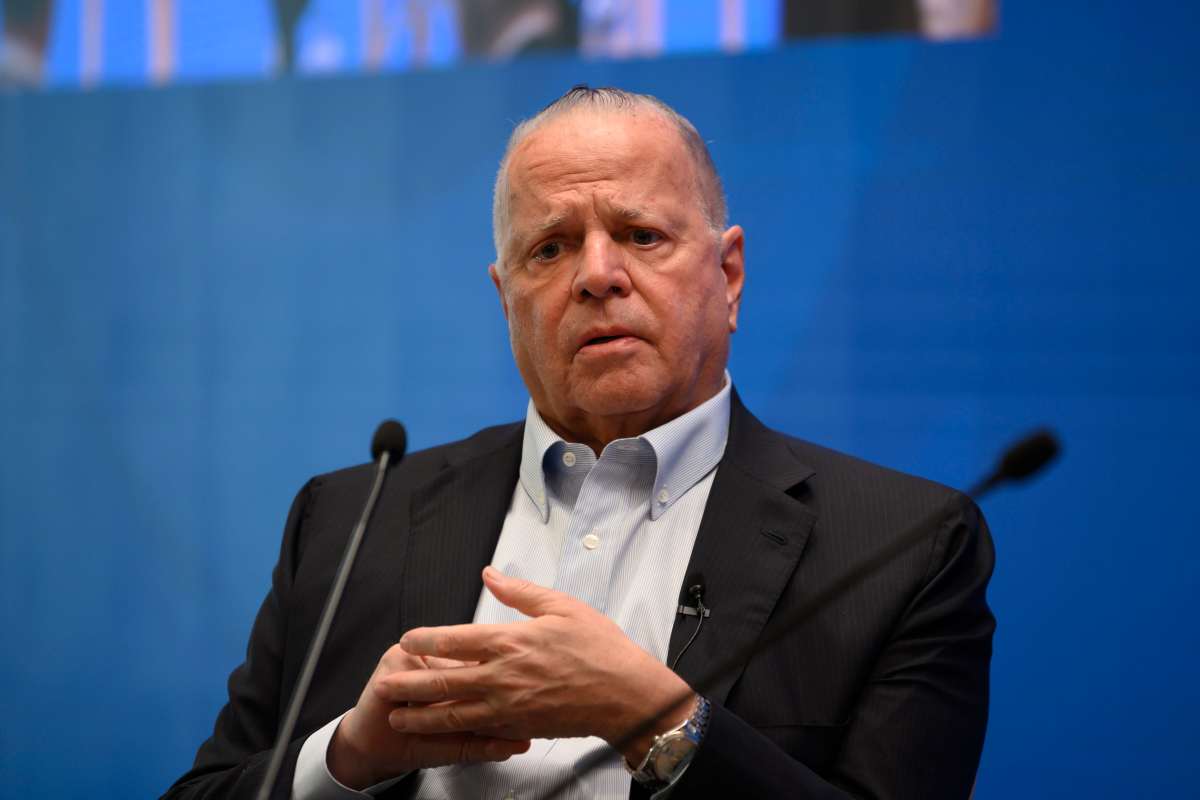
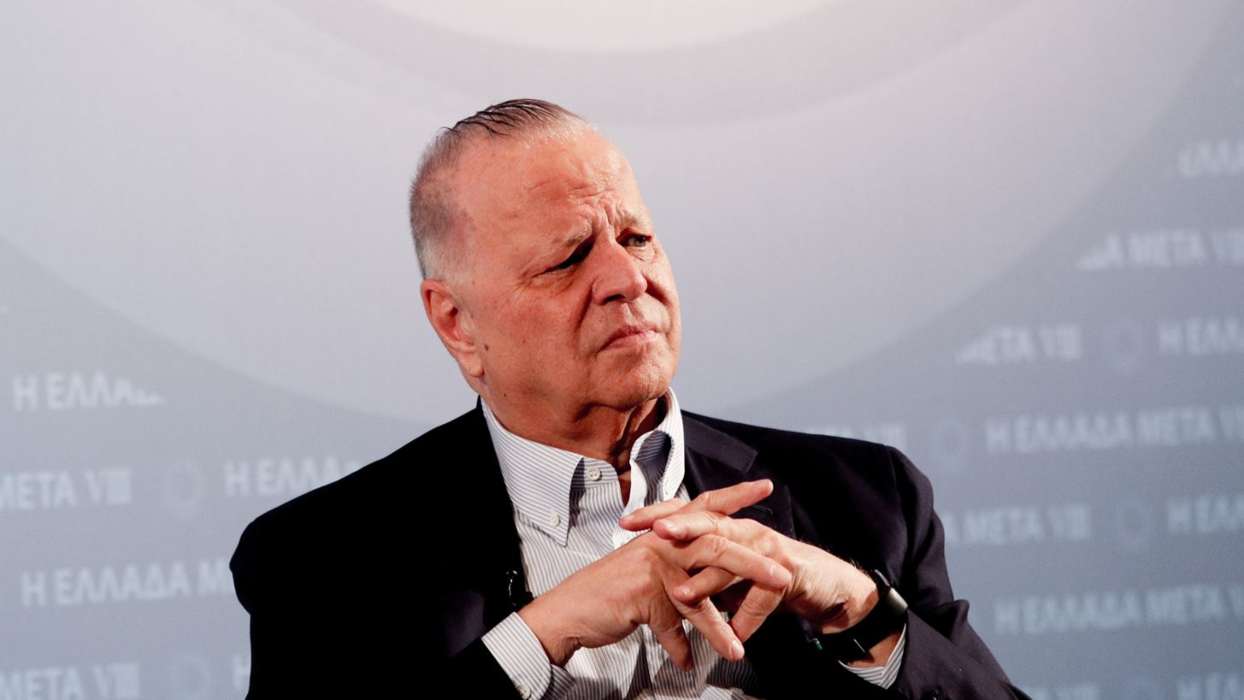
Πηγή Φωτογραφίας: eurokinissi//Mytilineos to Europe: “We Cannot Wait” – Energy Will Decide Whether European Industry Survives



Evangelos Mytilineos is bringing one of the most consequential issues for Europe’s economic future back to the center of the debate: energy costs and the competitiveness of European industry.
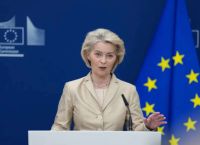
Commenting on European Commission President Ursula von der Leyen’s recent State of the Union address, the Executive Chairman of METLEN Energy & Metals argues that Europe’s industrial future will depend not merely on the targets Brussels sets, but on whether those ambitions can be translated into real investment, competitive energy and viable European production.
His intervention comes at a crucial moment. Critical raw materials, defense, artificial intelligence, batteries, advanced manufacturing and decarbonization increasingly converge around the same fundamental requirement: enormous amounts of investment and, above all, abundant and competitively priced energy.
Europe Needs a Strategy for the Transition Itself
At the heart of Mytilineos’ argument is an important distinction.
The energy system Europe hopes to have in the long term is one thing. The difficult journey required to get there is another.
Expanding renewable and nuclear generation, reducing dependence on imported fossil fuels and building stronger energy infrastructure are all essential elements of Europe’s long-term strategy.
But they do not eliminate today’s cost pressures.
Europe still consumes roughly 450 million tonnes of oil and 340 billion cubic metres of natural gas every year. Even under existing transition scenarios, hydrocarbons are expected to remain significant during the coming decade.
That means oil and gas will continue to influence electricity prices, industrial production costs and the final energy bills paid by businesses and households.
Mytilineos’ central message is clear:
“Europe cannot wait for the future energy system to arrive before addressing competitiveness. We need a strategy for the transition itself.”
No Two-Speed Europe on Industrial Support
This is where Mytilineos introduces another critical dimension to the debate: the risk of fragmentation within Europe’s Single Market.
If every member state is left to protect its industrial base according to its own fiscal capacity, Europe risks creating increasingly unequal competitive conditions.
Countries with greater fiscal firepower can provide substantially more support to their companies, while smaller or more fiscally constrained economies simply cannot compete on the same terms.
For Mytilineos, the answer therefore has to be European rather than national.
“Not a patchwork of national measures available only to Member States with the deepest fiscal pockets, but common European solutions, backed by European funding.”
The implication is significant: energy competitiveness should increasingly be treated as a common European industrial challenge rather than a problem to be solved independently by 27 national governments.
Critical Raw Materials: From Announcements to Production
The second major pillar of Mytilineos’ intervention concerns critical raw materials.
He views the proposed creation of a European Critical Raw Materials Centre as a potentially important starting point, but argues that Europe must move beyond simply identifying strategic vulnerabilities.
The next step is to build actual industrial capacity.
That means investment in mining, refining, processing and recycling within Europe, combined with a diversified network of reliable international suppliers.
The challenge has become increasingly urgent because many of the same raw materials underpin almost every sector in which Europe wants to become more strategically autonomous: renewable energy, advanced manufacturing, digital technologies, semiconductors and defense.
The objective is therefore not simply to secure access to commodities.
It is to retain more processing, technology, investment and ultimately value creation inside Europe.
From Gallium to Aluminium: METLEN Is Already Playing This Game
Mytilineos’ intervention carries additional weight because METLEN is not merely observing this European industrial debate from the sidelines.
The company is already investing in precisely the areas Brussels increasingly identifies as strategic.
METLEN is developing gallium production capacity of up to 50 tonnes annually, which the company says would be sufficient to cover Europe’s current demand.
Mytilineos has previously warned that Europe risks losing even the race for gallium despite its ambition to reduce dependence on China — highlighting the gap between Europe’s strategic objectives and the market conditions required to make domestic production commercially sustainable.
At the same time, METLEN is strengthening its aluminium value chain.
Its latest investment of approximately €25 million in EP.AL.ME. expands the company’s capabilities in recycled aluminium, integrating primary and secondary production more closely with Aluminium of Greece.
The common denominator is increasingly clear: energy and metals are becoming two sides of the same European industrial strategy.
The Draghi Warning: Infrastructure Must Come First
Mytilineos also points to Mario Draghi’s landmark report on European competitiveness.
The underlying argument is straightforward.
The full economic benefits of the energy transition cannot materialize before Europe builds the infrastructure required to support it.
That means more clean generation, but also grids, storage capacity and flexibility mechanisms capable of integrating a much more complex electricity system.
Until those investments are completed, European factories must continue operating, investing and competing against companies in the United States, China and other global markets.
That transition period is therefore not a secondary problem.
It may determine how much European industry is still standing when the new energy system is finally in place.
Competitiveness Is Not the Prize — It Is the Precondition
This is ultimately the most important element of Mytilineos’ argument.
Europe cannot protect its industrial base only after completing the green transition. It needs a sufficiently competitive industrial base in order to complete that transition in the first place.
Mytilineos encapsulates the argument in one sentence:
“Global competitiveness is not the reward at the end of the transition. It is what enables the transition to happen in the first place.”
That shifts the European debate considerably.
The real choice is no longer between decarbonization and industry.
The question is whether Europe can build an energy and industrial policy capable of delivering both — without allowing high energy costs, investment gaps and fragmented national policies to erode its manufacturing base along the way.
Source: pagenews.gr
Διαβάστε όλες τις τελευταίες Ειδήσεις από την Ελλάδα και τον Κόσμο