New York’s Diplomatic Chessboard: Erdoğan, Cyprus and the Meeting That Is Still Up in the Air
 ΧΡΟΝΟΣ ΑΝΑΓΝΩΣΗΣ 7 '
Πηγή Φωτογραφίας: AP Photo//New York’s Diplomatic Chessboard: Erdoğan, Cyprus and the Meeting That Is Still Up in the Air



New York is once again becoming the crossroads of global diplomacy, as world leaders gather for the High-Level Week of the 81st United Nations General Assembly.
Nearly 130 Heads of State and Government are expected to attend, while the General Debate runs from September 22 to 28 under the theme “Restoring trust, managing transformation: a United Nations that delivers for all.”
Wars, energy security, climate pressures, artificial intelligence and the future of multilateral cooperation will dominate the broader agenda.
For Greece and Cyprus, however, there is another layer to the week.
The Aegean, the Eastern Mediterranean, the Cyprus issue and energy diplomacy will all move into the corridors of the UN — where an unscheduled encounter can sometimes matter as much as a formal meeting.
The Meeting That Does Not Exist — Yet
One of the central questions for Athens is whether Prime Minister Kyriakos Mitsotakis and Turkish President Recep Tayyip Erdoğan will ultimately meet in New York.
No formal bilateral meeting has been announced so far, leaving open the possibility of a last-minute encounter if the two leaders’ schedules allow it.
The timing itself makes diplomacy complicated. The General Debate opens on September 22 and continues through September 28, with the UN’s High-Level Week bringing dozens of leaders and competing bilateral agendas into the same narrow window.
But the importance of a possible Mitsotakis–Erdoğan meeting goes well beyond scheduling.
The Greek-Turkish relationship is entering New York with fundamental differences still unresolved.
Ankara Puts the Aegean Back on the Table
Turkey has again raised its longstanding positions concerning the status and militarization of Greek islands, while Athens maintains that the dispute it recognizes as open to delimitation concerns the continental shelf and Exclusive Economic Zone in the Aegean and Eastern Mediterranean.
That leaves a fundamental disagreement beneath the diplomatic dialogue: Athens and Ankara do not define the scope of their disputes in the same way.
Greece continues to support keeping communication channels with Turkey open, while insisting that questions of maritime delimitation must be addressed on the basis of international law and the Law of the Sea.
New York is unlikely to resolve that divergence.
What it can reveal is whether there is still enough political space to prevent those disagreements from disrupting the broader dialogue.
Christodoulides Opens the Second Diplomatic Front
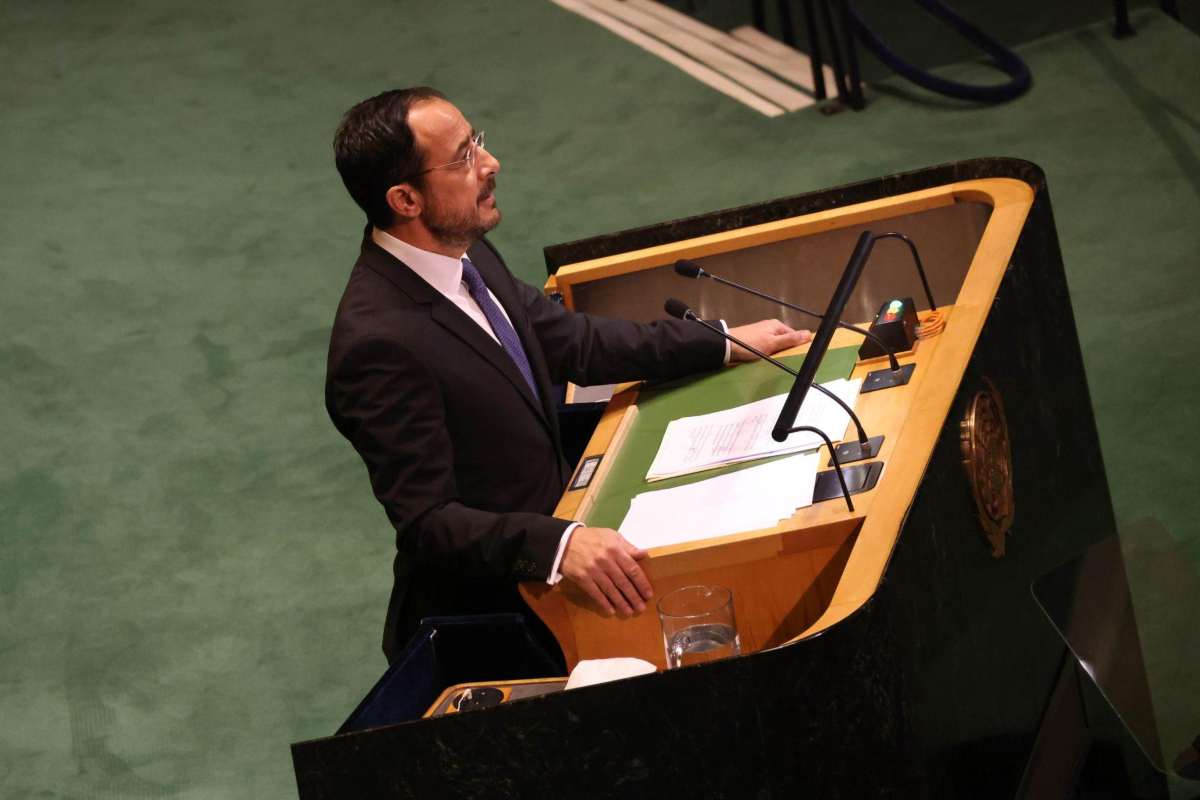
At the same time, Cyprus President Nikos Christodoulides arrives in New York with a much more structured diplomatic agenda.
Nicosia wants to use the UN gathering to keep the Cyprus issue high on the international agenda and explore whether conditions can be created for further movement in the UN-led process.
On Tuesday, September 22, Christodoulides is scheduled to meet María Ángela Holguín Cuéllar, the UN Secretary-General’s Personal Envoy on Cyprus. The meeting is scheduled for 6 p.m. New York time.
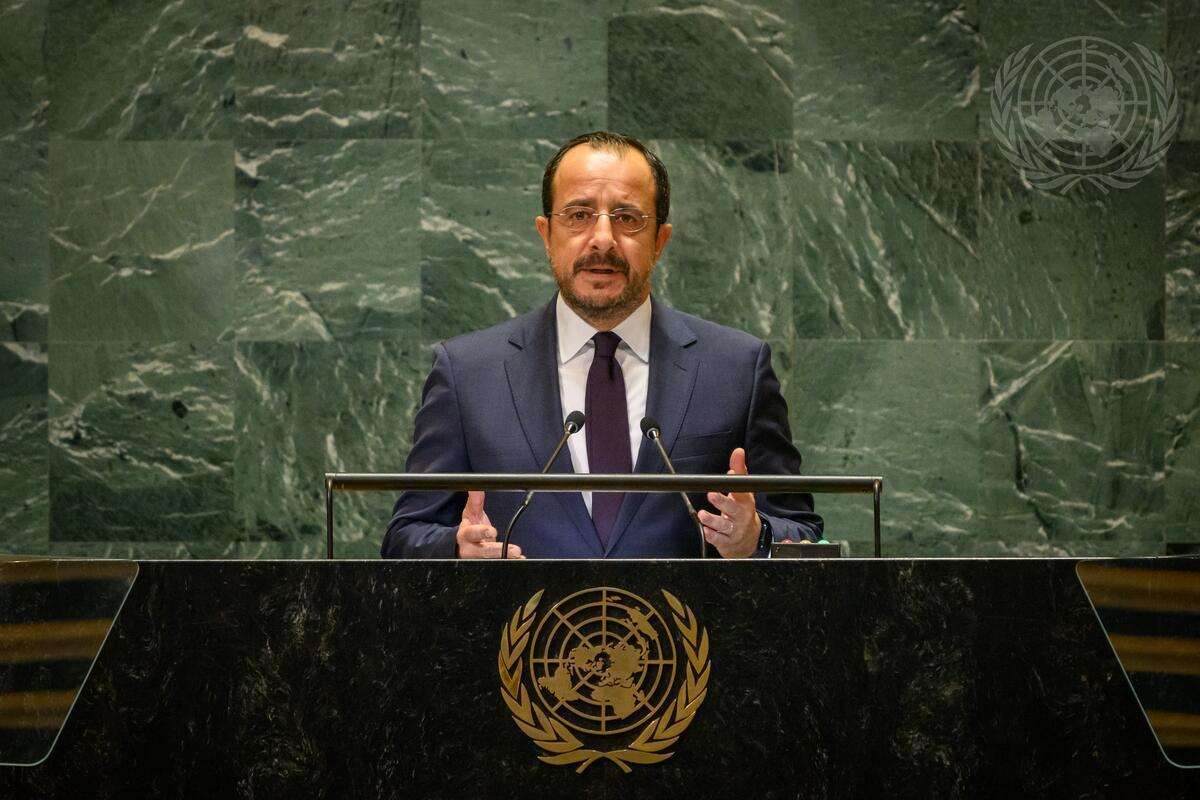
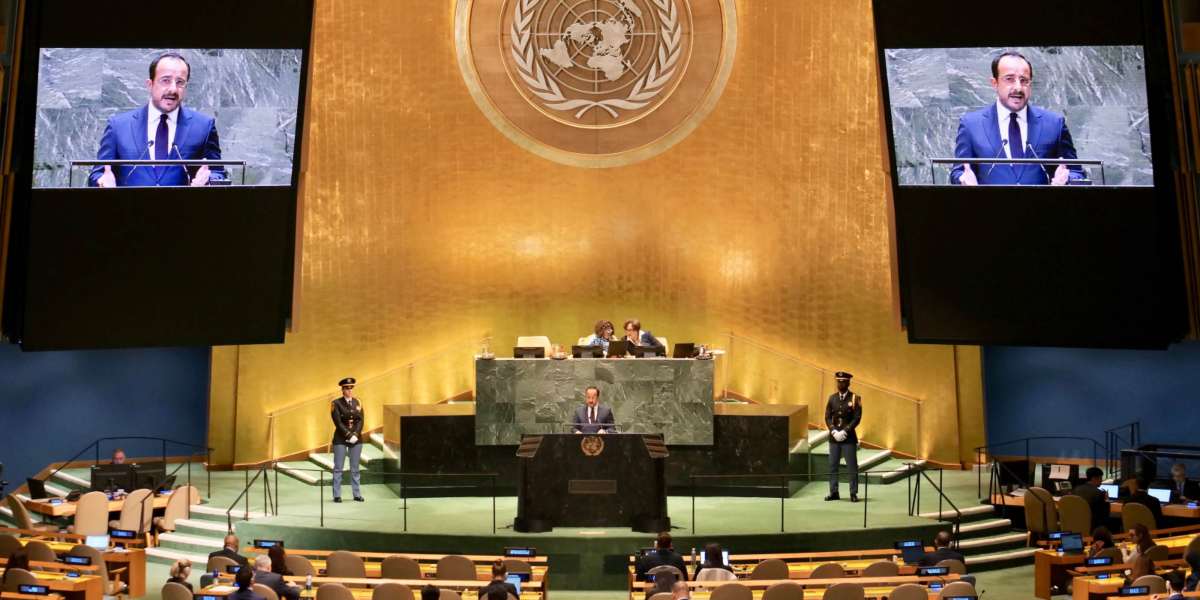
The Cypriot president will also address the General Assembly during the week.
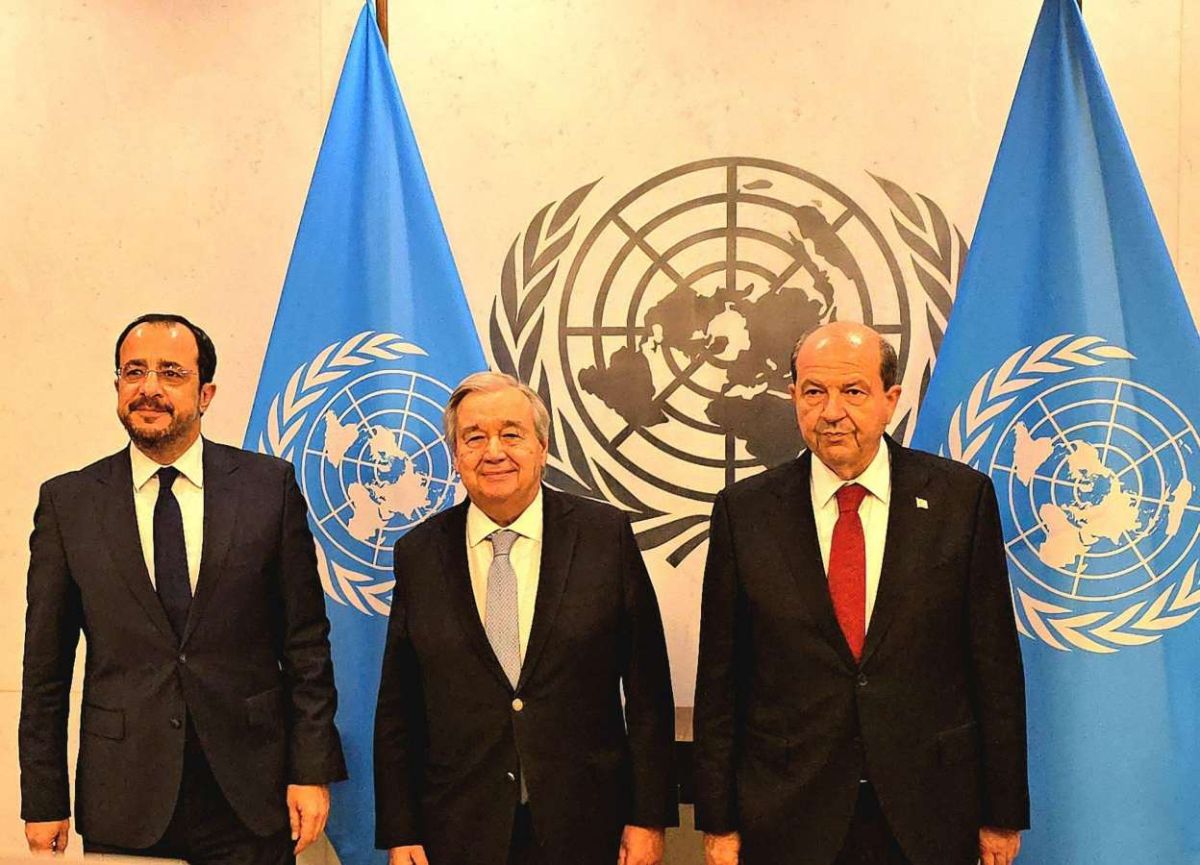
The most closely watched meeting, however, will be with UN Secretary-General António Guterres.
According to the official programme released by the Cypriot presidency, Christodoulides is scheduled to meet Guterres at 10:55 a.m. in the Secretary-General’s office at UN headquarters. He will subsequently host a lunch for the permanent representatives of the five permanent members of the UN Security Council.
The diplomatic architecture is clear: Nicosia wants to preserve UN engagement and build momentum for whatever comes next.
The 5+1 Format Has Not Yet Been Locked In
The bigger question is whether the latest diplomatic activity can eventually lead to another expanded meeting on Cyprus.
Christodoulides has publicly stated that the Greek Cypriot side is ready to participate in an expanded conference whenever the UN Secretary-General considers the conditions appropriate.
For now, however, the official New York programme confirms separate meetings with Holguín and Guterres rather than a new 5+1 meeting.
That makes this week less of a final negotiating moment and more of a diplomatic staging ground.
There has nevertheless been movement. Earlier in September, Christodoulides said a joint meeting involving himself and Turkish Cypriot leader Tufan Erhürman in New York remained possible, either with Guterres or his personal envoy.
Whether that possibility develops into something more substantial will be one of the issues to watch behind the scenes.
Chevron and ExxonMobil: Energy Enters the Equation
There is another dimension to Christodoulides’ New York programme — and it extends beyond the Cyprus negotiations.
Energy is firmly on the agenda.
On September 22, the Cypriot president is scheduled to meet Javier La Rosa of Chevron. His programme also includes meetings with senior representatives of multinational companies, as Nicosia links its diplomatic outreach with the wider strategic and economic role of the Eastern Mediterranean.
That matters because maritime zones in the region are not simply a question of diplomacy and sovereignty.
They are also connected to major energy investments, infrastructure and the strategic calculations of international energy companies.
This is where Cyprus, Greek-Turkish relations and energy security begin to overlap.
The Real Story May Unfold Away From the UN Podium
No dramatic breakthrough on either Greek-Turkish relations or the Cyprus issue should be assumed from UN High-Level Week itself.
The significance of New York lies elsewhere.
For Athens, the immediate question is whether political contact with Erdoğan materializes and whether dialogue can be maintained despite continuing disagreements over the Aegean and Eastern Mediterranean.
For Nicosia, the objective is different: to turn the meetings with Holguín and Guterres into diplomatic momentum and prevent the Cyprus issue from being crowded out by an international agenda already dominated by multiple wars and crises.
And behind both tracks lies the broader strategic contest in the Eastern Mediterranean — a region where security, maritime boundaries, energy resources and competing national interests increasingly intersect.
That is why the most important development in New York may never come from the General Assembly podium.
It may emerge from a meeting behind a closed door.
Source: pagenews.gr
Διαβάστε όλες τις τελευταίες Ειδήσεις από την Ελλάδα και τον Κόσμο