Androulakis at TIF: “This Should Be New Democracy’s Final Mile” — His First Six-Month Plan
 ΧΡΟΝΟΣ ΑΝΑΓΝΩΣΗΣ 12 '
Πηγή Φωτογραφίας: eurokinissi//Androulakis at TIF: “This Should Be New Democracy’s Final Mile” — His First Six-Month Plan



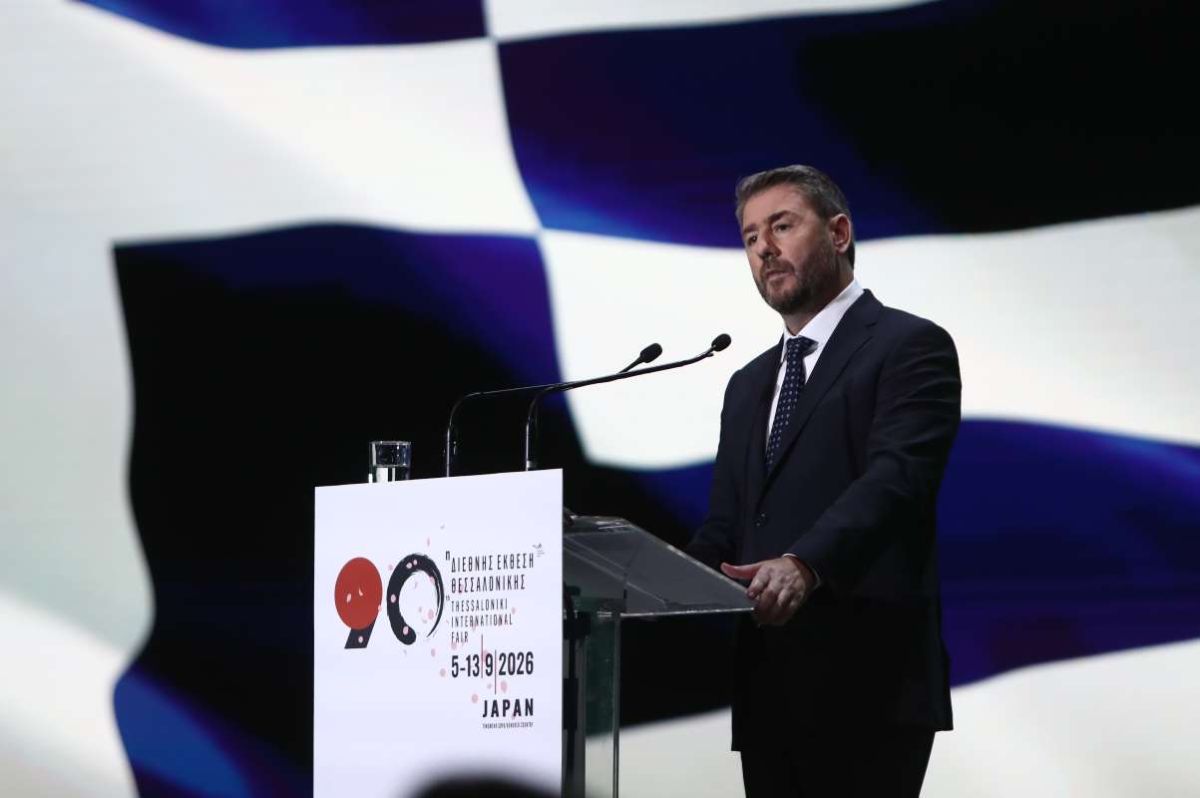
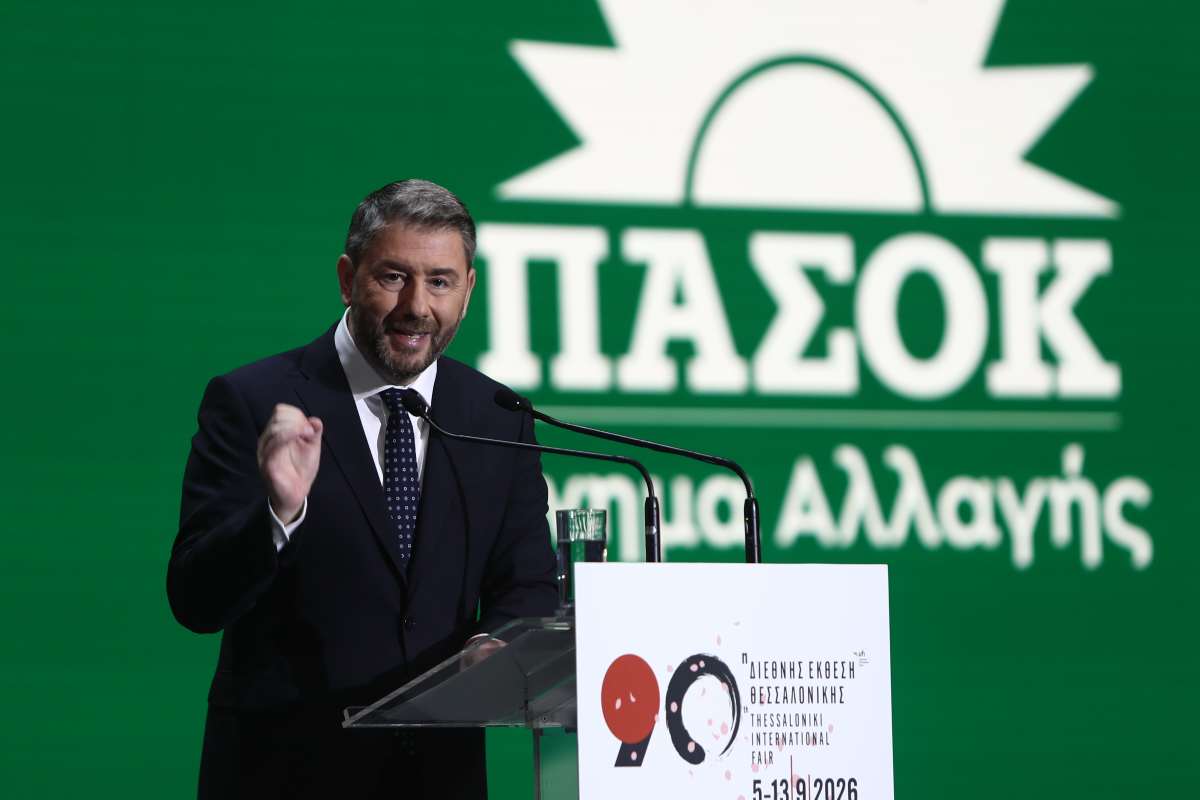
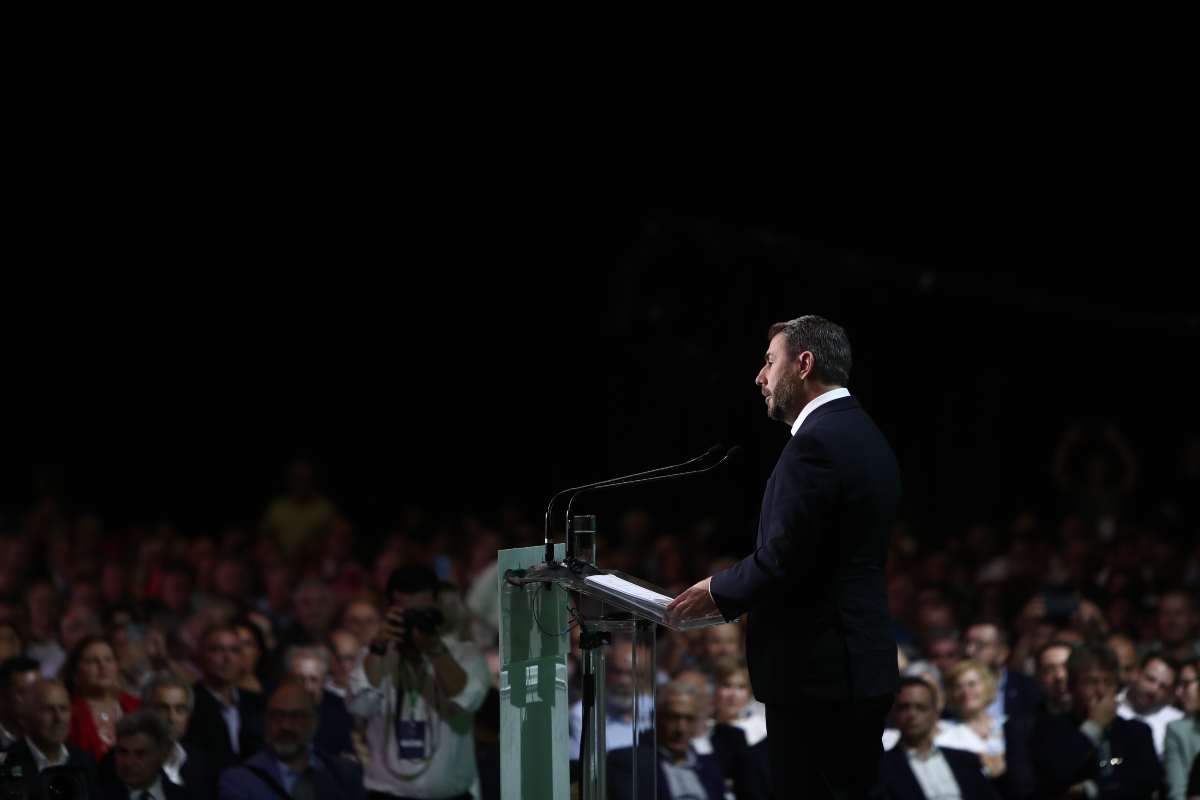
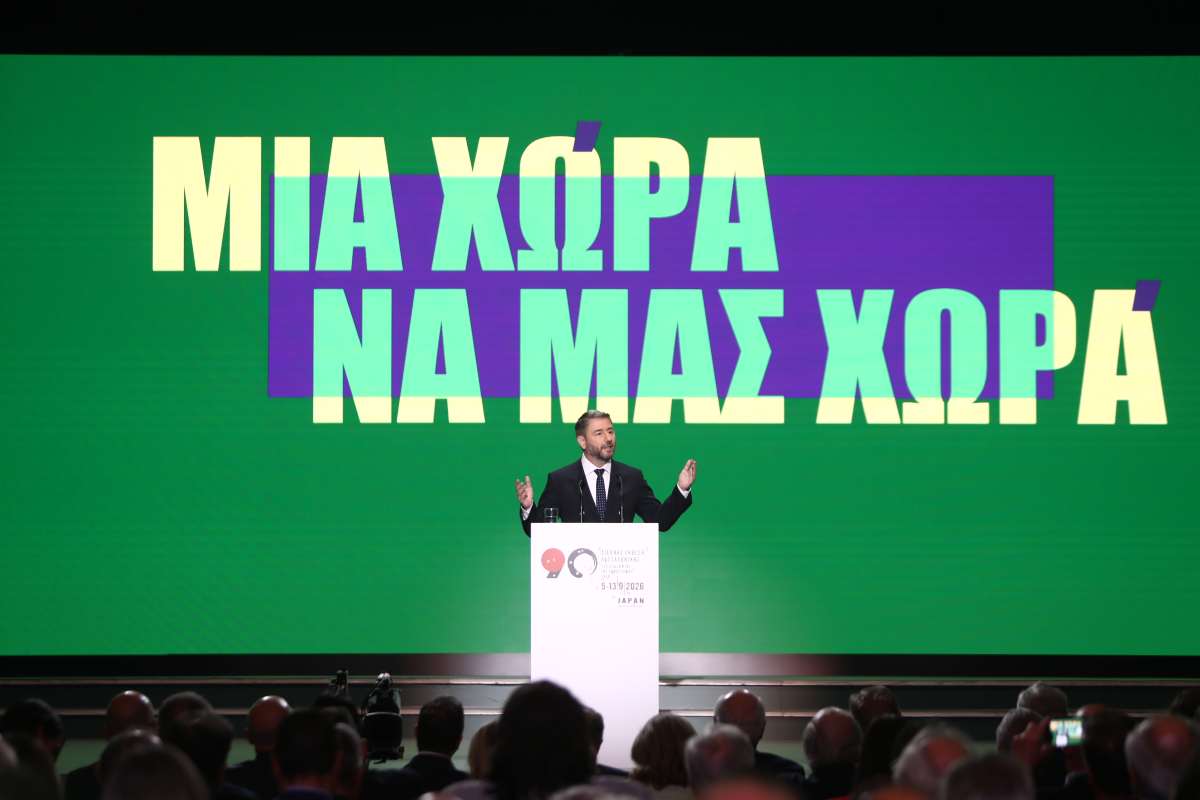
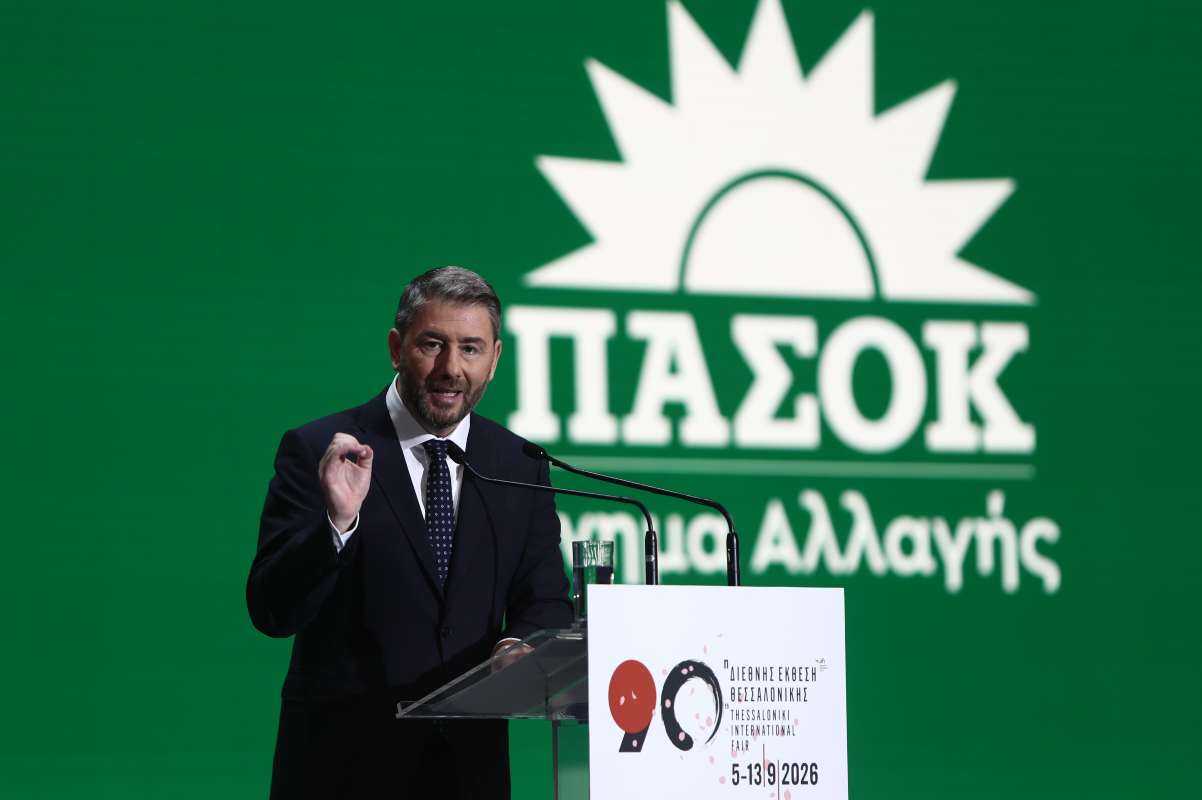
Nikos Androulakis took the stage at the 90th Thessaloniki International Fair with a message designed to move PASOK beyond opposition politics and firmly into the debate over Greece’s next government.
His argument was that political change cannot simply mean replacing one prime minister with another. It must mean changing the country’s priorities, rules and economic model.
“Now is the time for major decisions. Not only about who will govern the country, but above all about how the country will be governed. With what priorities. With what rules. And, ultimately, for whom.”
“This should be New Democracy’s final mile”
Androulakis launched a direct attack on Prime Minister Kyriakos Mitsotakis and the prospect of a third consecutive New Democracy term.
“Do we deserve another four years of missed opportunities? A third New Democracy term with more corruption, lack of meritocracy, opacity and impunity?”
He then delivered one of the most politically charged lines of his speech:
“If the answer is ‘no’ — and it must be ‘no’ — then what we are living through should be New Democracy’s final mile.”
The phrase encapsulates PASOK’s strategy: turn dissatisfaction with the government into a positive case for political change rather than merely an anti-government vote.
Androulakis attacks the “Mitsotakis or chaos” narrative
The PASOK leader also challenged New Democracy’s argument that political stability depends on Mitsotakis remaining in power.
“From ‘Mitsotakis or chaos,’ they have reached the point of absolute absurdity: ‘Mitsotakis or Erdoğan.’ In other words, they are presenting democratic alternation in government as a national threat.”
He followed with an unusually sharp rebuke:
“A little shame, gentlemen of New Democracy. You are dangerous.”
Androulakis is effectively trying to reverse the governing party’s stability argument: PASOK’s case is that democratic alternation should not be portrayed as a risk, but as a normal and necessary feature of a functioning political system.
Seven flagship reforms in the first six months
At the heart of the speech was a commitment to launch seven major legislative interventions during the first six months of a PASOK government:
- Tackling inflation and introducing stricter market rules.
- Building a new productive model focused on investment, jobs and domestic value creation.
- Higher wages, stronger labour rights and adequate pensions.
- A new framework for resolving private debt.
- Affordable housing, support for families and a comprehensive demographic strategy.
- Revitalising public healthcare and education.
- Building a state based on meritocracy, transparency and accountability.
“These seven interventions are the starting point for the political change the country needs. We are ready.”
The significance lies not only in the policy agenda but in the timetable. By committing to the first six months, Androulakis is attempting to give PASOK’s platform the characteristics of an incoming government’s legislative programme.
Cost of living: “Another pass is not enough”
On inflation, Androulakis rejected reliance on temporary subsidies.
“Another pass is not enough.”
PASOK proposes a new, strengthened Competition and Market Commission with greater resources, staffing and investigative tools.
Its responsibilities would combine competition enforcement with stronger consumer protection, targeting cartels, abuse of dominant market positions, misleading advertising and unfair commercial practices.
The wider package includes a Small Supplier and Merchant Ombudsman, a Market Mapping Unit using pricing and digital data, tighter scrutiny of multinational companies’ intra-group pricing and an emergency windfall-profit tax mechanism for oligopolistic markets.
PASOK also proposes targeted, temporary VAT reductions on essential goods and cuts to excise duties on fuel.
The political distinction Androulakis wants to draw is straightforward: instead of repeatedly compensating consumers after prices rise, the state should intervene more aggressively in the structures that allow excessive prices to emerge.
Energy: 20% lower household electricity prices in 2027
Energy provided one of the most measurable commitments in the speech.
Androulakis pledged:
“A 20% reduction in the total price per kilowatt-hour for households in 2027 and a 30% reduction by the end of the four-year term.”
PASOK says it would pursue that target by encouraging households to move from expensive variable tariffs to cheaper fixed-price contracts, expanding long-term energy agreements and accelerating investment in grids, interconnections and storage.
It also wants priority grid access for energy communities created by municipalities, farmers and SMEs, a redesigned energy-efficiency programme focused on vulnerable households, a ceiling for agricultural electricity prices and a permanent framework providing greater energy-cost stability for industry.
It is an ambitious and politically attractive target. It will also require detailed costing and a clear implementation mechanism if PASOK is to demonstrate that the promised reductions can be delivered under different wholesale energy-market conditions.
Fuel and windfall profits
Androulakis also challenged the government’s response to high fuel and heating costs.
“The answer cannot once again be ‘international prices are to blame.’ When the government needs to justify high prices, it invokes Europe. But when Europe discusses interventions against windfall profits, the government remains silent.”
PASOK’s proposal is to activate an extraordinary taxation mechanism wherever competent independent authorities establish the existence of windfall profits, with the proceeds redirected towards households and social policy.
A tax reset for SMEs and the self-employed
Small and medium-sized businesses occupy a central place in Androulakis’ economic strategy.
PASOK proposes abolishing the business levy, gradually reducing advance income-tax payments to 50% over four years and abolishing presumptive taxation in favour of taxation based on actual income.
It also wants to raise the VAT-exemption threshold to €20,000 for small businesses and self-employed professionals and introduce protected business bank accounts to preserve liquidity.
The broader objective is to redirect tax incentives towards productive reinvestment, equipment, technology and increased production capacity rather than primarily rewarding dividend distribution.
A Development Bank Group and National Wealth Fund
One of the more structural economic proposals is the creation of a powerful Development Bank Group built around two pillars: an upgraded Hellenic Development Bank and what Androulakis described as a genuine National Wealth Fund.
Under PASOK’s plan, the Growthfund would acquire a different mission and become an instrument of long-term national development strategy.
European funding, public assets, potential future revenues from natural-resource extraction and additional market capital could all feed into that model.
The proposal reflects Androulakis’ broader attempt to position PASOK around a more interventionist investment policy without abandoning private investment or European fiscal discipline.
Agriculture: A National Agricultural Land Bank
Androulakis also unveiled an extensive programme for the primary sector, with a particular focus on young farmers and domestic value creation.
His flagship proposal was:
“We are creating a National Agricultural Land Bank.”
The plan includes bringing abandoned agricultural land back into production, making public land available to young farmers, tax-free agricultural diesel at the pump, reforming the ELGA agricultural insurance framework and establishing a national water-management strategy based partly on smaller dams and irrigation networks.
PASOK also proposes protecting agricultural subsidies and compensation from seizure and establishing a more transparent agricultural-payment mechanism.
The economic philosophy is to keep more value inside Greece by connecting primary production with processing, branding, research and exports.
Androulakis illustrated the idea with specialised agri-food business parks where producers, processing facilities, quality-control laboratories, research centres and export services could operate as an integrated ecosystem.
Industry returns to the centre of the economic agenda
The PASOK leader also called for rebuilding Greece’s industrial base.
“There is no resilient economy without a strong industrial base. We want Greek industry to be strong again.”
His proposals include modern industrial zones, lower installation costs, improved energy infrastructure, greater access to finance and incentives for automation, research, new equipment and exports.
This is one of the broader themes running through the speech: Androulakis wants PASOK’s economic message to move beyond redistribution and towards production, industrial policy and investment.
A “New Helsinki” strategy towards Turkey
Foreign policy also occupied an important place in the speech.
Androulakis criticised the government’s “calm waters” approach towards Turkey and proposed what he called a “New Helsinki” strategy.
The central idea is to use Turkey’s relationship with the European Union as leverage.
PASOK wants progress on upgrading the EU–Turkey Customs Union and other aspects of Ankara’s European relationship to be linked to respect for international law, the Law of the Sea and the sovereign rights of Greece and Cyprus.
The strategic shift is significant: rather than treating Greek-Turkish disputes primarily as bilateral issues, Androulakis wants Athens to embed them more firmly in the EU–Turkey negotiating framework.
A stronger Greece inside a stronger Europe
Androulakis also presented European policy as part of his wider national strategy.
He called for deeper European integration, a permanent European investment and convergence mechanism and a more assertive Greek role in negotiations over the EU’s future.
His argument is that Greece cannot simply react to European decisions after they have been made. It must build alliances early enough to shape those decisions.
That position connects domestic economic policy with geopolitics: investment, energy security, defence and competitiveness increasingly depend on decisions made at European level.
Apostolakis and Avlonitis attract attention at Vellidio
The political symbolism inside the hall was also notable.
Independent MPs Evangelos Apostolakis and Alexandros Avlonitis, both originating from SYRIZA, were present at Vellidio.
Their appearance inevitably fuels speculation about further PASOK expansion towards figures from the broader centre-left.
Their presence does not, by itself, constitute confirmation that either politician is joining PASOK. Politically, however, it reinforces the image Androulakis wants to project: a party seeking to expand its reach and establish itself as the principal alternative pole to New Democracy.
From opposition leader to candidate for prime minister
This was ultimately the central political objective of Androulakis’ TIF appearance.
He sought to make the transition from critic of the Mitsotakis government to a politician presenting himself as a potential prime minister with a defined governing programme.
There were concrete targets: a 20% reduction in household electricity prices in 2027 and 30% over four years.
There were specific tax commitments for SMEs and the self-employed.
There were institutional proposals on competition, private debt, housing and the state.
And there were broader strategic choices on industrial policy, agriculture, Europe and Turkey.
The strength of the speech lies in that attempt to assemble the proposals into a coherent governing narrative rather than a catalogue of isolated benefits.
The next test is more difficult: detailed costing, sequencing and evidence that all these commitments can coexist within Greece’s fiscal constraints and European rules.
Because after this year’s TIF, PASOK is asking voters to judge it by a higher standard.
Not simply whether its criticism of the government is persuasive.
But whether it is ready to govern.
Androulakis himself chose to raise that bar:
“Now is the time for major decisions.”
Source: pagenews.gr
Διαβάστε όλες τις τελευταίες Ειδήσεις από την Ελλάδα και τον Κόσμο