Iran Seeks Putin’s Shield: A Secret Message, Arms Deals and the Hormuz Bargain
 ΧΡΟΝΟΣ ΑΝΑΓΝΩΣΗΣ 5 '
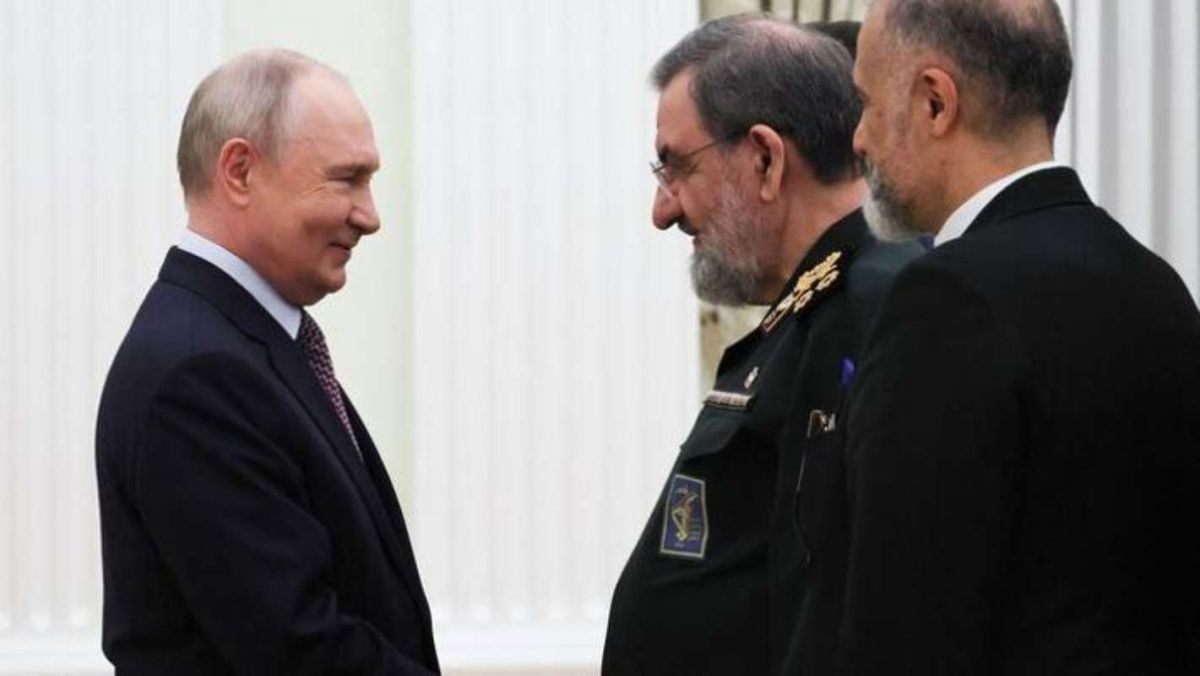
Πηγή Φωτογραφίας: In this pool photograph distributed by the Russian state agency Sputnik, Russian President Vladimir Putin (L) shakes hands with Mohsen Rezaei, secretary of Iran's Supreme National Security Council, ahead of their talks in Moscow on Nov. 5, 2026. — Alexey BABUSHKIN / AFP via Getty Images



What does Iran want from Vladimir Putin: weapons, diplomatic backing or reassurance that it will not face another American escalation alone?
The unannounced Moscow visit by Mohsen Rezaei, secretary of Iran’s Supreme National Security Council, places that question at the centre of the regional crisis.
Rezaei met the Russian president at the Kremlin on November 5, delivering a message from Supreme Leader Mojtaba Khamenei whose contents were not disclosed.
Russia’s delegation included foreign policy adviser Yuri Ushakov and Igor Kostyukov, head of the GRU military intelligence agency.
Their presence underscored the meeting’s significance. It does not, by itself, establish that Moscow made new military commitments.
Tehran is seeking to turn military vulnerability into a stronger strategic position. Moscow must decide how much support it is prepared to provide—and on what terms.
Trump’s electoral defeat does not guarantee de-escalation
The visit followed the Republicans’ loss of congressional control, with the war and rising energy costs weighing on the Trump administration.
For Iran’s leadership, the result may encourage expectations of greater pressure on Washington to pursue a diplomatic exit.
It does not ensure that the American president will choose compromise.
A Reuters analysis describes the choice between a negotiated settlement and further escalation. The critical variable is how Tehran interprets the American political reversal: as an opportunity for agreement or evidence that it can increase its demands.
The second interpretation carries a risk of miscalculation. A president facing domestic pressure may seek a deal, but may also attempt to demonstrate that he retains the initiative.
Hormuz as a negotiating instrument
The Strait of Hormuz remains central to the confrontation.
According to Reuters, efforts towards a settlement involve:
- The future arrangements for navigation through the Strait.
- The American blockade of Iranian ports.
- Sanctions against Tehran.
- The resumption of negotiations over Iran’s nuclear programme.
Rezaei said Iran had presented seven conditions to the United States, linking their fulfilment to reopening the Strait and entering negotiations.
His position reflects Tehran’s attempt to retain a powerful source of leverage. It also complicates a settlement, because Gulf governments have a direct interest in safe and uninterrupted navigation.
Control over a critical energy passage can strengthen a negotiating position while increasing the number of governments demanding a resolution.
Arms cooperation: What is documented—and what remains uncertain
The Kremlin meeting coincides with new reporting on Russian–Iranian military cooperation.
The Financial Times, citing Russian defence production documents, reported an agreement to supply Iran with 90 helicopter-mounted launchers for precision-guided missiles.
According to the investigation, the documents establish the order. They do not establish that delivery was completed.
Separately, Iran International, relaying reporting by The Telegraph, said the Iranian delegation sought S-400 air defence systems.
That remains a reported Iranian request. No confirmed supply agreement or delivery timetable has been presented.
The distinction matters: seeking military support is different from Moscow being willing and able to provide the equipment Tehran wants within a useful timeframe.
A strategic partner without automatic military protection
Russia and Iran formalised their cooperation through the strategic partnership agreement signed in January 2025.
However, the agreement contains no mutual defence clause.
It provides for cooperation against military threats, joint exercises and the development of military-technical ties. It does not require automatic Russian intervention if Iran comes under attack.
That marks the boundary between Tehran’s expectations and Moscow’s established commitments.
The Kremlin may seek to strengthen Iran, expand its influence and secure a larger role in regional negotiations. That does not mean it is prepared to risk direct confrontation with Washington.
Al-Monitor’s analysis identifies precisely this uncertainty: whether Russia will become a meaningful security partner or limit itself to benefiting from Iran’s confrontation with the United States.
Gas diplomacy looks beyond the war
The meeting also addressed plans for a natural gas pipeline from Russia to Iran.
According to Rezaei, the proposal aims to address Iranian shortages while enabling Russian gas to reach neighbouring markets.
The energy dimension indicates that the discussions extend to the economic arrangements that could follow the conflict. Such infrastructure could create long-term interdependence, but discussing it does not amount to completing—or operating—a pipeline.
Chatham House argues that the war is strengthening Tehran’s view of Russia as an important partner for military survival, reconstruction and long-term deterrence.
Describing the Kremlin talks, Rezaei said:
“Important regional issues were discussed with Mr Putin, and significant conversations took place regarding the post-war period and regional security arrangements.”
Source: pagenews.gr
Διαβάστε όλες τις τελευταίες Ειδήσεις από την Ελλάδα και τον Κόσμο