Marinakis: “No Permission Was Sought from Turkey” – The Energy Cable, New Support Measures and Elections
 ΧΡΟΝΟΣ ΑΝΑΓΝΩΣΗΣ 15 '
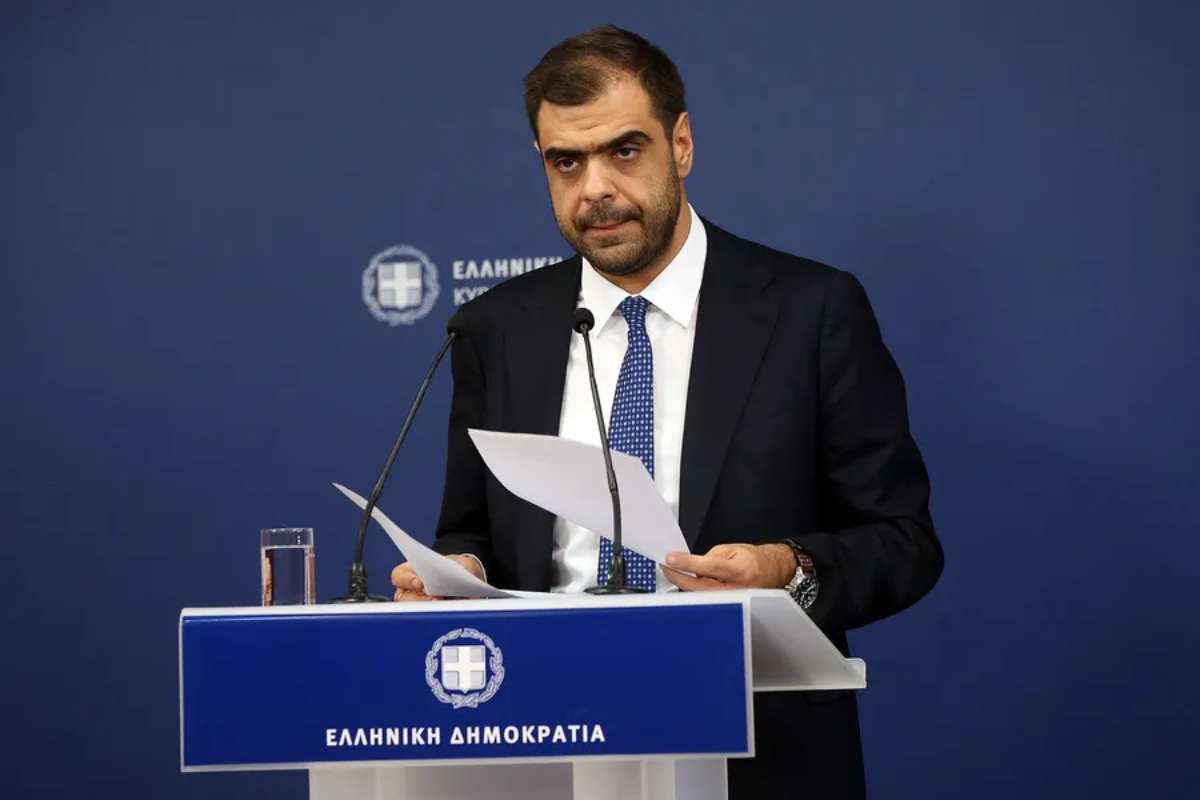
Πηγή Φωτογραφίας: eurokinissi//Marinakis: “No Permission Was Sought from Turkey” – The Energy Cable, New Support Measures and Elections



“No permission was sought from Turkey.”
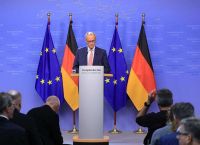
With this unequivocal statement, Greek government spokesperson Pavlos Marinakis sought to put an end to the controversy surrounding the French diplomatic communication and the ongoing maritime operations associated with the Greece–Cyprus electricity interconnector.
Speaking in a wide-ranging television interview, Marinakis argued that the Greek and Cypriot authorities were the only ones to issue the relevant authorizations for the vessel’s operations.
His remarks come amid renewed tensions over maritime jurisdiction in the Eastern Mediterranean, with Turkey seeking to assert its claims in waters associated with the disputed Turkey–Libya maritime memorandum.
The interview also offered an insight into the government’s domestic political strategy, including its approach to corruption investigations, relations with PASOK, the possibility of a third term and the economic pressures facing Greek households.
“The Vessel Is Operating Under Greek and Cypriot Authorization”
Marinakis placed particular emphasis on an official statement issued by the company involved in the interconnector project.
According to the government spokesperson, the statement explicitly identifies Greece and Cyprus as the authorities responsible for authorizing the vessel’s operations.
“This is not something New Democracy, Kyriakos Mitsotakis, Giorgos Gerapetritis or Pavlos Marinakis is saying. It is what the official announcement says,” he argued.
For Athens, the distinction is politically and diplomatically significant.
Turkey has sought to portray the maritime operations as requiring its consent, particularly in areas where Ankara asserts jurisdiction based on its maritime agreement with Libya.
Greece rejects the legality of that agreement insofar as it infringes upon what Athens considers the maritime rights of other states.
Marinakis argued that the vessel’s operations constitute a practical response to those claims.
“The crucial point is that a vessel is operating in this area with Greek and Cypriot authorization,” he said.
The government’s position is that the continuation of the project demonstrates that Turkey’s objections have not prevented the authorized maritime activities.
However, the vessel’s deployment and survey operations should not be confused with confirmation that the physical laying of the cable has been completed.
Turkish NAVTEX Dispute: Athens Rejects Ankara’s Claims
The government spokesperson also addressed the Turkish NAVTEX issued in connection with the vessel’s activities.
He argued that the Turkish announcement came after the relevant operational information had already been made public and did not constitute an authorization.
“The Turkish NAVTEX makes no reference whatsoever to issuing permission,” Marinakis stated.
He added that Greece subsequently issued its own counter-notification rejecting the Turkish claims.
The dispute has become a central element of the political confrontation surrounding the interconnector.
Turkish media reports have suggested that Ankara’s approval was necessary for the operations to proceed.
Marinakis dismissed that interpretation, insisting that the company’s official documentation contradicts it.
“The company itself comes out and contradicts them. What more can we say?”
The Greek government maintains that informing a third country about maritime operations is fundamentally different from requesting authorization from that country.
Whether the French diplomatic communication could carry broader legal or diplomatic implications remains a subject of debate, particularly because its precise wording is central to the opposition’s concerns.
French Diplomatic Note: Government Accuses Opposition of Premature Conclusions
Marinakis strongly criticized opposition parties demanding immediate disclosure of the French note verbale.
He argued that Prime Minister Kyriakos Mitsotakis had already publicly addressed the issue and that further institutional briefings would take place through the Ministry of Foreign Affairs.
“The haste being displayed by the political parties is excessive and, I would say, unjustified,” he said.
The government spokesperson insisted that foreign policy questions should not become instruments of routine partisan confrontation, particularly while a strategically important energy project remains underway.
“When discussing matters concerning foreign policy, our primary concern should not be party-political confrontation.”
At the same time, Marinakis acknowledged the opposition’s right to request information.
His argument was that such briefings should take place through the appropriate institutional channels and at a time that does not interfere with ongoing operations.
Opposition parties, including PASOK, have questioned whether Athens knew in advance about the French communication, whether it approved the initiative and what precisely the document states.
The government maintains that the note was informational and did not recognize Turkish jurisdiction.
An EU-Backed Project with Wider Strategic Implications
Marinakis emphasized the European dimension of the Greece–Cyprus interconnector.
The project is intended to strengthen energy connectivity between Cyprus and the European electricity network, with a longer-term ambition to extend the connection toward Israel.
According to the government spokesperson, European financial support exceeds €600 million.
He described the project as a strategic investment whose importance extends beyond electricity transmission.
For Cyprus, the interconnector is intended to reduce energy isolation. For Greece, it reinforces the country’s role in regional energy infrastructure. At the European level, it forms part of broader efforts to strengthen cross-border connectivity and energy security.
Marinakis argued that the involvement of European institutions and companies makes the project an international undertaking rather than a purely bilateral Greek-Cypriot initiative.
The government also sees its implementation as a demonstration of the European Union’s presence in the Eastern Mediterranean.
“Greece Is Stronger Than Ever” – The Message to Ankara
Asked how Athens would respond if Turkey escalated tensions in the area, Marinakis avoided outlining specific operational scenarios.
He said the situation remained calm and expressed confidence that it would continue to do so.
“The waters are calm, and we want to believe—and have every reason to believe—that they will remain calm,” he said.
Nevertheless, he insisted that Greece was prepared for different contingencies.
“Greece is a country that respects international law, does not retreat, asserts its rights and achieves results in practice.”
Marinakis linked the government’s confidence to a series of diplomatic and defense initiatives undertaken in recent years.
He cited maritime delimitation agreements with Egypt and Italy, the extension of Greece’s territorial waters to 12 nautical miles in the Ionian Sea, the country’s maritime spatial planning initiative and investments in defense capabilities.
He also referred to the acquisition of Rafale fighter aircraft, Belharra-class frigates and the planned F-35 program.
Regarding the possible extension of territorial waters elsewhere, he reiterated that Greece retains the right to exercise that option at a time of its choosing.
He declined to speculate about specific Turkish military responses, emphasizing that Athens was not seeking escalation.
PASOK and Coalition Politics: “The Only Party We Could Sit Down With”
The interview shifted to domestic politics when Marinakis was asked what would happen if New Democracy failed to secure an outright parliamentary majority in the next general election.
He reiterated that the government’s objective remained a single-party majority.
Nevertheless, he acknowledged that a coalition might become necessary if voters produced a different parliamentary balance.
In that scenario, Marinakis identified PASOK as the only potential negotiating partner, citing the party’s historical record of institutional responsibility.
“The only party we could sit down at the table with, based on its history and despite our enormous political differences, would be PASOK,” he said.
However, he sharply criticized PASOK’s current leadership under Nikos Androulakis.
Marinakis contrasted the party’s present approach with what he described as the institutional seriousness demonstrated during the leadership of Evangelos Venizelos and the late Fofi Gennimata.
He criticized PASOK’s parliamentary conduct, its position on the Tempi railway disaster and its refusal to contemplate cooperation with New Democracy.
The remarks highlight a central dilemma in the government’s coalition strategy: while PASOK is presented as the only plausible partner, its current leadership has explicitly distanced itself from such an arrangement.
Corruption Investigations: “Crime Did Not Begin in 2019”
Marinakis also defended the government’s record on corruption and organized crime.
He rejected the argument that the emergence of major criminal investigations necessarily demonstrates government complicity or institutional failure.
Instead, he presented the dismantling of criminal networks as evidence that law enforcement and investigative mechanisms had become more effective.
“Crime did not begin in 2019 or 2020,” he said.
According to Marinakis, the Directorate for Combating Organized Crime has dismantled 262 major criminal organizations over approximately two years.
He attributed this record to the restructuring of investigative services, tougher criminal legislation and improved coordination between authorities.
“If I could give a title to what is happening, it would be rules for everyone,” he stated.
The spokesperson also stressed that criminal responsibility must be determined by the courts and that the presumption of innocence must be respected.
His broader argument was that the detection of wrongdoing should be distinguished from the question of whether the government bears political responsibility for specific cases.
The reported number of criminal organizations dismantled remains a government claim that requires independent verification.
Clash with Alexis Tsipras: “He Is Neither a Judge Nor a Prosecutor”
The government spokesperson responded forcefully to criticism from former Prime Minister Alexis Tsipras concerning corruption and the prospect of special courts.
“Mr. Tsipras is neither a judge nor a prosecutor,” Marinakis said.
He argued that elected politicians are accountable to voters, while criminal responsibility must be established through judicial proceedings.
Marinakis also referred to court rulings involving former members of the SYRIZA government and criticized decisions taken during Tsipras’s premiership concerning criminal legislation.
“I do not believe our job is to take out a moral measuring stick and declare who is moral and who is immoral,” he said.
Nevertheless, he made clear that New Democracy would respond when challenged on integrity and accountability.
The exchange reflects the increasingly confrontational debate over corruption, institutional independence and the rule of law in Greek politics.
Inflation and Energy Prices: “We Will Continue Supporting People for as Long as Necessary”
Turning to the economy, Marinakis acknowledged that persistent inflation and high energy prices continue to place significant pressure on households.
Asked whether existing support measures would be extended—and whether the level of energy subsidies might change—he declined to announce specific decisions.
“The answer is that we will continue providing support for as long as there is a need,” he said.
He explained that the details of any new measures would be announced by the prime minister and the Ministry of Finance.
“I cannot prejudge the exact measures,” he added.
Marinakis linked the continuing inflationary pressures to international developments, including the economic consequences of Russia’s invasion of Ukraine and renewed instability in the Middle East.
He acknowledged that the government had not eliminated the problem.
“We have not managed to make the problem disappear. We are not magicians.”
The government spokesperson argued that sustainable support must be financed through stronger economic activity, increased employment and improved tax compliance rather than additional borrowing.
He maintained that investment, exports and the fight against tax evasion were helping create fiscal space for tax reductions and targeted benefits.
However, the central economic challenge remains the gap between improvements in macroeconomic indicators and the purchasing power of households facing higher everyday costs.
“We Are Not Governing with Borrowed Money”
Marinakis defended the government’s fiscal approach as a departure from what he described as the unsustainable spending practices of previous decades.
“We are not conducting policy with borrowed money. We are not mortgaging the future of the next generations,” he said.
He argued that Greece must avoid repeating policies that created long-term financial burdens for younger generations, workers, pensioners and businesses.
According to the government spokesperson, the administration is seeking to combine economic growth with lower public debt, reduced taxation and higher disposable incomes.
He acknowledged that many citizens want faster progress.
“Yes, it is not enough. I understand that. But coming out and promising to square the circle will not solve any problem.”
His remarks reflect the government’s attempt to balance fiscal discipline with demands for stronger intervention against the cost-of-living crisis.
Elections: “Not May 2, Not During Easter”
Toward the end of the interview, Marinakis was asked about the timing of Greece’s next general election.
He declined to provide a specific date, referring instead to the prime minister’s statements and the government’s intention to complete its parliamentary term.
“I do not know the date of the elections,” he said.
He ruled out May 2 and the Easter period, while reiterating that the government’s position was to avoid an early election.
Marinakis argued that holding elections prematurely during a major international energy crisis would introduce unnecessary political uncertainty.
For New Democracy, he presented the completion of the four-year term as a demonstration of stability and consistency.
From the Eastern Mediterranean to the Ballot Box
Marinakis’s interview revealed the government’s attempt to connect foreign policy, economic management and political stability into a single governing narrative.
In the Eastern Mediterranean, Athens is seeking to demonstrate that strategic infrastructure projects can advance despite Turkish objections.
Domestically, New Democracy is defending its record on law enforcement and corruption investigations while challenging opposition parties over their ability to offer a viable alternative government.
On the economy, the government faces the more immediate challenge of protecting households from persistent inflation without abandoning its fiscal commitments.
And as the next election approaches, the question of parliamentary majorities and potential coalition partners is becoming increasingly difficult to avoid.
For Marinakis, however, the central message remains one of continuity.
On the interconnector, his position was categorical:
“No permission was sought from Turkey.”
On economic support, his commitment was more cautious:
“We will continue providing support for as long as there is a need.”
And on the next election, he insisted that the government intends to complete its term, leaving the final decision on Greece’s political future to the voters.
Source: pagenews.gr
Διαβάστε όλες τις τελευταίες Ειδήσεις από την Ελλάδα και τον Κόσμο