UN Succession Battle: Grynspan Wins 12 Votes, but Five Powers Hold the Key to Guterres’ Future
 ΧΡΟΝΟΣ ΑΝΑΓΝΩΣΗΣ 13 '
Πηγή Φωτογραφίας: AP Photo//UN Succession Battle: Grynspan Wins 12 Votes, but Five Powers Hold the Key to Guterres’ Future



Twelve votes in favor, three against, and one decisive geopolitical question: Can Rebeca Grynspan secure the approval of the world’s five most powerful diplomatic gatekeepers?
The former vice president of Costa Rica has strengthened her position in the race to succeed António Guterres as United Nations Secretary-General, emerging as the leading candidate after the eighth informal ballot held by the UN Security Council on November 5.
Yet her growing support does not guarantee victory.
The next Secretary-General will ultimately need to avoid a veto from any of the Security Council’s five permanent members: the United States, Russia, China, France and the United Kingdom.
And in a world increasingly divided by military conflicts, strategic competition and disputes over international institutions, that requirement may prove more difficult than winning the support of a majority of Council members.
The contest is therefore becoming more than a leadership election.
It is a test of whether the major powers can agree on a figure capable of leading the United Nations through one of the most challenging periods in its modern history.
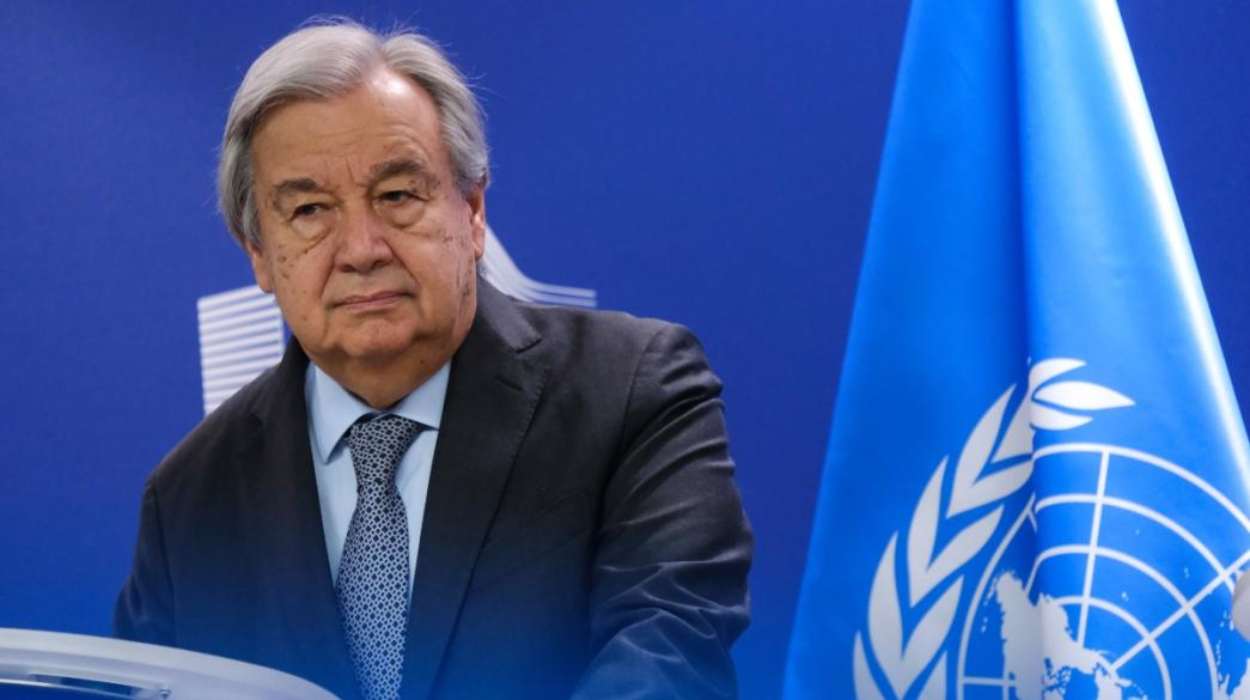
Grynspan’s 12 Votes: A Strong Lead, but No Guarantee of Victory
Grynspan secured 12 encouragement votes and three discouragement votes in the eighth informal Security Council ballot on November 5.
The result marked her strongest performance so far, improving on the 11 positive votes she received in the previous round.
It suggests that diplomatic support is consolidating around her candidacy.
However, the latest ballot did not distinguish between votes cast by the Council’s five permanent members and those cast by its ten elected members.
That distinction is crucial.
If even one of the three negative votes came from a permanent member determined to oppose her appointment, her path to the UN’s top position could remain blocked.
The numerical advantage therefore conceals a potentially decisive political obstacle.
Grynspan may have the broadest support in the Security Council, but a single permanent member can still prevent her appointment.
The Power of Five: How the UN Secretary-General Is Really Chosen
Unlike most international leadership elections, the selection of the UN Secretary-General is governed by a process in which the Security Council plays a decisive role.
Under Article 97 of the UN Charter, the Secretary-General is appointed by the General Assembly upon the recommendation of the Security Council.
For the Council to issue that recommendation, at least nine members must vote in favor, with no veto from any of the five permanent members.
Before reaching a formal decision, the Council conducts informal ballots, commonly known as straw polls.
During these rounds, members can indicate whether they encourage a candidate, discourage a candidate or express no opinion.
The ballots are designed to test political support and identify potential obstacles before the formal recommendation.
A negative indication during an informal ballot is not technically a veto.
However, when it comes from a permanent member, it can signal a serious barrier to a candidate’s eventual appointment.
This makes the succession process a delicate diplomatic negotiation rather than a straightforward competition based on vote totals.
The October 16 Ballot: What Greece’s Security Council Presidency Revealed
The uncertainty surrounding the permanent members’ intentions has already produced important clues.
During the sixth informal ballot, held on October 16 under Greece’s presidency of the Security Council, separate ballots were used for permanent and elected members.
The results exposed a significant challenge for the leading candidates.
Each of the three strongest contenders at the time — Grynspan, Rafael Grossi and Carolyn Rodrigues-Birkett — received two discouragement indications from permanent members.
That meant none had secured unanimous acceptance among the five powers at that stage.
Subsequent rounds returned to combined ballots, making it impossible to determine whether those objections have since been withdrawn.
The October vote highlighted a central reality of UN diplomacy: the candidate who appears strongest in the overall tally may still face resistance from the countries whose approval matters most.
The role of Greece in presiding over that stage also underscored the importance of elected Security Council members in managing a process ultimately shaped by the permanent five.
Rafael Grossi and the Other Contenders: The Race Remains Open
Despite Grynspan’s growing lead, several other candidates remain in contention.
Rafael Grossi, director general of the International Atomic Energy Agency, received nine encouragement votes, four discouragement votes and two expressions of no opinion.
His candidacy carries particular geopolitical significance.
As head of the IAEA, Grossi has been deeply involved in international nuclear diplomacy and the monitoring of sensitive nuclear programs.
His experience could be regarded as particularly relevant at a time when Iran’s nuclear activities and wider security tensions remain central issues on the international agenda.
Carolyn Rodrigues-Birkett, from Guyana, received eight positive votes, five negative votes and two neutral indications.
Lana Nusseibeh, from the United Arab Emirates, secured seven positive votes, six negative votes and two neutral indications.
Although none has matched Grynspan’s momentum, their continued support demonstrates that the contest has not yet been settled.
A prolonged deadlock among the permanent members could create an opening for an alternative candidate.
In UN diplomacy, the strongest contender does not always become the eventual consensus choice.
Turkey Enters the Race: Erdoğan’s Diplomatic Ambitions at the United Nations
The entry of Feridun Sinirlioğlu, nominated by Turkey on November 1, has introduced another geopolitical dimension to the succession contest.
The veteran Turkish diplomat received three encouragement votes, eight discouragement votes and four expressions of no opinion in his first ballot.
The result places him well behind the leading candidates.
Nevertheless, Ankara’s decision to nominate him carries political significance beyond the immediate voting numbers.
Under President Recep Tayyip Erdoğan, Turkey has sought to strengthen its influence in international institutions and position itself as a diplomatic actor capable of engaging with competing geopolitical blocs.
A candidacy for the UN’s highest office fits into that broader strategy.
Even without a realistic prospect of immediate victory, participation in the succession race can provide diplomatic visibility and opportunities for engagement with major powers.
However, Sinirlioğlu’s initial result suggests that Turkey faces substantial obstacles in building the broad international support required for the position.
Could Grynspan Become the First Woman to Lead the United Nations?
Grynspan’s candidacy carries historical significance beyond the diplomatic calculations of the Security Council.
Since the United Nations was established in 1945, no woman has served as Secretary-General.
Her appointment would therefore mark a major milestone for gender representation at the highest level of international diplomacy.
Grynspan’s Costa Rican background also aligns with expectations that the next Secretary-General could come from Latin America and the Caribbean.
Regional rotation has long influenced discussions surrounding senior UN appointments, although it is not a legally binding requirement.
These two factors — gender representation and geographical balance — give her candidacy considerable political weight.
They may strengthen her appeal among countries seeking a more representative international system.
But neither can override the formal power of the Security Council’s permanent members.
The historic appeal of electing the first female Secretary-General is significant. The geopolitical requirement of avoiding a veto remains decisive.
Washington, Moscow and Beijing: The Hidden Contest Behind the Ballots
The most consequential negotiations are likely to take place beyond the public discussion of individual candidates.
The United States, Russia and China hold fundamentally different views on the role of the United Nations, international sanctions, military intervention and the future of global governance.
France and the United Kingdom also retain considerable influence through their permanent Security Council seats and veto powers.
The next Secretary-General will inherit an international environment defined by overlapping crises.
The war in Ukraine, instability in the Middle East, nuclear security concerns and tensions between major powers have repeatedly exposed the limitations of multilateral diplomacy.
The UN’s ability to respond effectively often depends on whether its most powerful members can reach a minimum level of agreement.
That makes the selection of its next leader particularly sensitive.
Washington may prioritize certain approaches to institutional reform, security and international accountability.
Moscow and Beijing may emphasize different interpretations of sovereignty, non-interference and the balance of influence within the UN system.
These are broad strategic differences, not evidence that any particular country has already decided to veto Grynspan.
Nevertheless, they help explain why a candidate with substantial support may still struggle to secure the final recommendation.
The next Secretary-General must be capable of engaging with competing powers without becoming unacceptable to any of them.
In the Security Council, avoiding determined opposition can be more important than securing enthusiastic support.
A United Nations Under Pressure: Why the Succession Matters
The race comes at a difficult moment for the United Nations.
The organization faces mounting financial pressures, growing humanitarian demands and persistent criticism of its ability to respond to major international conflicts.
Disagreements among permanent Security Council members have repeatedly constrained collective action.
Meanwhile, humanitarian crises continue to place enormous demands on UN agencies and international assistance programs.
The next Secretary-General will therefore inherit challenges extending far beyond traditional diplomatic mediation.
Institutional reform, financial stability, humanitarian coordination and the credibility of multilateral cooperation will all be central to the new administration.
The leadership transition will also occur at a time when many governments increasingly favor national or regional initiatives over universal institutions.
Restoring confidence in the UN’s relevance may prove as difficult as managing the conflicts themselves.
For that reason, the selection process is not merely about choosing a new diplomatic figurehead.
It is about determining who can preserve the organization’s influence in an increasingly fragmented international system.
November 19: The Next Critical Test
António Guterres’ term is scheduled to end on December 31, 2026, leaving limited time for the completion of the succession process.
According to the information currently available, another informal Security Council ballot is expected on Thursday, November 19.
The next round could provide further evidence of whether Grynspan’s lead is consolidating.
An increase in her positive votes would strengthen her position as the frontrunner.
However, the central question would remain whether any permanent member continues to oppose her.
If the five powers begin converging around her candidacy, the process could move relatively quickly toward a formal recommendation.
If not, negotiations could intensify, potentially opening the door to a compromise candidate.
The approaching deadline adds pressure to a Security Council already divided over several major international crises.
The Geopolitical Bottom Line: Twelve Votes Are Not Enough When Five Powers Hold the Veto
Rebeca Grynspan currently holds the strongest position in the contest to succeed António Guterres.
Her 12 encouragement votes represent a significant advantage over her rivals.
Her candidacy also offers the prospect of a historic first female Secretary-General and renewed representation for Latin America and the Caribbean.
Yet the final outcome remains uncertain.
The selection of the UN’s next leader will depend on whether the five permanent Security Council members can reach a workable compromise.
That reality exposes one of the enduring contradictions of the international system.
The United Nations represents a near-universal membership of sovereign states, but the selection of its most senior official remains decisively influenced by five countries.
Grynspan has 12 votes. What she still needs is something potentially harder to obtain: the absence of opposition from every permanent member of the Security Council.
The outcome will reveal not only who is best positioned to lead the United Nations, but also whether the major powers can still cooperate on an appointment central to the functioning of the international system.
Because the real question is no longer simply who leads the race. It is who can lead the UN in a world where the powers responsible for maintaining international peace are themselves increasingly divided.
Source: pagenews.gr
Διαβάστε όλες τις τελευταίες Ειδήσεις από την Ελλάδα και τον Κόσμο