Qatargate: Avramopoulos Seeks to Block European Arrest Warrant in New Legal Challenge
 ΧΡΟΝΟΣ ΑΝΑΓΝΩΣΗΣ 4 '

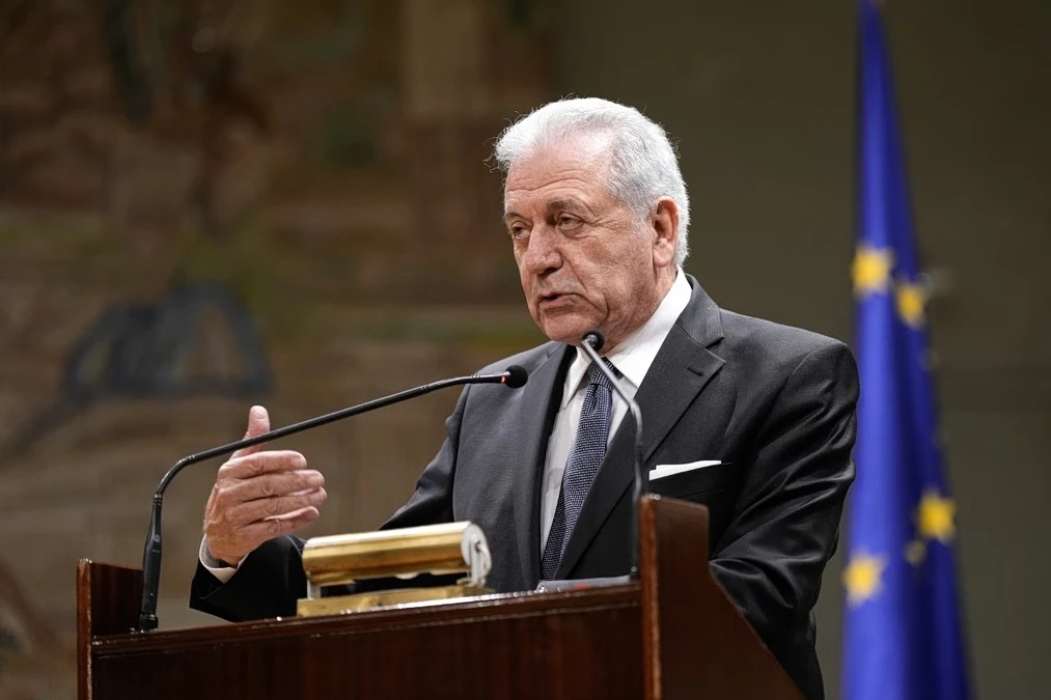
Πηγή Φωτογραφίας: eurokinissi//Qatargate: Avramopoulos Seeks to Block European Arrest Warrant in New Legal Challenge



The Qatargate investigation, one of the most significant corruption scandals to affect the European Parliament in recent years, has entered a new legal phase with the challenge brought by former European Commissioner and Greek Foreign Minister Dimitris Avramopoulos.
Before the Greek Parliament has completed procedures concerning parliamentary immunity and before Greek judicial authorities formally examine Belgium’s extradition request, Avramopoulos has petitioned Greece’s Supreme Court Prosecutor’s Office to declare the European Arrest Warrant (EAW) invalid.
The application represents an attempt to challenge the legal basis of the warrant before the extradition process advances.
A procedural, not substantive, defense
According to information from sources close to Avramopoulos, the legal challenge does not primarily dispute the substance of the allegations under investigation by Belgian prosecutors.
Instead, it focuses on what his legal team describes as procedural deficiencies in the European Arrest Warrant itself.
The two principal arguments reportedly include:
- the warrant allegedly refers only to a case reference number without explicitly identifying the underlying national judicial decision or arrest warrant on which it is based;
- it allegedly fails to specify sufficiently the time, location and factual circumstances of the alleged offenses, thereby limiting the defendant’s ability to prepare an effective legal defense.
According to this line of argument, these omissions undermine the formal validity of the warrant under the applicable European legal framework.
The jurisdiction question
A further element of Avramopoulos’ legal strategy reportedly concerns territorial jurisdiction.
His legal team argues that if any of the alleged acts were committed, even partially, on Greek territory, Greek judicial authorities could potentially claim jurisdiction over the case.
Legal observers note that such an argument could, if accepted, shift proceedings toward the Greek judicial system rather than requiring the former Commissioner to appear before Belgian investigators.
Whether this interpretation has legal merit remains for the competent courts to determine.
A test for the European Arrest Warrant system
Beyond the individual case, the dispute places one of the European Union’s most important judicial cooperation mechanisms under renewed scrutiny.
The European Arrest Warrant, introduced in 2004, is founded on the principle of mutual trust among the judicial authorities of EU Member States.
Its objective is to replace lengthy extradition procedures with a streamlined system of judicial surrender, allowing suspects or defendants to be transferred efficiently between Member States, except under specific legal exceptions provided by EU law.
Institutional analysts suggest that the case may become an important test of how procedural guarantees interact with the principle of mutual recognition, one of the cornerstones of the EU’s Area of Freedom, Security and Justice.
The broader legacy of Qatargate
The Qatargate investigation has already triggered one of the deepest institutional crises in the European Parliament in decades.
Belgian authorities are investigating allegations involving corruption, illicit lobbying and suspected foreign influence within European institutions.
The scandal has prompted significant reforms in Brussels, including tighter transparency rules, stricter oversight of lobbying activities and renewed discussions about ethics and accountability across EU institutions.
Political and institutional implications
From a political perspective, Avramopoulos’ legal challenge extends beyond an individual defense strategy.
On one hand, every defendant enjoys the fundamental right to exhaust all available legal remedies and procedural safeguards.
On the other hand, the case raises broader questions about the effectiveness of the European Union’s judicial cooperation framework and the resilience of the European Arrest Warrant mechanism when applied in politically sensitive, high-profile investigations.
The next phase will depend on decisions by the Greek judicial authorities, parliamentary procedures regarding immunity where applicable, and the ongoing investigation conducted by Belgian prosecutors.
Whatever the outcome, the Avramopoulos case is likely to become another important benchmark for the relationship between national sovereignty, judicial independence and the evolving architecture of the European rule of law.
Πηγή: pagenews.gr
Διαβάστε όλες τις τελευταίες Ειδήσεις από την Ελλάδα και τον Κόσμο