Türkiye Enters the ASEAN Game: Why Singapore Could Unlock Ankara’s Next Economic Expansion
 ΧΡΟΝΟΣ ΑΝΑΓΝΩΣΗΣ 7 '
Πηγή Φωτογραφίας: AP Photo//Türkiye Enters the ASEAN Game: Why Singapore Could Unlock Ankara’s Next Economic Expansion



Türkiye’s growing engagement with ASEAN could become one of Ankara’s most consequential geo-economic openings in Asia.
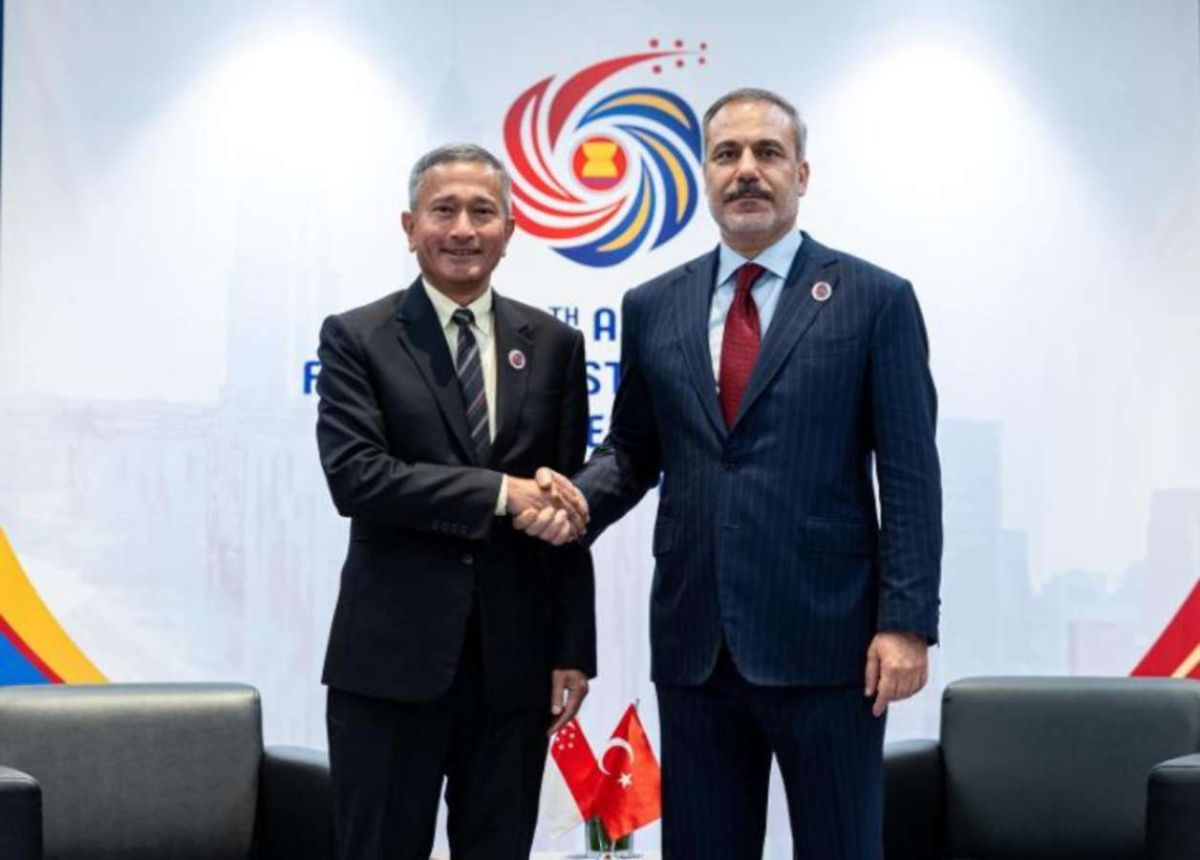
After ASEAN formally granted Türkiye Dialogue Partner status on July 21, Ankara gained much more than another diplomatic channel. It gained an opportunity to establish a deeper commercial, financial and strategic presence across one of the world’s most dynamic economic regions.
The crucial question is therefore no longer simply how much Singaporean investment Türkiye can attract.
It is whether Turkish companies can use Singapore as the financial and institutional headquarters from which to expand across Southeast Asia.
Singapore Could Become Türkiye’s ASEAN Engine
Singapore’s greatest value to Turkish companies does not necessarily lie in the size of its investment capital.
Its real advantage is the sophisticated infrastructure surrounding international business: corporate treasury management, foreign-exchange hedging, project finance, maritime insurance, arbitration, regional headquarters services and increasingly carbon accounting.
These are the financial and institutional pipes through which ambitious cross-border expansion becomes sustainable.
The legal foundations are already in place.
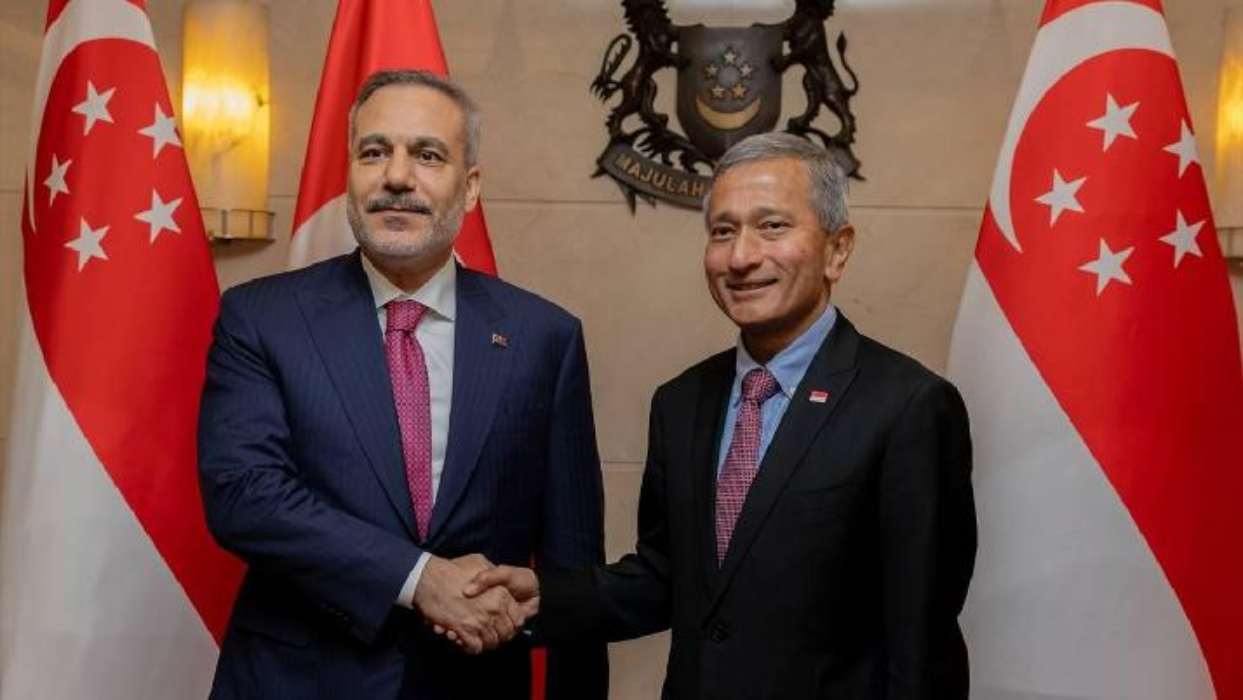
The Türkiye-Singapore Free Trade Agreement has been in force since 2017 and extends beyond goods to areas including services, e-commerce, customs facilitation and government procurement.
Around 286 Turkish-capital companies already operate in Singapore.
The next step is to transform Singapore from another export destination into an operational base for Türkiye’s expansion across ASEAN.
Managing the Currency Maze
ASEAN is not a single economic market.
A Turkish manufacturer could sell machinery in Indonesian rupiah, Thai baht and Vietnamese dong, purchase inputs in euros or dollars and finance production in Turkish lira.
That creates significant foreign-exchange and liquidity risks.
Singapore has established itself as one of Asia’s leading corporate treasury centres, offering companies the ability to centralise cash management, financing, hedging and regional financial operations.
For Turkish companies expanding simultaneously into several ASEAN economies, that could provide a much clearer picture of their overall exposure.
This is not simply an accounting advantage. Poorly managed currency risk can turn successful international expansion into a financial liability.
Turkish Contractors Eye Southeast Asia’s Infrastructure Boom
Infrastructure represents another potentially powerful area for Turkish expansion.
Türkiye’s construction groups have extensive international experience, but technical expertise alone is not enough to succeed in Southeast Asia.
An industrial project in Indonesia, a transport concession in the Philippines and an energy investment in Vietnam all carry very different political, currency, regulatory and financing risks.
Singapore’s Infrastructure Asia ecosystem can provide access to project preparation expertise, financing structures and connections with multilateral institutions.
That could allow Turkish contractors to move beyond simply bidding for already-financed projects.
Instead, they could participate in structuring projects from the beginning — helping transform infrastructure concepts into bankable investments.
Shipping Gives Singapore Another Strategic Advantage
Geography strengthens the case.
Singapore sits at the heart of one of the world’s most important maritime trading corridors and has developed an extensive ecosystem encompassing shipping finance, legal services, arbitration and dozens of marine insurers.
For Turkish exporters, shipbuilders and logistics companies, that infrastructure could provide better cargo insurance, clearer claims procedures and greater legal certainty in international contracts.
Singapore arbitration could also provide a neutral dispute-resolution mechanism for selected third-country agreements where companies are reluctant to rely on their counterpart’s domestic courts.
The New Requirement: Carbon Data
Another issue is becoming increasingly important for Turkish businesses seeking to compete internationally: carbon reporting.
Companies seeking green financing or contracts with multinational corporations increasingly need reliable and auditable information covering emissions from factories, transportation and supply chains.
Singapore has been developing substantial professional expertise around international sustainability-reporting standards.
A Singapore-based carbon-accounting operation could therefore give Turkish companies something increasingly valuable: credible environmental data that lenders and international customers can verify.
In future ASEAN tenders, a competitive product may no longer be enough.
A company unable to satisfy sustainability and disclosure requirements could lose contracts despite offering better pricing or technology.
But Singapore Cannot Replace ASEAN
There is an important limitation.
Singapore can become the coordinating hub, but it cannot substitute for a genuine presence inside Southeast Asian markets.
A regional headquarters cannot understand provincial politics in Indonesia, build supplier relationships in Vietnam or manage local networks in the Philippines entirely from an office in Singapore.
Turkish companies therefore need a dual structure: financial, legal and strategic operations based in Singapore combined with strong local teams and partners across individual ASEAN economies.
There is also a danger that establishing a Singapore headquarters becomes an expensive corporate fashion.
Smaller Turkish companies could be overwhelmed by office costs and professional fees. Ankara should therefore avoid subsidising symbolic headquarters with little operational substance.
A Türkiye-Singapore “ASEAN Operating Platform”
Ankara and Singapore could take the relationship further by establishing an ASEAN Operating Platform under their existing strategic partnership and free trade agreement.
Rather than functioning as another investment-promotion forum, it could connect export-ready Turkish companies with:
• banks and trade-finance providers;
• maritime and commercial insurers;
• arbitration and legal institutions;
• project-finance and infrastructure specialists;
• carbon-accounting and sustainability experts.
Public support could focus on initial structuring, expertise and capability-building rather than permanently subsidising corporate operating expenses.
Success would then be measured not by conferences or headline investment pledges, but by projects financed, trade insured, disputes resolved and Turkish companies establishing sustainable revenue streams across Southeast Asia.
ASEAN Could Become Ankara’s Next Economic Frontier
Türkiye’s new relationship with ASEAN creates a significant geo-economic opportunity.
But success will not be determined by another diplomatic agreement or several billion dollars of announced investments.
The real breakthrough will come when a Turkish company can use Singapore to structure a water project in Vietnam, insure equipment moving through the Strait of Malacca, manage exposure to multiple Asian currencies and resolve commercial disputes under predictable rules.
Ankara has secured the diplomatic gateway into ASEAN.
The next challenge is building the financial machinery that allows Turkish businesses to actually walk through it.
Πηγή: pagenews.gr
Διαβάστε όλες τις τελευταίες Ειδήσεις από την Ελλάδα και τον Κόσμο