Bloomberg: Turkey Pushes Secure First Six F-35s –Congress, the S-400s,Opposition from Greece and Israel
 ΧΡΟΝΟΣ ΑΝΑΓΝΩΣΗΣ 5 '
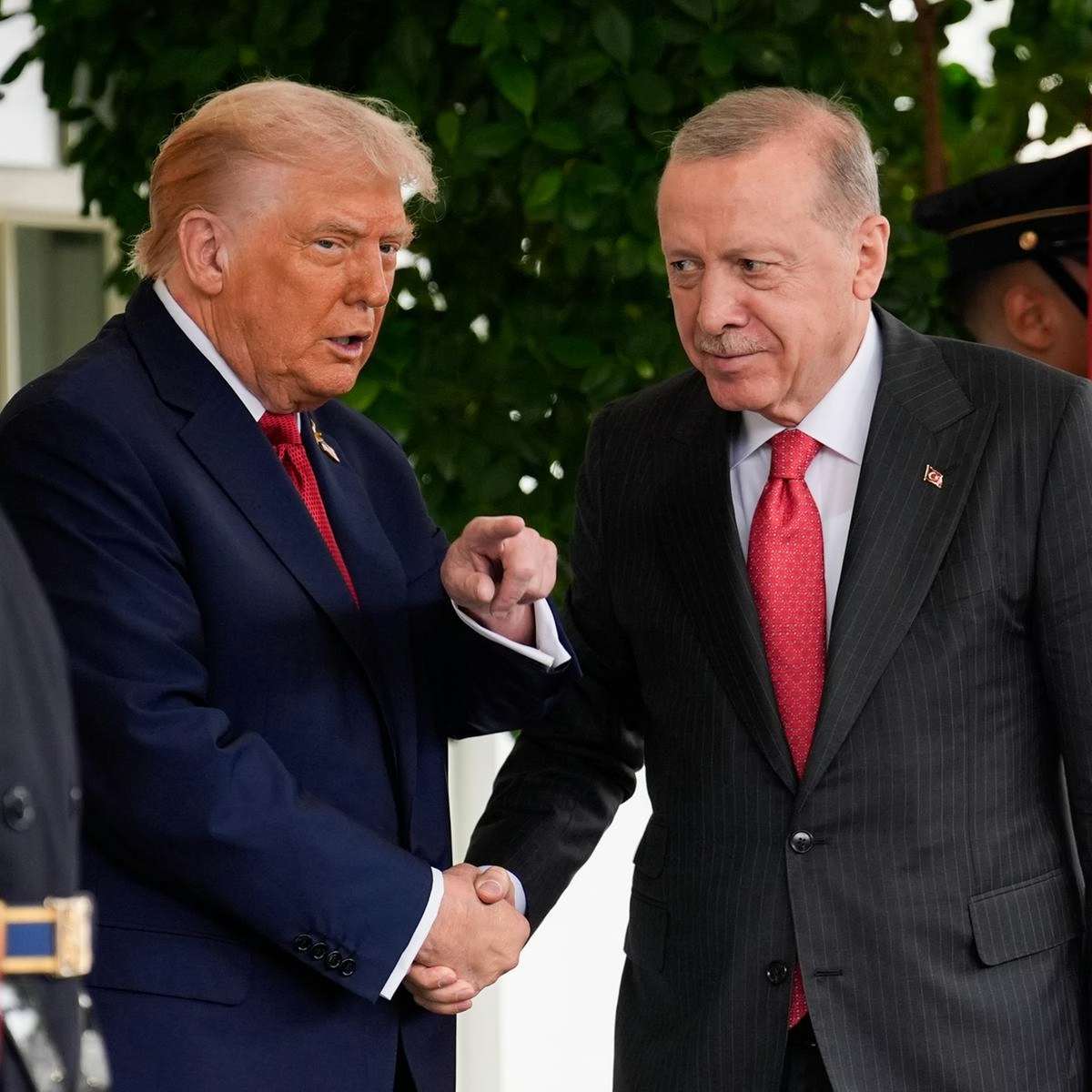
Πηγή Φωτογραφίας: AP Photo//Bloomberg: Turkey Pushes Secure First Six F-35s –Congress, the S-400s,Opposition from Greece and Israel



Turkey is making a renewed bid to regain access to the West’s most advanced fighter aircraft program.
According to a Bloomberg report by Selcan Hacaoglu, Firat Kozok, and Beril Akman, President Recep Tayyip Erdoğan’s government is seeking, as an initial step, the delivery of six F-35 fifth-generation fighter jets, for which Ankara has already paid approximately $1.4 billion before being removed from the program in 2019.
Although Turkey’s long-term objective remains the acquisition of roughly 40 aircraft, securing the first six would represent a major geopolitical victory for Erdoğan and could fundamentally reshape U.S.-Turkey defense relations.
Trump Signals a Possible Reset
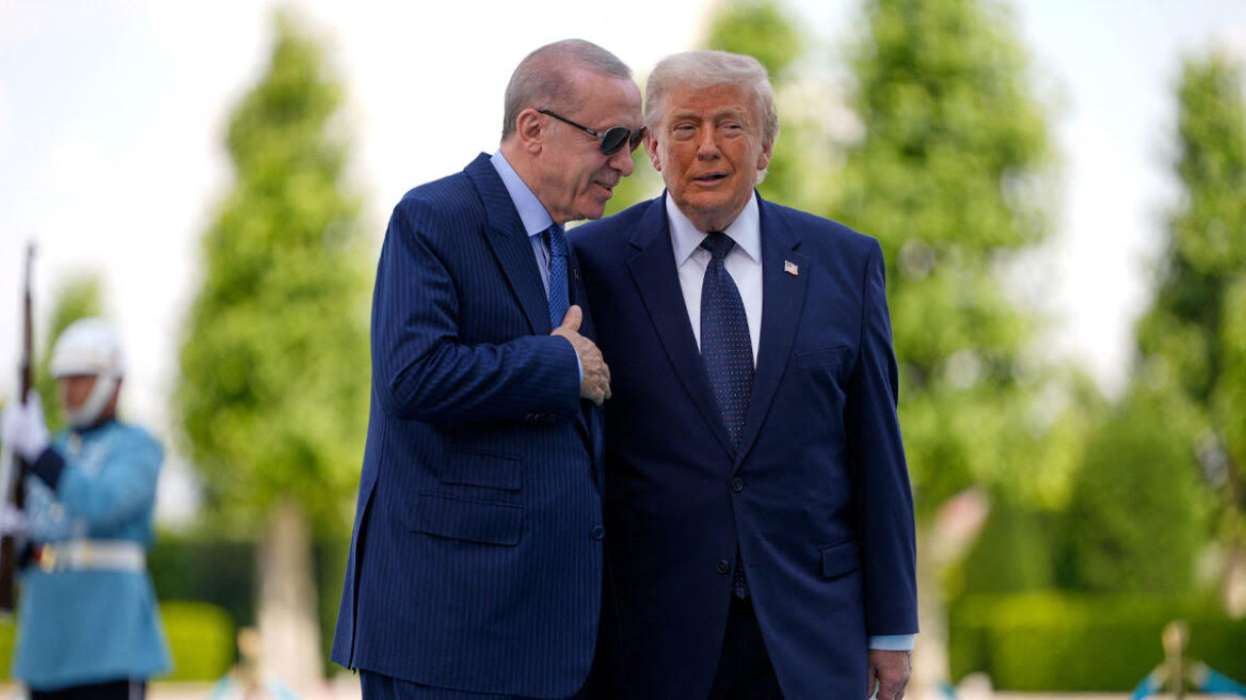
Donald Trump’s bilateral meeting with Erdoğan during the NATO Summit reignited expectations in Ankara.
The U.S. President indicated he is willing to reconsider sanctions imposed on Turkey’s defense sector and suggested that Washington is looking for a political solution to the impasse created by Turkey’s acquisition of the Russian S-400 air defense system.
However, the White House is only one part of the equation.
Congress Remains the Biggest Obstacle
Even if President Trump supports Turkey’s return, any transfer of F-35 aircraft could still face significant resistance in the U.S. Congress.
The CAATSA sanctions framework remains in force, while lawmakers from both parties continue to argue that operating Russian-made S-400 systems alongside F-35s presents an unacceptable risk to one of America’s most sensitive military technologies.
Nevertheless, several U.S. senators attending the NATO Summit adopted a more flexible tone.
Democratic Senator Jeanne Shaheen stated that Turkey’s return could be considered if an acceptable solution regarding the S-400 issue is reached.
Republican Senator Mike Rounds likewise emphasized Turkey’s strategic importance within NATO and acknowledged Ankara’s military contributions to the Alliance.
The S-400 Issue Remains the Core Dispute
The central problem has not changed.
Washington maintains that the simultaneous operation of Russian S-400 systems and F-35 fighters could expose classified operational data and compromise the aircraft’s stealth capabilities.
According to Bloomberg, Turkey is now considering a compromise formula that would include:
- retaining ownership of the S-400 batteries,
- limiting their operational deployment,
- allowing U.S. technical oversight,
- activating the system only under exceptional national security circumstances.
So far, however, no agreement has been reached.
Growing Concern in Israel and Greece
Turkey’s potential return to the F-35 program is generating considerable concern among two of Washington’s closest regional partners.
Israel, currently the only Middle Eastern country operating F-35 fighters, has openly opposed the possibility.
Prime Minister Benjamin Netanyahu has repeatedly argued that Turkey should not receive the aircraft, citing Ankara’s increasingly assertive regional posture.
Greece is also closely monitoring developments.
Athens has already joined the F-35 program and considers preserving its technological edge over the Turkish Air Force a key element of its long-term deterrence strategy.
The Six Aircraft Already Paid For
One of the most significant aspects of the negotiations is that the first six aircraft have already been built.
Turkey transferred approximately $1.4 billion before being suspended from the multinational program.
The aircraft remain stored in the United States and, should legal and political restrictions be lifted, could theoretically be delivered relatively quickly.
Turkey’s “Steel Dome” Strategy
Alongside its effort to regain access to the F-35, Ankara is accelerating construction of its own integrated air defense architecture.
The Steel Dome initiative aims to establish a layered national air defense network combining:
- Russian S-400 batteries,
- domestically developed Turkish missile systems,
- a potential acquisition of the Franco-Italian SAMP/T system,
- advanced anti-drone capabilities,
- next-generation radar networks.
Turkish officials argue that recent missile exchanges during the Iran-Israel conflict demonstrated the urgent need for a more comprehensive missile defense shield.
Turkey’s effort to rejoin the F-35 program extends well beyond a conventional arms procurement negotiation. It reflects Ankara’s broader strategy to restore its position inside the Western defense architecture at a time when NATO increasingly values Turkey’s strategic geography amid the wars in Ukraine and the Middle East. While President Donald Trump appears more willing than previous administrations to normalize defense relations with Erdoğan, the decisive variables remain unchanged: Congressional approval, CAATSA sanctions, the unresolved S-400 issue, and strong reservations from regional allies such as Greece and Israel. Ultimately, Washington’s challenge is not simply whether Turkey should regain access to the F-35, but whether it can do so without undermining NATO’s technological security or altering the military balance in the Eastern Mediterranean.
Source: pagenews.gr
Διαβάστε όλες τις τελευταίες Ειδήσεις από την Ελλάδα και τον Κόσμο