SYRIZA at a Crossroads: Waiting for EL.A.S., the Dourou–Pappas Leadership and Polakis’ Calculated Distance
 ΧΡΟΝΟΣ ΑΝΑΓΝΩΣΗΣ 6 '
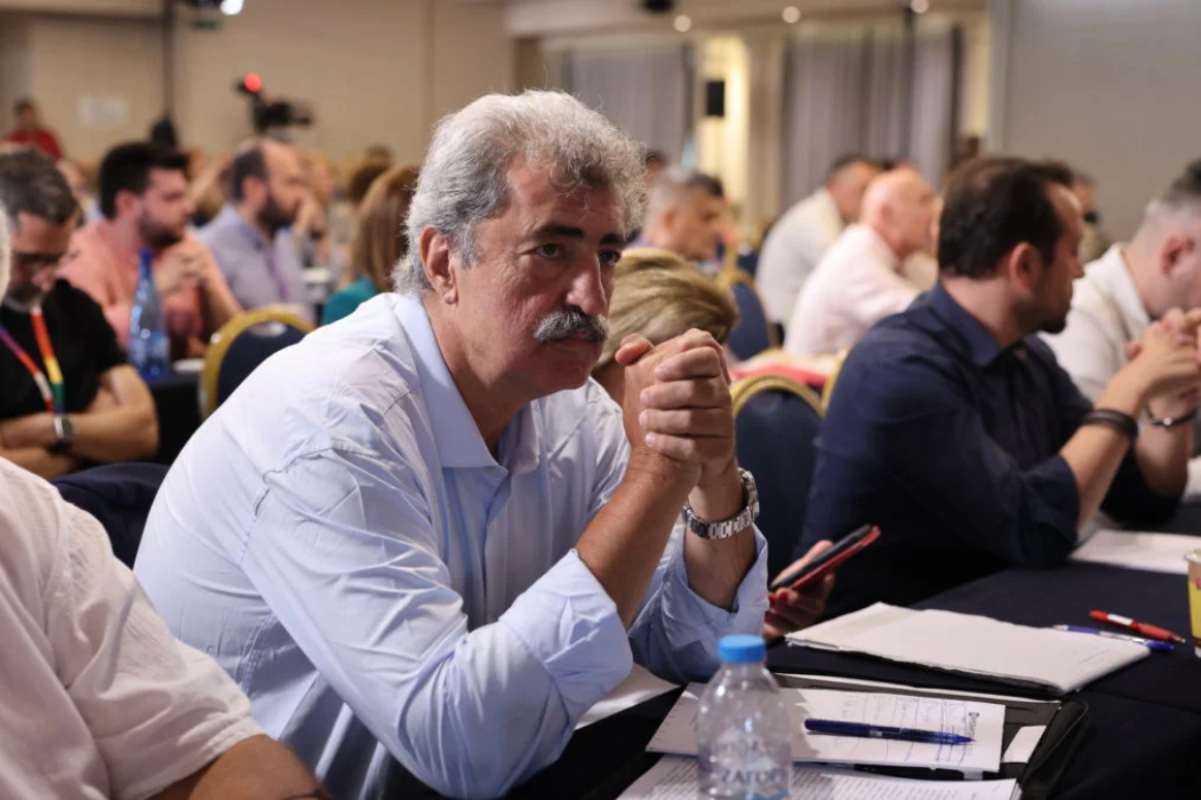
Πηγή Φωτογραφίας: eurokinissi//SYRIZA at a Crossroads: Waiting for EL.A.S., the Dourou–Pappas Leadership and Polakis' Calculated Distance



A New Phase in Greece’s Progressive Political LandscapeThe resignation of Socrates Famellos as leader of SYRIZA–Progressive Alliance has triggered far more than an internal party reshuffle. It marks the beginning of a broader political realignment within Greece’s fragmented center-left, where established alliances are being reassessed and new political poles are emerging.
At the center of these developments stands Alexis Tsipras’ newly established Greek Left Alliance (EL.A.S.), which many observers increasingly view as a potential vehicle for reshaping the progressive opposition.
While SYRIZA struggles to preserve its institutional cohesion, much of its former political capital appears to be waiting for Tsipras’ next move.
Departures Fuel Expectations Around EL.A.S.
The resignation or departure of at least 15 SYRIZA lawmakers represents one of the most significant parliamentary reorganizations in the party’s recent history.
Although speculation has intensified that many of them could eventually join EL.A.S., the transition appears far from automatic.
According to political sources, Tsipras’ new movement remains cautious about absorbing large numbers of former SYRIZA officials, seeking instead to build a broader political coalition rather than simply recreating the party he once led.
Officials close to the new organization insist that “red lines remain in place,” emphasizing that political compatibility—not numerical strength—will determine future participation.
The strategy reflects a broader effort to present EL.A.S. as a new political project with a wider social and ideological appeal rather than a continuation of SYRIZA under a different name.
Dourou and Pappas Assume Responsibility for SYRIZA’s Recovery
Inside SYRIZA, attention has shifted toward rebuilding the party’s leadership structure.
Rena Dourou has been appointed head of the Parliamentary Group, while Nikos Pappas has become the party’s new Secretary, forming the leadership duo tasked with navigating one of the most challenging periods in SYRIZA’s history.
The new leadership has sought to project unity while leaving open the possibility of future cooperation with Tsipras’ political initiative.
In one of her first interventions, Dourou stated:\
“We are open to cooperation, but not to political identification.”
Her remarks have been interpreted as an attempt to preserve channels of communication with EL.A.S. while maintaining SYRIZA’s institutional independence.
Polakis Draws Clear Political Boundaries
Perhaps the most politically significant development has been the position adopted by Pavlos Polakis.
Although remaining within SYRIZA, the outspoken MP from Crete declined to assume a prominent leadership role, choosing instead to participate only as an ordinary member of the newly established Strategic Planning Committee.
Within party circles, the decision is widely viewed as a deliberate political signal.
Polakis has openly questioned both the strategic direction of SYRIZA’s new leadership and the still-evolving political identity of EL.A.S.
His criticism was unusually direct.
“So far they haven’t presented a political line. They’ve offered nothing but empty rhetoric.”
He argued that any credible left-wing political project must adopt a far more radical economic agenda, including proposals such as the re-nationalization of Greece’s Public Power Corporation (PPC), stronger action against market cartels, and broader state intervention in strategic sectors of the economy.
His closing remarks perhaps best captured the uncertainty surrounding the future of Greece’s left.
“We will ultimately be judged by our political programme. I will continue fighting within SYRIZA, for as long as I can, alongside those who believe in such a programme. For any other programme, I will not fight.”
The statement has been interpreted as both a warning to the new party leadership and a message to Alexis Tsipras that ideological clarity—not political branding—will determine future alliances.
Tsipras Seeks to Build a New Progressive Platform
Meanwhile, Alexis Tsipras appears determined to avoid the perception that EL.A.S. is merely a refuge for former SYRIZA politicians.
The recent announcement of the party’s 75-member Political Committee, featuring academics, local government officials, policy experts and civil society representatives, forms part of a broader effort to demonstrate organizational renewal.
Rather than relying exclusively on familiar political figures, EL.A.S. is gradually presenting policy proposals across key sectors—including education, institutional reform and economic policy—in an effort to establish itself as a modern progressive movement capable of attracting voters beyond SYRIZA’s traditional electoral base.
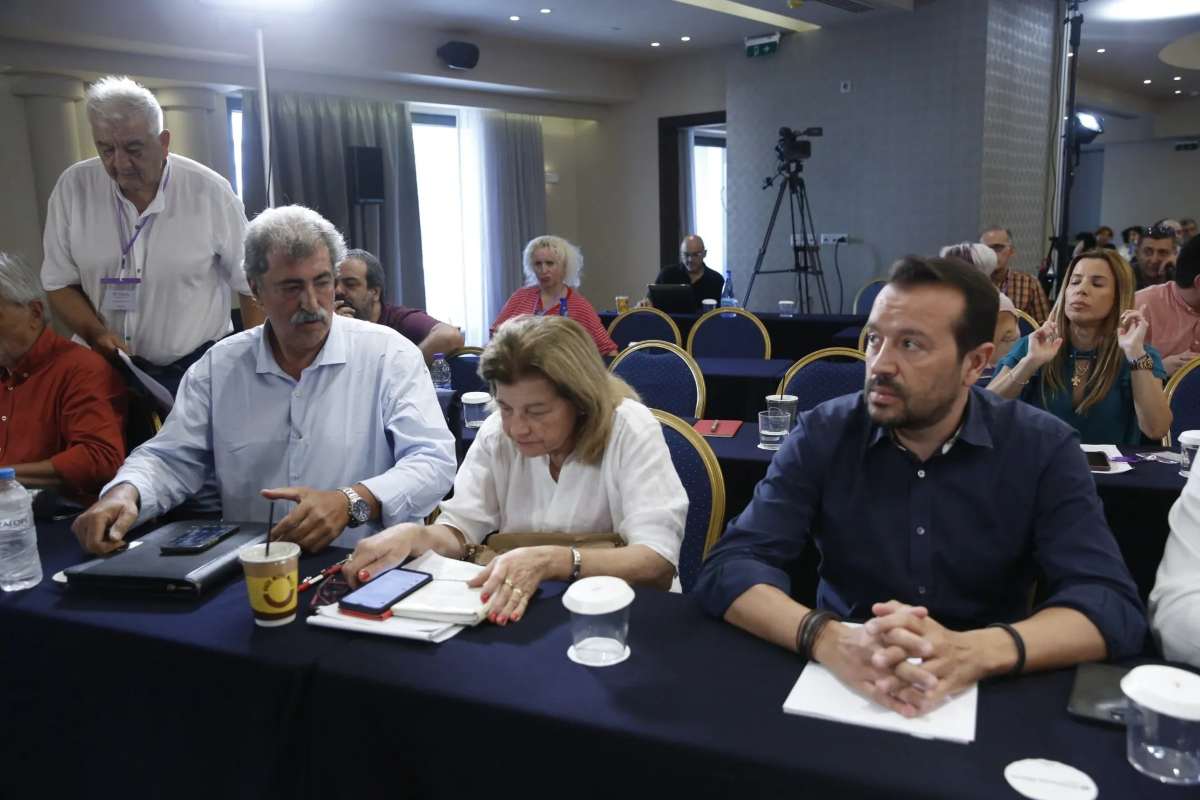
This strategy reflects Tsipras’ broader ambition to rebuild the Greek center-left around a new political narrative that addresses contemporary challenges, including economic inequality, climate transition, technological change and institutional modernization.
A Fragmented Opposition Searches for a New Equilibrium
The current developments extend well beyond the internal dynamics of SYRIZA.
They illustrate the wider transformation of Greece’s opposition landscape, where competing visions for the future of the progressive camp are emerging simultaneously.
On one side, SYRIZA seeks to preserve its political identity and parliamentary relevance. On another, EL.A.S. is positioning itself as a broader progressive platform capable of redefining the center-left. At the same time, influential figures such as Pavlos Polakis continue to argue for a more ideologically uncompromising left-wing agenda.
The coming months are likely to prove decisive. Whether departing lawmakers eventually align with EL.A.S., whether cooperation between the two political formations becomes feasible, or whether fragmentation continues will shape the future architecture of Greece’s opposition.
Beyond the movement of political personalities, however, the deeper question concerns which political force will ultimately articulate a convincing progressive alternative at a time when economic pressures, social inequality, energy transition and mounting geopolitical uncertainty are fundamentally reshaping both Greek politics and the broader European political landscape.
Διαβάστε όλες τις τελευταίες Ειδήσεις από την Ελλάδα και τον Κόσμο