Trump and Putin Redraw Europe’s Security Order? The NATO–Ukraine Bargain Alarms Brussels
 ΧΡΟΝΟΣ ΑΝΑΓΝΩΣΗΣ 16 '
Πηγή Φωτογραφίας: AP Photo/Trump and Putin Redraw Europe’s Security Order? The NATO–Ukraine Bargain Alarms Brussels



Europe is confronting a question that could reshape the continent’s security order: can Washington and Moscow negotiate the foundations of European security before the war in Ukraine has even ended?
The administration of US President Donald Trump is attempting to open a second diplomatic track with Russia.
The first concerns ending the war in Ukraine. The second addresses a much broader issue: the rules governing Russia’s future relationship with Europe, NATO’s military posture and the security guarantees that could underpin a lasting settlement.
According to a report by Axios, the United States has asked Moscow to submit updated proposals for a new European security architecture.
Washington is not simply inviting Russia to restate its demands. American negotiators also want the Kremlin to identify what it would be prepared to offer in return, including concrete de-escalation measures, reciprocal commitments and assurances against future attacks on European countries.
The initiative has raised concerns across European capitals because it brings back issues Moscow placed on the table before its full-scale invasion of Ukraine in February 2022.
These include restrictions on NATO enlargement and changes to the alliance’s military presence in Eastern Europe.
The fact that Washington is prepared to discuss Russian proposals does not mean it has accepted them. It does, however, mean that the future of Europe’s security order is now part of an active diplomatic negotiation.
Washington Asks Moscow for a New Security Blueprint
The American initiative emerged during negotiations in Abu Dhabi on November 10 and 11, where representatives of the United States, Russia and Ukraine met to discuss possible steps toward ending the war.
Trump’s envoys, Jared Kushner and Steve Witkoff, asked Russian negotiators to present a revised security framework reflecting the geopolitical realities that have emerged since 2021.
According to Axios, the Russian delegation again argued that President Vladimir Putin had launched the invasion because the Biden administration had failed to address Moscow’s security concerns.
That remains Russia’s justification for the war, not an established explanation that legitimizes the invasion.
Ukraine and its Western allies reject Moscow’s argument, maintaining that Russia’s invasion violated Ukrainian sovereignty and international law.
The American response was that the world had changed substantially since 2021 and that any serious negotiation would require a different approach.
Kushner explained the message delivered to the Russians:
“We told the Russians that they have their wishes and fears, but they also need to present different de-escalation measures and proposals if they want Europe to view them positively.”
The statement illustrates the central element of Washington’s approach.
The United States appears willing to examine Russian concerns, but it is demanding corresponding commitments from Moscow.
The difficult question is whether such commitments could satisfy European governments, particularly those closest to Russia.
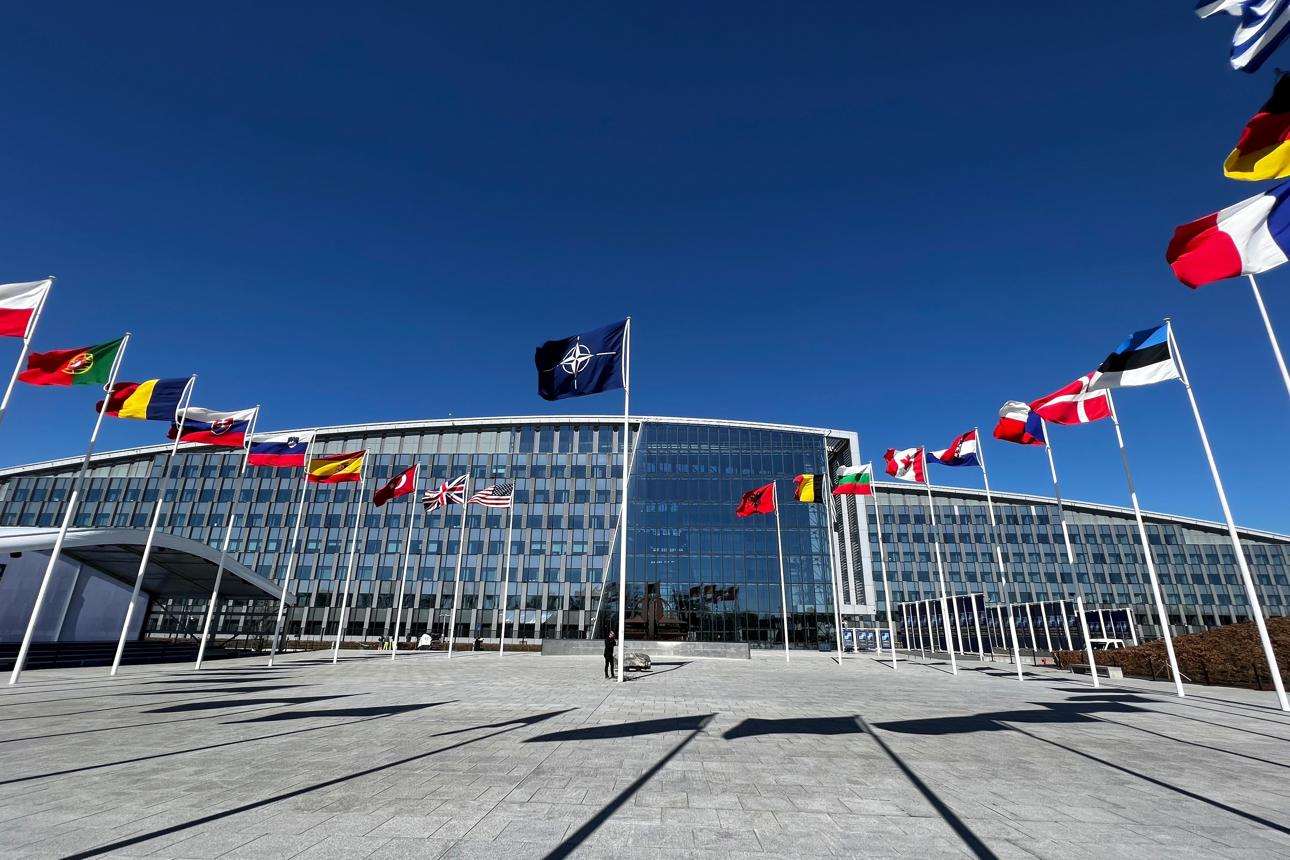
NATO Back on the Table: Moscow Revives Its 2021 Demands
The discussion about a new European security architecture is not beginning from scratch.
In December 2021, Moscow presented draft security agreements to the United States and NATO.
Among its demands were restrictions on further NATO enlargement and limitations on the alliance’s military deployments in Eastern Europe.
Western governments rejected the idea that Russia should have a veto over the sovereign security choices of other countries.
Five years later, elements of those demands have returned as potential subjects for negotiation.
For Moscow, the opportunity is significant.
The Kremlin has long argued that the war in Ukraine cannot be resolved independently of what it describes as the wider European security problem.
For countries on NATO’s eastern flank, however, the implications are considerably more sensitive.
Poland, Estonia, Latvia and Lithuania have strengthened their defense capabilities and relied on NATO’s collective-defense commitments precisely because of concerns about Russian military power.
Any agreement limiting allied deployments or the reinforcement of NATO’s eastern flank would therefore raise fundamental security questions.
The distinction is between reciprocal confidence-building measures that reduce the risk of conflict and arrangements that restrict the sovereign choices of European states.
The former could provide a basis for negotiation. The latter would encounter significant resistance.
Russia Wants a Deal About Europe — Without Europeans at the Table
One of the most striking contradictions in the diplomatic process concerns Russia’s position on European participation.
Moscow wants a comprehensive agreement governing its future security relationship with Europe.
Yet it has so far resisted allowing European governments to participate directly in the negotiations over Ukraine.
Vladimir Medinsky, Putin’s adviser and head of the Russian delegation, criticized several European leaders, accusing them of misleading Ukrainians and contributing to the continuation of the war.
“I don’t understand what there is to discuss with them,” he said.
The remark reflects Moscow’s reluctance to recognize European governments as direct negotiating partners in the current process.
Medinsky also used a striking metaphor to explain why Russia believes an agreement limited to Ukraine would be insufficient.
“Ukraine was merely where an abscess burst. The whole body needs to be treated. A bandage is not enough.”
The statement captures Moscow’s broader objective.
Russia wants the negotiations to address the structure of European security rather than focus exclusively on a ceasefire or territorial settlement in Ukraine.
For European governments, however, the approach raises concerns about a return to great-power bargaining over the security of smaller states.
The central question is whether a future agreement would establish reciprocal security obligations or create arrangements that effectively recognize spheres of influence.
Von der Leyen: End the War Before Redesigning European Security
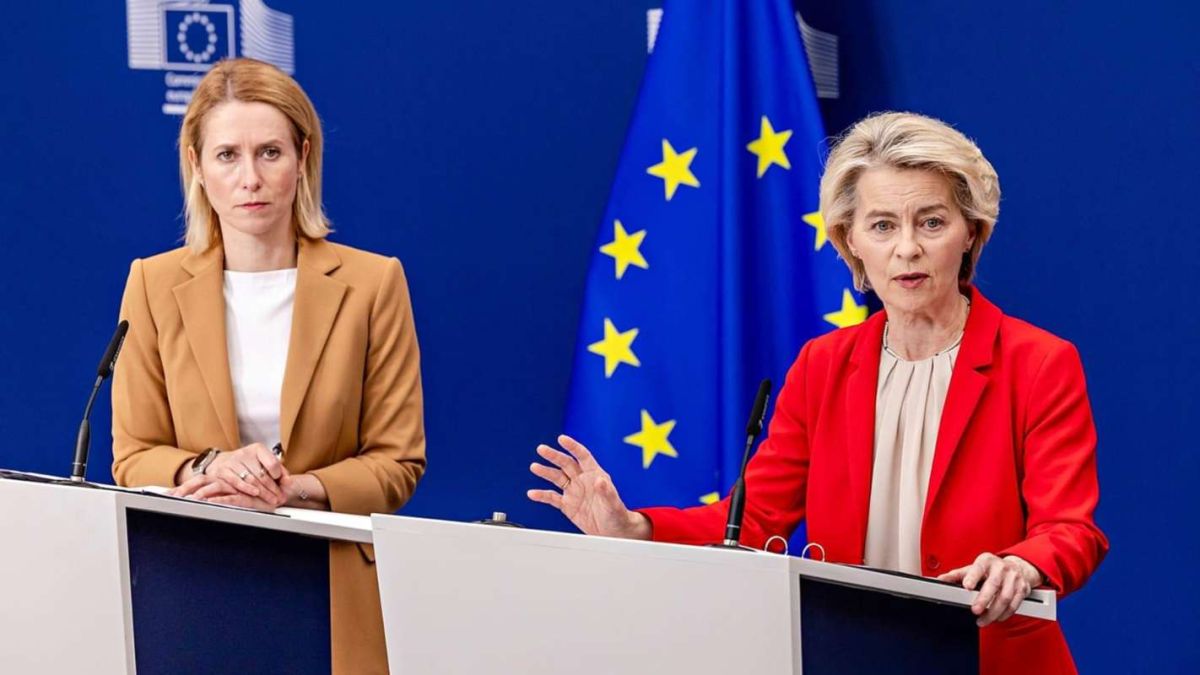
European Commission President Ursula von der Leyen has taken a more cautious position than Washington.
According to accounts of the diplomatic discussions, she believes that final decisions on a new European security architecture should follow the end of the war in Ukraine.
The difference is important.
Washington wants to negotiate the peace settlement and future security arrangements in parallel.
European leaders are concerned about making commitments on the continent’s long-term security while Russian military operations continue.
This does not necessarily mean European governments oppose preliminary discussions.
Rather, they want to avoid becoming bound by arrangements negotiated before the conditions for a durable peace have been established.
The debate also comes as the European Union seeks to strengthen its own defense capabilities.
In her 2026 State of the Union address, von der Leyen called for stronger mechanisms to respond to hybrid threats and security emergencies.
“I believe it is time for our own Article 4 or an Emergency Security Protocol,” she said.
The proposal does not replace NATO’s Article 4 consultation mechanism or the alliance’s collective-defense obligations.
It nevertheless reflects a wider European ambition to improve coordination and crisis-response capabilities.
The contrast is revealing.
While Washington is exploring a comprehensive agreement with Moscow, Brussels is simultaneously considering how to strengthen Europe’s capacity to respond independently to security threats.
Kaja Kallas: A Ceasefire Must Come Before a Lasting Peace
EU foreign policy chief Kaja Kallas has also expressed skepticism about Russia’s willingness to make meaningful concessions.
Kallas has argued that Moscow has not demonstrated sufficient goodwill and that a ceasefire should precede substantive peace negotiations.
Her position reflects a broader concern among European governments.
Negotiations could provide Russia with diplomatic opportunities without necessarily requiring it to reduce military pressure on Ukraine.
European officials therefore emphasize that any future security agreement must include more than political declarations.
It would need credible verification arrangements, implementation mechanisms and consequences for violations.
These requirements are particularly important in discussions about possible Russian non-aggression commitments.
A pledge not to attack another European country would have limited practical value unless accompanied by mechanisms capable of monitoring compliance.
The central European concern is not simply what Russia might promise, but how those promises would be enforced.
That question is likely to remain one of the most difficult obstacles to a comprehensive agreement.
Abu Dhabi Talks: Difficult Negotiations and a Prisoner Exchange
The negotiations in Abu Dhabi marked the first direct meeting between Russian and Ukrainian officials under American mediation after a nine-month interruption.
According to reporting cited by Axios and The Washington Post, the opening exchanges were tense.
Both delegations arrived with substantial disagreements, and the initial discussions were at times emotionally charged.
Kushner and Witkoff attempted to move the process away from mutual accusations and toward specific options that could be presented to the respective leaders.
Kushner acknowledged the difficulties:
“We had some pretty difficult discussions.”
Despite the tensions, the delegations reached an agreement in principle on a potentially significant prisoner exchange.
The final number of prisoners and the practical arrangements remained subject to further discussions.
The development represents a concrete, though limited, outcome of the diplomatic process.
It does not amount to a ceasefire or demonstrate that the principal disagreements over territory and security guarantees have been resolved.
The war continues, and both sides remain divided over fundamental questions.
Nevertheless, the prisoner exchange discussions suggest that limited humanitarian agreements may be possible even when the broader political negotiations remain deadlocked.
Kushner and Witkoff Head to Putin — Zelensky Awaits Answers
Following the Abu Dhabi talks, the American envoys were scheduled to travel to Moscow for discussions with President Vladimir Putin.
Their agenda includes the next phase of peace negotiations, security guarantees, prisoner exchanges and the possibility of bringing European representatives into future talks.
The diplomatic schedule also includes discussions with Ukrainian President Volodymyr Zelensky in Dublin.
Ukraine is particularly concerned about any arrangement that could reshape European security without providing credible guarantees against another Russian attack.
A source familiar with the White House discussions explained the importance of the issue:
“Zelensky will not agree to a settlement unless he knows what comes next in terms of security guarantees. And Putin wants to know that too.”
For Kyiv, the distinction between ending the fighting and achieving a durable peace is fundamental.
A ceasefire without enforceable security arrangements could leave Ukraine exposed to renewed military pressure.
The Ukrainian government also continues to reject the idea that it should be compelled to surrender occupied territory as the price of peace.
These positions complicate Washington’s attempt to construct a comprehensive settlement.
Any agreement would need to address both the immediate military situation and the longer-term security framework.
Dublin Becomes a Test of European Influence
Dublin is emerging as an important diplomatic venue for the next phase of discussions.
European governments face the prospect of negotiations that could affect NATO’s future military posture, the balance of power in Eastern Europe and the broader relationship between Russia and the West.
The immediate issue is whether European representatives will participate in the talks.
But several additional questions remain unresolved.
Who would represent Europe? Would the European Union and NATO have separate roles? What authority would the representatives possess? And how would any eventual agreement be approved?
According to sources cited by Axios, Washington has assured European governments that it does not intend to reach a security agreement with Russia without European and Ukrainian support.
The American administration has also reportedly ruled out granting Moscow a veto over European security decisions.
These assurances are important.
However, participation in consultations is not necessarily equivalent to influence over the final terms.
For European governments, the challenge will be to secure a substantive role in shaping any future arrangement.
Otherwise, they could find themselves responsible for implementing commitments negotiated largely by Washington and Moscow.
Poland and the Baltic States Fear a Return to Spheres of Influence
The consequences of a new security agreement would not be identical across Europe.
Countries on NATO’s eastern flank regard Russian military capabilities as an immediate national-security concern.
For Poland and the Baltic states, discussions about restricting NATO deployments directly affect the credibility of collective defense.
Their concerns are rooted in geography, historical experience and the security consequences of Russia’s invasion of Ukraine.
At the same time, a future agreement involving reciprocal military transparency, arms-control arrangements and mechanisms to prevent accidental escalation could offer potential benefits.
The distinction lies in the substance of the commitments.
An agreement designed to reduce the risk of confrontation is different from one that gives a major power influence over the defense policies of its neighbors.
This is why the debate has revived concerns about spheres of influence.
European governments want to ensure that the continent’s future security arrangements are based on sovereign equality rather than decisions made exclusively by larger powers.
What the New Security Talks Mean for Greece
The negotiations also have implications for Greek foreign policy.
As a member of both the European Union and NATO, Greece has a direct interest in decisions affecting the alliance’s strategic direction and Europe’s defense architecture.
A future agreement between Russia and Western governments could influence NATO’s priorities, defense planning and the distribution of military resources.
For Athens, the institutional dimension is particularly relevant.
The principle that sovereign states retain the right to determine their international partnerships and security arrangements is a central element of the European security order.
The debate over Ukraine and NATO therefore touches on broader principles of sovereignty, territorial integrity and the prohibition on the use of force.
No specific new Greek diplomatic initiative has been announced in connection with the latest US–Russia discussions.
Nevertheless, the outcome will matter to Greece as a member of the organizations whose future roles are under discussion.
Peace in Ukraine or a Renegotiation of Europe?
The American initiative is attempting to connect two related but distinct diplomatic processes.
The first concerns ending a war that has entered its fifth year.
The second concerns establishing a new framework for relations between Russia and Europe.
Linking the two could create opportunities for a broader settlement.
It could also make the negotiations more difficult by introducing additional disputes before the immediate military questions have been resolved.
Russia wants to discuss the entire European security system.
Ukraine demands credible guarantees against renewed aggression.
European governments insist that decisions affecting their security cannot be made without their participation.
The United States is attempting to develop a framework in which these different demands can be negotiated simultaneously.
For now, there is no agreed security blueprint, no common framework for enforcing guarantees and no settled arrangement for European participation.
What has changed is the scope of the diplomatic discussion.
The negotiations are no longer confined to the future of Ukraine.
They now extend to the security architecture of the European continent itself.
And that leaves Europe facing a question with consequences far beyond the current war:
Will European governments help shape the next security settlement, or will they be asked to manage an agreement whose central terms were negotiated between Washington and Moscow?
Source: pagenews.gr
Διαβάστε όλες τις τελευταίες Ειδήσεις από την Ελλάδα και τον Κόσμο