Macron Takes France’s Nuclear Deterrent Beyond Borders: Europe’s Umbrella Has a Name-But Still No Clear Rules
 ΧΡΟΝΟΣ ΑΝΑΓΝΩΣΗΣ 7 '
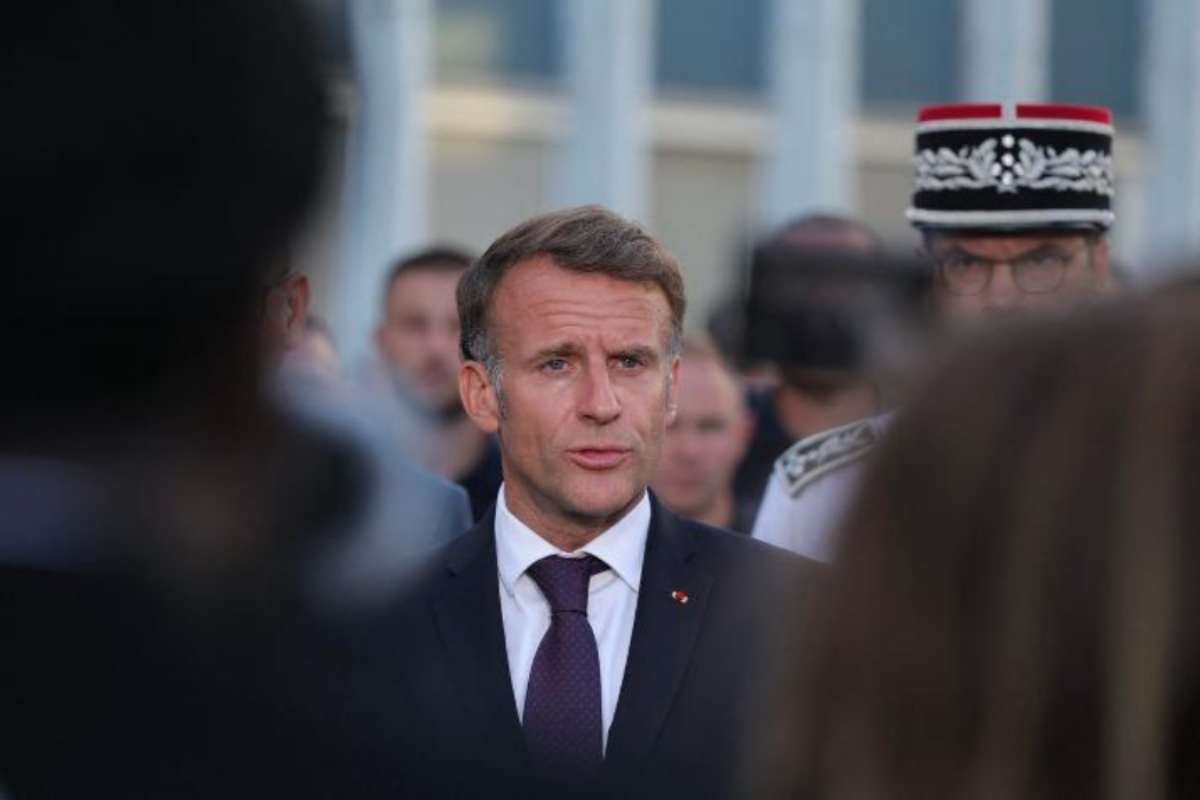
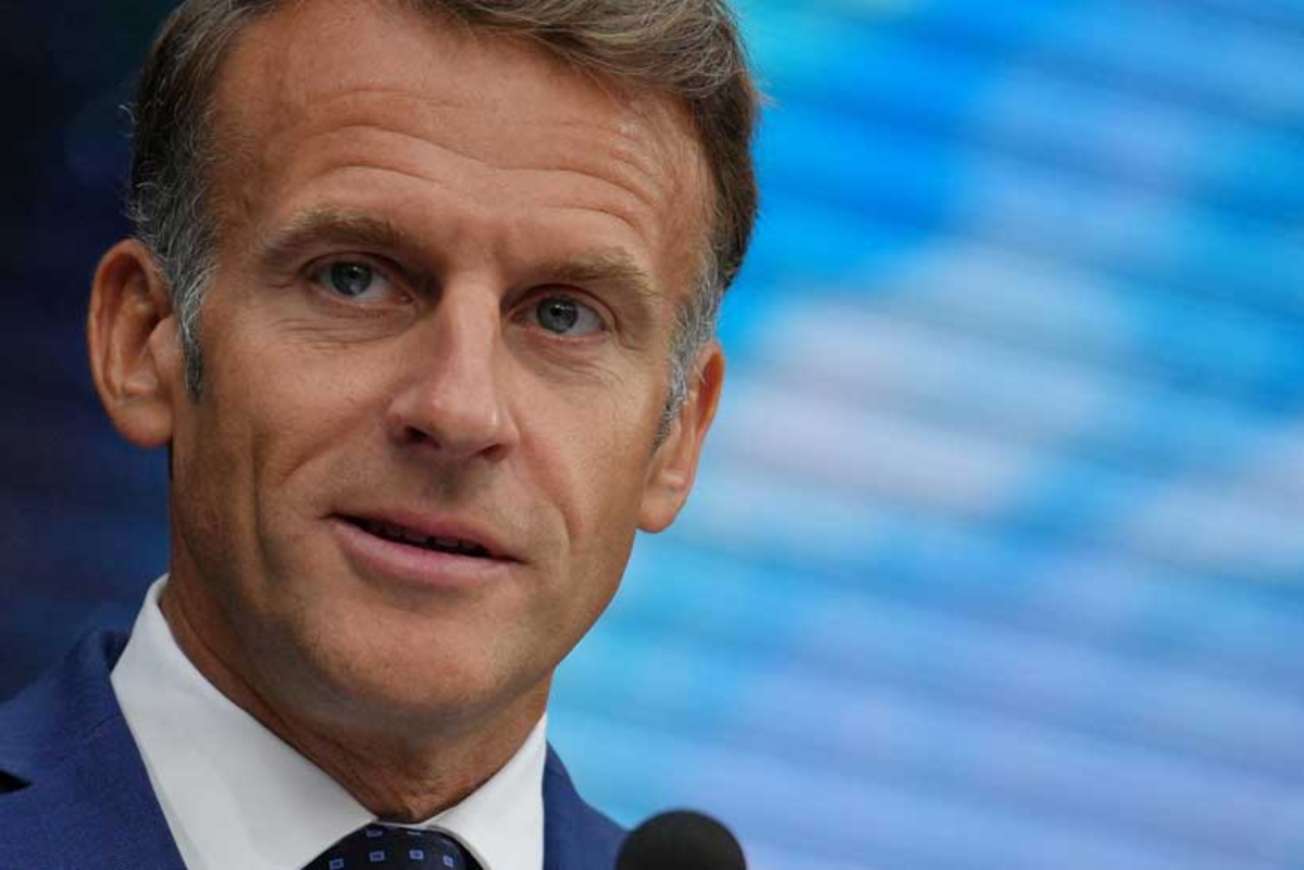
Πηγή Φωτογραφίας: AP Photo//Macron Takes France’s Nuclear Deterrent Beyond Its Borders: Europe’s New Umbrella Has a Name — But Still No Clear Rules


France is attempting something it avoided for decades: giving its strictly national nuclear deterrent a far more explicit European role.
The debate itself is not new.
As early as February 2020, Emmanuel Macron told the École de Guerre that France’s vital interests possessed a European dimension and invited willing European partners to engage in strategic dialogue — including participation in French nuclear-deterrence exercises.
For six years, however, the concept remained closer to a political formula than an operational architecture.
In March 2026, that began to change.
March 2 marked the turning point
Speaking at the Île Longue strategic submarine base, Macron unveiled two major shifts.
First, France would increase its nuclear arsenal and end the previous practice of publicly disclosing the precise size of its stockpile.
Second, he formally introduced the concept of “forward deterrence” — dissuasion avancée.
The new approach allows European partners to take part in French deterrence exercises and, under certain circumstances, could involve the deployment of elements of France’s strategic forces on allied territory.
That represents a genuine departure.
Not because France is surrendering control of its nuclear force.
Quite the opposite.
Macron has made clear that the decision to cross the nuclear threshold will remain exclusively French.
The paradox at the heart of Europe’s new “umbrella”
This is where the central problem begins.
France is building something that increasingly resembles extended nuclear deterrence.
But it has not created a corresponding mechanism for shared decision-making.
Paris has not published a definitive list of countries that would automatically fall under French nuclear protection.
It has not publicly defined what kind of attack on a partner would be considered an attack on French “vital interests”.
And it has not given European allies anything comparable to the role some NATO members hold through the alliance’s Nuclear Planning Group.
Some of that ambiguity is deliberate.
French nuclear doctrine has traditionally avoided drawing precise red lines, precisely because uncertainty complicates an adversary’s calculations.
Macron reiterated in March that France’s vital interests cannot be reduced mechanically to its national borders.
Germany: the first real test
The most consequential step has been taken with Germany.
On the same day as Macron’s Île Longue speech, Paris and Berlin announced a high-level Nuclear Steering Group.
Its purpose is to create strategic dialogue around the interaction between:
- French nuclear deterrence,
- conventional forces,
- missile defence,
- and long-range strike capabilities.
The relationship has already moved beyond theory.
In July, French Rafale aircraft from the Strategic Air Forces deployed to Germany’s Nörvenich air base, while Germany is also expected to participate conventionally in French nuclear-deterrence exercises.
That is perhaps the clearest indication yet that Paris is no longer speaking only in abstract terms.
Poland and Finland enter the equation
Germany is no longer the only country involved.
France and Poland held the first meeting of their own Nuclear Steering Group in Paris in July and agreed on a strategic cooperation roadmap.
Then came another important move on September 14.
Finland announced its participation in French forward deterrence.
Paris and Helsinki agreed to establish a new Nuclear Steering Group focused on strategic coordination and escalation management below the nuclear threshold.
Six months after Macron’s announcement, a small but increasingly tangible group of states is therefore being institutionally connected to the French model.
Why now?
The answer extends far beyond France.
Europe’s strategic environment has been transformed by:
- the war in Ukraine,
- repeated Russian nuclear threats,
- the weakening of arms-control architecture,
- and growing European anxiety over whether the American nuclear guarantee can be assumed indefinitely.
The International Institute for Strategic Studies has described French forward deterrence as a significant evolution in France’s strategic thinking precisely because it enables deeper cooperation with regional partners without abandoning French nuclear sovereignty.
But the French umbrella is not the American one
This distinction is critical.
France’s initiative does not currently replace NATO’s nuclear umbrella.
Paris and Berlin have explicitly stated that their new cooperation is designed to complement NATO deterrence, not substitute for it.
There are also structural differences.
U.S. extended deterrence rests on:
- a vastly larger nuclear arsenal,
- a global base network,
- NATO’s Nuclear Planning Group,
- nuclear sharing arrangements,
- and decades of integrated operational planning.
The French system is only beginning to develop.
The central gap: what exactly is France promising?
This is the core policy question.
If Russia threatened Poland or Finland with a nuclear strike, what exactly would participation in French forward deterrence mean?
Would Paris automatically consider the threat an attack on its own vital interests?
Would France deploy strategic assets?
Would it escalate conventionally before contemplating any nuclear response?
Or does the arrangement simply mean that an adversary must now calculate that France could become involved?
For the moment, the answer remains intentionally ambiguous.
That ambiguity may strengthen deterrence.
But it also creates uncertainty for the European partners now being asked to stand beneath the French umbrella.
The succession problem after Macron
There is another layer of uncertainty.
Macron is approaching the final phase of his presidency.
French nuclear doctrine itself is deeply institutionalised and does not depend on one president.
But the Europeanisation of deterrence is a political choice.
France’s next president will therefore have to decide whether to continue, deepen or constrain forward deterrence.
That makes 2027 important not just for French domestic politics, but for the security architecture of Europe as a whole.
From slogan to nuclear architecture
In 2020, Macron spoke of the “European dimension” of French vital interests.
By 2026, there are now:
- Nuclear Steering Groups,
- German participation in French exercises,
- deployments of French strategic Rafales to Germany,
- strategic dialogue with Poland,
- and Finland’s participation in forward deterrence.
So this time, something real is being built.
The question is no longer whether France’s nuclear deterrent has a European dimension.
It does.
The real question is how far France is prepared to go when a European crisis moves beyond exercises and declarations and enters the realm of an actual nuclear threat.
Until that question is answered, Europe’s emerging French nuclear umbrella will remain simultaneously more real than ever — and more ambiguous than many of the states beneath it may be comfortable with.
Source: pagenews.gr
Διαβάστε όλες τις τελευταίες Ειδήσεις από την Ελλάδα και τον Κόσμο