EYDAP–EYATH: The €400 Million Water Overhaul That Could Reshape Their Investment Story
 ΧΡΟΝΟΣ ΑΝΑΓΝΩΣΗΣ 8 '
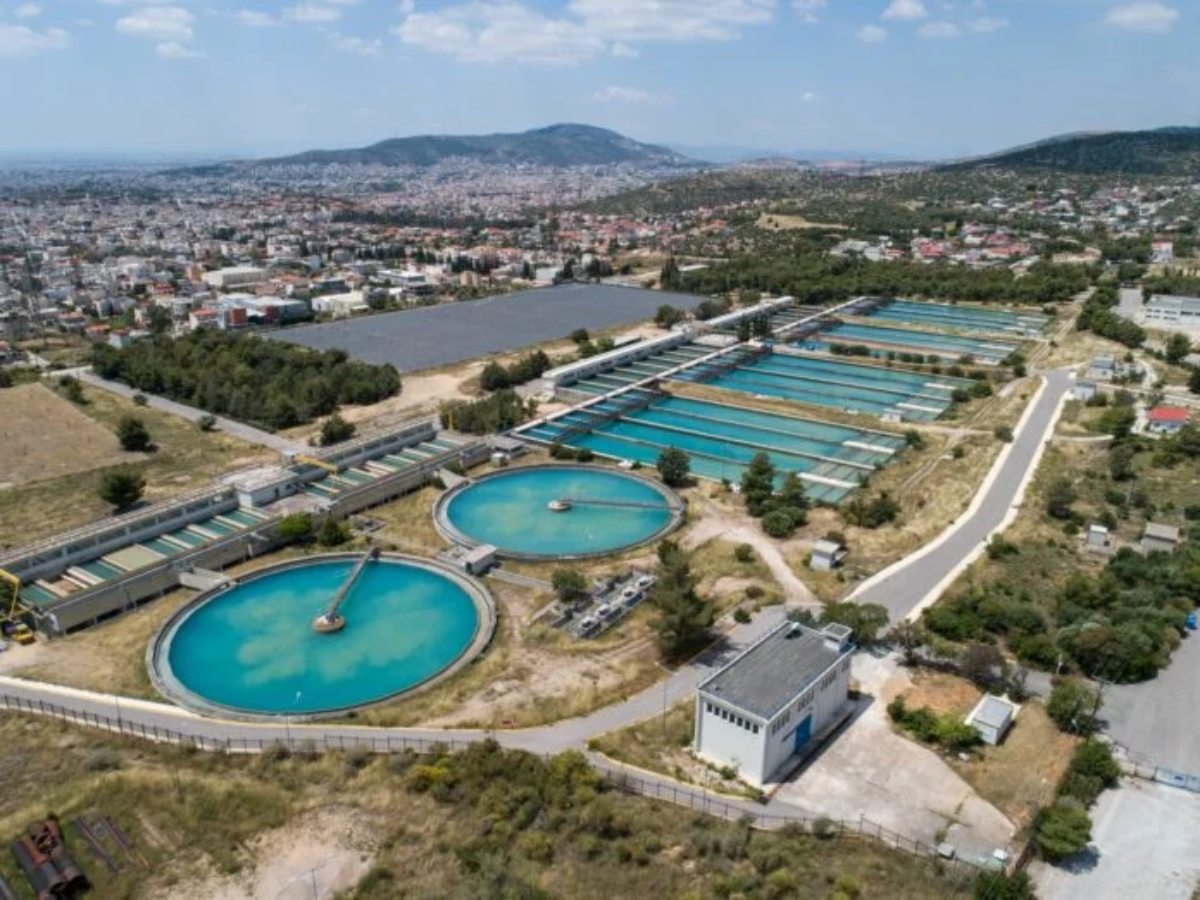
Πηγή Φωτογραφίας: EYDAP–EYATH: The €400 Million Water Overhaul That Could Reshape Their Investment Story



A reform initially viewed largely as an administrative overhaul of Greece’s fragmented water sector is increasingly becoming an investment story for the Athens Stock Exchange.
At the centre are EYDAP, Athens’ listed water utility, and EYATH, its Thessaloniki counterpart.
Under the new framework, the two companies are set to expand significantly through the integration of dozens of regional water, wastewater and irrigation providers.
Before that can happen, however, one crucial question has to be answered:
What exactly are EYDAP and EYATH taking on?
The Great Asset Mapping Begins
A fast-track process is being launched to identify and assess the assets of the 68 providers expected to be incorporated into EYDAP and EYATH, according to Crisis Monitor. Under the more optimistic timetable, the process could be completed by summer 2027.
This is much more than an inventory of pipelines and treatment facilities.
The exercise involves physical infrastructure and other fixed assets, but also personnel, employment arrangements and financial liabilities.
For investors, this distinction is critical.
The restructuring may add substantial assets and new revenue streams to the two companies, but it could simultaneously bring significant investment requirements.
EYDAP Takes 43 Providers, EYATH 25
The scale of the restructuring is considerable.
Under the government’s plans, 43 providers are expected to be integrated into EYDAP, including municipal water and wastewater departments, DEYAs — Greece’s municipal water and sewerage companies — and irrigation organisations.
EYATH is expected to absorb another 25 providers, extending its footprint beyond its traditional Thessaloniki base.
That brings the total to 68 providers.
The result would be more than a modest geographic expansion. It could fundamentally alter the operating perimeter of both listed companies.
The Question Markets Will Ask: What Are the Assets Worth?
This is where the story becomes particularly important for shareholders.
The networks and other assets transferred to EYDAP and EYATH will have to be valued.
The methodology and valuation will involve the country’s regulatory authority, RAAEY, while compensation for transferred assets is expected to be determined under the new framework.
Until that exercise is completed, there is no reliable aggregate figure for the net economic value being added to the two companies.
And that matters.
Investors will need to look beyond the headline value of the assets and examine their condition, associated liabilities and, most importantly, the amount of capital expenditure required to modernise them.
A large water network can be valuable.
An ageing network requiring billions in future upgrades is a very different proposition.
The State Is Absorbing Part of the Debt Risk
The government is seeking to reduce one of the immediate risks attached to the consolidation.
The Environment and Energy Ministry has said the state will cover at least 75% of the electricity debts owed by the DEYAs that are being absorbed.
Official government information places the broader financial support package for municipalities and municipal water companies at €400 million, including approximately €200 million related to the restructuring and debt burden.
That is significant for the investment case because the value of the assets being transferred cannot be considered independently from the liabilities attached to them.
Reducing part of the legacy debt makes the consolidation materially easier to manage.
From Traditional Utility to Water-Infrastructure Platform
This is where the investment narrative begins to change.
Until now, EYDAP and EYATH have largely been viewed as mature, regulated utilities operating within well-defined geographic territories.
The new model could be much broader.
Greater geographic coverage can potentially mean larger revenue bases and economies of scale. The incorporation of irrigation infrastructure could also move the two groups towards a more integrated role across the water cycle.
If executed successfully, the restructuring could therefore shift the way investors think about both companies:
from local regulated utilities to larger national and regional water-infrastructure operators.
That does not automatically translate into higher shareholder value. The ultimate outcome will depend heavily on asset valuations, tariffs, regulation and investment requirements.
The Other Side of the Equation: Capex
The biggest counterweight to the bullish interpretation is capital expenditure.
More infrastructure also means more infrastructure to maintain.
Ageing pipelines, water losses, energy costs, wastewater facilities, digitalisation, telemetry and climate-resilience projects can all require substantial investment.
Crisis Monitor also highlights the prospect of increased capex as the expanded networks are modernised.
For markets, therefore, the equation is not:
More assets = more value.
It is closer to:
New assets + additional cash flows – liabilities – required capex = the real equity story.
That calculation cannot be completed until the asset-mapping exercise produces much greater visibility.
Water Scarcity Adds a Strategic Premium
There is also a broader factor that makes the restructuring more important than an ordinary utility consolidation.
Water infrastructure is becoming a strategic asset.
Climate change, drought risk, ageing infrastructure and increased pressure on available water resources are forcing European governments to spend more on water security and network resilience.
For Greece — a country where agriculture, tourism and urban demand can place considerable seasonal pressure on water resources — the ability to manage networks at greater scale is becoming increasingly important.
That gives EYDAP and EYATH a role that goes beyond traditional municipal utility services.
Their infrastructure increasingly sits at the intersection of climate adaptation, food production, urban resilience and national infrastructure policy.
RAAEY Holds a Key Piece of the Puzzle
The regulatory framework will be crucial.
RAAEY is expected to play an important role in the valuation and oversight of transferred assets and in monitoring the economic and operational performance of water providers.
For investors, greater regulatory clarity could eventually make the enlarged companies easier to model.
The market will want answers on several issues: asset valuations, permitted returns, tariff structures, investment obligations and the timetable for infrastructure upgrades.
Until those variables become clearer, assigning a precise valuation premium to the restructuring would be premature.
Summer 2027 Becomes the Next Major Milestone
Under the faster scenario, the asset-mapping process could be completed by summer 2027, although delays could push parts of the exercise further out.
By then, investors should have a much clearer picture of what is actually being transferred.
How much infrastructure?
At what value?
With what liabilities?
How much capex will be necessary?
And what additional cash flows could the enlarged operating footprint generate?
Those are the numbers that will ultimately determine whether the restructuring changes the valuation case for the two stocks.
Could Water Become the Next Infrastructure Story on the Athens Exchange?
That is ultimately what makes the process worth watching.
EYDAP and EYATH could be approaching one of the largest changes to their corporate perimeter in years.
It is still too early to conclude that the consolidation will create additional net value for shareholders. Asset quality, investment requirements, regulation and the cost of integration will determine the answer.
But the scale of the transformation is difficult to ignore.
If the restructuring proceeds as planned, EYDAP and EYATH will no longer be viewed simply through the traditional lens of the Athens and Thessaloniki water utilities. They will control a broader geographic footprint, more infrastructure and potentially a much wider part of Greece’s water cycle — opening an entirely new chapter in their investment story.
Διαβάστε όλες τις τελευταίες Ειδήσεις από την Ελλάδα και τον Κόσμο