GSI: The French “Key” Could Unlock the Cable — Cyprus to Release €25 Million Once NAVTEX Is Issued
 ΧΡΟΝΟΣ ΑΝΑΓΝΩΣΗΣ 9 '
Πηγή Φωτογραφίας: eurokinissi//GSI: The French “Key” Could Unlock the Cable — Cyprus to Release €25 Million Once NAVTEX Is Issued


The Great Sea Interconnector appears, for the first time in months, to be regaining a clear operational roadmap.
Not every financial, regulatory or geopolitical issue has been resolved. But three elements have changed the outlook:
Meridiam’s entry as majority investor in the GSI company,
a clearer financial commitment from Nicosia,
and preparations for the resumption of seabed surveys.
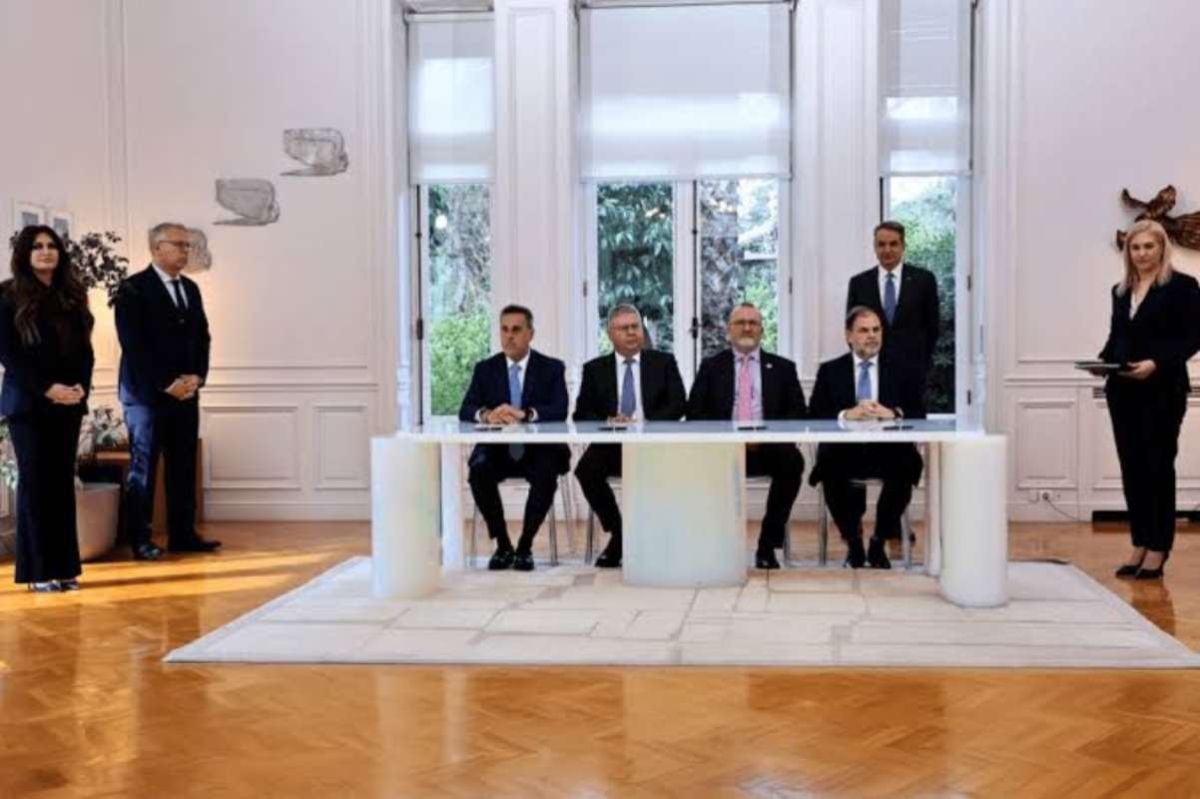
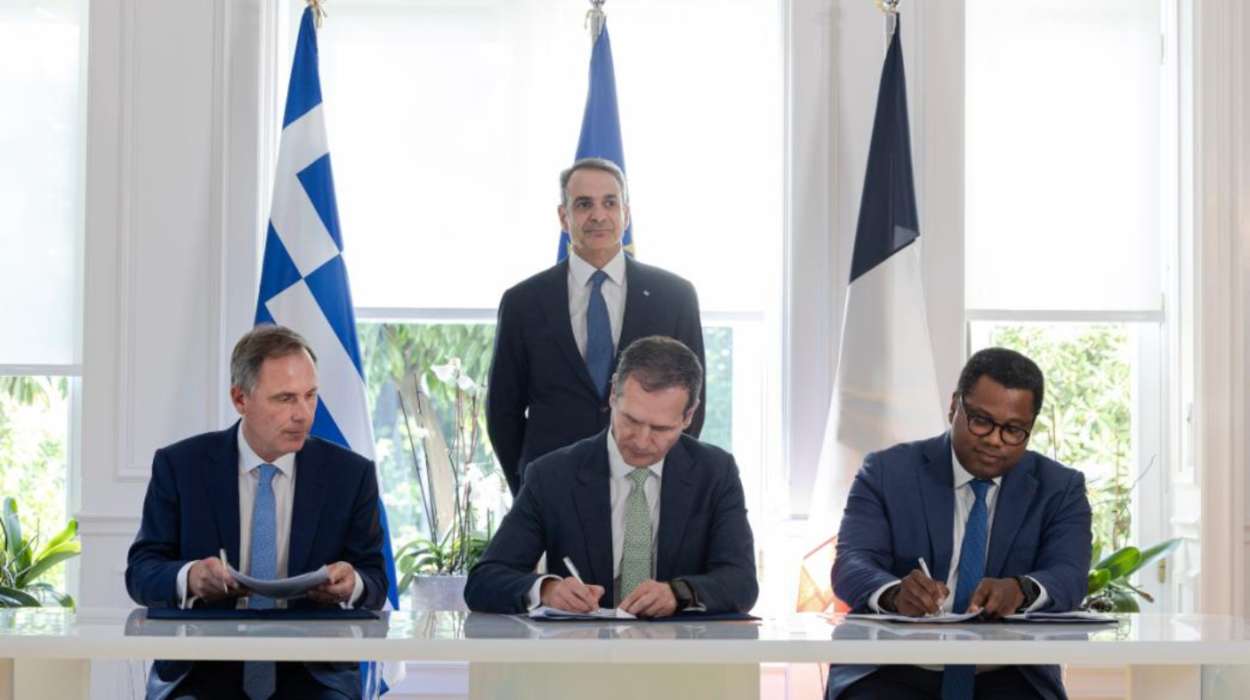
The agreement with Meridiam was signed on August 5 in the presence of Greek Prime Minister Kyriakos Mitsotakis, alongside a tripartite agreement between IPTO, GSI and Nexans covering seabed survey work. Mitsotakis described completion of the surveys as a “first priority” for accelerating the project.
Nicosia Links the €25 Million Payment to NAVTEX
The clearest new signal came from Cypriot President Nikos Christodoulides.
He said that he had agreed with Mitsotakis that Cyprus would proceed with the €25 million payment once the relevant NAVTEX is issued and marine survey activity resumes.
“We agreed that Cyprus will pay the €25 million once NAVTEX is issued for the start of the surveys,” Christodoulides said, adding that the amount has already been provided for in the Cypriot budget.
The statement matters because Cyprus’s financial participation has been one of the main points of uncertainty around the project.
Nicosia is now tying the payment to a tangible operational milestone:
the actual return of survey activity at sea.
Christodoulides: “Closer Than Ever”
Days earlier, the Cypriot president had described Meridiam’s entry as decisive for both the financial and geopolitical dimensions of the project.
“For the first time since 2012, we have substantive developments toward the implementation of this project,” he said, arguing that GSI is now closer than ever to becoming reality.
That does not mean Cypriot concerns have disappeared.
Energy Minister Michalis Damianos has stressed that the government supports the interconnection, but continues to examine carefully the cost that could ultimately be passed on to consumers.
Cyprus has also linked any direct equity participation by the state to the completion of the European Investment Bank’s assessment.
Meridiam Changes the Weight of the Project
The French group’s entry is not merely a change in shareholder structure.
Meridiam manages roughly €25 billion in infrastructure assets and has experience in major trans-European networks.
Its CEO Thierry Déau said at the signing ceremony that the GSI is a strategic European project and enjoys high-level political support in France.
IPTO remains a strategic shareholder and technical partner.
But with a major French infrastructure investor holding the majority position, the project gains a stronger capital base, a different risk structure and, above all, a broader European political footprint.
Mitsotakis–Macron: GSI Reaches the Élysée
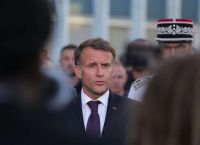
The new geopolitical dimension became clear during the Mitsotakis–Macron meeting in Paris on September 9.
According to the official readout from the Greek prime minister’s office, the two leaders discussed the “next steps” for the implementation of the electricity interconnector following Meridiam’s entry.
The project was discussed in the broader context of the Eastern Mediterranean, the Middle East and regional connectivity infrastructure.
Greek reports have also indicated that France is prepared to support the restart of marine surveys with a vessel sailing under the French flag.
If confirmed operationally, that would significantly increase the French role in any future tension involving Turkey.
That point is crucial.
Because what stalled GSI was never only a financing problem.
It was also geopolitical.
The Kasos Precedent Still Matters
Earlier survey activity faced Turkish objections south of Kasos and Karpathos.
That episode demonstrated that even before physical cable-laying begins, preparatory survey work can become entangled in disputes over maritime jurisdiction.
That risk has not disappeared.
But the presence of a French investor, French cable manufacturer Nexans and potentially a French-flagged survey vessel changes the political setting.
GSI is no longer seen purely as a Greek-Cypriot infrastructure project.
It increasingly carries a French and wider European dimension.
NAVTEX Is Now the Real Stress Test
According to Cypriot government statements and regional reporting, the Greek NAVTEX is expected within the coming weeks, with marine surveys potentially resuming from late September through early November.
If the technical preparations by Meridiam, IPTO and Nexans are completed on schedule, October could become the month that shows whether the current political momentum can be translated into actual work at sea.
And this time NAVTEX will carry greater significance than a simple navigation notice.
It will function as:
the technical trigger for restarting the project,
the financial trigger for Cyprus’s €25 million payment,
and a geopolitical test for the next phase.
€658 Million From the EU — Cyprus Remains the EU’s Last Energy Island
The European Commission has already committed roughly €658 million through the Connecting Europe Facility for the project, which has been designated a Project of Common Interest.
The Commission has repeatedly stressed that Cyprus remains the only EU member state without an electricity interconnection to the continental European grid.
GSI is intended to end that isolation, strengthen security of supply and support higher penetration of renewable energy.
The planned subsea route stretches close to 900 kilometres and ranks among the most technically demanding electricity interconnection projects in the world.
Why the Interconnector Matters for Cyprus
The main advantage is not simply access to cheaper imported electricity.
It is the transformation of Cyprus from an isolated electricity system into part of a broader regional market.
Cyprus would gain:
access to European electricity markets,
the ability to import power during periods of high demand,
the ability to export surplus renewable generation,
greater balancing capacity,
and lower dependence on maintaining large reserve generation margins domestically.
The European Commission explicitly links GSI both to security of supply and to deeper renewable integration in the Mediterranean region.
The Difficult Question: Who Pays, and How Much?
This remains the core debate in Cyprus.
EU funding significantly reduces the capital burden, but does not eliminate the cost of the project.
The Cypriot government has made clear that it wants greater clarity on:
the final overall cost,
financing costs,
potential revenues from use of the interconnector,
and the amount that may ultimately be passed on to Cypriot consumers.
That is why the latest studies are not treated in Nicosia as a routine technicality.
They will influence the final structure of Cyprus’s financial participation.
Opposition in Cyprus Demands Clear Decisions
Political pressure is also increasing for the Cypriot government to adopt a firmer position in support of the project.
Supporters of faster implementation argue that Meridiam’s entry, stronger French involvement and EU financing have materially changed the project’s risk profile.
The government’s position is more cautious:
yes to the strategic importance of the interconnector, but with continued scrutiny of the financial burden and the obligations Cyprus would assume.
From a Greece–Cyprus Cable to an Eastern Mediterranean Corridor
The wider geopolitical value of GSI emerges in the next phase.
The original concept does not end with Crete and Cyprus.
A future extension toward Israel could create a larger electricity corridor linking the Eastern Mediterranean with Europe.
In that scenario, Cyprus would cease to be the EU’s last isolated electricity system and instead become an intermediary energy hub.
GSI would then gain importance beyond the cable itself:
as part of a new regional architecture of electricity connectivity.
France Is Now Putting Political Capital Into the Project
That is the real change of recent weeks.
Until recently, the central question was:
will the cable move forward at all?
Today the question is becoming:
can the new Greece–Cyprus–France framework convert political will into actual offshore activity?
Meridiam is in the ownership structure.
Nexans is already involved industrially.
Macron is discussing the project directly with Mitsotakis.
Nicosia is now linking its €25 million contribution to the issuance of NAVTEX.
And seabed surveys are once again moving to the center of the timetable.
None of this guarantees completion of the Great Sea Interconnector.
But after a prolonged period of uncertainty, GSI once again has a concrete next step — and this time France is inside the project, not merely standing alongside it.
Source: pagenews.gr
Διαβάστε όλες τις τελευταίες Ειδήσεις από την Ελλάδα και τον Κόσμο