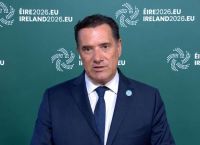
Plevris in Luxembourg: “Europe Must Protect Itself” — Greece Pushes Emergency Migration Mechanism
 ΧΡΟΝΟΣ ΑΝΑΓΝΩΣΗΣ 8 '

Πηγή Φωτογραφίας: Γραφείο Τύπου//Plevris in Luxembourg: “Europe Must Protect Itself” — Greece Pushes Emergency Migration Mechanism



Greece is bringing a proposal for a European emergency migration mechanism to the EU Justice and Home Affairs Council in Luxembourg, with Migration and Asylum Minister Thanos Plevris arguing that Europe needs additional tools when its external borders face exceptional pressure.
The Greek initiative is formally included on the agenda of the 1 October 2026 Home Affairs Council under the heading:
“A European Emergency Mechanism to address instrumentalisation and hybrid threats at the EU external borders.”
The Council explicitly states that Greece will provide information on the proposal.
Plevris: “Exceptional circumstances require exceptional means”
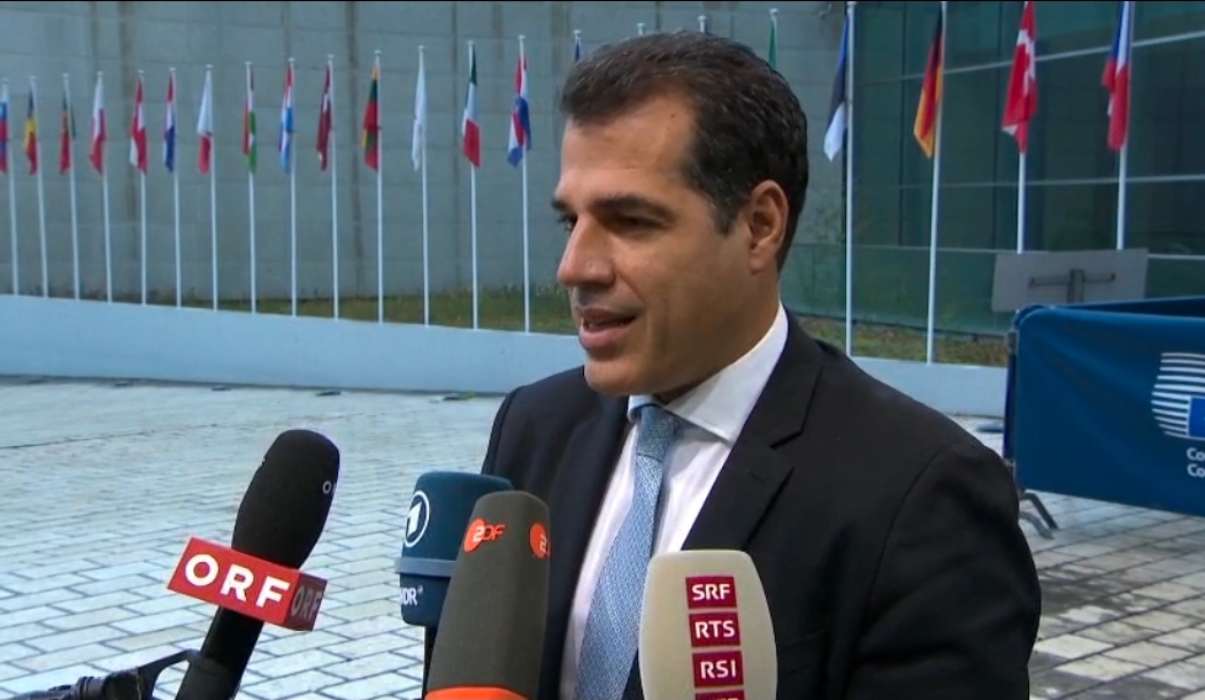
Speaking as he arrived at the Council, Plevris set out the central argument behind the Greek proposal.
“In exceptional circumstances concerning migration, exceptional means are needed.”
Athens’ position is that the EU’s new migration and asylum architecture provides the common framework for normal conditions, but Europe also needs a clearly defined mechanism for extreme situations involving sudden mass pressure or the deliberate instrumentalisation of migration.
The European Commission itself has acknowledged that additional emergency tools are being developed for such circumstances.
The Greek proposal is now formally on the EU table
The significance of today’s meeting is that the initiative is no longer merely part of the political debate in Athens.
According to the Council’s official programme, the Greek proposal is scheduled for discussion at approximately 13:15 Luxembourg time.
It focuses specifically on situations where migration may be used as a form of political pressure or as part of a broader hybrid threat against the EU’s external borders.
Plevris: Mitsotakis proposal backed politically by von der Leyen
Plevris linked the initiative directly to Prime Minister Kyriakos Mitsotakis and to the broader debate opened by European Commission President Ursula von der Leyen.
“Today I will present the proposal of Greek Prime Minister Kyriakos Mitsotakis for the Emergency Support Mechanism, which was also accepted by von der Leyen,” he said.
Von der Leyen announced in her State of the Union address on 16 September that the Commission would propose a new European Emergency Response Framework for exceptional situations at the EU’s borders.
Her argument was that recent events had demonstrated the need for European tools to evolve, particularly where mass movements of people are deliberately engineered or weaponised.
What could change during an emergency
Plevris pointed to two instruments Greece believes should be available in severe crisis situations:
reinforced surveillance and protection of the EU’s external borders, alongside exceptional adjustments to normal asylum procedures.
His political message was concise:
“Europe must protect itself.”
The precise legal architecture of the Commission’s new framework, however, has not yet been finalised.
This distinction is important.
Von der Leyen has said the mechanism should operate only under strictly defined criteria and allow temporary, narrowly defined flexibility in standard procedures. The Commission has also stressed that EU values and fundamental rights will continue to apply.
Brussels has not yet endorsed a blanket suspension of asylum
The issue is particularly sensitive when it comes to asylum.
At a Commission briefing on 23 September, officials were directly asked whether the future framework could include a temporary suspension of the right to asylum.
The Commission did not confirm such a measure.
Instead, it reiterated that work on the framework is still under way and referred to “time-limited and strictly defined flexibility in standard procedures.”
This means the Greek position being presented by Plevris should be distinguished from the final legal form that any Commission proposal may eventually take.
Von der Leyen: Europe needs new tools for weaponised migration
The political direction in Brussels has nevertheless shifted clearly towards greater crisis preparedness.
Von der Leyen told the European Parliament that the EU must be able to protect its borders at all times, particularly when mass movements are deliberately engineered.
She also stressed that the European response must combine stronger border management with compliance with fundamental rights.
The Commission has simultaneously announced plans to strengthen Frontex, accelerate returns, improve early-warning capabilities and deepen cooperation with third countries.
The Migration and Asylum Pact is already in force
The debate is taking place less than four months after the EU’s Pact on Migration and Asylum entered into application on 12 June 2026.
The new framework includes faster procedures, clearer responsibility for asylum applications and a mandatory solidarity mechanism designed to support member states facing disproportionate migratory pressure.
It also contains a dedicated crisis framework covering sudden migratory surges, instrumentalisation by third countries and force-majeure situations.
Available tools include accelerated asylum and return procedures, enhanced operational support, emergency funding and solidarity measures.
Why Greece wants an additional mechanism
The Greek initiative therefore does not emerge in a legal vacuum.
The EU already has crisis provisions.
The argument now advanced by Athens is that the events of recent months have exposed a need for an additional, clearly structured European response when border pressure develops into a wider security or hybrid-threat scenario.
That distinction is reflected in the wording of today’s Council agenda, which explicitly links the Greek proposal to both instrumentalisation and hybrid threats.
Returns move to the centre of EU migration policy
Returns are another major item at the Luxembourg meeting.
EU home affairs ministers are discussing how to improve the return of people who have no legal right to remain in the Union by strengthening readmission cooperation with priority non-EU countries.
For Greece, this forms part of the same broader policy: tighter control of the external border must be accompanied by a system capable of returning people whose applications have been rejected and who have no other legal basis to remain.
Early warning before the crisis reaches the border
A further debate today concerns the EU’s ability to anticipate migratory crises before they escalate.
Ministers are discussing stronger situational-awareness and early-warning capabilities, including during crisis situations.
The Commission has also identified early warning as one of the pillars of its emerging migration strategy, including greater cooperation with third countries and better detection of developments that could generate sudden movements towards Europe.
The legal balance will be decisive
The next phase will revolve around a difficult legal and political balance.
Member states such as Greece want tools capable of responding rapidly when border pressure is extraordinary or deliberately engineered.
At the same time, any European framework will have to operate within EU law, fundamental-rights obligations and international protection rules.
That is why the distinction between Greece’s political proposal and the Commission’s eventual legislative design matters.
Brussels has signalled greater flexibility in emergencies — but it has not yet defined the full extent of that flexibility.
Athens wants Europe to have a rulebook for the moment of crisis
At its core, the Greek proposal seeks to answer a specific question:
What should Europe do when procedures designed for ordinary conditions collide with a sudden, mass or deliberately weaponised migration crisis?
Athens’ answer is a predefined European emergency mechanism rather than an improvised response after each crisis erupts.
Such a mechanism would establish in advance when emergency measures can be triggered, what tools can be used, for how long and under what safeguards.
That is the argument Plevris is taking to Luxembourg.
“In exceptional circumstances, exceptional means are needed. Europe must protect itself.”
Source: pagenews.gr
Διαβάστε όλες τις τελευταίες Ειδήσεις από την Ελλάδα και τον Κόσμο