Mitsotakis Hits the Brakes on the Green Transition: The Message That Could Reshape Europe’s Debate
 ΧΡΟΝΟΣ ΑΝΑΓΝΩΣΗΣ 6 '
Πηγή Φωτογραφίας: eurokinissi//Mitsotakis Hits the Brakes on the Green Transition: The Message That Could Reshape Europe’s Debate



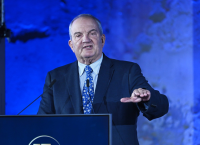
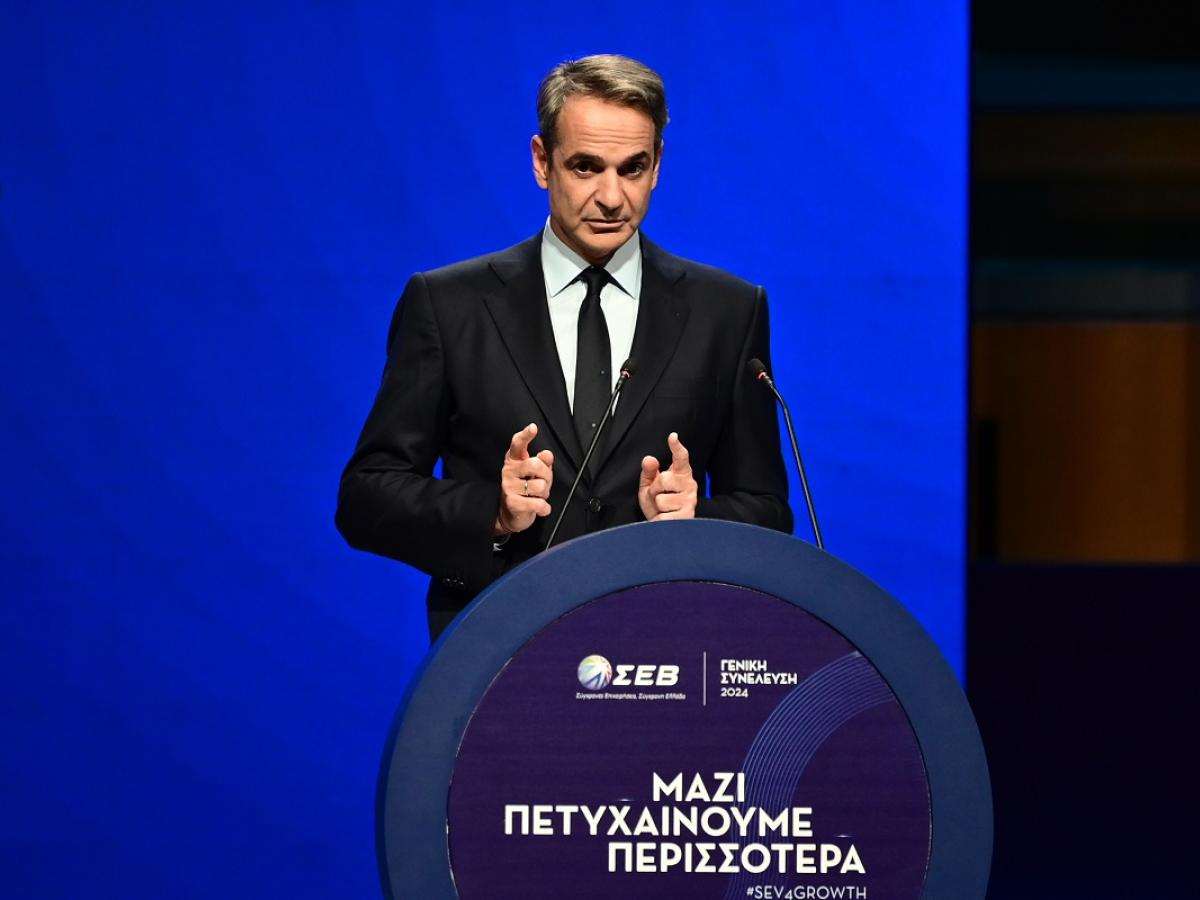
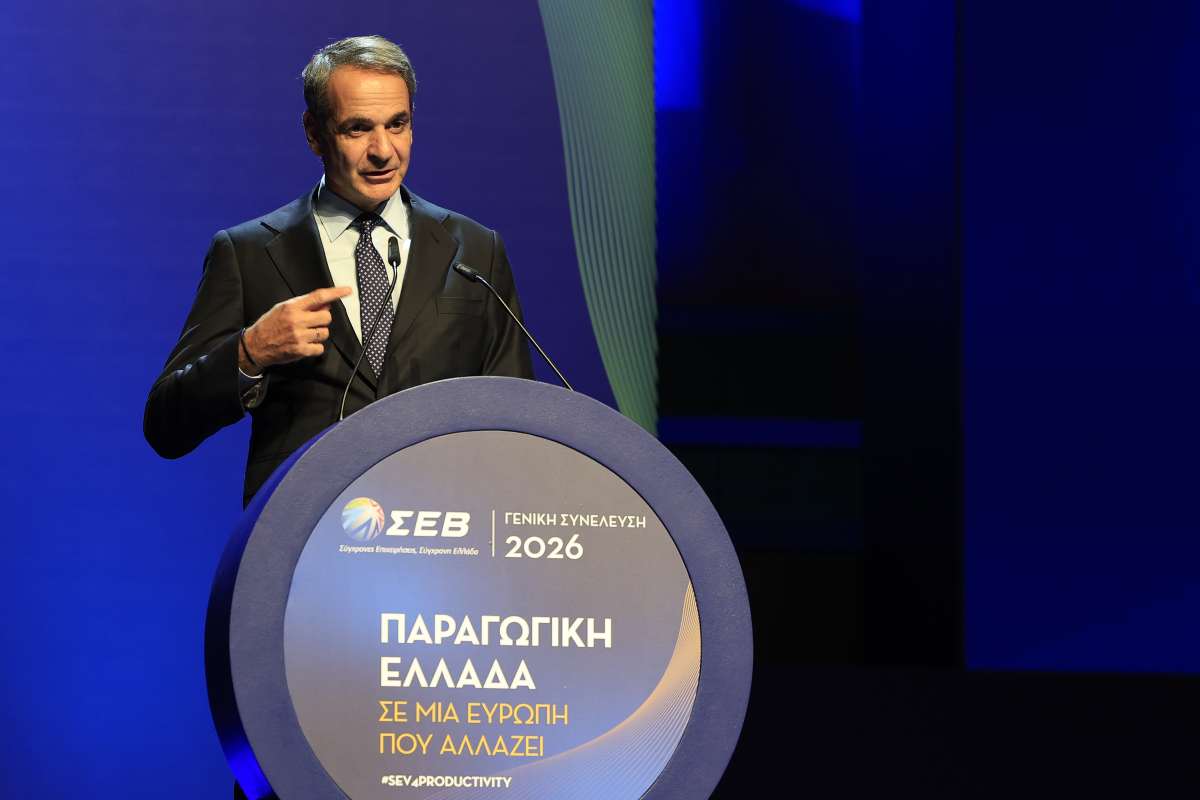
One sentence from Greek Prime Minister Kyriakos Mitsotakis at the SEV General Assembly was enough to open a political debate far bigger than the government’s new electricity-support package for industry.
Mitsotakis publicly raised an issue that only a few years ago would have been politically difficult to articulate in Brussels: Europe’s green transition cannot necessarily proceed at the same pace, regardless of economic cost, if the result is to put entire sectors of European industry at risk.
His wording was striking:
“And if we need to hit the brakes somewhere in order to protect these sectors of European industry, we should not hesitate to do so.”
This was not an isolated remark. Mitsotakis first stressed that Europe must strike a balance between its ambition to remain a leader in the green transition and the reality that the cost of adjustment is extremely high for certain industrial sectors.
From “Faster” to “How Much Can European Industry Take?”
This is where the real political significance of Mitsotakis’ intervention lies.
The Greek prime minister did not challenge the objective of decarbonisation, nor did he call for Europe to abandon its green transition.
What he did was openly raise the question of pace and cost.
In other words, the debate is shifting from “how quickly can Europe go green?” to “how quickly can Europe go green without losing its industrial base?”
That distinction matters.
The European Commission itself has acknowledged that high energy prices and intense global competition are putting pressure on European manufacturers. The Clean Industrial Deal was designed precisely to bring decarbonisation and competitiveness closer together, with particular attention to energy-intensive industries.
Mitsotakis is therefore not opening a debate in a vacuum. He is positioning Greece inside an increasingly important European argument over whether climate targets can be delivered without accelerating industrial decline.
The Draghi Warning Still Echoes in Brussels
Behind the debate lies Mario Draghi’s diagnosis of Europe’s competitiveness problem.
Europe faces weaker productivity growth, demographic pressures, higher energy costs and much tougher global competition at precisely the moment when the green and digital transitions require enormous investment.
This is effectively the political terrain on which Mitsotakis is now placing Greece.
Decarbonisation remains a strategic objective. But when European companies face structurally higher energy costs than many international competitors, the issue stops being purely environmental.
It becomes an industrial, economic, social — and ultimately geopolitical — question.
Mitsotakis Warns Against a “Flood” of Imports
Another important part of the prime minister’s speech concerned competition from outside Europe.
Mitsotakis warned that some countries possess such enormous production capacity that they can effectively “flood European markets” with products, potentially threatening the survival of entire European industrial sectors.
The underlying message is difficult to miss.
Europe cannot indefinitely impose expensive adjustment requirements on its own manufacturers while leaving them exposed to imported products produced under very different cost structures and regulatory conditions.
At that point, the green transition becomes inseparable from industrial policy, trade policy and Europe’s broader strategic autonomy.
The Rubio Timing Raises Eyebrows — But There Is No Evidence of a Link
There is also an intriguing geopolitical coincidence.
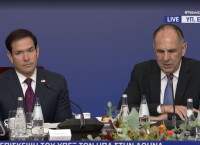
Mitsotakis’ intervention comes as US Secretary of State Marco Rubio visits Greece, at a time when the Trump administration is pursuing an energy and climate policy markedly different from that of the European Union.
The timing inevitably attracts attention.
There is, however, no evidence that Mitsotakis’ statement was prompted by Rubio’s visit or coordinated with Washington.
Indeed, the prime minister’s argument fits much more directly into Europe’s own debate over competitiveness, industrial policy and energy prices.
There also remains a substantial difference between the two approaches: Mitsotakis is not advocating abandoning the green transition. His argument is that Europe needs flexibility when the cost of transition threatens strategically important industries.
€95 Million: Greece Moves to Shield Its Industrial Base
The political message was accompanied by a concrete financial intervention.
Mitsotakis announced a new €95 million package aimed at reducing the energy burden on Greek industry.
The scheme is expected to cover sectors including cement, food production, paper and plastics, while additional assistance is planned for energy-intensive companies beyond existing carbon-cost compensation mechanisms.
“Extraordinary circumstances require extraordinary interventions,” Mitsotakis said, addressing SEV president Spyros Theodoropoulos.
The government has already increased compensation for indirect carbon costs by €75 million for 50 companies and cut Public Service Obligation contributions by 50% for 23,000 businesses.
Mitsotakis put the value of previous interventions at close to half a billion euros.
The Difficult Question Now Moves to Brussels
The European Commission, however, continues to pursue the acceleration of electrification and decarbonisation as central pillars of its long-term economic strategy.
That is where the difficult equation emerges.
Athens is not saying “no” to the green transition. It is now saying that there may be points at which its economic cost requires Europe to hit the brakes.
That is a significantly different political message.
When the prime minister of an EU member state publicly argues that protecting industry may justify slowing specific aspects of the transition, the question inevitably reaches Brussels:
Does Europe pursue the green transition at any cost — or at a pace that ensures European industry is still standing when the transition is complete?
Source: pagenews.gr
Διαβάστε όλες τις τελευταίες Ειδήσεις από την Ελλάδα και τον Κόσμο