DAEDALUS: Greece Switches On Its AI Ambitions — The €58.9 Million Investment
 ΧΡΟΝΟΣ ΑΝΑΓΝΩΣΗΣ 5 '

Πηγή Φωτογραφίας: eurokinissi//DAEDALUS: Greece Switches On Its AI Ambitions — The €58.9 Million Investment



A new facility of strategic importance to research, business and Greece’s technological autonomy was inaugurated in Lavrio on Monday, October 19, 2026.
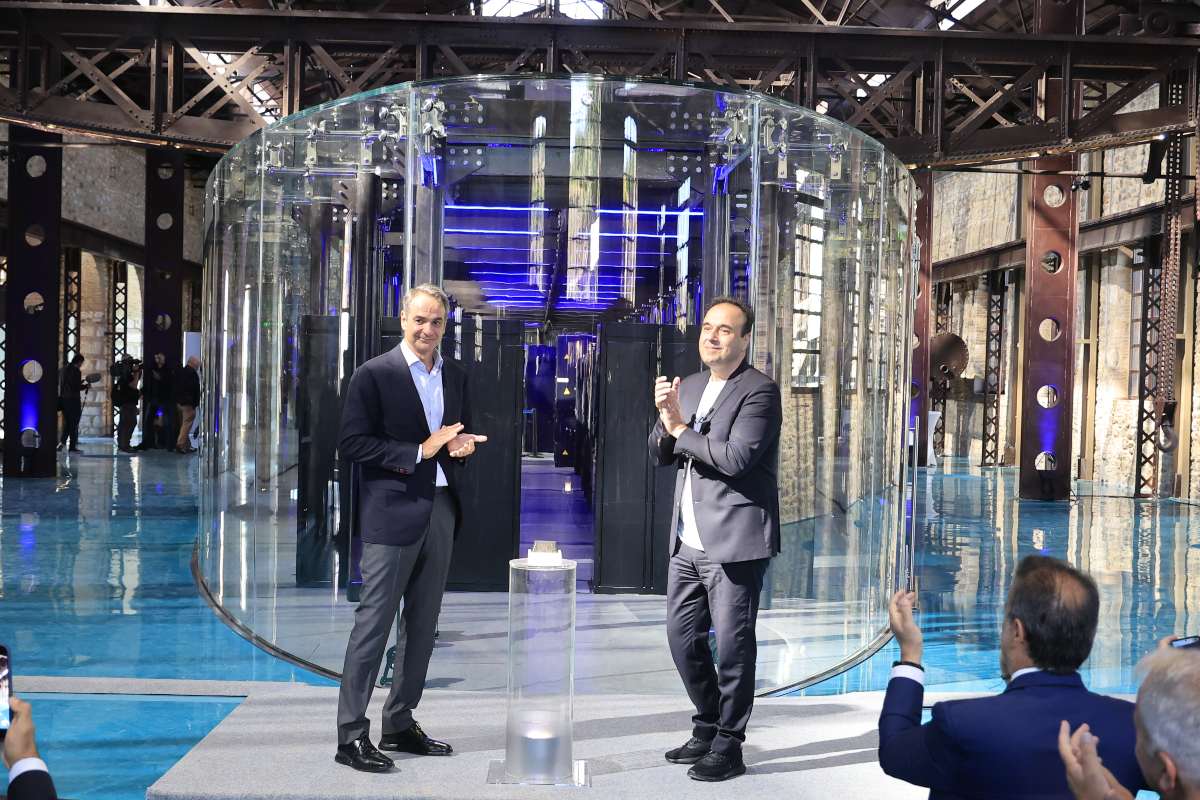
Prime Minister Kyriakos Mitsotakis and Minister of Digital Governance and Artificial Intelligence Dimitris Papastergiou symbolically activated DAEDALUS, Greece’s National Supercomputer, the most powerful computing system the country has acquired.
The investment, with a total budget of €58.9 million including VAT, provides capacity to process data and develop applications requiring exceptionally large amounts of computing power.
The policy and development challenge now shifts to putting that capacity to use: enabling research teams to access it, involving businesses and delivering applications with practical benefits.
Mitsotakis: Computing Power for Researchers and Businesses
The prime minister identified access for users as the project’s next priority:
“The next step is to make DAEDALUS’s enormous computing power available to Greek researchers and businesses.”
His statement also defines a key measure of the project’s success. A supercomputer’s performance delivers economic value when it supports research, technological services and new productive capabilities.
For the government, DAEDALUS forms part of the effort to strengthen Greece’s position in artificial intelligence and advanced digital infrastructure.
Papastergiou: “Critical and Useful National Infrastructure”
Dimitris Papastergiou highlighted the investment’s importance:
“DAEDALUS is an exceptionally critical and useful piece of national infrastructure that moves the country forward.”
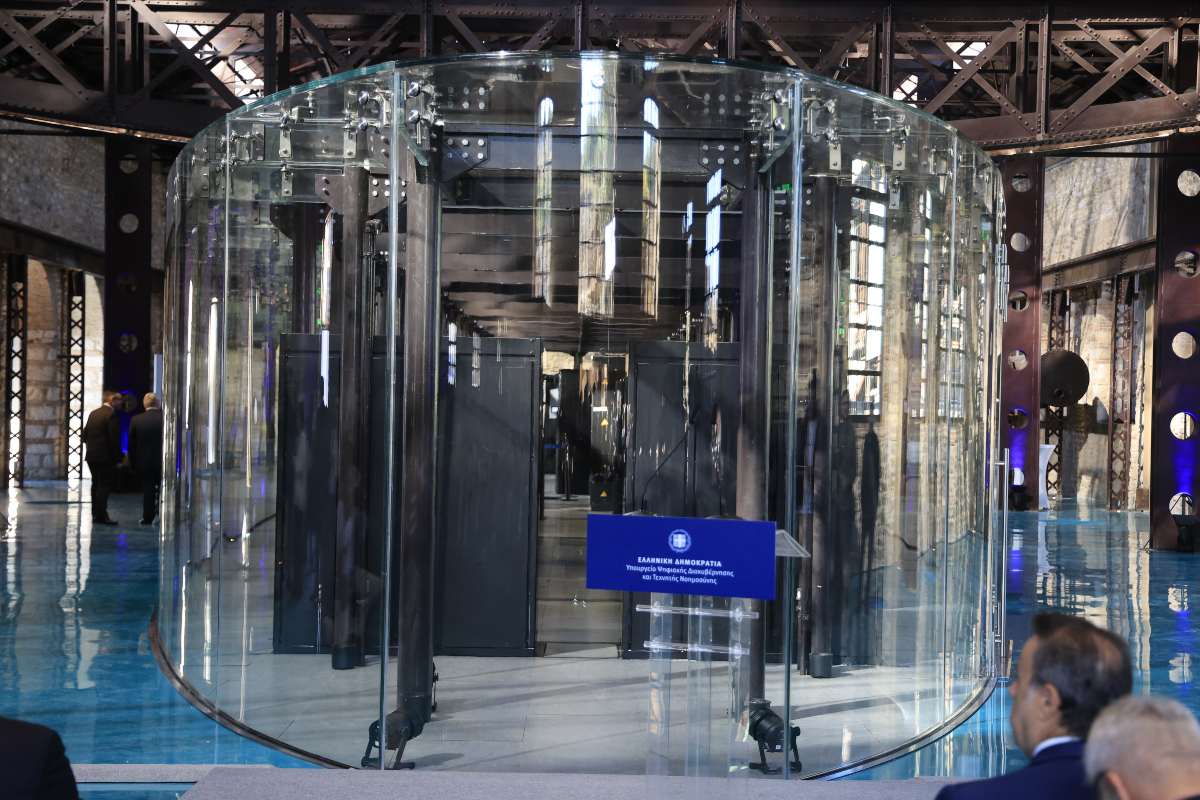
Its installation at the Lavrio Technological and Cultural Park of the National Technical University of Athensconnects the area’s industrial heritage with a new high-technology activity.
The historic former power station, covering approximately 1,500 square metres, has been converted into a modern data centre equipped with the electrical and mechanical infrastructure needed to operate the system.
Ranked 31st Worldwide
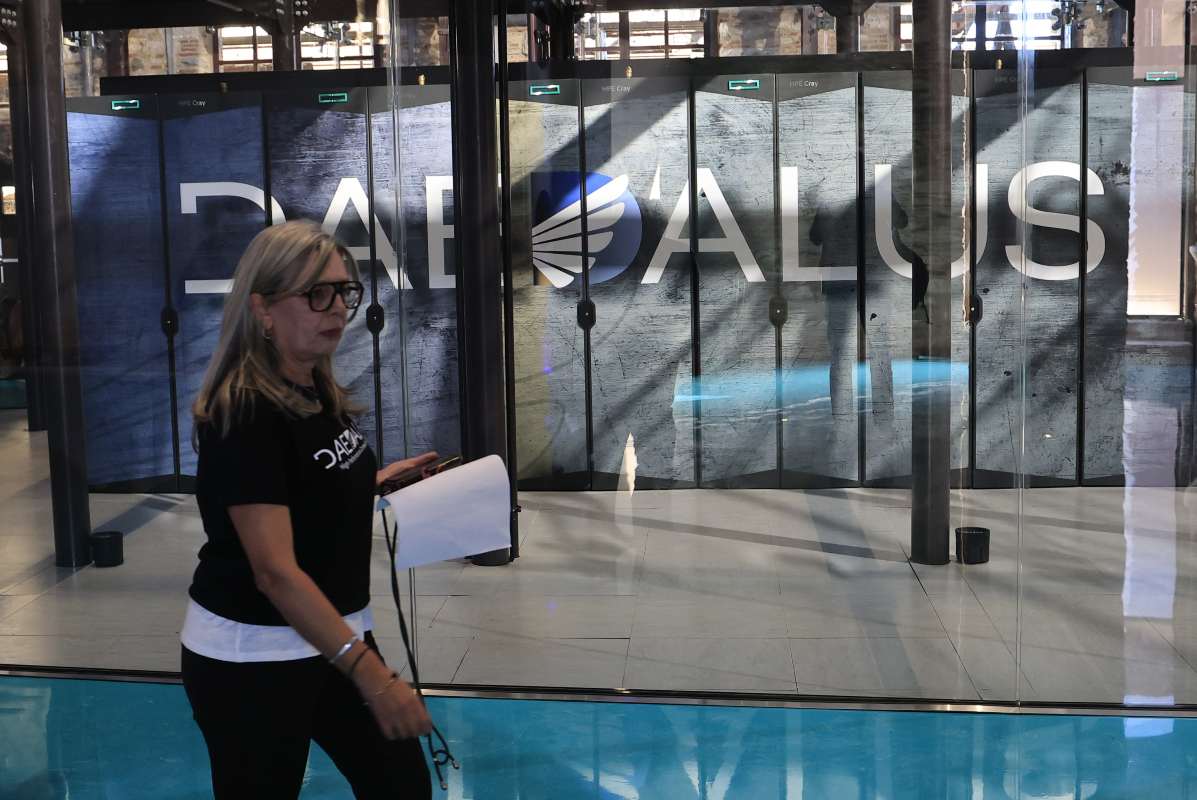
DAEDALUS has a measured computing performance of 85.69 petaflops.
According to the figures presented, it ranks 31st on the TOP500 list of the world’s most powerful supercomputers and 23rd on the Green500, which assesses energy efficiency.
The infrastructure allows large numbers of computing resources to work simultaneously on demanding scientific and technological tasks.
Researchers and businesses can therefore tackle problems that would take much longer to solve on conventional systems or would be difficult to address in practice.
Access to Begin Gradually in December
The inauguration marks the project’s next phase. Access for the first users is expected to begin gradually during December, following completion of the system’s configuration.
GRNET S.A. — the National Infrastructures for Research and Technology will operate and manage DAEDALUS and publish calls for proposals, access conditions and instructions.
Universities, research centres, startups, small and medium-sized enterprises, industry and public bodies will be eligible to use the infrastructure through the relevant GRNET and EuroHPC procedures.
Resource allocation will depend on proposal assessments, scientific or technological merit and computing requirements.
The Computing Core of PHAROS
DAEDALUS forms the computing core of Greece’s PHAROS AI Factory.
This connection combines computing power with tools, expertise, training and specialist support for application development.
Its main priority areas are:
- Healthcare, supporting biomedical research and model development.
- Language and culture, including applications that use Greek-language content.
- Sustainability, providing tools for environmental, energy and other complex analyses.
Domestic infrastructure broadens the options available to Greek teams and businesses, strengthening their ability to develop their own solutions.
Where Practical Benefits Could Emerge
In healthcare, research teams will be able to train models using appropriately anonymised data, aiming to develop tools for early disease detection and personalised medicine.
In civil protection, the system can support complex climate models and risk assessments for extreme weather and wildfires.
In industry, simulations can assist product and manufacturing-process design before costly physical prototype testing.
The infrastructure is also expected to support generative AI applications and large language models.
Its capabilities extend to computational physics, chemistry, biology, energy and transport.
The Investment’s Energy Dimension
The system uses Hewlett Packard Enterprise architecture with NVIDIA GH200 accelerators.
It employs direct liquid cooling to remove heat more effectively, while its design also takes advantage of free cooling for much of the year.
A 2 MWp photovoltaic installation for self-consumption also operates at the park, contributing to the facility’s energy needs.
Energy efficiency is particularly important because it affects operating costs and the effective use of such demanding infrastructure.
How the €58.9 Million Budget Is Allocated
The budget includes €41 million including VAT for computing equipment, storage, software, installation and training services, with HPE as the contractor.
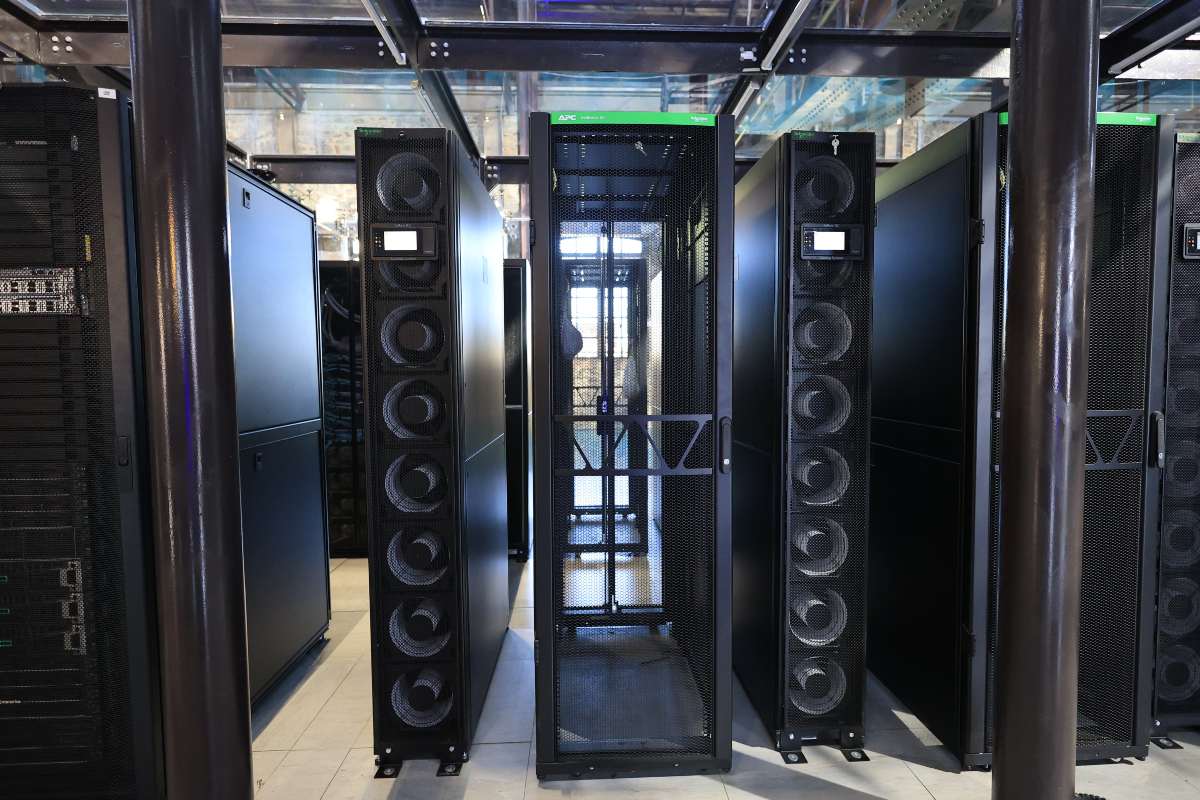
A further €17.9 million including VAT covers the electrical and mechanical infrastructure and data centre development, undertaken by MainSys.
Funding comes through Greece 2.0, the European Union’s NextGenerationEU resources and the EuroHPC Joint Undertaking.
Completion of the installation establishes an important technological foundation. The next test concerns sustained use: how many teams gain access, which projects advance and how the investment supports Greek research and production.
Source: pagenews.gr
Διαβάστε όλες τις τελευταίες Ειδήσεις από την Ελλάδα και τον Κόσμο