Cyprus Unleashes $1.8 Billion Gas Project: Cronos Set to Transform Eastern Mediterranean Energy by 2028
 ΧΡΟΝΟΣ ΑΝΑΓΝΩΣΗΣ 13 '
Πηγή Φωτογραφίας: AP Photo//Cyprus Unleashes $1.8 Billion Gas Project: Cronos Set to Transform Eastern Mediterranean Energy by 2028



A major turning point is emerging for Cyprus and the energy future of the Eastern Mediterranean, as the development of the Cronos natural gas field, located in Block 6 of Cyprus’s Exclusive Economic Zone (EEZ), moves from investment planning into implementation.
Contracts worth up to $1.8 billion have been signed to develop the offshore field, marking a significant milestone in Cyprus’s long-standing ambition to turn its natural gas discoveries into commercial production.
The project is being advanced by Eni and TotalEnergies, with first gas targeted for the first half of 2028.
For Nicosia, the development represents more than a major energy investment. It offers a potential route toward establishing Cyprus as a natural gas producer and exporter, strengthening its economic position and strategic relevance.
For the wider region, the project creates an additional energy connection between Cyprus, Egypt and international LNG markets, with Europe among the principal potential destinations.
A $1.8 Billion Investment Moves Into Implementation
The contracts cover the essential engineering and construction activities required to develop the Cronos field.
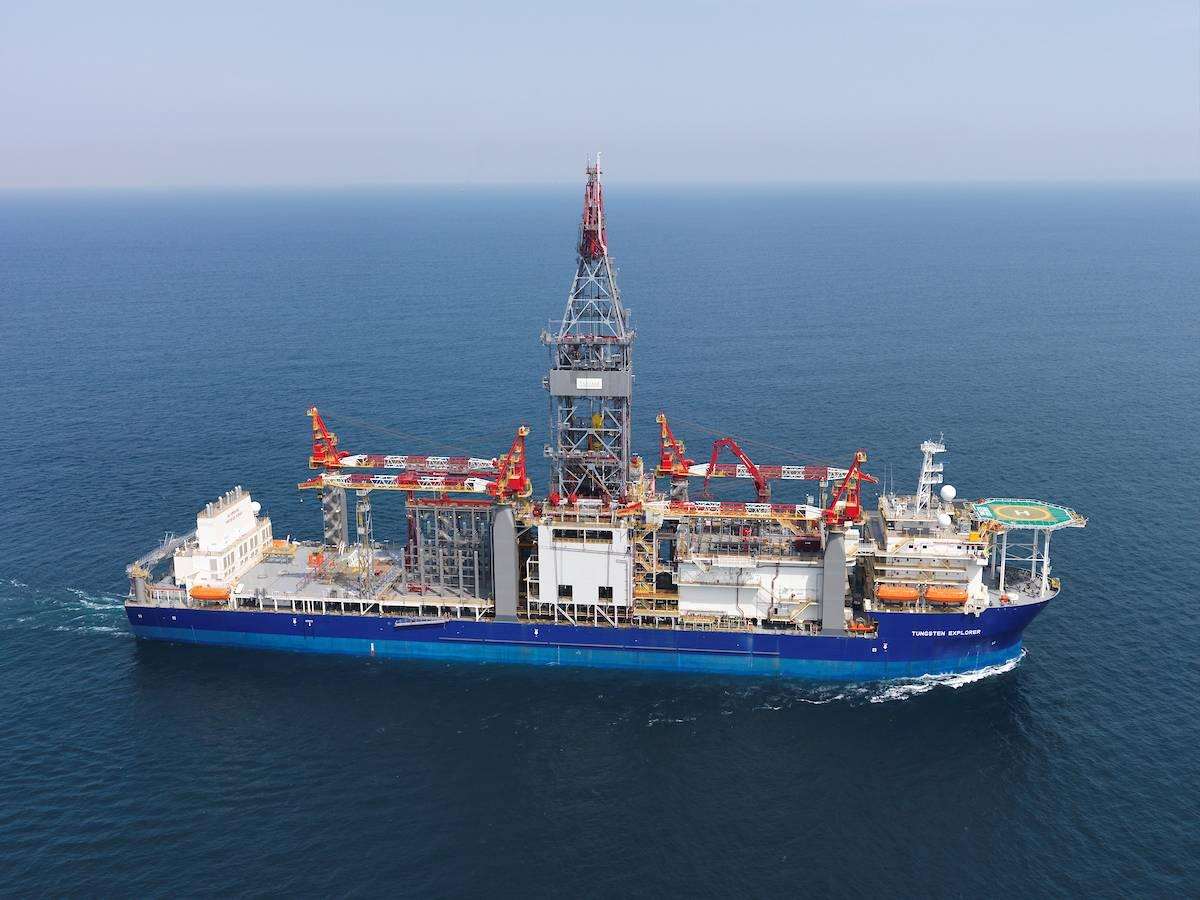
These include detailed engineering, equipment procurement, subsea infrastructure construction and installation, and the drilling operations necessary to bring the offshore reserves into production.
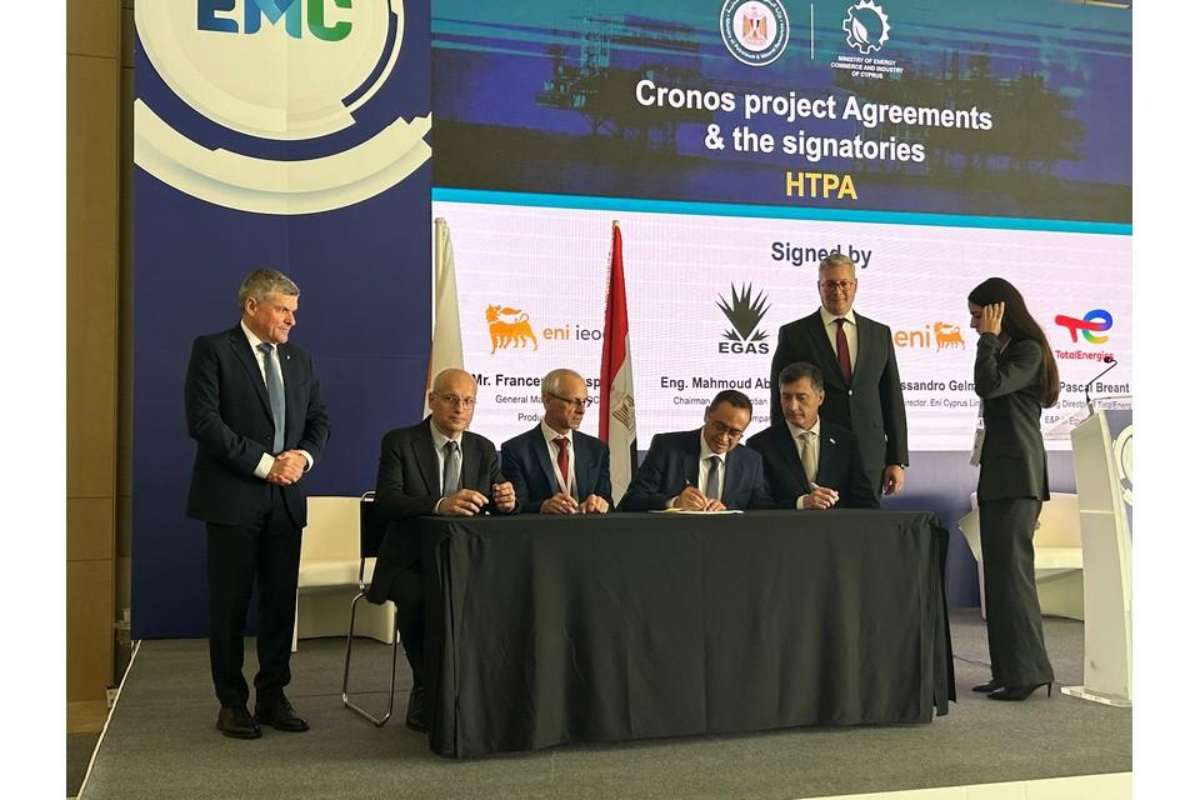
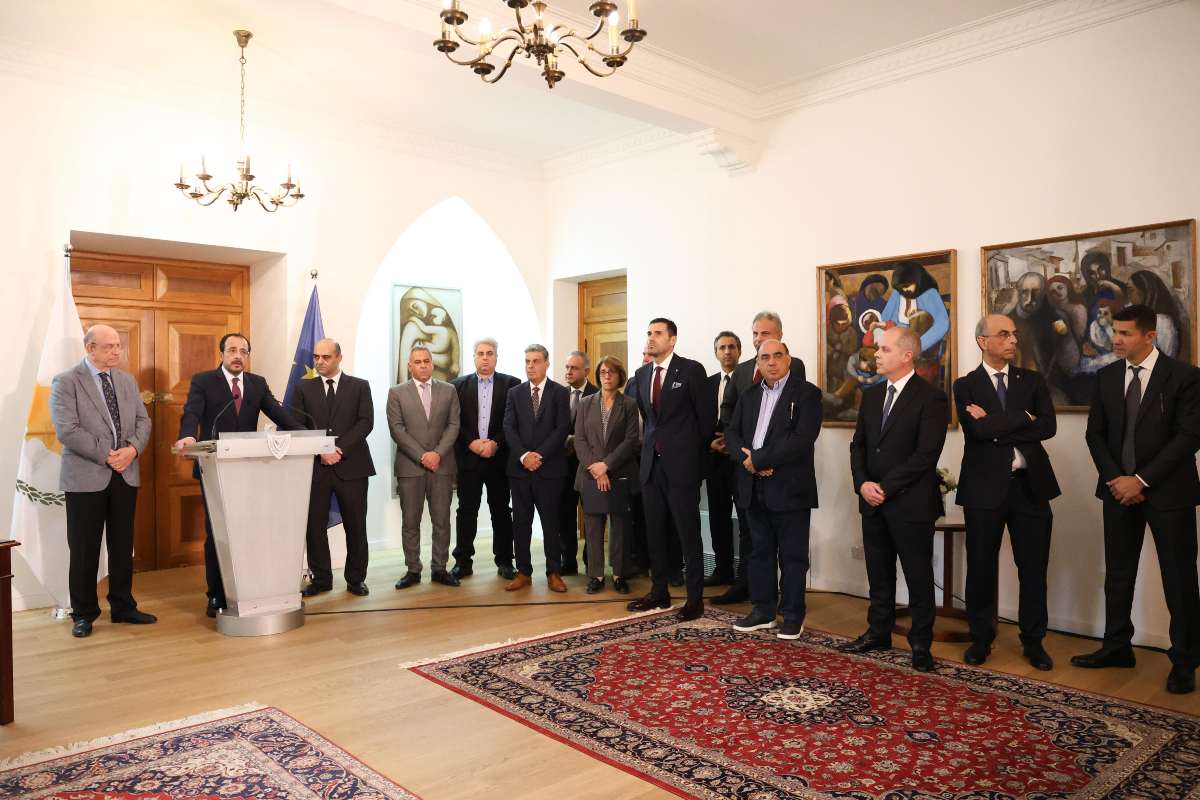
The signing ceremony took place at the Presidential Palace in Nicosia, attended by Cypriot President Nikos Christodoulides, representatives from Egypt, Italy and France, and executives from the participating energy companies.
The international presence highlighted the project’s broader significance.
Italy and France are represented through two of Europe’s major energy groups, while Egypt will provide the infrastructure needed to process and export the gas.
The agreement marks a transition from exploration and resource assessment toward the physical development of a commercial energy project.
For Cyprus, this is a particularly important step after years of offshore discoveries that have yet to translate into large-scale domestic gas production.
First Gas in 2028: Reserves and Production Targets
The Cronos field is estimated to contain more than 3 trillion cubic feet of natural gas.
Once fully developed, production is expected to reach approximately 500 million cubic feet per day.
These figures underline the commercial potential of the project and its possible contribution to regional energy supplies.
Under the existing partnership structure, Eni operates Block 6 with a 50% interest, while TotalEnergies holds the remaining 50%.
The final investment decision was taken on July 28, 2026, paving the way for the execution of development contracts.
The project now faces a demanding construction and installation schedule.
Its success will depend on the completion of drilling operations, subsea infrastructure and the connection to Egyptian processing and export facilities.
Although the first half of 2028 is the announced production target, actual commissioning will remain subject to technical execution and operational readiness.
Egypt Becomes the Gateway for Cypriot Gas Exports
One of the most strategically significant aspects of the Cronos project is its reliance on existing Egyptian energy infrastructure.
Rather than building an entirely new LNG export terminal in Cyprus, the development will use facilities already established in Egypt.
Under the proposed arrangement, gas from Cronos will be transported to infrastructure associated with Egypt’s Zohr gas field, where initial processing will take place.
It will then be directed to the Damietta LNG terminal for liquefaction and export to international markets.
This model offers several potential advantages.
Using existing infrastructure can reduce the need for major new onshore facilities, lower development complexity and shorten the route to commercial exports.
It also strengthens Egypt’s role as a regional natural gas processing and LNG export hub.
For Cairo, the project could support the utilization of its energy infrastructure and deepen cooperation with Cyprus.
For Nicosia, it provides a practical export solution without requiring the immediate construction of a domestic liquefaction facility.
The result is a potentially important energy corridor connecting offshore Cypriot reserves with global gas markets.
President Christodoulides: A Strategic Milestone for Cyprus
President Nikos Christodoulides described the signing of the contracts as an important step toward exploiting Cyprus’s natural resources.
According to the account of the ceremony, he emphasized the investment’s economic and geopolitical significance.
The project advances a long-term Cypriot objective: transforming offshore discoveries into commercially viable energy production.
That transition carries implications extending beyond the energy sector.
Commercial gas exports could create additional economic opportunities, reinforce international partnerships and increase Cyprus’s relevance in regional energy planning.
The involvement of major European energy companies also gives the development an important international commercial dimension.
For the Cypriot government, however, the ultimate test will be the project’s delivery.
The strategic value of Cronos will become tangible when production begins, export arrangements are operational and the gas reaches commercial markets.
Energy Minister Michalis Damianos: From Discovery to Production
Cyprus’s Energy Minister, Michalis Damianos, highlighted the significance of moving from offshore discoveries toward actual gas production and commercialization.
His assessment reflects the fundamental challenge facing countries with newly identified hydrocarbon resources.
Discovering a gas field does not automatically make it commercially productive.
Successful development requires substantial investment, detailed engineering, infrastructure agreements, regulatory approvals and reliable access to export markets.
The Cronos project has now reached a stage where investment commitments are being translated into contracts and construction obligations.
That represents a meaningful step forward for Cyprus’s emerging natural gas industry.
The next phase will determine whether the technical and commercial arrangements can deliver the planned production timetable.
A New Eastern Mediterranean Gas Route to Europe
The Cronos development arrives at a time when European energy security and supply diversification remain major strategic priorities.
European countries have sought to broaden their energy partnerships and reduce exposure to concentrated sources of supply.
Additional LNG production from the Eastern Mediterranean could contribute to that diversification.
The Egyptian export route is particularly important because LNG can be transported by sea to multiple destinations.
Unlike a pipeline serving a fixed market, LNG cargoes can be allocated according to contractual arrangements, terminal availability and commercial demand.
European buyers could become important customers for gas originating from Cronos.
However, the final destination of individual cargoes will depend on future sales agreements and market conditions.
The project therefore offers Europe an additional potential supply source rather than a guaranteed volume reserved exclusively for European consumption.
Its broader value lies in expanding the range of available energy options.
Why the Cronos Project Matters to Greece
The development of Cronos also carries implications for Greece, whose energy strategy increasingly emphasizes its role as a gateway between international gas markets and Southeastern Europe.
Athens and Nicosia maintain close cooperation on regional energy policy, maritime security and European affairs.
A commercially successful Cypriot gas project would strengthen the wider Eastern Mediterranean’s position in international energy markets.
Greece has already developed significant LNG import and gas transmission infrastructure, including facilities at Revithoussa and Alexandroupolis, alongside interconnections serving neighboring countries.
These assets support the country’s ambition to become an important energy transit hub for Southeastern and Central Europe.
Additional LNG supplies originating from the Eastern Mediterranean could eventually create new commercial opportunities across the region.
Nevertheless, no specific agreement has been announced requiring Cronos gas to pass through Greek terminals or transmission networks.
Any future participation by Greek infrastructure would depend on commercial contracts, shipping arrangements and market demand.
The significance for Greece is therefore strategic and potentially commercial, rather than an already confirmed component of the Cronos development plan.
Eni and TotalEnergies Strengthen Europe’s Energy Footprint
The participation of Eni and TotalEnergies gives the Cronos project a strong European corporate dimension.
Both companies have extensive international experience in offshore exploration, field development and natural gas production.
Their involvement reflects the continuing importance of the Eastern Mediterranean within the investment strategies of major energy companies.
As the operator, Eni has a central role in coordinating the technical development of Block 6.
TotalEnergies participates as an equal partner, sharing the project’s commercial exposure and potential returns.
The use of Egyptian infrastructure also creates opportunities for cooperation with companies and operators already active in the country’s gas sector.
This multinational structure illustrates how offshore gas developments increasingly depend on regional integration rather than isolated national infrastructure.
For Cyprus, attracting and retaining major international investors remains essential to turning discovered resources into economically viable projects.
The Geopolitical Dimension: Energy, Diplomacy and Regional Influence
Energy developments in the Eastern Mediterranean cannot be separated entirely from the region’s geopolitical environment.
Maritime boundaries, international partnerships and security considerations remain important elements of the broader strategic landscape.
The Cronos project reinforces the energy relationship between Cyprus and Egypt, giving both countries an additional shared economic interest.
It also expands the commercial involvement of major Italian and French companies in the region.
Such investments can support deeper cooperation by creating long-term infrastructure links and mutually beneficial commercial arrangements.
For Cyprus, successful gas exports could strengthen its international economic position and contribute to broader regional partnerships.
However, energy investments do not automatically resolve existing maritime disputes or eliminate regional security risks.
The project’s geopolitical influence will ultimately depend on its commercial success, the stability of its export arrangements and the wider diplomatic environment.
Why Existing Egyptian Infrastructure Changes the Economics
Building new offshore gas infrastructure is capital-intensive and technically demanding.
The costs can become significantly higher when a project also requires a new liquefaction terminal and extensive supporting facilities.
The Cronos development seeks to address part of this challenge by integrating with infrastructure already available in Egypt.
This approach can reduce the scale of additional investment required to reach international LNG markets.
It may also improve the commercial viability of the field by allowing development to proceed without a completely new export system.
However, the benefits will depend on the technical compatibility of the infrastructure, available processing capacity and the terms of the relevant agreements.
Using existing facilities can improve project economics, but it does not eliminate execution risks.
The companies must still complete the offshore development and ensure that gas can be processed, transported and exported reliably.
The 2028 Deadline: The Next Major Test
The signing of contracts worth up to $1.8 billion is an important milestone, but it is not the final stage of the project.
Offshore gas development involves complex engineering and construction work, often under demanding technical and environmental conditions.
Drilling operations, subsea installations and connections to processing facilities must all be completed before commercial production can begin.
The announced target of first gas in the first half of 2028 gives the project a defined implementation horizon.
Progress during the coming months will provide a clearer indication of whether that timetable can be achieved.
For Cyprus, the distinction between investment announcements and actual production is especially important.
The country’s long-term ambition has been to convert offshore natural gas discoveries into tangible economic activity.
Cronos now offers one of the clearest pathways toward achieving that objective.
Cyprus Enters a New Energy Chapter
The development of the Cronos gas field represents one of the most consequential steps in Cyprus’s efforts to commercialize its offshore natural gas resources.
Contracts worth up to $1.8 billion, the participation of Eni and TotalEnergies, and the planned use of Egyptian LNG infrastructure have established a concrete development framework.
For Cyprus, the project offers the prospect of natural gas production, export revenues and a stronger role in regional energy cooperation.
For Egypt, it reinforces the country’s position as an Eastern Mediterranean processing and LNG export center.
For Europe, it creates the possibility of additional natural gas supplies from a geographically significant region.
And for Greece, it adds another dimension to the evolving energy architecture of the Eastern Mediterranean.
The defining milestone is now 2028: the year Cyprus aims to move beyond offshore discoveries and begin turning the Cronos field into a commercial source of natural gas for international markets.
Source: pagenews.gr
Διαβάστε όλες τις τελευταίες Ειδήσεις από την Ελλάδα και τον Κόσμο