“We Will Act When Necessary”: Turkey’s Defence Minister Sends a Stark Warning to Greece
 ΧΡΟΝΟΣ ΑΝΑΓΝΩΣΗΣ 11 '
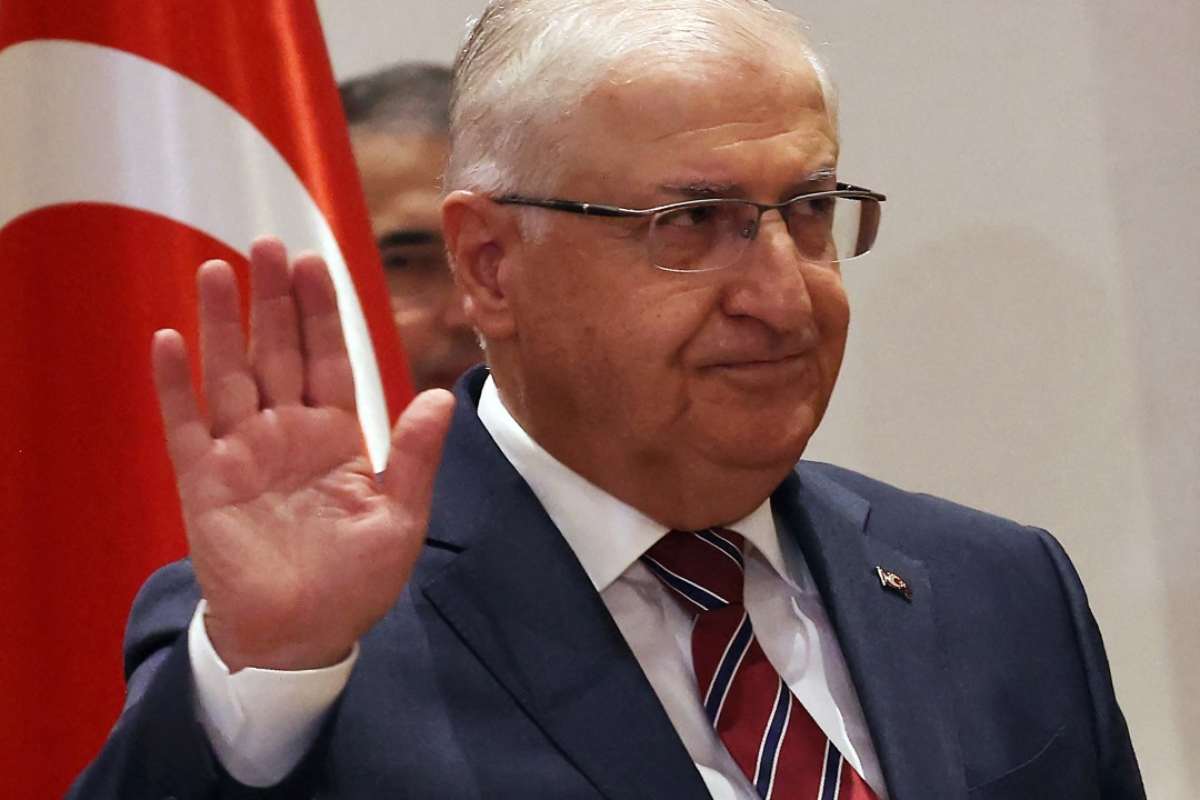
Πηγή Φωτογραφίας: ΚΥΠΕ//Turkish Defence Minister Yaşar Güler has reaffirmed his country's commitment to dialogue



A new diplomatic warning from Ankara has brought the fragile balance in Greek–Turkish relations back into focus, highlighting the persistent gap between calls for cooperation and the hard positions maintained by both countries over the Aegean and Eastern Mediterranean.
Turkish Defence Minister Yaşar Güler has reaffirmed his country’s commitment to dialogue, good-neighbourly relations and peaceful dispute resolution. At the same time, he has made clear that Turkey has no intention of compromising on what it regards as its sovereign rights and national interests.
His most consequential statement was a direct assertion of Ankara’s readiness to act:
“Turkey possesses both the means and capabilities to protect its rights arising from international law and the political will to act decisively whenever necessary.”
Coming from Turkey’s defence minister, the language carries particular strategic significance.
It does not constitute an announcement of an imminent military operation. It does, however, demonstrate Ankara’s intention to combine diplomatic engagement with a continued emphasis on its ability to exert pressure.
The central question is whether Greece and Turkey can sustain a meaningful diplomatic process while maintaining fundamentally different interpretations of their maritime rights.
“We Want Dialogue”: Ankara’s First Message to Athens
In the opening part of his remarks, Güler sought to emphasise the importance of keeping communication channels open between the two neighbouring countries.
“We also evaluate our relations with our neighbouring Greece from this perspective,” he stated.
He continued:
“We consider it important to keep communication channels open, strengthen mutual trust and address existing problems on the basis of international law, good-neighbourly relations and constructive dialogue.”
These remarks underline Turkey’s stated willingness to maintain diplomatic engagement with Greece, even as substantial disagreements remain unresolved.
For both governments, maintaining communication can serve an important practical purpose.
It can reduce the risk of misunderstandings, facilitate crisis management and help prevent isolated incidents from escalating into broader confrontations.
Yet dialogue alone does not resolve the underlying disputes.
The existence of diplomatic channels should not be confused with agreement over the legal and political questions dividing Athens and Ankara.
That distinction remains central to understanding the current state of Greek–Turkish relations.
The Aegean and Eastern Mediterranean: Cooperation, but on Whose Terms?
Güler specifically addressed the two maritime regions that have long been at the centre of Greek–Turkish disagreements.
“We wish to develop cooperation in the Aegean Sea and the Eastern Mediterranean and resolve our differences through mutual understanding and diplomacy,” he said.
Taken in isolation, the statement could be interpreted as a signal of de-escalation.
Its significance changes, however, when considered alongside the conditions outlined later in the same remarks.
For Athens, the principal outstanding bilateral dispute concerns the delimitation of the continental shelf and Exclusive Economic Zone, in accordance with international law and the law of the sea.
Ankara approaches the relationship through a broader range of disputed issues, including maritime jurisdiction, the effect of Greek islands on delimitation and other aspects of the Aegean’s legal and security framework.
These differences extend beyond competing interpretations of particular maritime boundaries.
They also concern the scope of any future negotiations.
Greece maintains that the delimitation of maritime zones is the central legal dispute requiring resolution.
Turkey considers additional issues relevant to the broader relationship.
This divergence helps explain why repeated declarations of support for diplomacy have not automatically translated into substantive agreements.
The challenge is not simply persuading Athens and Ankara to negotiate. It is establishing what they are prepared to negotiate about.
“We Will Not Accept Approaches Contrary to Our Interests”
The tone of Güler’s intervention became noticeably firmer when he addressed what Turkey considers unacceptable conduct.
“It is not possible for us to accept approaches that run counter to the rights and interests of our country and nation, increase tensions or make the resolution of problems more difficult,” he declared.
The statement leaves open an important question: which specific Greek policies or actions does Ankara regard as incompatible with its interests?
In the published excerpts, Güler did not identify a particular new Greek decision as the immediate trigger for his remarks.
Nevertheless, the wording reflects a recurring feature of the bilateral relationship.
Turkey reserves the right to challenge actions it considers detrimental to its interests, while Greece maintains that the exercise of its lawful sovereign rights cannot depend on another state’s approval.
This creates the potential for conflicting interpretations of the same development.
A measure viewed by one country as the legitimate exercise of sovereign rights may be perceived by the other as a unilateral change to the regional status quo.
Such disagreements make crisis prevention particularly important.
They also underline the need to distinguish between political objections, legal claims and the actual rules governing maritime jurisdiction.
“Peaceful Resolution Does Not Mean Concessions”
Güler was explicit in separating Turkey’s support for diplomacy from any suggestion that Ankara might retreat from its established positions.
“Our stance in favour of the peaceful resolution of disputes does not mean that we will make concessions regarding our rights and interests,” he emphasised.
This statement captures one of the central difficulties in Greek–Turkish diplomacy.
Both governments can express support for peaceful dispute resolution while maintaining fundamentally different views about what constitutes a legitimate national right.
Turkey presents its position as the defence of its lawful interests.
Greece argues that sovereign rights arising under international law must be respected and that maritime disputes should be addressed through the applicable legal framework.
A particularly significant disagreement concerns the maritime entitlements of islands.
Athens maintains that Greek islands possess maritime rights under the law of the sea, while Ankara advocates a different approach to the effect of certain islands in maritime delimitation.
The precise boundary in any particular case depends on the applicable law and relevant geographical circumstances.
The dispute therefore cannot be reduced to competing declarations of national determination. It concerns how international legal principles should be interpreted and applied.
The Warning About “Decisive Action”: A Message of Deterrence
The strongest language came towards the end of the Turkish defence minister’s remarks.
“Turkey possesses both the means and capabilities to protect its rights arising from international law and the political will to act decisively whenever necessary,” Güler said.
His references to capabilities, political will and decisive action reflect the language of deterrence.
In strategic terms, deterrence involves communicating that a state possesses the capacity and willingness to defend interests it considers essential.
But the wording also introduces uncertainty.
Güler did not specify what circumstances would trigger such action, what measures Ankara might consider or whether he was referring to diplomatic, military or other instruments of state power.
It would therefore be inaccurate to present his statement as confirmation of a planned Turkish military operation.
Nevertheless, such declarations carry political weight in a region where unresolved disputes and competing claims have previously generated serious tensions.
The challenge for both governments is to ensure that deterrent rhetoric does not increase the risk of miscalculation.
When political warnings are delivered against a background of unresolved maritime disagreements, clarity and effective communication become essential instruments of regional stability.
The European Dimension: Diplomacy Without the Threat of Force
Greek–Turkish relations are not solely a bilateral matter.
Greece is a member of the European Union, while Turkey is a NATO ally and an important regional security actor.
Stability in the Aegean and Eastern Mediterranean therefore has implications for European security, regional energy infrastructure and the southeastern flank of the Atlantic Alliance.
From the EU’s perspective, the prevention of military escalation between Greece and Turkey remains a significant strategic concern.
The United Nations Charter establishes the prohibition on the threat or use of force in international relations, subject to the exceptions recognised by the Charter.
This principle provides an essential framework for the peaceful management of disputes.
Diplomatic engagement must therefore be accompanied by restraint and efforts to prevent incidents that could undermine regional security.
The broader European interest lies in ensuring that disagreements over maritime jurisdiction do not develop into crises affecting trade, energy connectivity or NATO cooperation.
At the same time, legal disputes require legal and diplomatic solutions.
Neither military capability nor political determination, on its own, establishes the validity of a contested maritime claim.
The Eastern Mediterranean’s Wider Geopolitical Context
The latest Turkish remarks come amid continuing debates over maritime delimitation, energy infrastructure and regional partnerships in the Eastern Mediterranean.
For Greece, relations with Egypt and Cyprus form an important part of its regional diplomatic framework.
For Turkey, maritime jurisdiction remains closely connected to its broader strategic interests and its approach to the regional balance of power.
The disagreement over the 2019 Turkey–Libya maritime memorandum illustrates these competing positions.
Athens rejects the memorandum, arguing that it disregards the maritime rights of Greek islands and cannot create legal consequences for third states.
Ankara continues to defend the agreement and its interpretation of maritime delimitation principles.
These disputes demonstrate why the language used by senior defence officials attracts close attention.
Statements about dialogue may help preserve diplomatic channels, but declarations of readiness to act can simultaneously reinforce uncertainty about how either side might respond to future developments.
The result is a relationship in which cooperation and strategic competition coexist.
What Comes Next for Athens and Ankara?
Güler’s remarks do not, by themselves, establish a new direction in Turkish foreign policy.
They do, however, illustrate the limits of the current rapprochement.
Ankara says it wants cooperation.
It also insists that it will not compromise on what it considers its national rights and interests.
Athens continues to emphasise international law, sovereign rights and the peaceful settlement of disputes.
The sustainability of the relationship will depend on whether these positions can coexist without producing renewed confrontation.
Three factors will be particularly important: maintaining effective communication, avoiding actions that could trigger escalation and identifying realistic areas for substantive diplomatic engagement.
The distinction between political rhetoric and actual government decisions will also remain essential.
Turkey’s defence minister has made clear that Ankara intends to preserve both its diplomatic channels and its capacity to exert pressure.
Whether that combination contributes to stability or generates further tensions will depend on the choices made by both governments.
For now, one question remains at the heart of the Greek–Turkish relationship:
Can a lasting rapprochement emerge when calls for dialogue are accompanied by warnings of “decisive action”?
Source: pagenews.gr
Διαβάστε όλες τις τελευταίες Ειδήσεις από την Ελλάδα και τον Κόσμο