Meloni’s €23.5bn Budget Gamble: Italy Targets Banks as Brussels Faces a New Fiscal Test
 ΧΡΟΝΟΣ ΑΝΑΓΝΩΣΗΣ 11 '
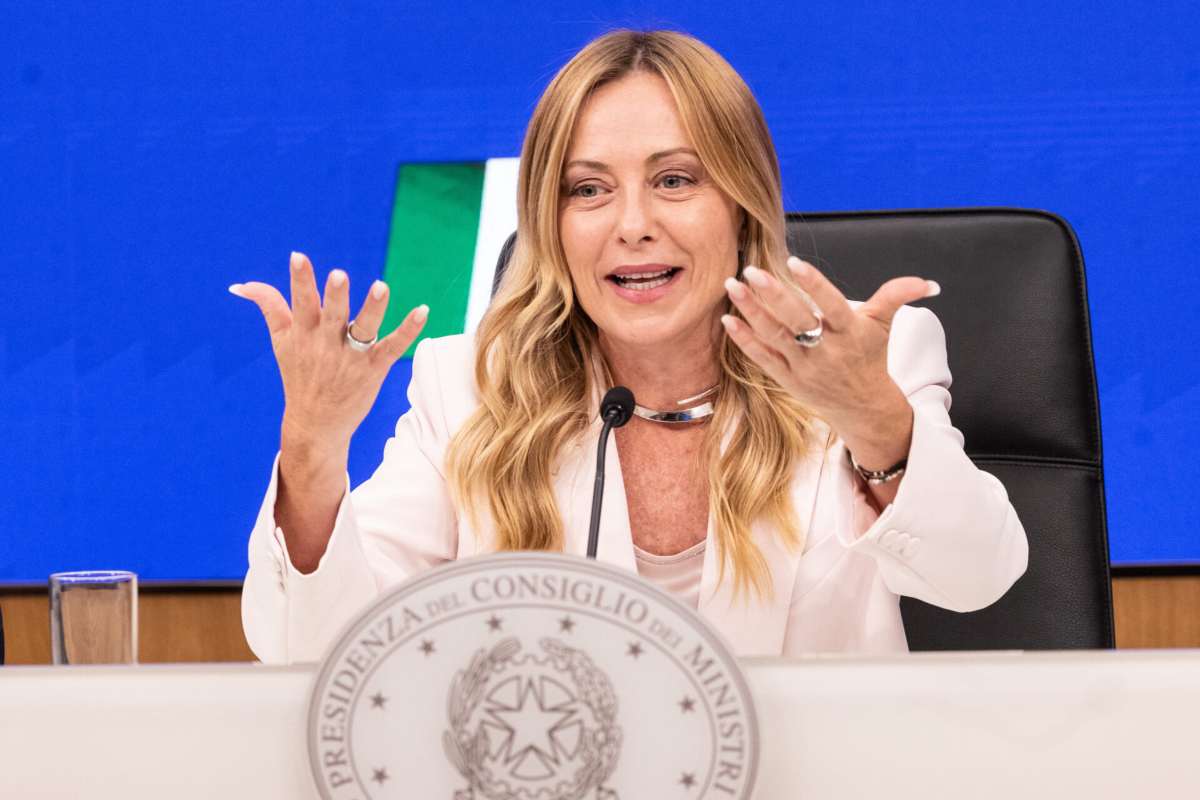
Πηγή Φωτογραφίας: Copyright AP/ Mauro Scrobogna/LaPresse//Meloni’s €23.5bn Budget Gamble: Italy Targets Banks as Brussels Faces a New Fiscal Test



Italian Prime Minister Giorgia Meloni is entering one of the most consequential economic and political battles of her premiership as her government moves towards approving a €23.5bn budget for 2027.
According to the Financial Times, the three-party governing coalition is expected to approve the package on Wednesday, October 28, seeking to protect households from rising living costs while preserving the confidence of international investors.
The proposed measures include tax reductions for middle-income earners, support for pensioners, employment incentives and financial assistance for businesses struggling with higher energy prices.
But the budget comes with significant political and financial risks.
Italy is carrying one of the largest public debt burdens in the eurozone, its borrowing costs have risen sharply, and the government is seeking additional flexibility from Brussels as the European economy confronts renewed energy-related pressures.
For Meloni, the challenge extends beyond fiscal arithmetic.
The 2027 budget is expected to be the last before Italy’s next general election, making it a defining test of her government’s ability to reconcile economic stability with demands for household relief.
A €23.5bn package — and a €5bn bill for banks
At the centre of the government’s proposal is a fiscal package worth approximately €23.5bn, designed to ease pressure on consumers and businesses.
Rome plans to finance part of the measures by raising approximately €5bn from banks, insurance companies and other financial institutions.
The proposal has already generated resistance from the banking sector, which argues that financial companies face a disproportionately heavy tax burden.
Measures under discussion include higher corporate taxation for financial institutions and possible changes to the financial transaction tax.
The political calculation is significant.
By seeking additional contributions from banks and insurers, Meloni’s coalition is attempting to fund household support without relying entirely on additional borrowing.
However, financial industry representatives have warned that heavier taxation could affect investment and lending conditions.
The final structure of the measures remains subject to negotiations within the governing coalition.
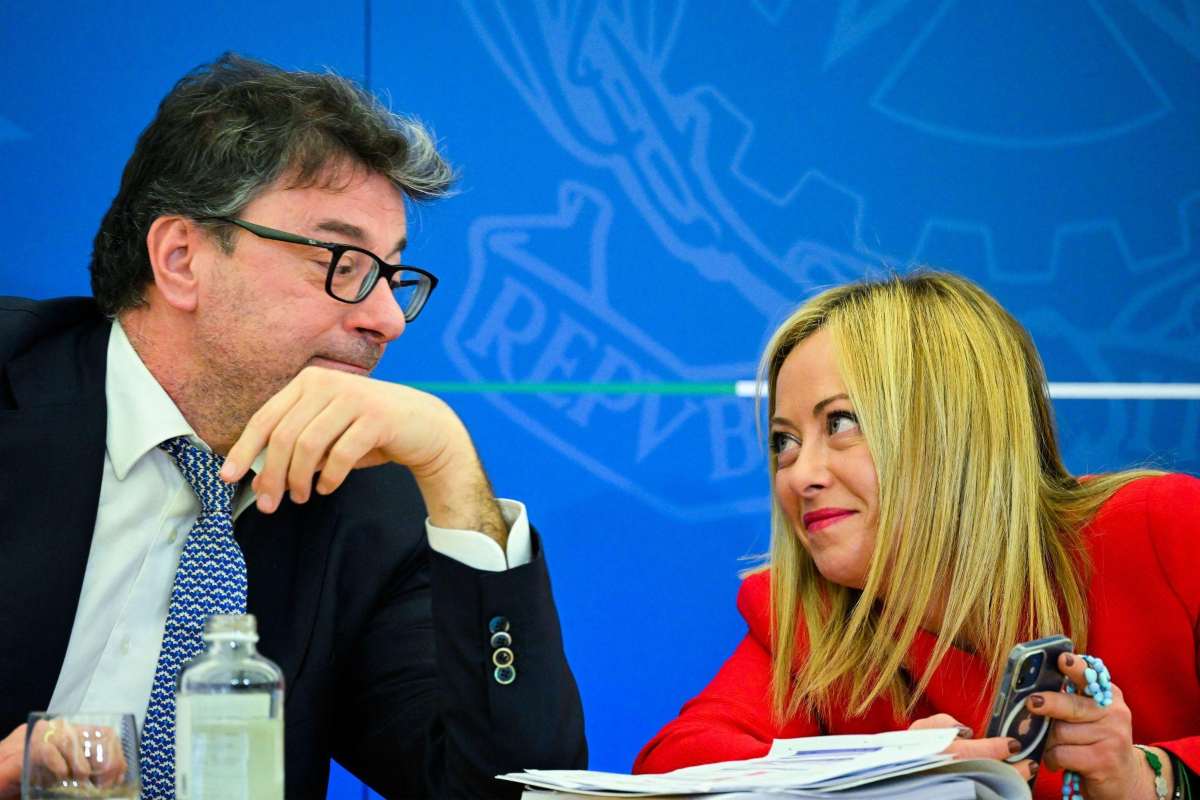
Giorgetti: “The country’s financial credibility must be preserved at all costs”
Italian Economy and Finance Minister Giancarlo Giorgetti has emerged as a central figure in the negotiations.
He has repeatedly stressed that Italy must maintain fiscal credibility despite growing political demands for additional spending.
“The country’s financial credibility, particularly in times like these, is an asset that must be preserved at all costs,” Giorgetti told parliament.
His warning reflects the difficult position facing Rome.
The government must respond to rising household costs while convincing investors that Italy remains committed to responsible public finances.
Giorgetti described the shortage of available resources with a particularly revealing expression:
“Unfortunately, the blanket is too short.”
The phrase captures the underlying dilemma: competing political priorities exceed the resources available to finance them.
Speaking ahead of the expected budget agreement, Giorgetti acknowledged the intensity of the negotiations.
“These are very intense days. We are working day and night,” he said.
Meloni turns to Brussels for fiscal flexibility
One of the most sensitive elements of the budget concerns Italy’s relationship with the European Commission.
Rome is seeking greater flexibility under the European Union’s fiscal framework, particularly as energy costs continue to put pressure on households and industrial producers.
The government has explored whether certain emergency measures could benefit from temporary exemptions or adjustments within EU fiscal rules.
However, Brussels has not automatically accepted the argument that energy-related subsidies should qualify for exceptional treatment.
Giorgetti has insisted that any support measures would be targeted and temporary.
“We believe the clause should, particularly in this initial phase, provide selective and temporary support to families and businesses experiencing difficulties because of higher energy prices and inflation,” he said.
Meloni has also pressed European Commission President Ursula von der Leyen for greater room to use additional tax revenues generated by inflation.
The dispute highlights a wider European challenge: how governments can respond to economic shocks without undermining the credibility of the EU’s fiscal framework.
Italy’s debt problem: 138% of GDP
Italy’s public finances remain vulnerable to higher interest rates and slower economic growth.
Government debt is close to 138% of gross domestic product, placing Italy among the eurozone’s most indebted economies.
The government’s fiscal projections indicate that the deficit could rise to 3.4% of GDP in 2027, compared with an estimated 2.9% in 2026.
| Fiscal indicator | 2026 | 2027 |
|---|---|---|
| Budget deficit (% of GDP) | 2.9% | 3.4% |
| Public debt (% of GDP) | Around 138% | Remains elevated |
| Proposed budget package | — | €23.5bn |
The expected increase in the deficit would interrupt several years of fiscal consolidation.
Rome argues that the deterioration reflects exceptional economic conditions and that targeted relief can be delivered without abandoning longer-term fiscal sustainability.
However, compliance with EU rules depends on more than the headline deficit.
The European framework also considers net expenditure growth, medium-term adjustment commitments and the conditions attached to temporary exemptions.
Bond markets send a warning
Financial markets are already testing the government’s fiscal strategy.
Italy’s benchmark 10-year government bond yield has risen from below 3.3% in late February to approximately 4.5%, reflecting concerns about inflation, energy prices and the economic outlook.
The spread between Italian and German government bonds — a closely watched measure of perceived sovereign risk — temporarily widened towards 130 basis points, its highest level in more than a year.
The deterioration has also been influenced by instability in France’s bond market.
Although Italy’s borrowing costs remain below those of France, investors are increasingly attentive to the possibility that fiscal pressures in one major eurozone economy could affect confidence elsewhere.
For Italy, the implications are particularly important.
With an enormous stock of outstanding public debt, sustained increases in borrowing costs can gradually raise debt-servicing expenses and reduce the resources available for public services and investment.
Salvini and Tajani push competing priorities
The negotiations have also exposed differences within Meloni’s governing coalition.
Matteo Salvini, leader of the League and deputy prime minister, has advocated measures that would allow some workers to retire earlier.
Meanwhile, Antonio Tajani, foreign minister and leader of Forza Italia, has prioritised income tax relief for middle-class households.
Forza Italia has proposed extending the income threshold for the 33% tax rate from €50,000 to €55,000.
Both proposals carry fiscal costs, creating additional pressure on Giorgetti to identify savings or alternative revenue sources.
Meloni must reconcile these demands while avoiding a budget that could unsettle financial markets.
The negotiations therefore represent a test not only of economic policy but also of the coalition’s ability to maintain a common fiscal strategy.
Energy prices become the second major battleground
Rising energy costs are another central concern.
Higher oil and natural gas prices have increased production expenses for Italian manufacturers and reduced household purchasing power.
Italy’s industrial sector, particularly energy-intensive businesses, is exposed to fluctuations in international energy markets.
Marco Osnato, chair of the lower house budget committee and a member of Meloni’s Brothers of Italy party, identified the government’s two central priorities.
“The central theme of this budget will be trying to address the purchasing power of families and, above all, energy issues for businesses. These are the two main pillars,” he said.
The government is also considering additional contributions from energy producers.
Environment and Energy Security Minister Gilberto Pichetto Fratin has indicated that companies operating in the sector could be asked to help finance relief measures.
The exact mechanism has not yet been finalised.
The debate illustrates the challenge facing European governments: protecting consumers from energy shocks while avoiding measures that discourage investment or weaken long-term energy security.
The political stakes ahead of the 2027 election
The budget carries particular significance because it comes ahead of Italy’s next general election.
Meloni’s coalition faces pressure over the cost of living, stagnant real incomes and the financial difficulties experienced by households and businesses.
Recent protests and industrial action have highlighted the political sensitivity of these issues.
The government is attempting to respond with targeted tax reductions and support programmes while maintaining its commitment to fiscal discipline.
But the strategy involves difficult trade-offs.
Greater spending could ease immediate economic pressure but increase concerns about debt sustainability.
Tighter fiscal policy could reassure investors while limiting the government’s ability to provide relief.
Meloni’s task is to demonstrate that the two objectives are not necessarily incompatible.
Why Italy’s budget matters for the entire eurozone
Italy’s fiscal decisions extend far beyond Rome.
As one of the eurozone’s largest economies, Italy plays a central role in the stability of European sovereign debt markets.
Any sustained deterioration in investor confidence could affect borrowing conditions across the currency union.
The budget also raises broader questions about the European Union’s approach to fiscal flexibility during economic emergencies.
Other governments face similar pressures from energy prices, industrial competitiveness and demands for greater public spending.
The way Brussels responds to Italy’s requests could therefore influence future discussions about the balance between fiscal discipline and economic intervention.
For countries such as Greece, which also have experience managing high public debt, the debate offers a relevant example of the constraints facing governments seeking to combine economic support with financial credibility.
However, the two economies have different fiscal structures, growth prospects and financing conditions, making direct comparisons necessarily limited.
The bigger picture: Meloni’s balancing act between voters, Brussels and the markets
Italy’s proposed 2027 budget represents a defining moment for Meloni’s economic strategy.
Her government wants to deliver €23.5bn in tax relief and support measures while protecting households and businesses from the effects of higher energy prices.
At the same time, it must manage a public debt burden close to 138% of GDP, rising bond yields and increasingly demanding financial markets.
The outcome will depend on the final composition of the budget, the European Commission’s assessment and the response of investors.
For Meloni, the political stakes are substantial.
The central question is whether Italy can provide meaningful economic relief ahead of the 2027 election without undermining the fiscal credibility that remains essential to financing one of Europe’s largest public debts.
Source: pagenews.gr
Διαβάστε όλες τις τελευταίες Ειδήσεις από την Ελλάδα και τον Κόσμο