Dendias: Greece Moves From Buying Weapons to Producing Them — 15,000 Drones a Year From 2026
 ΧΡΟΝΟΣ ΑΝΑΓΝΩΣΗΣ 6 '

Πηγή Φωτογραφίας: eurokinissi//Dendias: Greece Moves From Buying Weapons to Producing Them — 15,000 Drones a Year From 2026



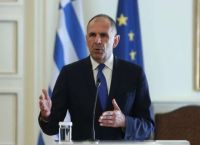
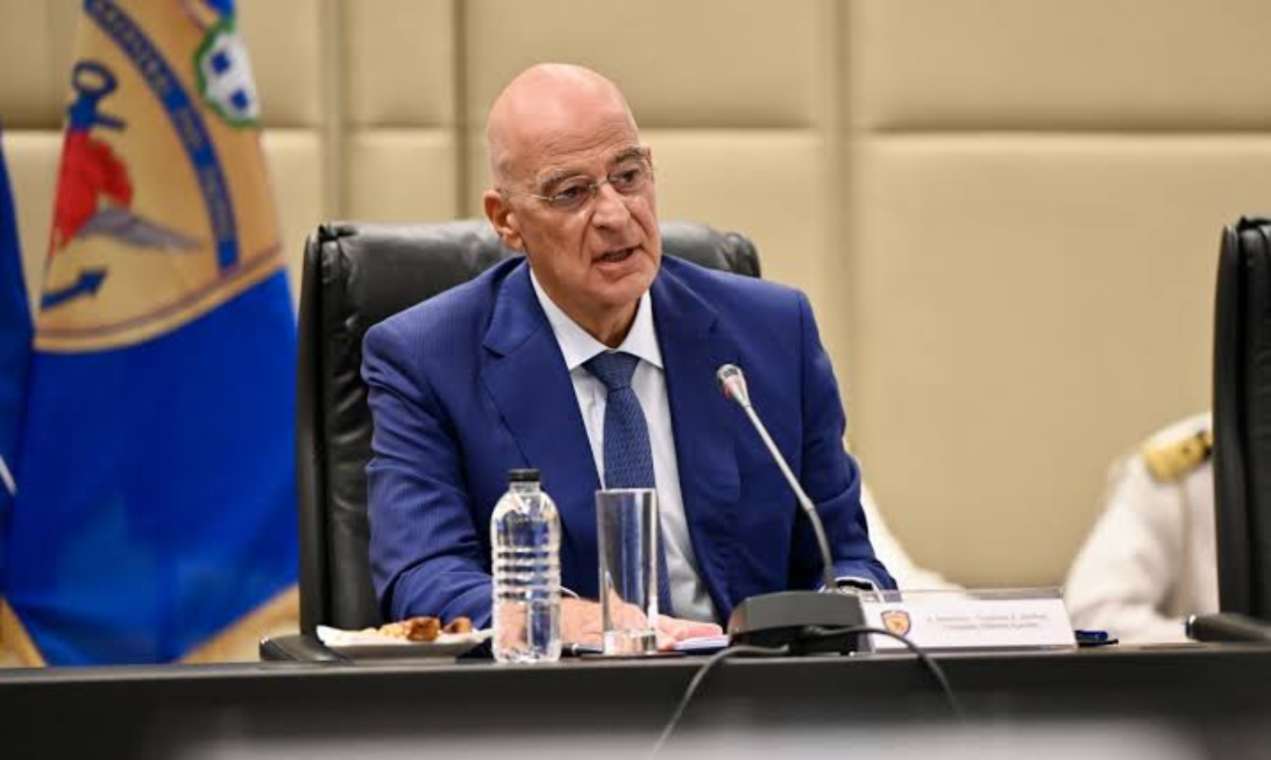
Greece is seeking to transform defence spending from a fiscal cost into an engine of industrial, technological and economic development, Defence Minister Nikos Dendias argues, setting out a broader vision for the country’s military transformation under “Agenda 2030.”
In an article for the special edition “The Big Ideas” published by Capital.gr and the newspaper Kefalaio, in cooperation with The New York Times and under the central theme “What Drives Us,” Dendias presents defence not simply as a matter of acquiring military hardware, but as part of a wider strategy for national power.
At the centre of that strategy is a fundamental shift: Greece should no longer merely purchase advanced weapons abroad. It should increasingly participate in their development and production at home.
“Inaction cannot be an option”
Dendias begins from a rapidly changing geopolitical landscape shaped by security competition, technological disruption, energy challenges and climate pressures.
“It is now commonly accepted that inaction cannot be an option.”
The question for Greece, he argues, is what position it wants to occupy in the international balance of power over the coming decades — and what kind of country it wants to become after 2030.
For Dendias, national strength extends beyond military capabilities. He links it to democratic institutions, the rule of law, culture, technological development, innovation and a stronger productive economy.
From defence spending to defence investment
This is the central economic argument of Dendias’ intervention.
For decades, he argues, Greek defence policy was largely treated as a matter of expenditure: the state purchased weapons systems without acquiring a corresponding industrial, technological or productive capability.
As a result, Greece spent substantial resources on national security without converting enough of that expenditure into domestic productive capacity.
Dendias says that model is now being changed.
“We no longer treat national security as simply the purchase of weapons systems, but as an investment.”
Under this approach, defence spending is intended to generate domestic know-how, industrial activity, high-value technology and economic growth.
In other words, Greece is seeking to move from “buying” to “buying, participating, developing and producing.”
At least 25% Greek participation in defence programmes
“Agenda 2030” is the framework through which the Defence Ministry is pursuing this transformation.
According to Dendias, it includes a modern Force Structure, a long-term 20-year defence procurement programme and a commitment to secure substantive participation by the domestic defence industry.
The target is for Greek companies to account for at least 25% of defence procurement programmes.
The figures cited by the minister underline the scale of the ambition:
- €7 billion in contracted defence programmes.
- €1.5 billion directed to the domestic defence industry.
- At least 25% Greek participation targeted in procurement programmes.
- Greek companies participating in programmes including the multi-layered defence shield and the new Belharra frigates.
The objective is not simply to retain a larger share of defence expenditure inside Greece, but to create industrial capabilities that can survive beyond individual procurement contracts.
The 15,000-drone target
One of the most concrete industrial targets concerns unmanned systems.
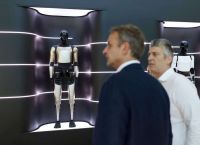
Dendias says that by the end of 2026, Defence Ministry factories will be capable of producing 15,000 drones annually.
The figure is significant because drones and counter-drone technologies have become central to modern warfare, from Ukraine to the Middle East, dramatically changing the economics of the battlefield.
For Greece, domestic drone production could therefore serve two objectives simultaneously: increasing military autonomy and developing a national technological and manufacturing base.
Centaur, Hyperion, Telemachus and Teucer
The second pillar is the development of Greek defence systems.
Dendias points to Centaur, Hyperion, Telemachus and Teucer as examples of the effort to move towards indigenous technological capabilities.
“Greece is moving from purchasing to production.”
That sentence captures the philosophy behind the programme.
The strategic calculation is straightforward: a country that can design, adapt and manufacture at least part of its military technology is less dependent on foreign suppliers and retains more of the knowledge and economic value generated by defence expenditure.
“Agenda 2030” becomes industrial policy
This is where Dendias’ argument moves beyond the traditional boundaries of defence policy.
“Agenda 2030” is being presented not only as a military reform but also as an element of industrial and technological policy.
The aim is for part of the billions of euros Greece must spend on defence to generate a domestic multiplier: Greek companies, engineers, research programmes, intellectual property, manufacturing capacity and potentially exportable defence products.
The Armed Forces thus become, in Dendias’ vision, not simply consumers of technology but a catalyst for an ecosystem connecting the military, universities, start-ups, established defence companies and the wider manufacturing sector.
The success of that model will ultimately depend on implementation. Several of the objectives outlined under “Agenda 2030” remain targets or programmes still under development rather than completed outcomes.
Defence power and economic power
Dendias ultimately places defence within a broader concept of national power.
A country cannot sustain strong Armed Forces over the long term without the economic and industrial capacity needed to support them.
“Economic power is the foundation of national power and a fundamental prerequisite for our national survival.”
The goal he describes is a Greece that is more productive, technologically advanced and militarily stronger, with an enhanced role in its wider region and within the European Union.
His contemporary “Big Idea” is therefore not framed as a territorial project. It is a strategy based on production, technology, innovation, economic resilience and defence capability — with confidence in Greece’s human capital at its core.
Πηγή: pagenews.gr
Διαβάστε όλες τις τελευταίες Ειδήσεις από την Ελλάδα και τον Κόσμο