Serbia’s Lithium Revolt: Brussels Wants Jadar, but the New Majority Could Kill Europe’s Strategic Mine
 ΧΡΟΝΟΣ ΑΝΑΓΝΩΣΗΣ 14 '
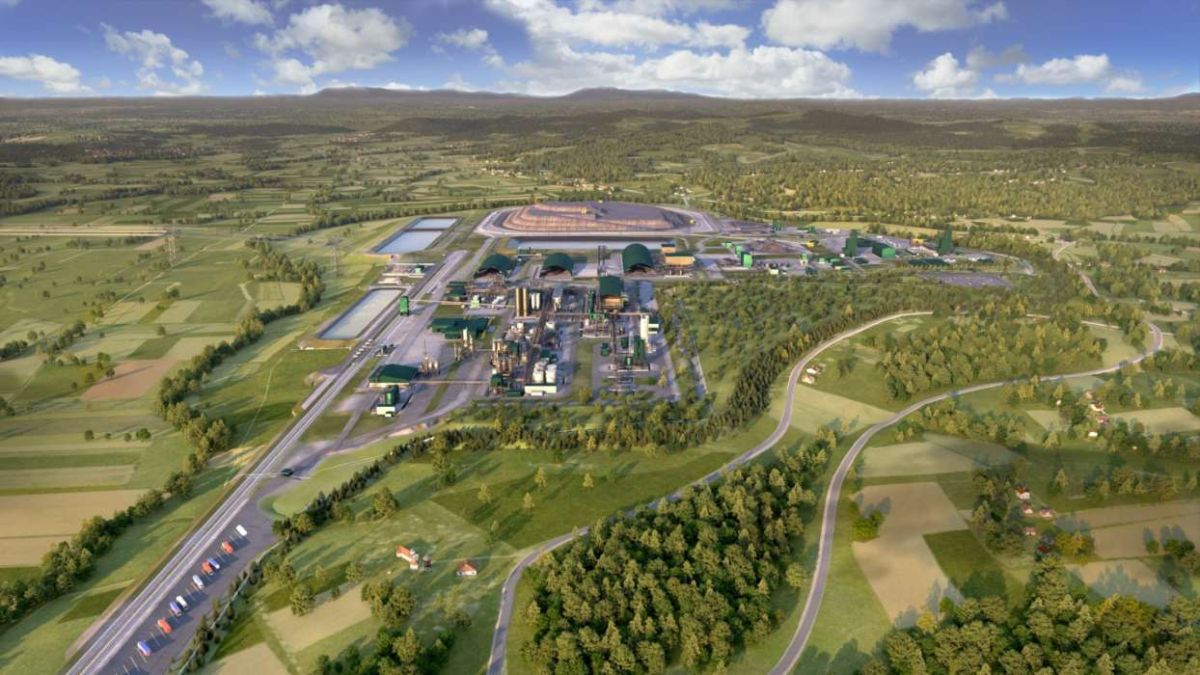
Πηγή Φωτογραφίας: AP Photo//Brussels and influential figures within Serbia’s emerging parliamentary majority now have fundamentally different visions for the same valley.



The European Union may be approaching one of its most consequential political confrontations in the Western Balkans — not over Russia, Kosovo or NATO, but over lithium.
In western Serbia, the Jadar Valley has become the epicentre of a dispute that reaches far beyond environmental policy. For Brussels, the region contains a potentially valuable source of lithium, a critical ingredient in electric-vehicle batteries and a strategic resource in Europe’s effort to reduce its dependence on China.
For Serbia’s anti-mining movement, however, Jadar represents something very different: a struggle over environmental protection, democratic accountability and the right of local communities to determine their economic future.
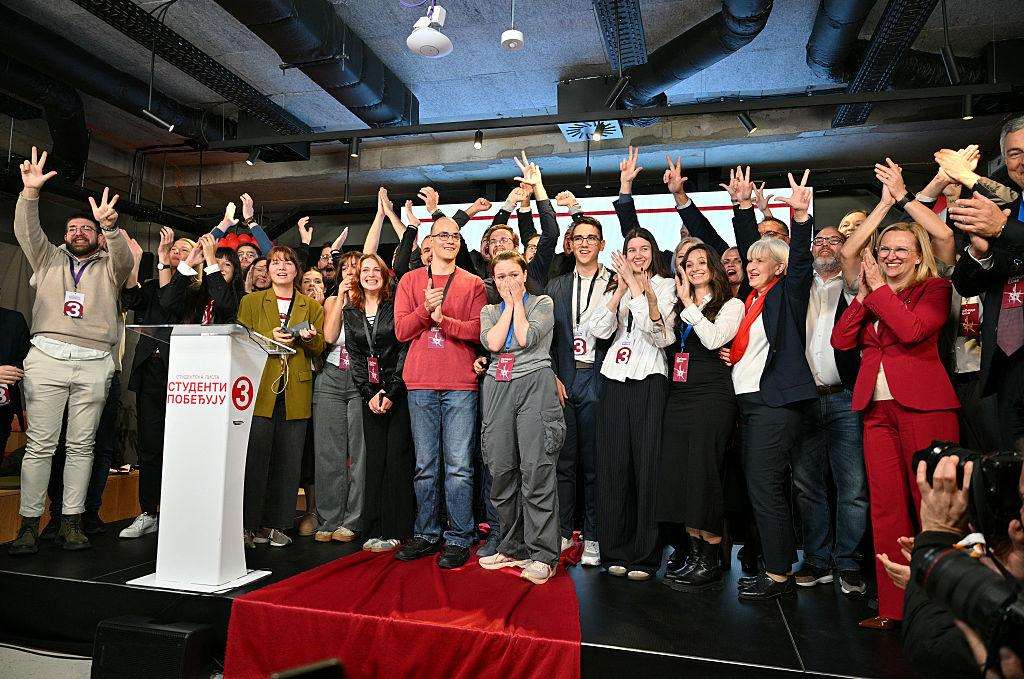
The conflict has acquired a new political dimension following the reported electoral victory of Serbia’s student-led opposition list, which secured approximately 52% of the vote and a projected parliamentary majority.
The movement’s broader campaign was driven by demands for institutional reform and political accountability. But its ranks also include prominent opponents of Rio Tinto’s proposed mine.
Brussels and influential figures within Serbia’s emerging parliamentary majority now have fundamentally different visions for the same valley.
How the European Union responds could shape its relationship with Belgrade for years.
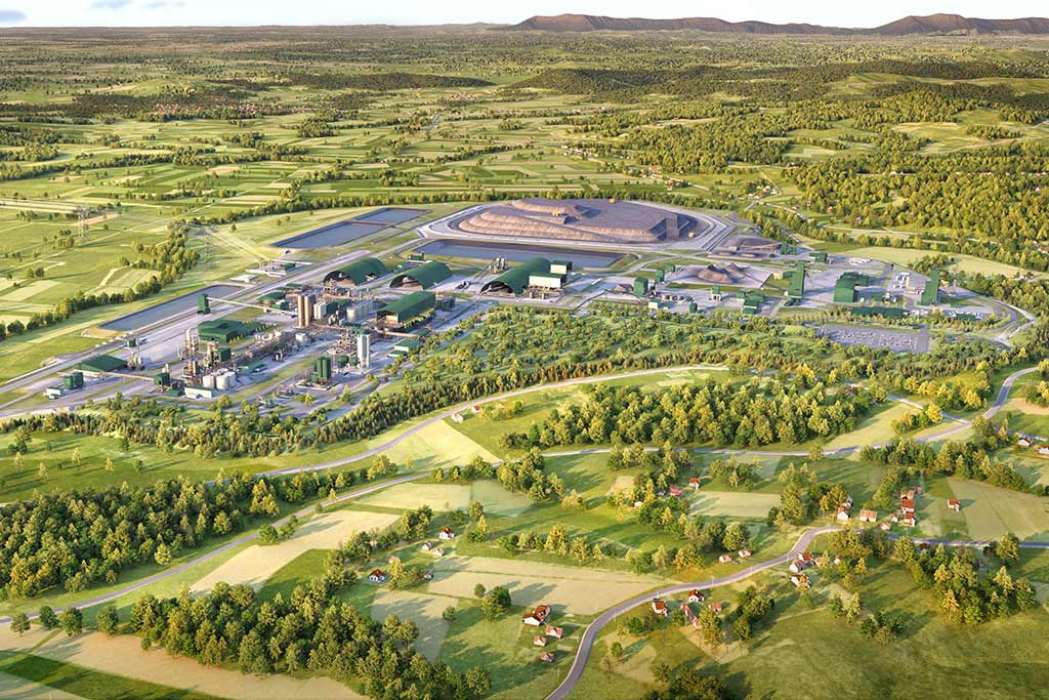
The Farmer Who Became a Symbol of Serbia’s Anti-Lithium Movement
Few figures embody the conflict more clearly than Zlatko Kokanović, a farmer from Gornje Nedeljice, a village in western Serbia near the proposed mining site.
For almost seven years, Kokanović has campaigned against Rio Tinto’s plans to develop the Jadar lithium deposit.
His opposition has made him one of the most recognisable voices in Serbia’s environmental movement.
Five days before the election, speaking to the Serbian newspaper Danas as a candidate on the Student List, he rejected the prospect of negotiations with the mining company.
“There is no point in talking with such a company,” he said.
His proposed solution is unequivocal: legislation permanently prohibiting lithium exploration and mining in Serbia.
That position goes beyond opposing a single project. It challenges the economic model that would place large-scale lithium extraction at the centre of Serbia’s industrial development.
Supporters of the mine argue that such a ban would sacrifice investment, jobs and a potentially significant position in Europe’s battery supply chain.
Opponents contend that the environmental risks and the lack of public trust outweigh the projected economic benefits.
The dispute is no longer confined to protests and petitions. It now has the potential to move directly into parliamentary politics.
Why Brussels Wants Serbia’s Lithium
The Jadar deposit was discovered by Rio Tinto in 2004 near Loznica, in western Serbia.
It contains jadarite, a mineral rich in lithium and boron.
According to Rio Tinto’s projections, the proposed operation could produce approximately 58,000 tonnes of lithium carbonate annually, potentially enough to supply batteries for around 1.1 million electric vehicles.
Those figures help explain why the project attracted attention from European policymakers.
The European Union faces a structural challenge in securing critical raw materials for its energy transition.
China holds a dominant position in several stages of the global battery supply chain, particularly mineral processing and battery-component manufacturing.
For Brussels, reducing that dependence has become a matter of industrial competitiveness, economic security and strategic autonomy.
The EU’s Critical Raw Materials Act establishes benchmarks intended to increase European extraction, processing and recycling capacity while limiting excessive reliance on individual external suppliers.
Although Serbia is not an EU member state, its proximity to European industrial centres makes it an attractive potential partner.
The Jadar project therefore represents more than a conventional mining investment.
It could provide a link between European raw-material supply, battery production and the automotive industry, particularly in Germany.
But the same strategic logic that makes Jadar attractive to Brussels has intensified concerns among Serbian communities that their land is being treated primarily as a resource for Europe’s industrial ambitions.
How the Lithium Dispute Became a National Political Movement
Opposition to Jadar has deep roots.
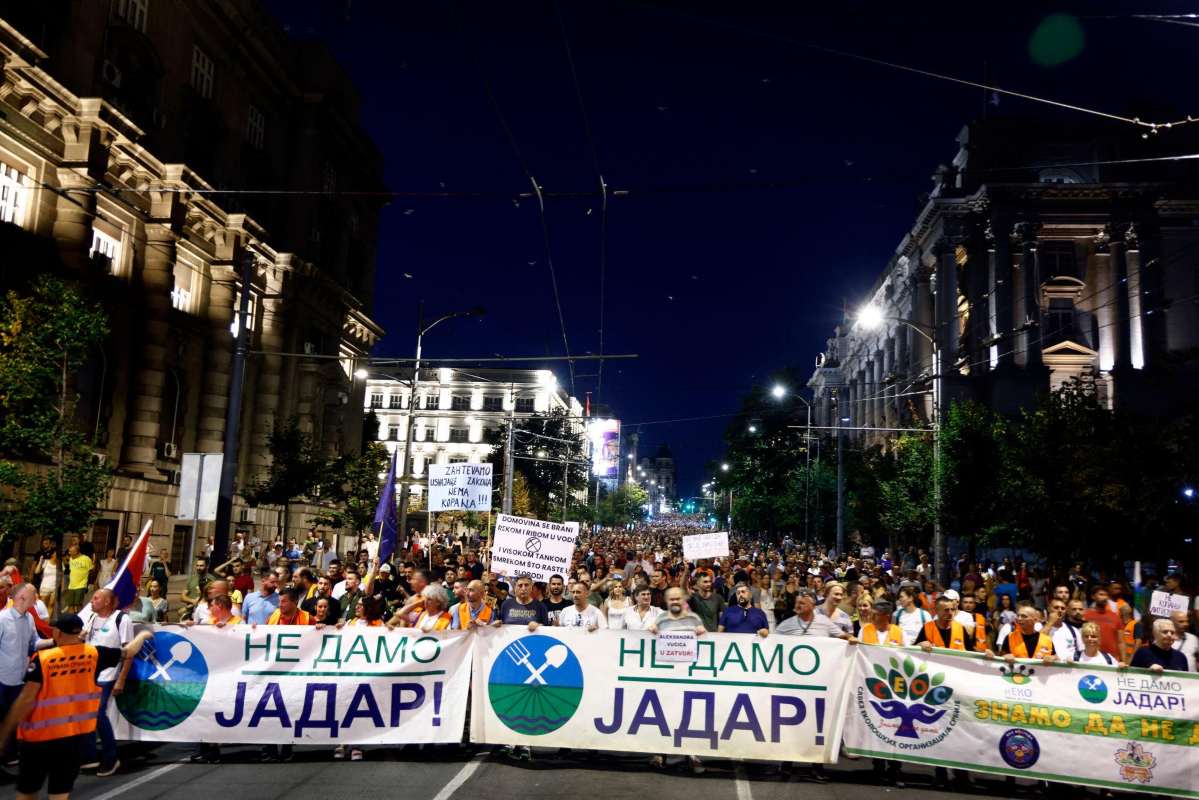
In late 2021, large demonstrations and road blockades spread across Serbia as environmental organisations, farmers and civic activists mobilised against the project.
The protests challenged both the proposed mine and the Serbian government’s handling of environmental and investment decisions.
In January 2022, the authorities cancelled key administrative measures supporting the project.
For anti-mining campaigners, the decision represented a major victory.
But the conflict was far from over.
In July 2024, Serbia’s Constitutional Court ruled that the earlier cancellation had been unlawful, creating the conditions for the project’s revival.
Days later, the European Union and Serbia signed a strategic partnership covering sustainable raw materials, battery value chains and electric vehicles.
The agreement was announced during a visit to Belgrade by then-German Chancellor Olaf Scholz.
Scholz described the initiative as:
“An important European project and contribution to Europe’s sovereignty.”
The statement captured Germany’s interest in securing access to materials essential for its automotive industry.
Yet the agreement also deepened suspicions among opponents of the mine.
For many activists, it appeared that European industrial priorities were being advanced despite unresolved concerns about environmental safeguards and local consent.
In August 2024, tens of thousands of people demonstrated in Belgrade against lithium mining.
The Jadar controversy had become a national political issue.
Serbia’s Election Changes the Equation
The emergence of a student-led parliamentary majority introduces a potentially decisive new factor.
Serbia’s protest movement grew around demands for transparency, accountability and institutional reform, eventually bringing together students, civic organisations and other groups dissatisfied with the country’s political direction.
The Jadar dispute was not the sole cause of that mobilisation.
Nevertheless, environmental activism helped create networks of political participation that overlapped with the wider movement for change.
Kokanović’s presence on the Student List illustrates that connection.
If the new parliamentary majority moves to introduce a permanent ban on lithium exploration and extraction, the implications would be substantial.
Rio Tinto’s investment plans could face a new legislative obstacle.
The Serbian government would have to reconsider the country’s raw-materials strategy.
And Brussels would confront the prospect that a major project in its critical-minerals agenda no longer enjoys sufficient political support in the country hosting it.
That would transform Jadar from a dispute over environmental permits into a test of the EU’s relationship with Serbia’s emerging political leadership.
The European Contradiction: Strategic Autonomy Versus Democratic Consent
The European Union has two objectives that are both central to its long-term strategy.
First, it wants to strengthen economic security by diversifying supplies of critical minerals.
Second, it seeks to promote democratic institutions, the rule of law and environmental standards in candidate countries.
In Serbia, those priorities could come into tension.
Brussels has long argued that European integration should strengthen democratic accountability and public trust.
But if it continues promoting a mining project opposed by influential members of Serbia’s new parliamentary majority, it risks appearing more responsive to industrial demand than to domestic political concerns.
The dilemma is particularly sensitive because Serbia’s European future remains strategically important.
A confrontation over Jadar could create friction with political actors who otherwise support closer cooperation with European institutions.
At the same time, abandoning the project would carry costs.
European battery manufacturers would need to secure alternative supplies of lithium, potentially from other mining projects, processing facilities or recycling operations.
The issue is therefore not simply whether Europe needs lithium.
It is whether the pursuit of strategic autonomy can remain politically credible when the communities hosting extraction projects reject the terms under which those projects are developed.
Rio Tinto’s Project Is Paused — But Not Forgotten
Rio Tinto has continued to treat Jadar as a potentially valuable asset despite repeated political setbacks.
Company reporting and Serbian media coverage have described the project as paused, with the possibility of revival when conditions permit.
That distinction matters.
A paused project can potentially return if political, regulatory and commercial circumstances change.
A permanent legislative prohibition would create a much more substantial obstacle.
Such legislation could also raise questions concerning existing permits, investment protections and possible legal claims.
The outcome would depend on the precise wording of any new law and the legal obligations already in place.
For now, the project’s future remains uncertain.
Its strategic designation by European institutions does not itself authorise construction, override Serbian law or remove environmental permitting requirements.
That legal distinction may become increasingly important if the political confrontation intensifies.

Germany’s Industrial Interests and Europe’s China Problem
Germany has a particularly strong interest in developing more secure battery supply chains.
Its automotive industry faces intense competition from Chinese manufacturers, while the transition to electric vehicles requires reliable access to lithium and other critical minerals.
A nearby lithium source could reduce certain logistical vulnerabilities and support European industrial investment.
Yet the Jadar controversy demonstrates that geographical proximity does not guarantee political or social acceptance.
A mine may be strategically attractive on paper while remaining deeply contested in the country where it would operate.
For European policymakers, this raises a broader question.
Can the EU build resilient supply chains without reproducing the extractive relationships that critics associate with traditional resource dependency?
The answer may depend on the quality of environmental oversight, the distribution of economic benefits, public participation and the credibility of regulatory institutions.
Those conditions are especially important in candidate countries where trust in political institutions has been contested.
Three Scenarios for Brussels and Belgrade
The next phase of the Jadar dispute could develop along three broad paths.
1. Serbia Moves Towards a Permanent Lithium Ban
If the new parliamentary majority adopts legislation prohibiting lithium exploration and extraction, Rio Tinto’s project could face a fundamental legal barrier.
Brussels would then need to reconsider how Jadar fits into its strategic raw-materials policy.
Such an outcome could produce tensions over investment rights and the future of the EU–Serbia raw-materials partnership.
2. The Project Remains Suspended While Negotiations Continue
A second possibility is an extended political and regulatory pause.
Serbian authorities could review environmental studies, licensing procedures and the project’s economic implications without immediately introducing a comprehensive ban.
This would leave the investment unresolved while allowing discussions with European institutions to continue.
3. Brussels Reframes Its Partnership With Serbia
A third path would involve shifting the emphasis away from Jadar itself.
The EU could pursue cooperation with Serbia in battery recycling, clean technologies, industrial development and alternative critical-material supply chains.
Such an approach would not eliminate Europe’s lithium requirements.
It could, however, reduce the risk that one controversial mine becomes the defining issue in the EU’s relationship with Serbia’s new political leadership.
The Western Balkans Dimension: A Test of European Credibility
The stakes extend beyond lithium.
Serbia occupies a strategically important position in the Western Balkans, where European integration competes with other economic and geopolitical influences.
China has expanded its investment and commercial presence in the region, while Russia continues to maintain political and energy ties with Belgrade.
The European Union has repeatedly presented enlargement as a geopolitical priority.
But enlargement also depends on the credibility of European institutions in the eyes of candidate-country populations.
If the EU is perceived as defending a controversial mining project against strong domestic opposition, the political consequences could extend beyond environmental policy.
Conversely, a willingness to reconsider the project’s status could demonstrate that European strategic interests are not immune to democratic scrutiny.
Neither outcome is automatic.
Much will depend on the composition and programme of Serbia’s next government, the decisions of its parliament and the response of European institutions.
Jadar’s Reckoning: What Europe Must Decide
The controversy surrounding Rio Tinto’s Jadar mine has become a test case for the European Union’s wider industrial and geopolitical strategy.
Europe needs critical minerals to support electrification, strengthen manufacturing and reduce external dependencies.
Serbia, meanwhile, faces a debate over the environmental and economic consequences of developing one of the region’s most prominent lithium deposits.
The election has introduced a new political variable into that equation.
A movement that includes some of the country’s most determined opponents of the mine now has the potential to influence legislation and government policy.
The central question is no longer simply whether Jadar can produce enough lithium to strengthen Europe’s battery industry. It is whether Brussels can pursue that objective without undermining its relationship with Serbia’s changing political leadership.
For the EU, strategic autonomy cannot be measured only in tonnes of lithium or numbers of electric vehicles.
It must also account for environmental legitimacy, political stability and the democratic authority of the countries supplying the resources.
The Jadar Valley has become the place where those priorities collide.
And the decisions made in Brussels and Belgrade could influence not only the future of one mine, but also the credibility of Europe’s broader approach to the Western Balkans.
Πηγή: pagenews.gr
Διαβάστε όλες τις τελευταίες Ειδήσεις από την Ελλάδα και τον Κόσμο