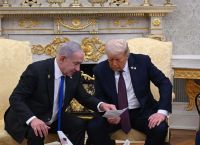
European Parliament Blocks U.S.–EU Trade Deal as Trump Threatens New Tariff War
 ΧΡΟΝΟΣ ΑΝΑΓΝΩΣΗΣ 5 '

Πηγή Φωτογραφίας: AP Photo//European Parliament Blocks U.S.–EU Trade Deal as Trump Threatens New Tariff War



A major geopolitical and economic confrontation is unfolding between the United States and the European Union after negotiations between the European Parliament, the European Commission and EU member states collapsed late Wednesday night without agreement on implementing the landmark U.S.–EU trade framework negotiated by President Donald Trump last year.
The failed talks now place the entire transatlantic agreement at risk and dramatically increase the likelihood of a new tariff war between Washington and Brussels.
President Donald Trump has repeatedly threatened to impose 25% tariffs on European automobile imports if the EU does not move quickly to ratify and implement the deal reached at his Turnberry golf resort in Scotland.
The agreement had been presented by the White House as a cornerstone of Trump’s global economic strategy and proof that his confrontational trade policies could force major allies into concessions. Instead, Europe is now openly resisting.

The Turnberry Agreement Hits a Wall
Under the original framework agreement:
- the EU would eliminate tariffs on American industrial goods,
- while the United States would cap tariffs on most European exports at 15%.
However, despite broad support from the European Commission and several member states, the agreement still requires parliamentary approval and legislative implementation inside the EU — a process that has now stalled amid growing political backlash.
Maroš Šefčovič reportedly urged negotiators to secure a compromise capable of “stabilizing trade relations with Washington,” but after nearly six hours of discussions, negotiators left without a deal.
Karin Karlsbro, representing the centrist Renew Europe group, said afterward:
“It is important to shape a Trump-proof agreement before reaching a final deal.”

European Parliament Pushes Back Against Trump
The main obstacle is no longer the European Commission — it is the European Parliament itself.
Led by trade committee chairman Bernd Lange, lawmakers are demanding several additional safeguards before approving the agreement, including:
- reductions in U.S. steel tariffs,
- suspension clauses if EU territorial integrity is threatened,
- and automatic expiration provisions before the end of Trump’s presidential term.
Political tensions escalated earlier this year after Trump floated controversial remarks about Greenland — an autonomous territory of Denmark — fueling European concerns about American unpredictability under a second Trump presidency.
Many European lawmakers now argue that the geopolitical environment has fundamentally changed since the Turnberry framework was first negotiated.
Washington Escalates Pressure
The White House is now intensifying pressure on Brussels.
Andrew Puzder warned that the United States could move “relatively soon” to impose the threatened 25% tariffs on European vehicles if negotiations remain stalled.
“You still have time to fix this. The time is now,” Puzder told Bloomberg TV in Brussels.
He also hinted that Washington could abandon the agreement entirely if Europe continues delaying implementation.
German Industry Faces Massive Risk
A tariff escalation would hit Germany’s industrial sector particularly hard.
Major automakers including:
- BMW
- Mercedes-Benz
- Volkswagen Group
could face billions in additional export costs to the U.S. market.
Economic analysts warn that a full-scale transatlantic trade conflict could:
- reduce Eurozone GDP growth,
- increase inflation in the United States,
- disrupt global supply chains,
- and weaken already fragile global markets.
The automotive sector remains one of the most sensitive pillars of European industrial power and one of Trump’s preferred pressure points in trade negotiations.
Trump Under Growing Political Pressure
The timing is politically difficult for Trump.
The president is heading into the 2026 midterm election cycle facing:
- declining approval ratings,
- criticism over Middle East policy,
- concerns about economic instability,
- and growing skepticism regarding the effectiveness of his aggressive negotiation tactics.
The U.S.–EU trade deal had been central to Trump’s narrative of restoring American economic dominance. Its potential collapse now risks becoming a political liability.
Europe Moves Toward Strategic Autonomy
Beyond trade, the standoff reflects a broader geopolitical shift inside Europe.
Following years of crises — including the Ukraine war, energy shocks and repeated tariff threats from Washington — many European leaders increasingly support:
- strategic autonomy,
- reduced dependence on the United States,
- stronger industrial protections,
- and a more independent foreign policy.
The current dispute demonstrates that even long-standing Western allies are entering a new era of transactional geopolitics where economic nationalism increasingly overrides traditional alliances.
The next round of negotiations is tentatively expected later this month, but officials on both sides privately admit that the atmosphere has deteriorated sharply.
If no compromise is reached before July, the transatlantic alliance could face its most serious economic rupture in years.
Source: pagenews.gr
Διαβάστε όλες τις τελευταίες Ειδήσεις από την Ελλάδα και τον Κόσμο