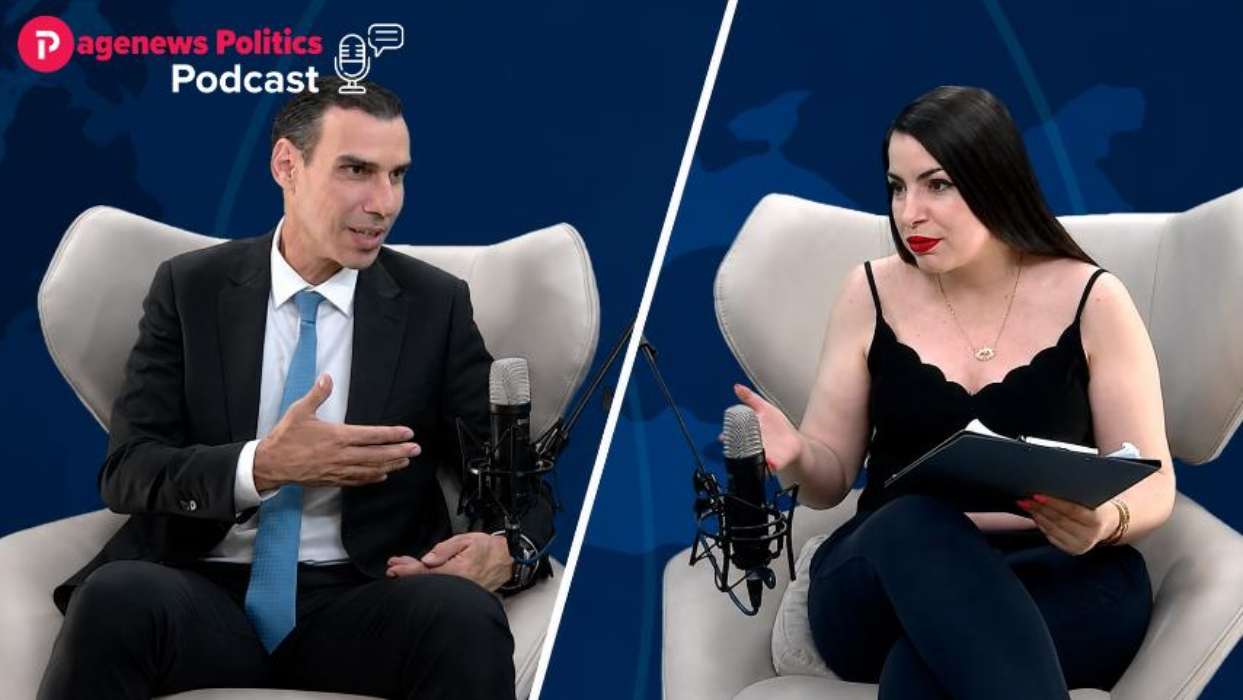
I Am Not Defending Myself,I Am Speaking With Facts:Avramopoulos,Qatargate,Europe’s Institutional Stress Test
 ΧΡΟΝΟΣ ΑΝΑΓΝΩΣΗΣ 6 '
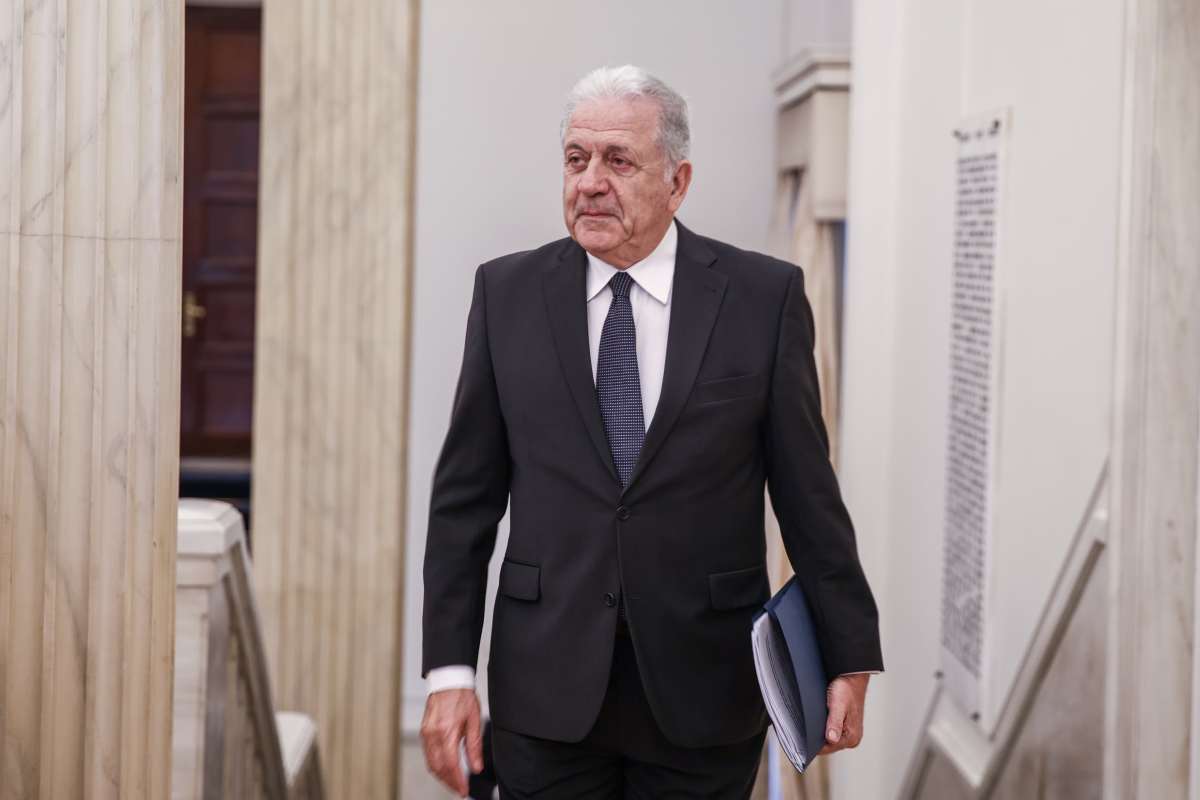
Πηγή Φωτογραφίας: eurokinissi//“I Am Not Defending Myself, I Am Speaking With Facts”: Avramopoulos, Qatargate and Europe’s Institutional Stress Test



The recent television appearance of former European Commissioner Dimitris Avramopoulos evolved into far more than a personal defense against allegations linking his name to the wider Qatargate investigation.
Instead, it became a broader intervention on the functioning of the European Union itself, touching upon principles of accountability, legality, institutional continuity and the rule of law.
Rather than focusing on headlines and public perceptions, Avramopoulos sought to move the discussion toward official documentation, procedures and institutional decision-making.
His central message was clear:
“I am not defending myself. I am speaking with facts.”
According to the former Commissioner, every professional activity he pursued following the end of his mandate received explicit authorization from the competent bodies of the European Commission.
Perhaps the most politically significant element of Avramopoulos’ argument concerns his involvement with the NGO Fight Impunity, founded by former MEP Antonio Panzeri.
According to Avramopoulos, before accepting the position he formally notified the European Commission and received written approval.
As he stated:
“The Commission examined the matter and replied in writing that joining the organization was entirely appropriate.”
He further claimed that he explicitly requested clarification regarding compensation for his participation and was informed that receiving remuneration was fully compatible with post-mandate ethical rules.
“I asked whether I could be paid, and they told me that I could.”
If verified, this argument substantially shifts the debate from questions of political optics toward questions of institutional responsibility.
The issue ceases to be whether Avramopoulos exercised poor judgment and becomes whether European institutions can later distance themselves from activities they previously authorized.
The Legality Argument
Throughout the interview, Avramopoulos repeatedly emphasized that the payments he received were neither hidden nor undeclared.
“The income was declared and taxed in Greece. Can a bribe be officially declared and taxed?”
The statement is politically significant because Qatargate has become synonymous with images of cash-filled suitcases, secret payments and illicit influence networks.
Avramopoulos’ strategy is therefore straightforward:
to contrast alleged corruption with documented, declared and taxable income that passed through official channels.
His defense rests on transparency rather than denial.
A Challenge to the Belgian Investigation
Equally striking was his criticism of the Belgian investigative process.
The former Commissioner suggested that his name became involved less because of concrete evidence and more because investigators sought to expand the scope of their inquiry.
“They decided to widen the investigation and asked themselves: why not include the former Commissioner as well?”
He further implied that investigators overlooked previous assessments and approvals issued by the European Commission itself.
This criticism raises an important institutional question:
Can a national investigation effectively disregard prior evaluations conducted by European institutions?
The issue reaches far beyond the personal circumstances of Avramopoulos and touches upon the relationship between EU governance and national judicial authorities.
The Qatargate Shadow Remains
Despite his explanations, Avramopoulos acknowledges that politically his name cannot be entirely separated from the broader Qatargate affair.
He nevertheless attempted to draw a clear distinction.
According to him, the activities of Fight Impunity had no operational connection to Qatar, Morocco or Mauritania.
“There is no reference to Qatar, Morocco or Mauritania in the organization’s official documents.”
He also stressed that his visits to Qatar took place in the context of international conferences on security, migration and counter-terrorism—areas directly related to his former responsibilities as European Commissioner—and not as part of lobbying efforts.
The Parliamentary Dimension
One of the most politically consequential aspects of the interview was Avramopoulos’ declaration that he would personally request the lifting of his parliamentary immunity.
“I trust Greek justice and I am asking for my immunity to be lifted.”
In political communication terms, such a move is designed to project confidence rather than defensiveness.
It allows the politician involved to present himself as willing to submit to scrutiny rather than seeking institutional protection.
A Message to New Democracy
Avramopoulos also used the opportunity to dispel speculation regarding his political future and his relationship with Greece’s ruling party, New Democracy.
“I am in New Democracy, and I will remain in New Democracy, supporting my party and my political family.”
The statement carries significance at a time when observers are closely monitoring developments within Greece’s broader center-right political landscape.
By reaffirming his loyalty, Avramopoulos appears determined to prevent the case from becoming a source of internal political friction.
The Broader European Question
Ultimately, the real significance of the affair extends beyond the fate of one politician.
If Avramopoulos’ claims are fully substantiated—if he indeed received written authorization from the European Commission, approval from ethics bodies and formal confirmation that his activities complied with post-mandate rules—then the debate shifts from political morality to legal certainty.
At that point, the central issue becomes institutional credibility.
Can the European Union guarantee that decisions taken by its own institutions remain reliable, predictable and legally meaningful?
Because if individuals act in accordance with official approvals yet remain vulnerable to subsequent legal and political scrutiny, the principle of legal certainty itself may come into question.
And that would transform the Avramopoulos affair from a personal controversy into a broader test of European governance, institutional coherence and the rule of law.
Διαβάστε όλες τις τελευταίες Ειδήσεις από την Ελλάδα και τον Κόσμο