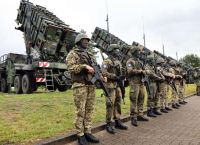
Drone incident in Ionian Sea: Greece demands answers from Ukraine over maritime security fears
 ΧΡΟΝΟΣ ΑΝΑΓΝΩΣΗΣ 4 '

Πηγή Φωτογραφίας: eurokinissi//Drone incident in Ionian Sea: Greece demands answers from Ukraine over maritime security fears



The discovery of an unmanned aerial system in the Ionian Sea has rapidly evolved from a technical maritime incident into a broader geopolitical signal of emerging hybrid-security risks in European waters.
Greek Minister of National Defence Nikos Dendias has formally demanded explanations from Ukraine, stressing that the incident raises serious concerns regarding maritime safety, international law, and regional stability.
“I do not even want to imagine what a collision with a passenger vessel would mean”
Nikos Dendias issued a strongly worded warning:“I do not even want to imagine what a collision with a passenger vessel or any other ship with this drone would mean”
He further emphasized that Greece “expects clear explanations” and will not allow the issue to fade from international attention.
THE DRONE INCIDENT AS A HYBRID WARFARE SIGNAL
The presence of a potentially explosive-laden drone near Lefkada highlights a growing trend: the expansion of unmanned systems beyond active battlefields into international maritime corridors.
Strategic implications include:
- Increased risk of spillover from the Ukraine conflict into the Mediterranean basin
- Rising ambiguity in attribution due to dual-use and remotely operated systems
- Greater vulnerability of civilian maritime traffic
- Expansion of “grey zone” operations in international waters

UKRAINE WAR SPILLOVER INTO THE MEDITERRANEAN
Since the beginning of the Russia–Ukraine war, European security analysts have warned that modern warfare technologies—especially drones—are no longer geographically contained.
The Ionian incident reinforces concerns that:
- Maritime Europe may face indirect exposure to Eastern European conflict dynamics
- Drone warfare creates low-visibility escalation risks
- Civilian shipping lanes become potential collateral environments
- Attribution disputes complicate diplomatic crisis management
GREECE’S DIPLOMATIC POSITION: ALLY, BUT DEMANDING CLARITY
While Greece remains a NATO and EU member supporting Ukraine politically and militarily, Athens is now signaling a more assertive diplomatic stance.
The demand for explanations is not a rupture in relations, but rather a clear assertion that maritime security concerns override alliance solidarity when civilian safety is at stake.
DOMESTIC POLICY DIMENSION: DEFENCE AND HOUSING STRATEGY
During the same address in Agathonisi, Nikos Dendias also outlined Greece’s internal defence-modernization strategy.
“Subsidy policy does not solve the problem”
“Subsidy policy does not solve the problem. When there is a supply shortage, you do not subsidize demand—you fix supply.”
He highlighted a large-scale programme involving more than 17,000 military housing units as a structural solution for armed forces personnel.
STRATEGIC ANALYSIS
The Ionian Sea drone incident reflects three converging geopolitical trends:
1. Expansion of conflict geography The Ukraine war increasingly generates security externalities beyond Eastern Europe.
2. Maritime domain vulnerability Civilian shipping lanes are becoming potential exposure zones for unmanned systems.
3. Hybrid warfare normalization Drones and remotely operated systems blur the line between war and peacetime activity.
BROADER INTERNATIONAL CONTEXT
This incident occurs amid rising global focus on:
- NATO maritime surveillance expansion
- EU hybrid-threat countermeasures
- Black Sea and Eastern Mediterranean security integration
- International regulation gaps for unmanned maritime/aerial systems
Πηγή: pagenews.gr
Διαβάστε όλες τις τελευταίες Ειδήσεις από την Ελλάδα και τον Κόσμο