Mitsotakis: “Turkey’s Occupation of Cyprus Is an Ongoing Crime – Cyprus Remains an Open Wound for Hellenism”
 ΧΡΟΝΟΣ ΑΝΑΓΝΩΣΗΣ 5 '
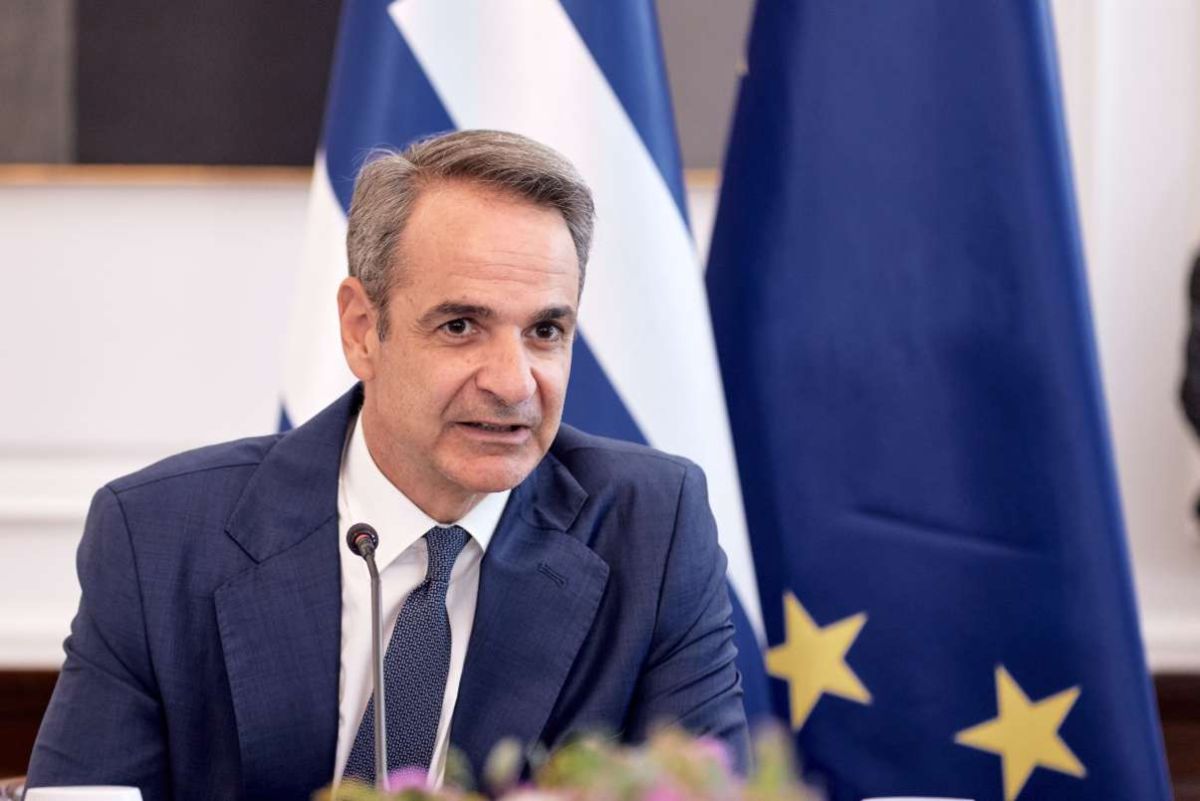
Πηγή Φωτογραφίας: eurokinissi//Mitsotakis: "Turkey's Occupation of Cyprus Is an Ongoing Crime – Cyprus Remains an Open Wound for Hellenism"



Cyprus Returns to the Forefront of Greece’s Geopolitical Agenda
Fifty-two years after Turkey’s military invasion of Cyprus, Athens is once again placing the Cyprus issue at the center of its foreign policy agenda, arguing that Europe’s last divided country remains one of the longest-standing unresolved questions of international law and regional security.
In a message marking the July 20 anniversary of the 1974 invasion, Prime Minister Kyriakos Mitsotakis described Turkey’s continued military presence on the island as “an ongoing crime”, emphasizing that Greece will never accept the faits accomplis created through military force.
“We do not forget. We remain vigilant,” Mitsotakis declared, reaffirming Greece’s long-standing position that the passage of time cannot legitimize an illegal occupation.
“An Open Wound in the Heart of Hellenism”
The Prime Minister stressed that the anniversary is not merely a remembrance of a historical event but a reminder of an unresolved international issue.
“Every time the calendar reaches July 20, our thoughts do not simply return to the dark anniversary of Turkey’s invasion of Cyprus. They encounter an open wound on the island and in the heart of Hellenism,” Mitsotakis wrote.
He referred to the suffering of displaced Cypriots, the tragedy of the missing persons and the continued occupation of northern Cyprus, arguing that these remain clear violations of international law and fundamental principles of sovereignty.
The statement also paid tribute to those who defended Cyprus during the invasion, honoring their sacrifice and their refusal to accept the consequences imposed by force.
International Law as the Foundation of Greek Policy
Athens continues to frame the Cyprus issue not as a bilateral dispute with Turkey, but as a matter of international legality, European security and respect for United Nations resolutions.
Mitsotakis reaffirmed Greece’s unwavering support for the internationally agreed framework for resolving the Cyprus problem.
“Greece remains firmly committed to the principles of international law and to United Nations resolutions, with the objective of achieving a just, functional and sustainable settlement,” he stated.
This position directly rejects Ankara’s proposal for a two-state solution, which Greece and the Republic of Cyprus maintain is incompatible with UN Security Council resolutions and the legal framework of the European Union.
A Renewed Diplomatic Opportunity
The Prime Minister also welcomed the latest initiative by UN Secretary-General António Guterres, describing it as an opportunity to revive negotiations under the established UN framework.
However, Athens made clear that any future talks must remain fully anchored in previously agreed principles.
“Our goal is a reunified Cyprus, free of occupation troops and obsolete systems of guarantees,” Mitsotakis emphasized.
This formulation reflects one of Greece’s core diplomatic objectives: not only ending Turkey’s military presence on the island but also abolishing the outdated 1960 Treaty of Guarantee, which Athens considers incompatible with Cyprus’ status as a sovereign EU member state.

Cyprus and the New Eastern Mediterranean Geopolitics
The renewed emphasis on Cyprus comes at a time when the Eastern Mediterranean has become one of Europe’s most strategically important regions.
Energy security, maritime boundaries, regional defense cooperation and the broader rivalry between NATO allies have elevated the geopolitical significance of the island well beyond the traditional framework of Greek-Turkish relations.
For Athens, the Cyprus issue has become inseparable from the European Union’s security architecture and from the broader rules-based international order.
Greek officials increasingly argue that resolving the Cyprus question is not only a matter of justice for the Cypriot people but also a test of Europe’s commitment to defending the sovereignty of its member states.
Memory as a Strategic Message
Beyond its commemorative dimension, Mitsotakis’ statement serves as a broader diplomatic message.
The phrase “We do not forget. We remain vigilant.” is intended not only to honor the victims of the invasion but also to signal that Greece rejects any attempt to normalize or legitimize the consequences of military occupation.
At a time when international attention is focused on conflicts in Ukraine and the Middle East, Athens is seeking to ensure that Cyprus remains part of the broader international conversation on territorial integrity, sovereignty and international law.
By framing the occupation of Cyprus as an enduring challenge to the international rules-based order, the Greek government aims to reinforce its position that the island’s division is not a historical relic but an unresolved geopolitical issue whose settlement remains essential for lasting stability in the Eastern Mediterranean and for the credibility of the international community itself.
Διαβάστε όλες τις τελευταίες Ειδήσεις από την Ελλάδα και τον Κόσμο