Ankara Sends the Oruç Reis Back: NAVTEX for Pipeline to Northern Cyprus and a New Energy Fait Accompli
 ΧΡΟΝΟΣ ΑΝΑΓΝΩΣΗΣ 7 '
Πηγή Φωτογραφίας: Ankara Sends the Oruç Reis Back: NAVTEX for Pipeline to Northern Cyprus and a New Energy Fait Accompli



The Oruç Reis returns to a familiar but highly sensitive region
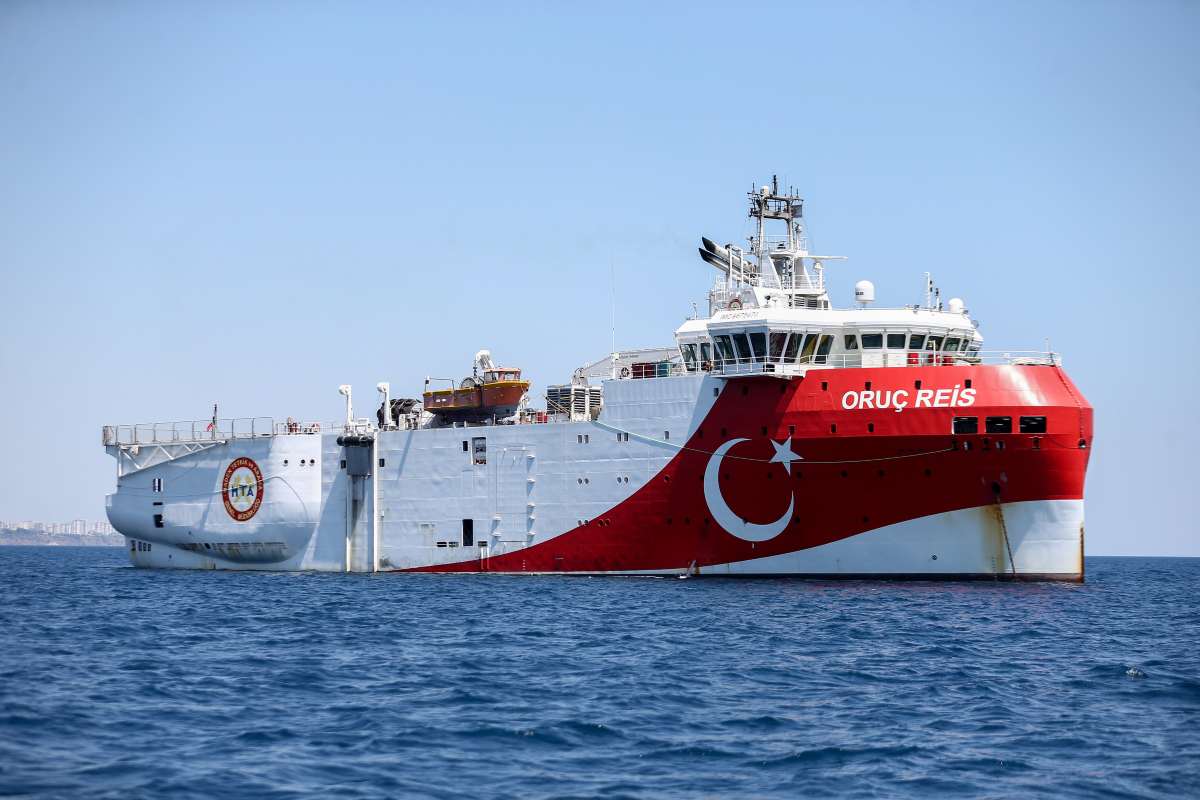
New activity is unfolding in the Eastern Mediterranean after Turkey issued a NAVTEX for seismic surveys along the proposed route of an undersea natural gas pipeline linking Turkey’s southern coast with northern Cyprus.
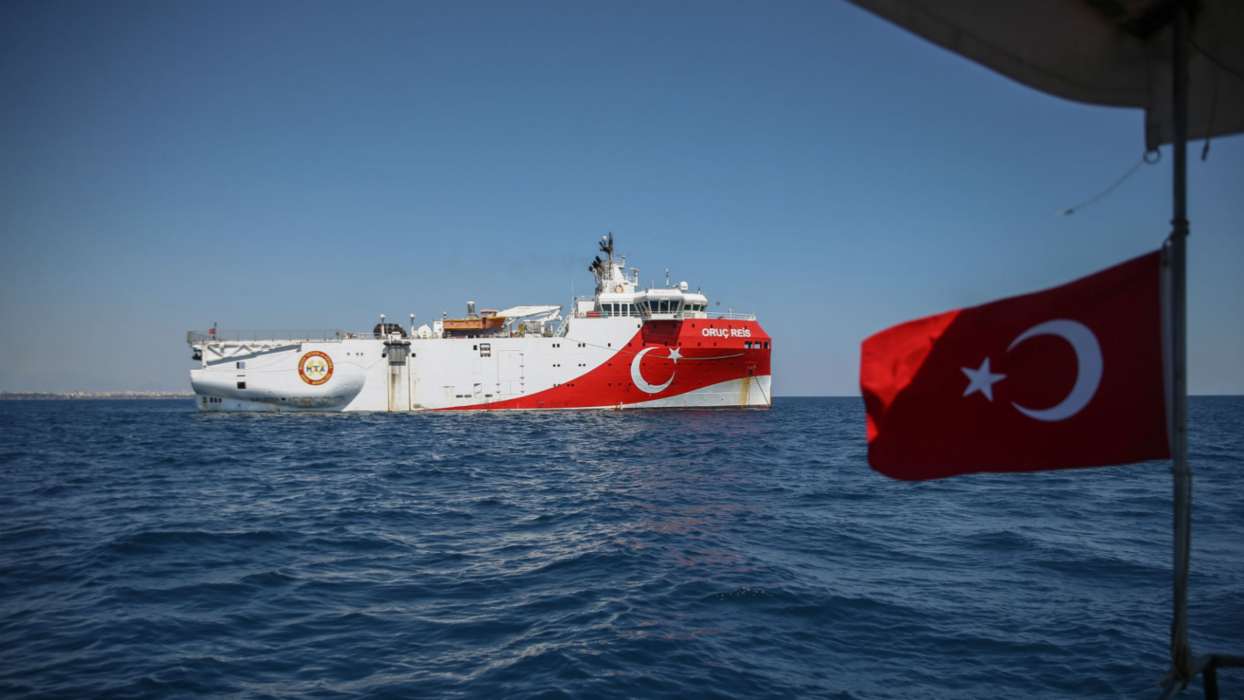
The work is being carried out by the research vessel Oruç Reis, whose name remains closely associated with the major Greek-Turkish tensions of 2020 and the broader dispute over maritime zones in the region.
Officially, the present mission concerns technical and seismic work for the construction of an energy infrastructure project rather than exploration for hydrocarbon deposits. Yet in the Eastern Mediterranean, even a technical survey can quickly acquire strategic and political significance.
A 101-kilometre pipeline
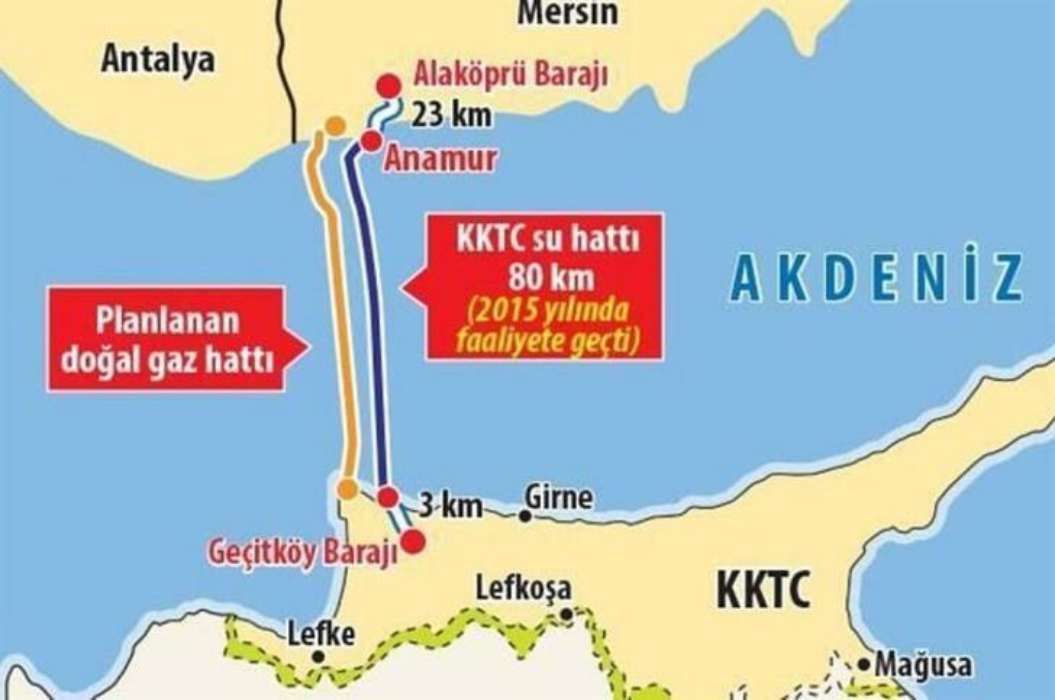
The proposed pipeline would extend for roughly 101 kilometres, connecting Anamur, in Turkey’s Mersin province, with the Teknecik power station, east of Kyrenia.
Approximately 97 kilometres of the route would be underwater, with the remaining four kilometres running on land. Turkish plans reportedly envisage two parallel pipelines and the possibility of bidirectional flow.
That technical detail is politically important. It means the infrastructure could theoretically transport gas not only from Turkey to northern Cyprus, but also in the opposite direction at a later stage.
The Turkish side presents the project as a means of strengthening energy security in northern Cyprus, reducing dependence on liquid fuels and ensuring a more stable supply for electricity generation.
The July 10 memorandum
The NAVTEX follows a memorandum signed on July 10 between Turkey and the Turkish Cypriot administration.
The agreement covers the pipeline, receiving facilities and supporting infrastructure. Ankara has described it as a major energy initiative that would enhance the economic viability of northern Cyprus.
However, the project also carries a clear political message. By signing the agreement directly with the Turkish Cypriot side and presenting it as an interstate arrangement, Ankara is reinforcing its long-standing position in favour of a two-state solution on the island.
Energy dependence as political integration
Turkey’s public narrative focuses on cost, security of supply and the replacement of expensive fuel oil.
The Republic of Cyprus sees something much broader.
A direct gas connection with Turkey would make northern Cyprus even more dependent on Ankara for a critical sector: electricity generation. After the undersea water pipeline linking Turkey to the north of the island, a gas pipeline would create a second strategic lifeline.
From Nicosia’s perspective, this is not merely an energy project. It is another step toward the economic and institutional integration of the occupied north into Turkey.
Nicosia’s strong reaction
The Cypriot government has denounced the memorandum as illegal and as part of a broader Turkish effort to consolidate the consequences of the occupation.
The Republic of Cyprus argues that strategic infrastructure cannot be developed on its territory or in its maritime zones without its consent. It also maintains that such actions infringe upon its sovereignty and sovereign rights.
Nicosia has indicated that it will continue to raise the matter through legal, political and diplomatic channels, including within the institutions of the European Union.
The European dimension
The issue is also likely to become part of the wider EU-Turkey agenda.
Turkey will seek to frame the pipeline as a technical project serving local energy needs. Cyprus, by contrast, will insist that the project cannot be separated from the unresolved political status of the island and the continuing presence of Turkish forces.
This puts Brussels in a difficult position. The EU wants cooperation with Ankara on energy, security and regional stability, but Cyprus remains a member state whose sovereignty the Union is expected to defend.
A wider ambition behind the bidirectional design
The possibility of reverse flow reveals that Ankara may be thinking beyond the immediate energy needs of northern Cyprus.
Turkish officials and media have suggested that, in a later phase, the pipeline could become part of a broader route carrying Eastern Mediterranean gas toward the Turkish market and from there to Europe.
For now, that remains a strategic vision rather than an agreed regional project. But it shows that Turkey does not see the pipeline as a closed local network.
It sees it as a possible first segment of a future Turkish-controlled energy corridor.
Turkey wants to become the unavoidable gateway
Ankara has long argued that the most commercially viable route for Eastern Mediterranean gas to reach Europe runs through Turkey.
This position directly challenges alternative energy cooperation schemes involving Cyprus, Greece, Israel and Egypt.
The proposed pipeline would not, by itself, be large enough to transport major regional gas volumes. It would, however, create infrastructure, technical expertise and a political precedent.
Turkey’s strategy appears to be gradual: establish physical links first, then argue that future regional energy projects should naturally connect to the Turkish network.
What it means for Cyprus and Greece
For Cyprus, the risks are twofold.
First, the pipeline would deepen northern Cyprus’s separation from the Republic of Cyprus while increasing its dependence on Turkey.
Second, Ankara could use the infrastructure to claim a greater role in future energy developments around the island, even without a political settlement.
For Greece, the return of the Oruç Reis is a reminder that Turkey’s Eastern Mediterranean strategy has not disappeared. It has changed form.
Rather than relying only on exploration vessels and drilling disputes, Ankara is now investing in infrastructure capable of creating long-term geopolitical realities.
Not yet a pipeline, but already a political fait accompli
The project is still at the survey and planning stage. Key questions remain unanswered, including financing, commercial viability, final routing and the full construction timetable.
Yet Turkey has already achieved an initial political objective.
It signed an agreement with the unrecognised Turkish Cypriot administration, issued a NAVTEX, deployed the Oruç Reis and presented the initiative as a project between two separate political entities.
Nicosia responds that no infrastructure can legitimise occupation or replace the sovereignty of the Republic of Cyprus.
The dispute will not be decided only on the seabed of the Eastern Mediterranean. It will also be fought in Brussels, international institutions, energy markets and future negotiations over Cyprus.
This time, the Oruç Reis may not be searching for new gas fields. It is mapping something equally consequential: Turkey’s next strategic claim — not merely to participate in Eastern Mediterranean energy, but to become the gateway through which the region’s gas must pass.
Source: pagenews.gr
Διαβάστε όλες τις τελευταίες Ειδήσεις από την Ελλάδα και τον Κόσμο