Guterres Reopens the Cyprus Question: 5+1 Summit Brings Greece and Turkey Back to the Table
 ΧΡΟΝΟΣ ΑΝΑΓΝΩΣΗΣ 12 '
Πηγή Φωτογραφίας: AP Photo//Guterres Reopens the Cyprus Question: 5+1 Summit Brings Greece and Turkey Back to the Table



A New Diplomatic Attempt to Break the Deadlock
UN Secretary-General Antonio Guterres is launching a new effort to bring the Cyprus question back onto a meaningful negotiating track by announcing an informal expanded meeting in the 5+1 format.
The two sides in Cyprus will be joined by Greece, Turkey and the United Kingdom, the three guarantor powers, while the United Nations will act as coordinator and mediator.
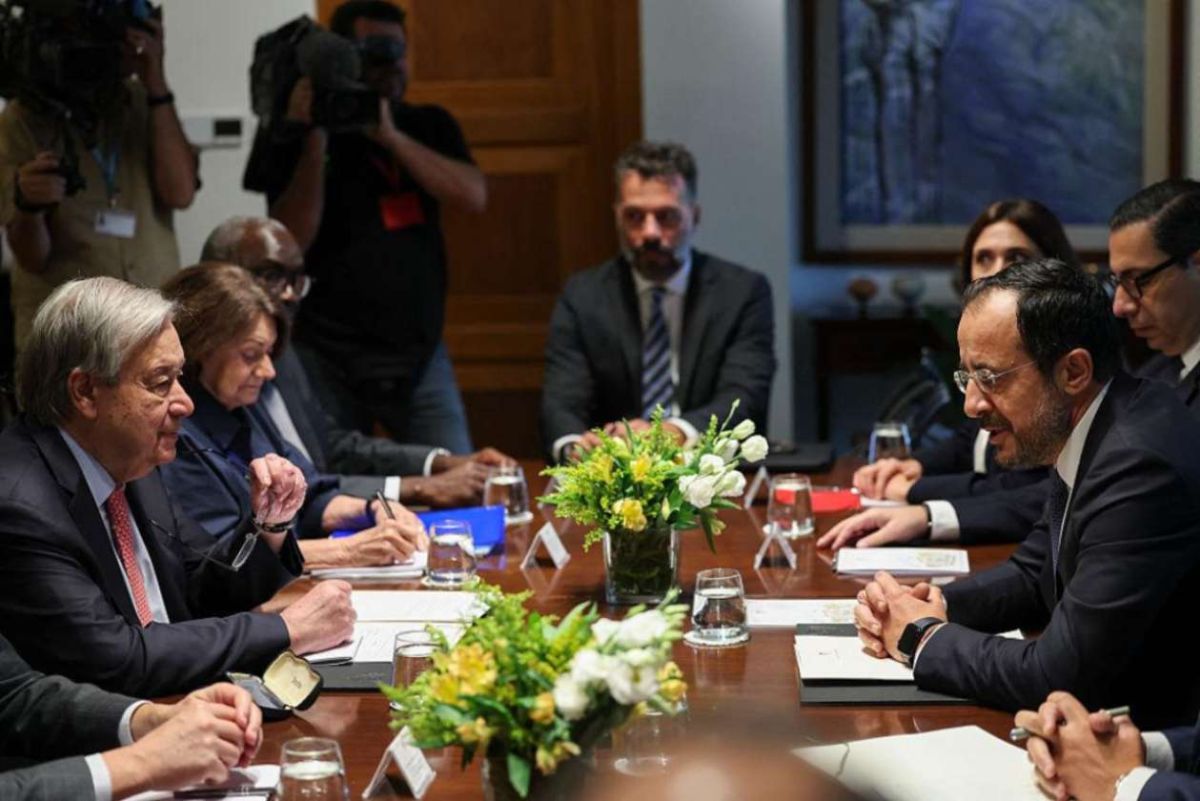
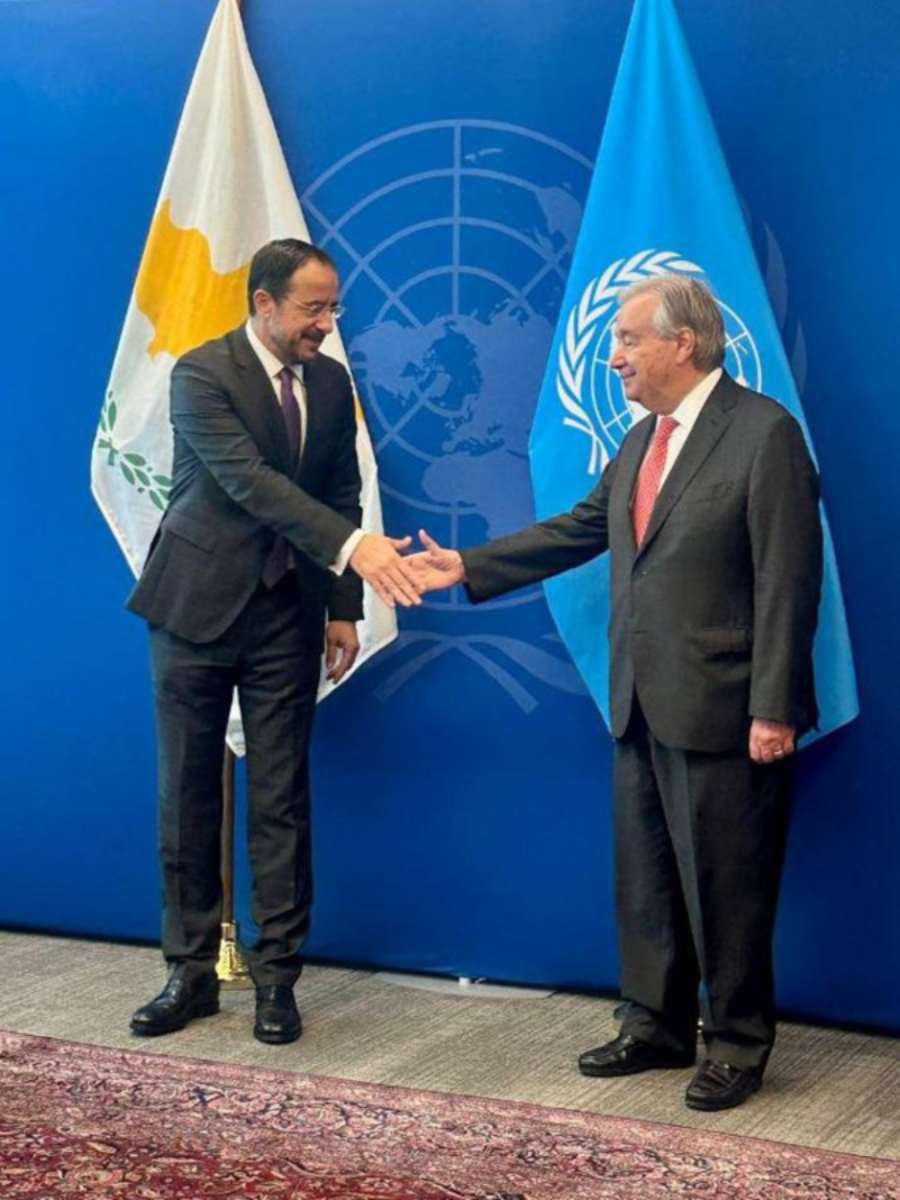
The initiative was announced following Guterres’ meetings with the President of the Republic of Cyprus, Nikos Christodoulides, and Turkish Cypriot leader Tufan Erhurman.
The UN chief described the discussions as constructive, both during the separate meetings and at the joint session, and urged the two leaders to intensify their efforts.
Cyprus is therefore returning to the centre of the diplomatic agenda at a time when the Eastern Mediterranean is facing successive security crises, renewed energy competition and growing geopolitical uncertainty.
Guterres: “I Have Asked Both Leaders to Intensify Their Efforts”
The UN Secretary-General presented his visit as a message of solidarity with all Cypriots and as proof of his personal commitment to achieving a comprehensive and sustainable settlement.
Reflecting on his first visit to the island, he referred to the coexistence of Cyprus’ rich history and culture with the still-visible scars of its painful past.
“Cyprus is an island of remarkable history, rich culture and enduring resilience. It is also a place where the beauty and potential of the present coexist with the marks of a painful past,” he said.
Guterres stressed that he had encountered a profound desire among Cypriots for cooperation, peace and a shared future.
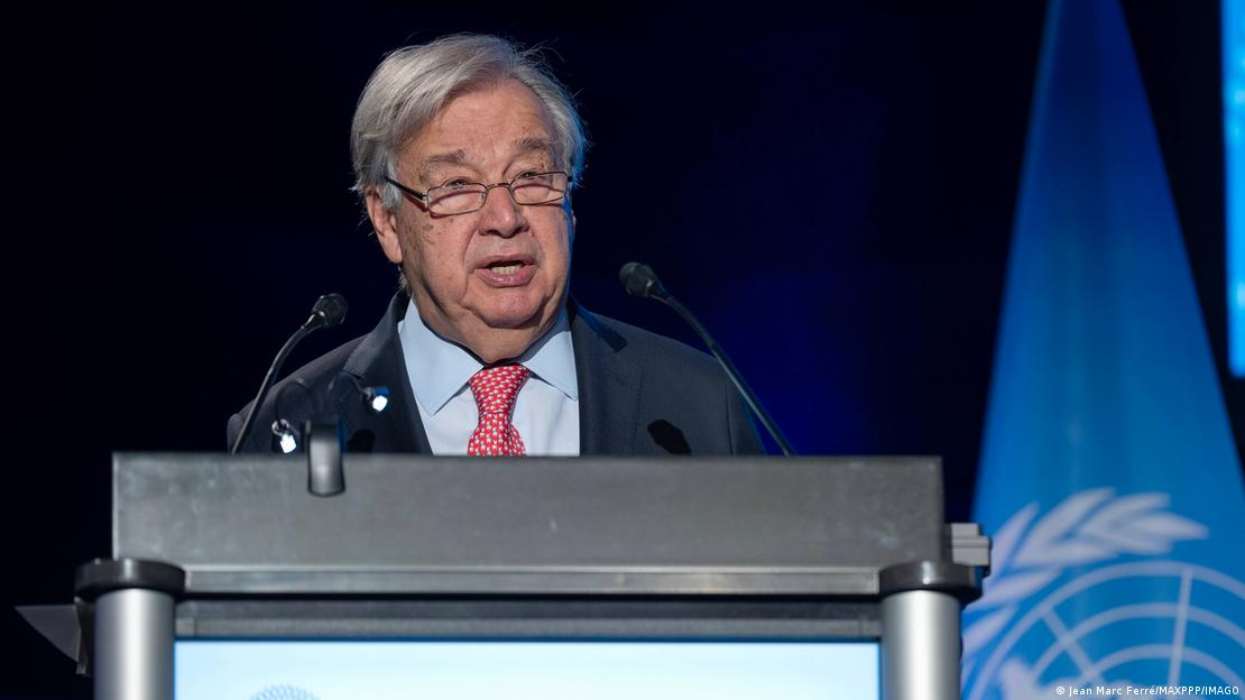
“I have asked the two leaders to intensify their efforts. Through this visit, I had the opportunity to listen to Cypriots who want a solution to the Cyprus problem, cooperation and peace,” he said.
He also confirmed that his talks with the two sides had been productive:
“The discussions were constructive, both in the separate meetings and in the joint meeting. I will convene a meeting in the 5+1 format. We will work together with the guarantor powers to make the meeting possible.”
No Date Yet, but Growing Political Pressure
Despite announcing the new meeting, Guterres avoided setting a specific timetable.
Asked when the 5+1 meeting would take place, he replied:
“We have not set a deadline. We will work on it.”
The absence of a fixed date indicates that the UN Secretariat first wants to ensure that all parties will attend with genuine political will and that the process will not be reduced to another ceremonial meeting.
The objective is not simply to bring the parties into the same room. It is to determine whether sufficient common ground exists for a process that could gradually lead to the resumption of formal negotiations.
This has been the central weakness of previous initiatives: dialogue remained open, but the fundamental political and strategic divisions were not bridged.
Why the 5+1 Format Matters
The expanded meeting does not in itself constitute a formal resumption of negotiations. It is, however, a crucial political test of whether a new common roadmap can be established.
The format includes:
- the Greek Cypriot side,
- the Turkish Cypriot side,
- Greece,
- Turkey,
- the United Kingdom,
- and the United Nations as coordinator.
The participation of the three guarantor powers makes the process much broader than a simple intercommunal dialogue.
The agenda will not be limited to the internal aspects of a settlement. It will also cover the most difficult questions of security, guarantees, military presence and the regional balance of power.
Guterres himself emphasised that a settlement must primarily be achieved by the Cypriots, while acknowledging that the guarantor powers will play a decisive role.
The Central Dispute Over the Form of a Settlement
The positive diplomatic language does not mean that the fundamental disagreements have disappeared.
The Greek Cypriot side continues to support a settlement within the agreed UN framework, based on the relevant Security Council resolutions and the model of a bizonal, bicommunal federation with political equality.
This is also the framework institutionally supported by the European Union, which links any settlement to EU principles, European law and the acquis communautaire.
Turkey, however, has in recent years promoted a different approach, placing emphasis on sovereign equality and the recognition of a separate status for the Turkish Cypriot side before formal negotiations can begin.
The election of Tufan Erhurman has raised expectations of a more functional and negotiation-oriented atmosphere compared with the previous period.
The key question, however, remains how much political autonomy the Turkish Cypriot leadership can exercise in relation to Ankara’s strategic position.
Guterres’ Warning Behind the Diplomatic Language
The statement that the United Nations cannot impose peace was, in reality, a carefully worded warning to all parties.
“The United Nations cannot impose peace, but let me be very clear: it remains fully committed to supporting the people of Cyprus at this critical moment for the island and the wider region,” Guterres said.
With this remark, the UN chief underlined that the organisation can facilitate, mediate and present proposals, but it cannot replace the political will of the parties involved.
It was also a message that declarations in favour of dialogue are not enough. Concrete moves, compromises and a minimum common understanding of the destination of the process are required.
Europe Cannot Remain a Mere Observer
Although the European Union is not formally part of the 5+1 format, the European dimension is unavoidable.
The Republic of Cyprus has been an EU member state since 2004, and any settlement will have to be compatible with European law, the fundamental freedoms, the rule of law and the Union’s institutional framework.
For Brussels, the Cyprus question is not merely a decades-old dispute between two communities. It is:
- a security and occupation issue on the territory of an EU member state,
- a crucial chapter in EU–Turkey relations,
- a test of the coherence of the Union’s common foreign policy,
- and a major factor in the stability of the Eastern Mediterranean.
The EU has repeatedly stated that it supports reunification within the UN framework and stands ready to play a stronger role in the process.
Europe also possesses important practical tools: financial assistance to the Turkish Cypriot community, programmes for alignment with the EU acquis, support for bicommunal initiatives and funding for measures that could facilitate economic and social reunification.
The Cyprus Question in the EU–Turkey Equation
Progress on Cyprus is directly linked to the broader relationship between the European Union and Turkey.
Ankara has repeatedly sought:
- an upgrade of the customs union,
- easier access to the European market,
- stronger political cooperation,
- progress on visa facilitation,
- and a greater role in Europe’s security architecture.
The European Union, however, has made clear that Turkey’s position on Cyprus inevitably affects the scope and pace of any EU–Turkey rapprochement.
This gives the new Guterres initiative a significant European dimension.
A constructive move by Ankara could create openings in other policy areas. A new failure, by contrast, would deepen mistrust and reduce the prospects for meaningful cooperation.
Security, Guarantees and Turkish Troops
The most difficult chapter remains security.
The Greek Cypriot side maintains that a modern European state cannot operate under an outdated system of guarantees or permanent unilateral intervention rights granted to foreign powers.
The Turkish side views the guarantees and the military presence as essential safeguards for the Turkish Cypriot community.
This divide is not merely technical. It concerns the very philosophy of the settlement:
- Will a reunited Cyprus operate as a normal European state without external guardians?
- Will special intervention rights remain in place?
- What will happen to Turkish troops?
- Who will guarantee the implementation of the agreement?
- How will political equality be combined with the functionality of the state?
Without answers to these questions, even a productive 5+1 meeting will struggle to develop into a full negotiating process.
Confidence-Building Measures as the First Test
Because a comprehensive settlement remains extremely difficult, the new process may initially focus on smaller but practical steps.
Previous discussions have included initiatives concerning new crossing points, demining, environmental cooperation, solar energy projects in the buffer zone, cultural heritage and greater involvement of civil society.
These measures cannot solve the Cyprus question. They can, however, build political capital, improve daily life and reduce mutual mistrust.
Progress on practical issues will also test the sincerity of the two sides.
If they cannot agree on measures carrying relatively low political cost, it will be far more difficult to address the core questions of territory, property, governance and security.
Why a Settlement Matters for the Entire Eastern Mediterranean
Guterres placed the Cyprus question within a much broader regional context.
“I firmly believe that a solution to the Cyprus problem is absolutely critical, not only for safeguarding the interests and peace of the Cypriot people, but also as a factor of stability in a region that is becoming dangerously unstable,” he said.
The comment was deliberate.
The Eastern Mediterranean is being shaped by:
- wars and crises in the Middle East,
- tensions between Iran and the West,
- energy and maritime disputes,
- migration pressures,
- increased military activity,
- and competition over infrastructure, pipelines and electricity interconnectors.
In this environment, a settlement in Cyprus could remove one of the region’s oldest sources of instability, facilitate regional cooperation and strengthen Europe’s energy security.
Continued division, by contrast, would leave the island increasingly exposed to external crises, as the UN Secretary-General warned.
A Political Restart or Another Diplomatic Cycle?
The announcement of a 5+1 meeting is clearly a positive development. It does not, however, guarantee the resumption of meaningful negotiations.
Guterres appears to have chosen a strategy of gradual re-engagement: maintaining open channels, organising joint meetings, advancing confidence-building measures and then convening an expanded conference with the guarantor powers.
The central question is whether this new momentum can evolve into a political process with a clear direction, or whether it will become another round of diplomacy without tangible results.
Success will depend on three factors.
First, whether Christodoulides and Erhurman can build a minimum level of mutual trust.
Second, whether Turkey is prepared to allow substantive negotiations within the UN framework.
Third, whether Greece, the United Kingdom, the European Union and other international actors can offer credible incentives and guarantees for a functional agreement.
Guterres’ Final Warning
Behind his cautiously optimistic tone, the UN Secretary-General delivered a serious warning: time is not neutral.
The absence of a settlement does not simply preserve the current situation. It entrenches partition, consolidates faits accomplis and makes any future agreement increasingly difficult.
The proposed 5+1 meeting is therefore both an opportunity and a test.
It will reveal whether the parties are prepared to move from managing the conflict to resolving it.
For Cyprus, Greece, Turkey and the European Union, the stakes extend far beyond the island. They concern the future security architecture of the Eastern Mediterranean, the direction of EU–Turkey relations and the credibility of international diplomacy in a region already burdened by more crises than it can safely absorb.
Source: pagenews.gr
Διαβάστε όλες τις τελευταίες Ειδήσεις από την Ελλάδα και τον Κόσμο